
Print Study Guides are essential classroom tools — whether you’re prepping learners for exams or creating teacher support material — and the right layout, binding and paper choices make the difference between a guide that sits unread and one students actually use.
How should I layout Print Study Guides so students use them?
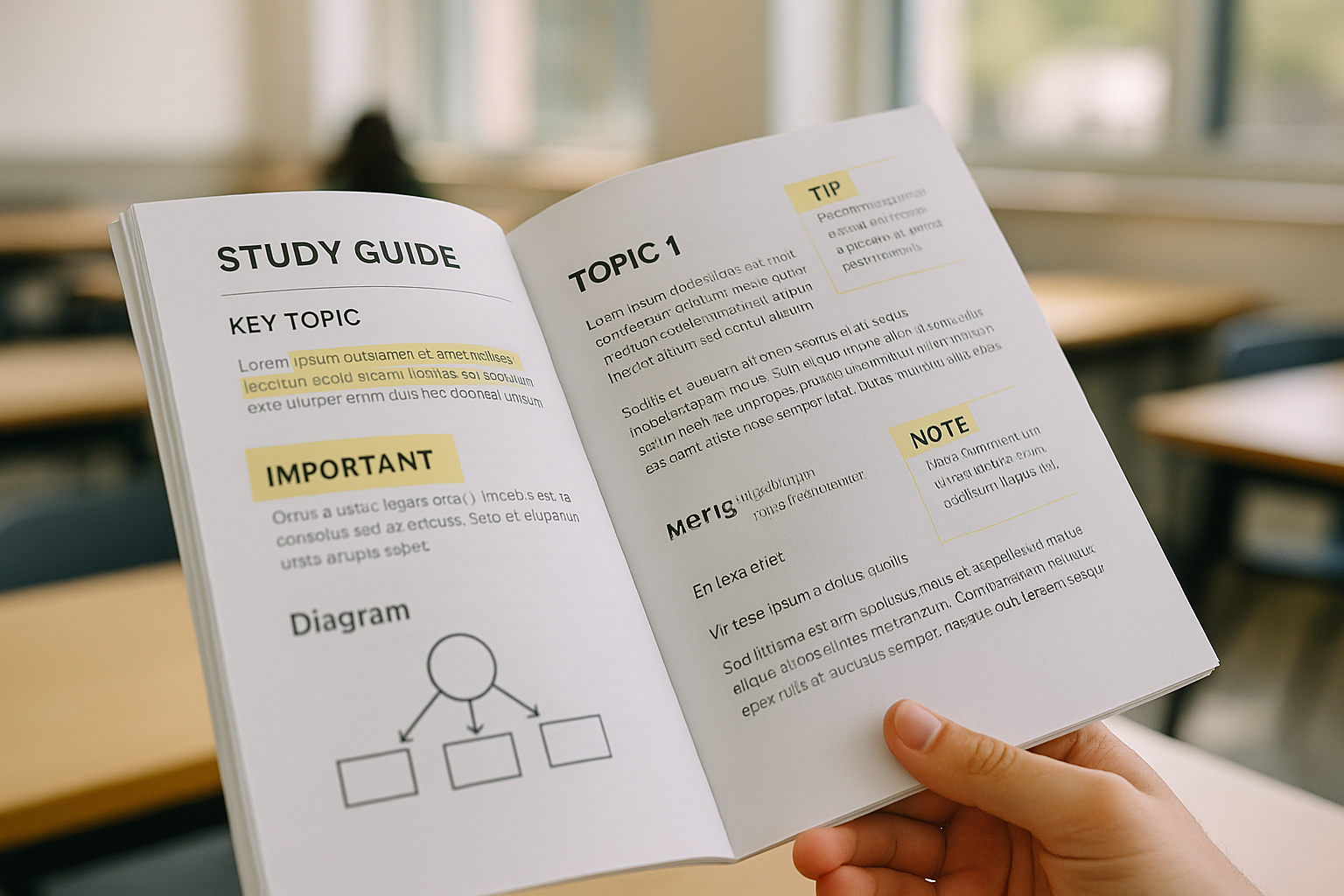
A great layout is the backbone of Print Study Guides: it improves comprehension, speeds revision and makes study less stressful. Start with a clear visual hierarchy — headings, subheadings, callouts and page numbers — and design for scanning. Use consistent margins and a grid to align text and images, and place learning objectives and summaries prominently.
Actionable layout checklist:
- Use sans-serif for headings and a readable serif or clean sans-serif for body text (11–12 pt for secondary learners).
- Include ample white space: 8–12 mm inner margin for binding and 10–14 pt leading for body copy.
- Highlight definitions, formulas and tips in shaded boxes or sidebars using a contrasting but muted colour palette.
- Integrate active elements: short quizzes, margin notes, labelled diagrams and answer keys.
In South Africa’s classrooms and exam-centred contexts, layout must prioritise legibility and quick lookup. Consider the needs of teachers who will photocopy or distribute sections; that means logical chapter breaks and modular pagination. For more structured educational print production, see our training manual and textbook printing resources for layout templates and pagination strategies: training-manual-printing and textbook-printing.
What binding options work best for study guides?
Choosing the right binding affects durability, cost and usability. Print Study Guides commonly use several binding methods depending on page count and use-case:
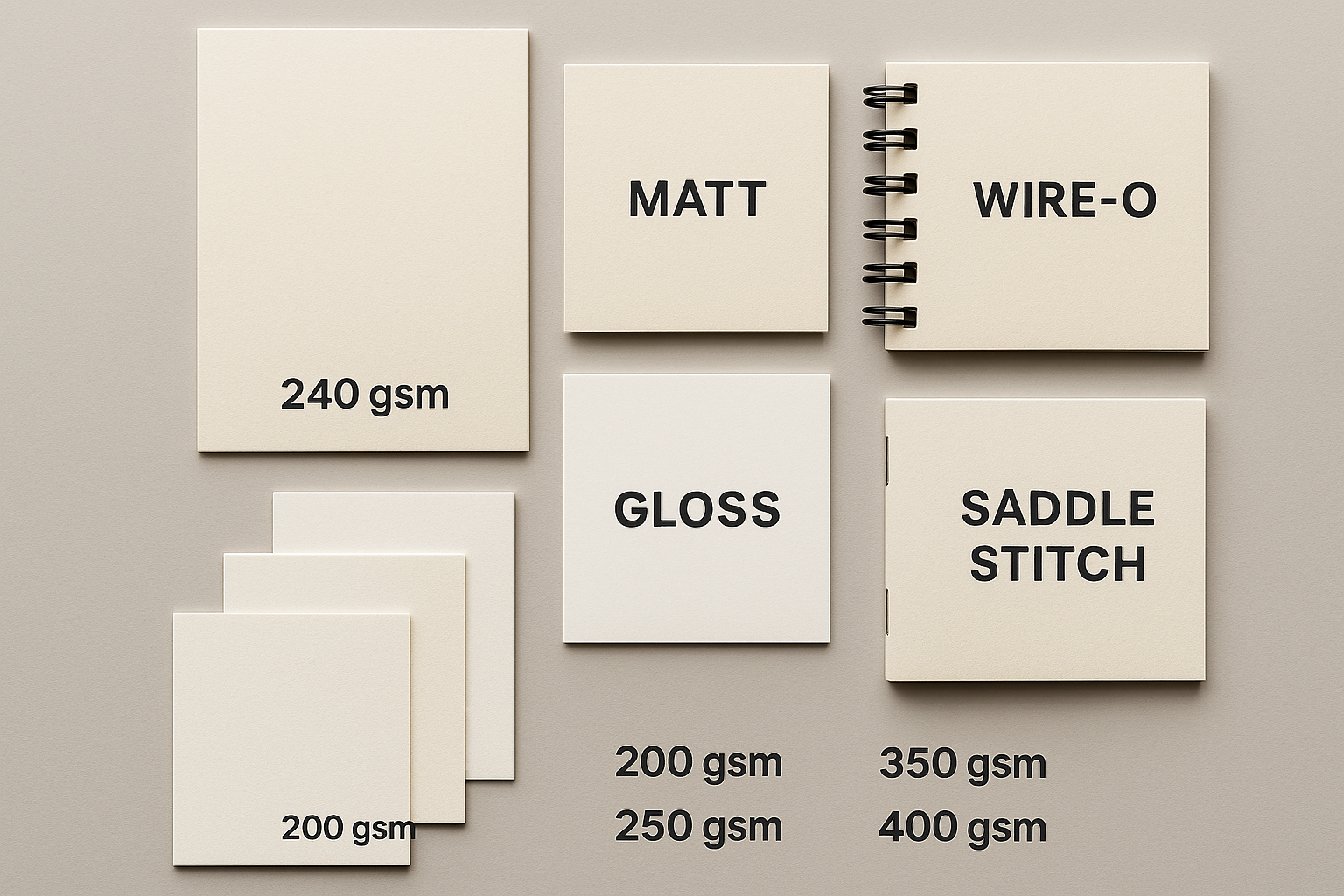
- Saddle stitch — ideal for up to ~80 pages; economical and lies fairly flat for thin guides.
- Perfect binding — suitable for thicker guides and full-colour teacher editions; professional finish but less flat.
- Spiral or wire-o — excellent for revision books because they open fully and remain flat for writing.
- Comb binding — cost-effective for modular study packs and allows easy page replacement.
For bulk educational printing for schools across South Africa, spiral/wire-o, pur binding and saddle stitch are often preferred due to their combination of durability and learner-friendliness. When choosing, consider classroom handling, expected lifespan (one term, year, or multi-year), and whether pages will be photocopied. For bespoke booklet options, our booklet printing services cover short runs through high-volume litho runs: booklet-printing.
Which paper types should I choose for Print Study Guides?
Paper choice influences readability, cost, weight and environmental impact. The common options are:
| Paper Type | Typical Use | Pros | Cons |
| 80–90 gsm uncoated | Text-heavy student guides | Readable, cost-effective | Less photographic quality |
| 120–130 gsm coated (silk/gloss) | Teacher editions, image-rich pages | Good reproduction, durable | Higher cost, glare on glossy |
| 200–300 gsm cover stock | Covers and heavy-use pages | Sturdy, protects internals | Adds bulk/weight |
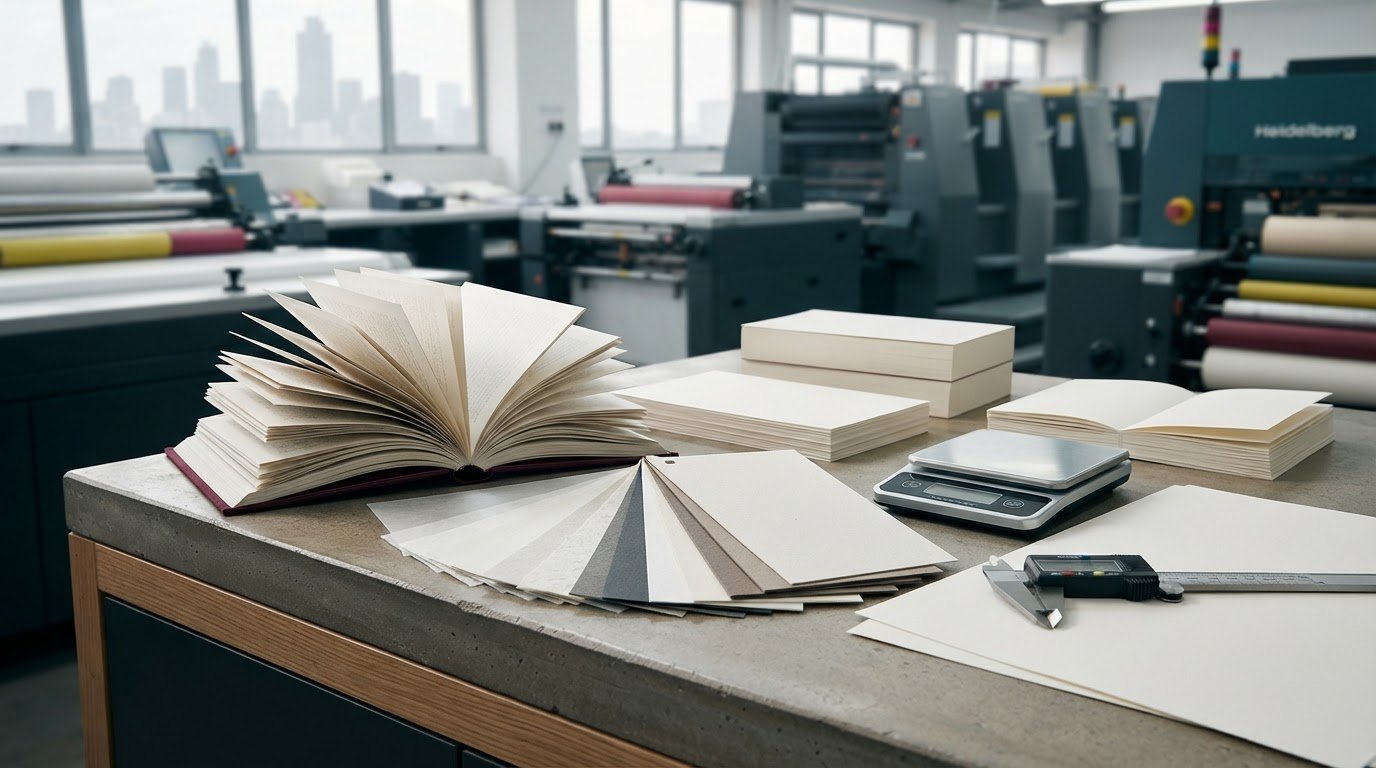
According to ISO 536, paper weight is measured in grams per square metre (gsm), which helps you compare options consistently. For most Print Study Guides aimed at daily classroom use, 90 gsm uncoated text stock with a 200–300 gsm cover balances durability and portability. If you expect heavy illustrations or full-colour pages, upgrade the image sections to 120–130 gsm coated stock to preserve image fidelity without making the whole guide too heavy.
How do layout, binding and paper impact cost and durability for bulk educational printing in South Africa?
Balancing cost and durability is central to commercial printing for schools. Bulk runs lower per-unit cost but require upfront investment, while print-on-demand saves cash but increases unit cost. Key levers to control cost:
- Choose saddle stitch for thin guides; it’s cheaper than perfect binding.
- Standardise on one text stock (e.g., 90 gsm) and only upgrade for image-heavy sections.
- Plan print runs around school terms to reduce rush fees and freight costs.
According to local industry practice, ordering ahead of term start typically saves 15–30% compared with late, fast-turnaround jobs. For fast turnaround or smaller batches, print-on-demand and short-run digital printing are viable. Our catalogue printing and education printing teams can advise tailored quotes and delivery across South Africa: education-printing and catalogue-printing.
What custom finishes and print options enhance usability for students?
Finishes can raise perceived value and function. For Print Study Guides, consider these finishes:
- Matt laminate — reduces glare and protects covers.
- Spot UV — for durable, tactile highlights (use sparingly to avoid distraction).
- Perforation — for tear-out worksheets or revision strips.
- Colour coding — different spine colours for subjects to support quick sorting.
Finishes should always improve function: a matt laminate reduces scuffing in school bags, while perforations allow teachers to hand out worksheets without damaging the core guide. For schools planning event promotions or sample guides, brochure printing finishes can demonstrate options before committing to large runs: brochure-printing-services.
How can I prepare files and artwork to get fast turnarounds?
Efficient file preparation speeds production and reduces errors. Use these best practices to speed printing:
- Export final PDFs with crop marks and 3 mm bleed, embedded fonts and CMYK colour profile.
- Outline fonts when possible and provide image resolution at 300 dpi for print pages and large posters.
- Provide a clear pagination list and indicate sections for different paper stocks or finishes.
Many commercial printers in South Africa accept package
What eco-friendly choices are available when printing study guides?
Eco options are important for schools and organisations mindful of sustainability. Common green choices include:
- FSC-certified paper or recycled paper stocks to reduce virgin fibre use.
- Eco Inks for safer indoor air quality in classrooms.
- Print-on-demand to limit overprinting and wasteful pulping of obsolete editions.
Choosing recycled or responsibly sourced paper will slightly alter paper texture and print behaviour; discuss proofs with your printer. Many South African printers now offer eco ink options and recycling programmes for print waste — a practical way to align procurement with school sustainability policies. According to environmental reporting by industry groups, choosing recycled papers can reduce energy use and water consumption during production compared with virgin fiber paper.
How do I design study guides for different learner stages (primary, secondary, tertiary)?
Different ages demand different approaches to layout, binding, and content chunking:
- Primary: larger fonts, bright but restrained colours, heavy use of illustrations and laminated covers for durability. Binding that lies flat (spiral) helps young learners and teachers.
- Secondary: denser content, clear sectioning, exercise pages and quick-reference summaries. Consider perforated worksheets and exam-style practice sections.
- Tertiary: compact, high-density notes, citations, and professional finishes; perfect binding is acceptable for thicker subject compendiums.
Matching design to developmental needs helps learning outcomes and increases reuse. For projects that mix formats — e.g., student guide + teacher notes — modular binding or separate teacher editions printed on heavier stock is often the best approach. Explore our books and training-manual printing pages to see examples and recommended specs: books-printing and training-manual-printing.
How can I test readability and learning effectiveness before a full print run?
Pilot testing prevents costly reprints. A small-scale print proof or digital PDF review with a sample of teachers and students identifies layout issues, confusing navigation, font-size problems and colour contrast issues. Steps to test effectively:
- Create a two- or three-chapter specimen of a Print Study Guide including cover and representative pages.
- Run readability checks: measure average reading speed, comprehension of a short quiz and time to find a topic using the index.
- Collect qualitative feedback about handling: does the guide stay open? Are margins sufficient for notes?
According to educational design research, small iterative changes to layout and content often yield outsized improvements in comprehension and retention. Pilot runs also let you test actual print finishes and binding for classroom handling before committing to a larger bulk educational printing order.

How do I choose a commercial printer in South Africa for Print Study Guides?
Selecting the right printer involves capability, experience, and logistics. Key questions to ask prospective printers:
- Do you have experience with bulk educational printing and school textbook printing?
- What binding and finishing options do you offer in-house?
- Can you handle mixed-paper jobs and multiple delivery points across South Africa?
- What are lead times, proofing protocols and quality guarantees?
Look for printers that combine litho and digital printing flexibility, offer print-on-demand for smaller reorders, and have transparent delivery and warehousing solutions. For reference, our education-printing, textbook-printing and catalogue-printing services support schools, publishers and organisations across South Africa with fast turnaround printing and distribution: education-printing, textbook-printing, catalogue-printing.
What logistics should I plan for: proofs, delivery, and print-on-demand?
Good logistics reduce stress in the run-up to term starts and exams. Standard logistics checklist:
- Approve a press proof (or PDF proof for short runs) before bulk printing.
- Schedule production at least 4–6 weeks before term start for large runs; 1–2 weeks for short-run digital jobs.
- Confirm delivery windows and warehousing options if you need staged shipments across provinces.
Print-on-demand is ideal for supplements and late updates; it eliminates warehousing and reduces waste. For high-volume core guides, bulk runs combined with regional distribution are more cost-effective. If you need graphic-ready templates, consider using professional layout support and the booklet-printing services to match pagination and binding expectations: booklet-printing.
Final checklist: essentials before you send Print Study Guides to print
Before you hit publish or submit to the press, run through this condensed pre-press checklist:
- Final proof approved (PDF or press proof).
- Fonts embedded or outlined; images at 300 dpi; colour in CMYK.
- Bleed and crop marks applied; correct page order and binding allowance.
- Paper stocks and finishes specified for text and covers.
- Delivery dates and quantities confirmed for all distribution points across South Africa.
Print Study Guides that are designed with students and teachers in mind — clear layout, practical binding and fit-for-purpose paper — will be used more often and last longer. For a deeper dive into print processes and historic context, see the printing overview on Wikipedia: Printing.
Contact Print It ZA today, for a Free Quote and Speedy Service.
Print It ZA, we deliver Printing Best!