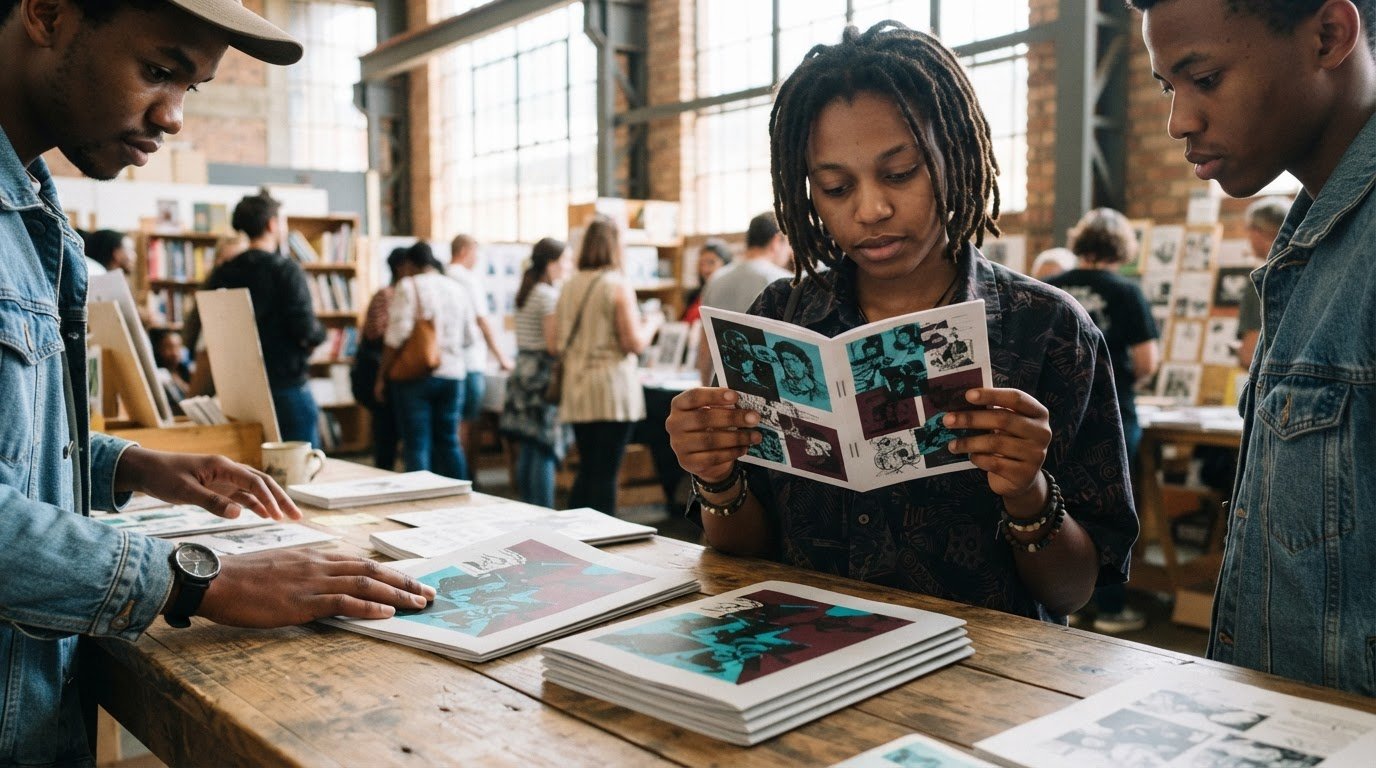
The neatest-looking zine format isn’t automatically the right one. A pocket-sized edition can feel intimate, while a larger booklet gives artwork and writing more room. If you’re planning zine printing Johannesburg, start with what the zine needs to do, then choose a format and finish that support its content and intended use.
It’s normal to be unsure about format, paper, colour and binding, especially while preparing artwork and requesting a quote. This guide compares the key decisions, from page size and paper feel to finishes and file preparation, so you can build a clear project brief and move towards a professionally printed result.
You’ll also see how Booklet Printing, Book Printing and Spiral Binding can suit different projects. Print It ZA serves Johannesburg and delivers across South Africa. We do not outsource design recommendations, printing, or binding. By the end, you’ll have a clearer idea of what to specify and how to take the next step with a local print partner.
Key Takeaways
- Match your zine’s format to its purpose, audience and how readers will receive it.
- Use page size in mm, page count, orientation and content flow to shape a clear print brief.
- Compare paper, colour, binding and litho or digital printing based on your artwork and intended use.
- For zine printing Johannesburg, prepare your quantity, page count and print preferences before requesting a quote.
- Print It ZA handles design recommendations, printing and binding in-house, with free delivery for orders up to 90 kg.
Planning zine printing in Johannesburg: define the project before choosing a format
Before settling on paper or binding, decide what your zine needs to communicate and how readers will encounter it. A zine is a self-directed printed publication, often created to share ideas, art or stories outside conventional publishing routes. It can be personal, collaborative or promotional, with no required size, page count or visual style. For more background, explore the traditional definition and history of zines.
Creative freedom doesn’t have to make production feel vague. A clear print brief can preserve the character of your idea while giving the printer useful information to plan around. Start with the reader’s experience, then choose a format and finish to support it.
What makes a zine different from a standard book?
A conventional book often follows familiar publishing expectations, while a zine gives its creator more room to experiment with subject, layout and voice. A zine doesn’t have to look handmade or follow a particular visual trend, though. The right print approach depends on what you’ve made and what you want readers to feel as they move through it.
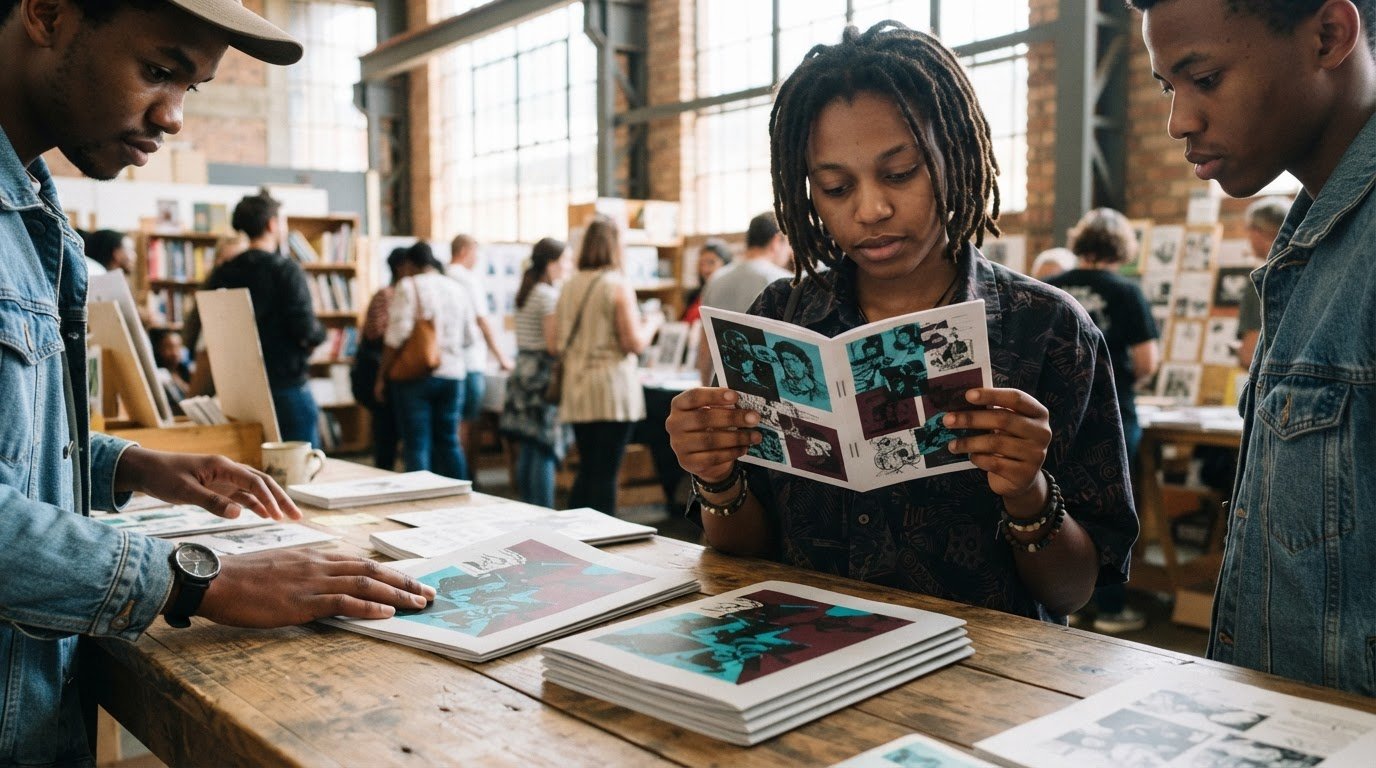
A zine built around short writing may need a comfortable reading flow, while a photography or illustration project may rely on generous image space and clear colour reproduction. A mixed-media publication might alternate between text, photographs and artwork. Consider whether readers should browse quickly, study each image or keep the zine as part of a collection. Let those goals, rather than a fixed template, guide your print choices.
Start with the reader and the way the zine will be shared
Picture who you’re making the zine for and where they’ll read or receive it. A personal project shared with friends may need a different feel from a publication created by a group, organisation or business. Will readers pick it up at an event, receive it directly or keep it on a shelf? These settings can influence how portable, durable or polished the finished piece should feel.
Use these prompts to turn the idea into a practical starting brief:
- Purpose: What should the zine express, explain or promote?
- Audience: Who do you expect to read it, and what will interest them?
- Content: Is it mainly writing, artwork, photography or a mix?
- Distribution: How will readers get a copy, and where might they read it?
- Reading experience: Should it feel lightweight and easy to handle, or more substantial?
A zine’s purpose and reading setting should guide its format and finishing choices. Keep that principle at the centre of your planning. It turns a creative vision into a brief that supports a useful quote without forcing the project into a standard template. For zine printing Johannesburg creators can discuss Booklet Printing or Book Printing with Print It ZA, serving customers in Johannesburg, Gauteng and across South Africa.
Zine format and design choices: shape the pages around your content
With the project’s purpose in view, turn the idea into a page plan. Booklet Printing and Book Printing are useful categories to consider, but neither is automatically right for every zine. A compact publication for casual browsing may call for a different structure from a substantial anthology that readers will revisit or display. Let the project requirements, not assumptions about what a zine should look like, guide the format.
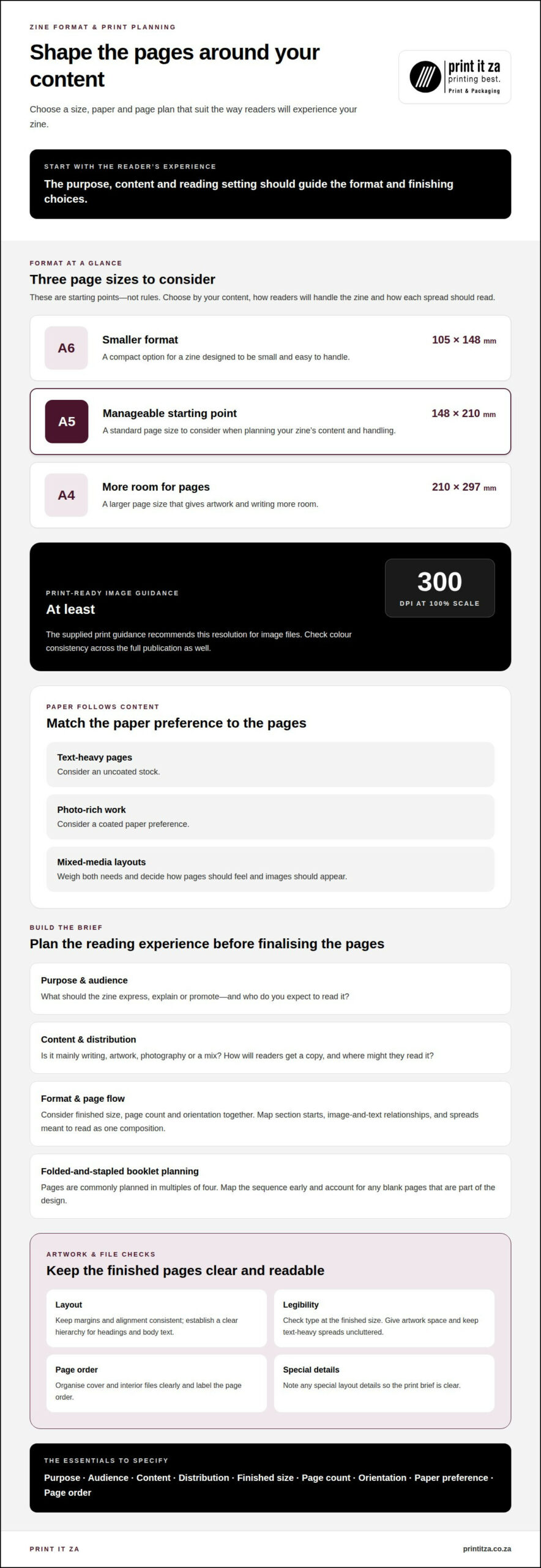
Consider finished size in millimetres (mm), page count and orientation together. A5 measures 148 mm × 210 mm and can be a manageable starting point; A4 at 210 mm × 297 mm gives pages more room, while A6 at 105 mm × 148 mm creates a smaller format. These are standard page sizes, not rules. Choose according to your content, how readers will handle the zine and how each spread should read. For more ideas about format and structure, consult Barnard College’s guide to zine basics.
Choose a format that supports the way readers use the zine
Consider how the finished piece will be held, opened and shared. A booklet-style project can suit a concise sequence of text, illustrations or photographs. A book format may better support a longer collection or a publication with a more substantial presence. If people will handle it repeatedly, think about how the cover and binding will suit that use. These are design considerations, not fixed size or page-count limits.
Plan the content order before finalising the page count. Mark where sections begin, how images relate to nearby text, and whether a spread should be read as one composition. Folded-and-stapled booklet pages are commonly planned in multiples of four, so map the full sequence early and account for any blank pages that are part of your design.
Prepare readable artwork for print
Good layout makes creative work easier to enjoy. Keep margins and alignment consistent, establish a clear hierarchy for headings and body text, and check that type remains legible at the finished size. Image-led pages may need space around the artwork, while text-heavy spreads benefit from comfortable line lengths and uncluttered layouts. For image files, the supplied print guidance recommends at least 300 DPI at 100% scale; check colour consistency across the full publication as well.
Paper is part of the design. Text-heavy pages may lead you to consider an uncoated stock, while photo-rich work may call for a coated paper preference. Mixed-media layouts can involve both needs, so decide how the pages should feel and how images should appear before settling the specification.
Organise cover and interior files clearly, label the page order, and note any special layout details. This gives design recommendations and quote preparation a useful starting point. For zine printing Johannesburg, bring these choices together while discussing your zine’s print specification with Print It ZA.
Compare zine printing options: paper, colour, binding and print method
Paper, colour, binding and print method work together. A photo essay with full-colour spreads has different needs from a text-led zine with a restrained palette. Use the comparison below to organise your preferences, rather than as a fixed recipe. The best print method depends on the complete project specification.
Text-led edition
Quantity: Record the number of copies you need. Artwork: Note whether pages are mainly text or include occasional images. Paper preference: Uncoated paper can suit a tactile, understated presentation; interior stocks around 80 gsm to 115 gsm are commonly used for text. Colour: Specify whether the cover, interior or both use colour. Intended use: Consider how to make the zine comfortable to handle and read.
Photo or illustration-led edition
Quantity: Include your planned copy count. Artwork: Identify image-heavy pages, full-colour spreads and important visual sequences. Paper preference: Art paper around 115 gsm to 135 gsm is commonly used for photo-heavy interiors. Colour: State which pages need colour and whether consistency across the publication matters. Intended use: Think about how the finished images should look and feel in readers’ hands.
Mixed-media or frequently handled edition
Quantity: Add the quantity to your project details. Artwork: Flag shifts between writing, photographs and artwork. Paper preference: You might prefer a tactile interior with a more substantial cover; cover stocks around 170 gsm to 250 gsm are common. Colour: Separate colour requirements for cover and interior. Intended use: Describe how readers will open, browse and keep the zine.
How to discuss litho and digital printing for a zine
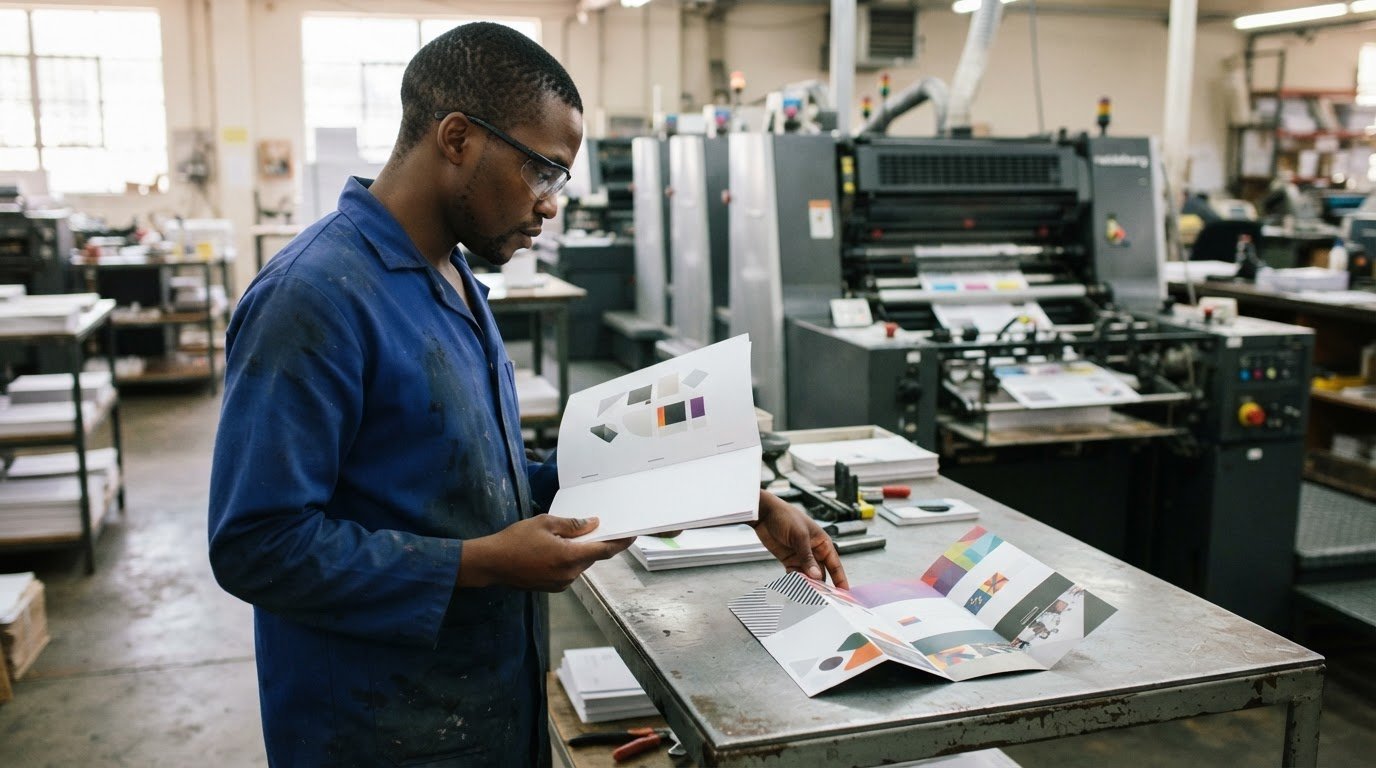
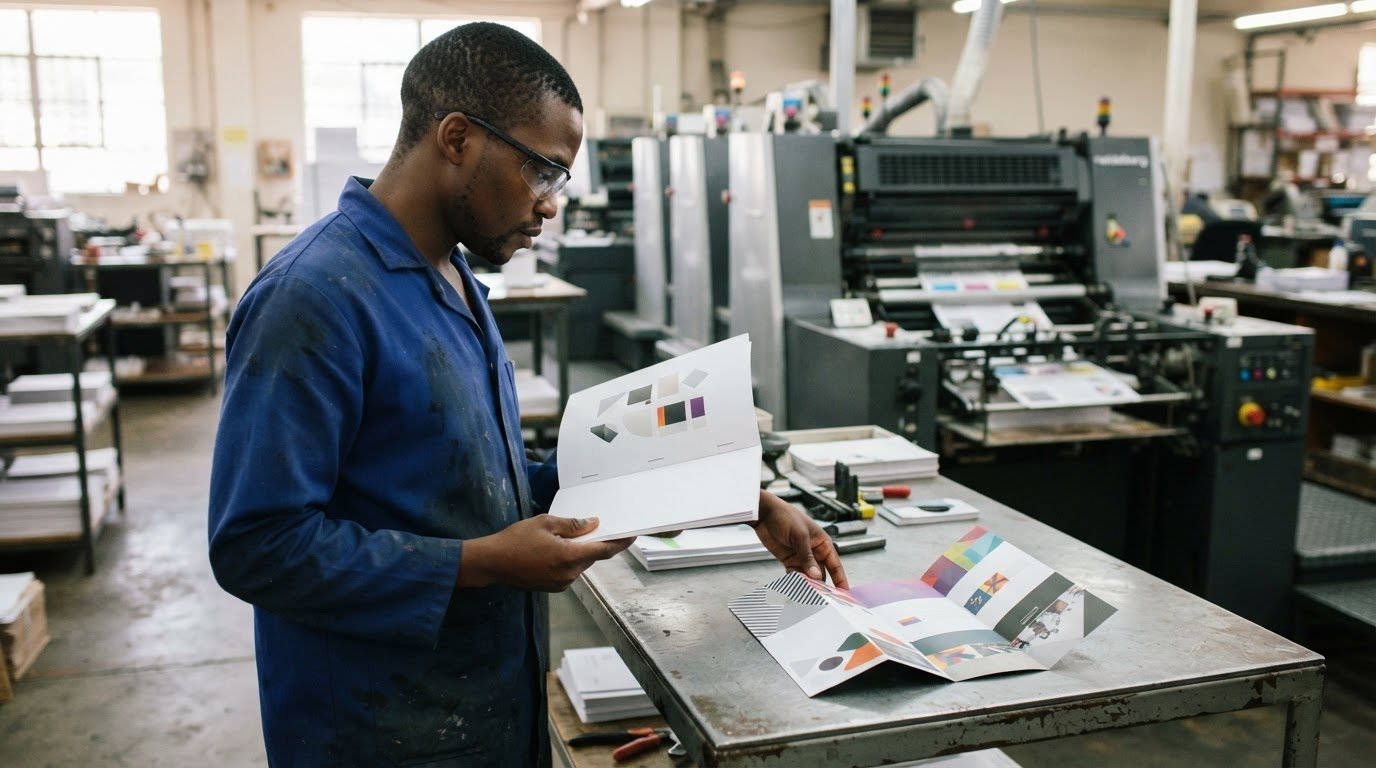
Print It ZA offers both litho and digital printing. Neither method is the universal choice for every project. Share your copy quantity, artwork, colour requirements, preferred paper and finish so the recommendation can reflect your actual brief. These details give the quote process a practical basis without relying on assumed run-size rules.
Select paper, colour and binding for the intended use
Choose paper based on the look and handling you want. Uncoated stock can support a natural, tactile feel; coated art paper can suit image-led pages. A cover can be specified separately to create a distinct first impression or a more substantial feel. State colour needs clearly for both cover and interior, including any pages that should remain black and white. Print artwork is generally prepared in CMYK, so include your colour expectations in the brief.
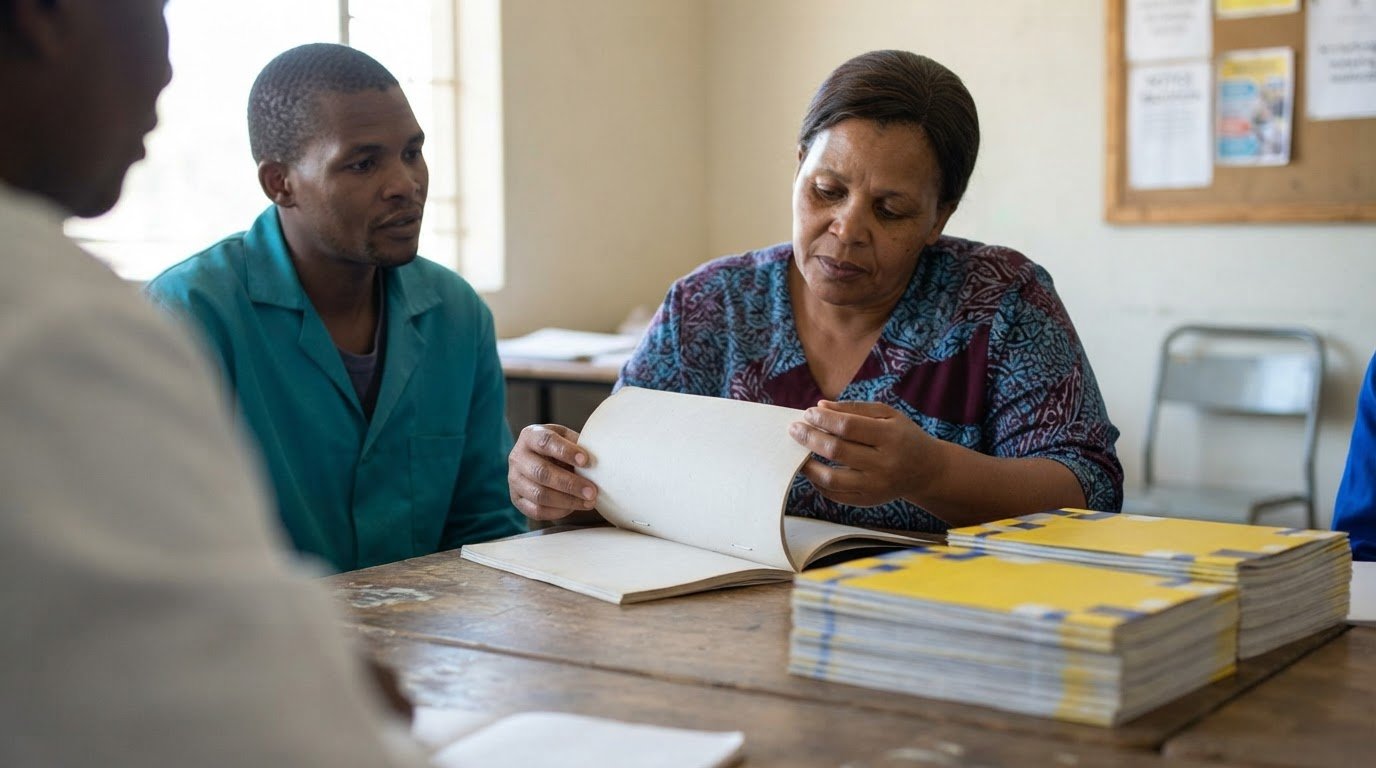
Binding affects how the publication opens and is handled. Discuss the planned format and page sequence alongside the finish. Spiral Binding is available for zine projects. For zine printing Johannesburg, give Print It ZA your full specification so paper, colour, binding and print method can be considered together.
Prepare a zine print brief in Johannesburg and request an accurate quote
A useful quote starts with a clear picture of the finished zine. You don’t need to have every production detail decided, but explain the project, share the artwork you have and identify the choices where you’d like guidance. This gives the team a practical basis for discussing format, materials and production.
What information helps make a zine quote useful?
Work through the brief in sequence: define the zine’s purpose, organise the artwork, record the specifications, then request a quote. Include the audience and how you plan to share the publication. A personal creative project, a group publication and an organisation’s promotional zine can have different requirements, even when they use a similar format.
Gather these details before you submit a request:
- Format: State the preferred finished size in mm and whether you’re considering Booklet Printing or Book Printing.
- Quantity: Provide the number of copies you’re planning.
- Page count: Give the total and indicate whether it includes the cover.
- Colour: Explain which parts of the cover and interior need colour.
- Paper preference: Describe the look and feel you want, such as tactile pages or a more image-focused presentation.
- Binding and finish: Note your preference and any finishing details that matter to the project.
- Artwork: Organise cover and interior files clearly, and mention whether you need design recommendations.
If a detail is still open, say so and describe the result you’re aiming for. For example, you may have completed artwork but want guidance on a paper choice that suits both photographs and text. A clear question is more useful than guessing a specification and building it into the brief.
Print It ZA offers a quick online quote process, and you can also request a quote by phone at (010) 446 5618. For zine printing Johannesburg projects, sharing the complete brief and available artwork helps the team understand what you want produced. If you’re still weighing up production choices, the professional printing services guide provides broader context on print services.
Plan delivery for Johannesburg and elsewhere in South Africa
Include the delivery destination in your project details. Print It ZA serves Johannesburg and delivers anywhere in South Africa, so your print brief can cover a local destination or another location in the country. Orders qualify for free delivery for orders up to 90 kg.
Ready to move from planning to production? Request a quote for your zine printing project with your format, quantity, artwork and preferences in hand.
Print your Johannesburg zine in-house with Print It ZA
Your zine’s creative direction deserves production decisions that support it from the first brief to the finished pages. Print It ZA offers Booklet Printing and Book Printing as relevant categories for discussing your project. The right direction depends on the format, artwork, quantity, paper, colour and binding requirements you set out.
Print It ZA owns its factory, ensuring there are no middlemen to add extra costs. That gives you a direct production partner for your zine. We do not outsource design recommendations, printing, or binding. Keeping these stages in-house connects design decisions with production requirements rather than treating each as a separate conversation.
From project idea to finished printed zine
Share your brief and artwork, then describe how you want the finished publication to look and feel. If you’re deciding between a booklet and a book format, or need guidance on paper and binding, include those questions with your project details. Design recommendations can connect your creative aims to practical print choices, while the agreed specification guides printing and binding.
That continuity matters for a zine: a change to page size or binding can affect how artwork sits on the page and how the publication feels in the reader’s hands. Discussing the whole project makes it easier to consider those details together. For more context on selecting book formats, see this guide to printing books in Johannesburg.
Request a quote for your zine printing project
To get started, prepare your preferred format, quantity, page count, colour requirements, paper preference and binding choice. Include the cover and interior artwork if it’s ready, and mention any areas where you’d value design recommendations. If some specifications are undecided, explain the outcome you want so the project can be discussed with the full brief in mind.
For zine printing Johannesburg, submit your project details through the online contact form or call (010) 446 5618. Print It ZA serves Johannesburg and customers across South Africa. You can also explore this Johannesburg print shop guide for further local printing context.
Ready to move your idea towards print? Request a quote for your zine project and share the details that will help shape a professionally produced result.
Take your zine from idea to print-ready
Think of this edition as the starting point for what your zine could become. A well-planned first print run gives you a foundation for future issues, new contributors or a different creative direction. Keep your final artwork and agreed specifications together so you can build on the project as it develops.
With zine printing Johannesburg, the next step is to bring the concept and production details into one conversation. You don’t need every creative decision locked in. A clear sense of the result you want gives the team a useful starting point and helps turn your ideas into a practical print project.
Print It ZA owns its factory, ensuring there are no middlemen to add extra costs. Orders qualify for free delivery for orders up to 90 kg.
Request a quote for your zine printing project and take the next step towards a printed edition that feels true to your vision.
Frequently Asked Questions
What is the best format for zine printing?
The best format depends on how your content should be read and handled. A short, easily browsed issue may work well as a booklet, while a collection with a longer sequence of pieces may call for Book Printing. Before settling on either, make a simple page mock-up and test how a reader moves through it. For zine printing Johannesburg, match that experience to the format in your print brief.
Can I print a zine as a booklet in Johannesburg?
Yes. Booklet Printing is a suitable option to discuss for a zine that brings its pages together in a compact, booklet-style publication. A poetry issue, for example, could place each poem and its accompanying artwork in a clear reading sequence, while a community publication might organise contributors into sections. Share your planned page order and intended use so the finished booklet reflects how you want people to read it.
How do I prepare artwork for zine printing?
Prepare and proof the complete publication as a reader would see it, rather than checking pages only as separate designs. Review spelling, page order, image placement and consistency in headings, then inspect the cover and interior at the intended finished size. Keep artwork files organised so the cover is easy to distinguish from the inside pages. If a layout decision needs guidance, include the question with your request for design recommendations.
Which is better for zines, litho or digital printing?
Neither litho nor digital printing is automatically better for every zine. The useful comparison is how each method suits your stated quantity, artwork and desired finish. To make a quote discussion clearer, describe the same project requirements for both possibilities rather than comparing unlike specifications. A colour-heavy art edition and a text-led publication, for instance, may prompt different production discussions even if their page counts are similar.
Can Print It ZA deliver zines in Johannesburg?
Yes, Print It ZA delivers printed projects in Johannesburg and anywhere in South Africa. Include the full delivery address and any practical instructions for the destination with your project details. If someone other than the person requesting the quote will receive the order, include their relevant contact information too. Orders qualify for free delivery for orders up to 90 kg.
How do I request a quote for zine printing?
Request a quote through Print It ZA’s online contact form or call (010) 446 5618. Give a short description of the zine and share the artwork if it’s ready. If parts of the specification are undecided, identify them clearly and explain the result you’re aiming for. That helps keep the discussion focused on your project instead of assumptions about its format, materials or finish.