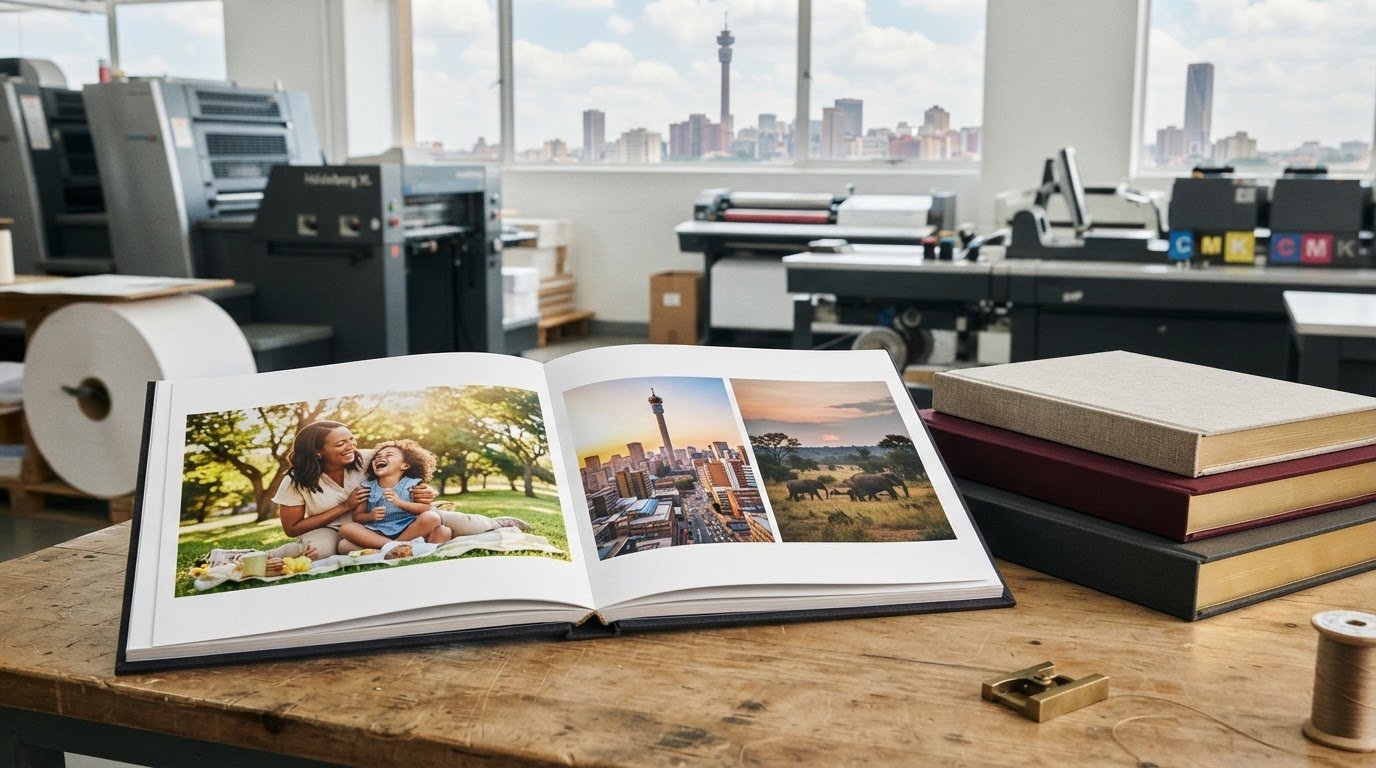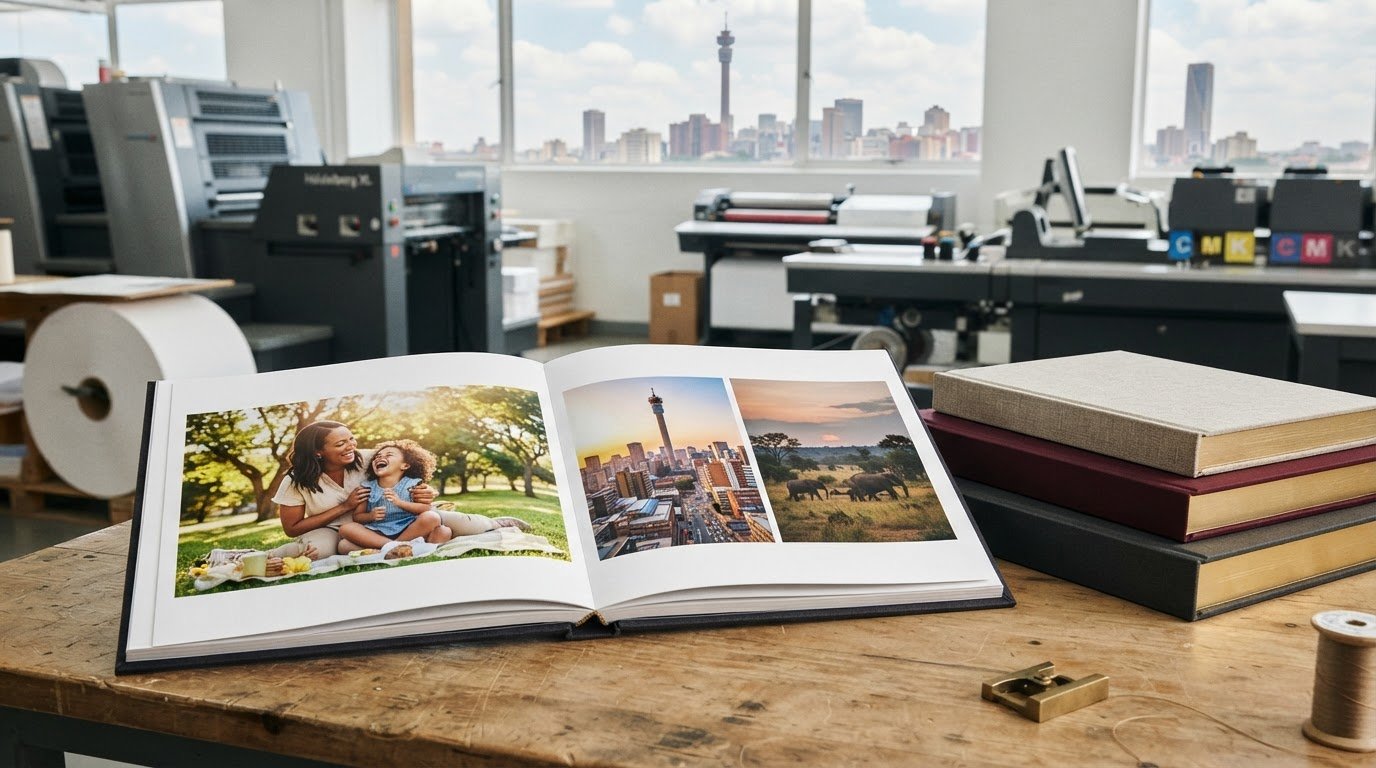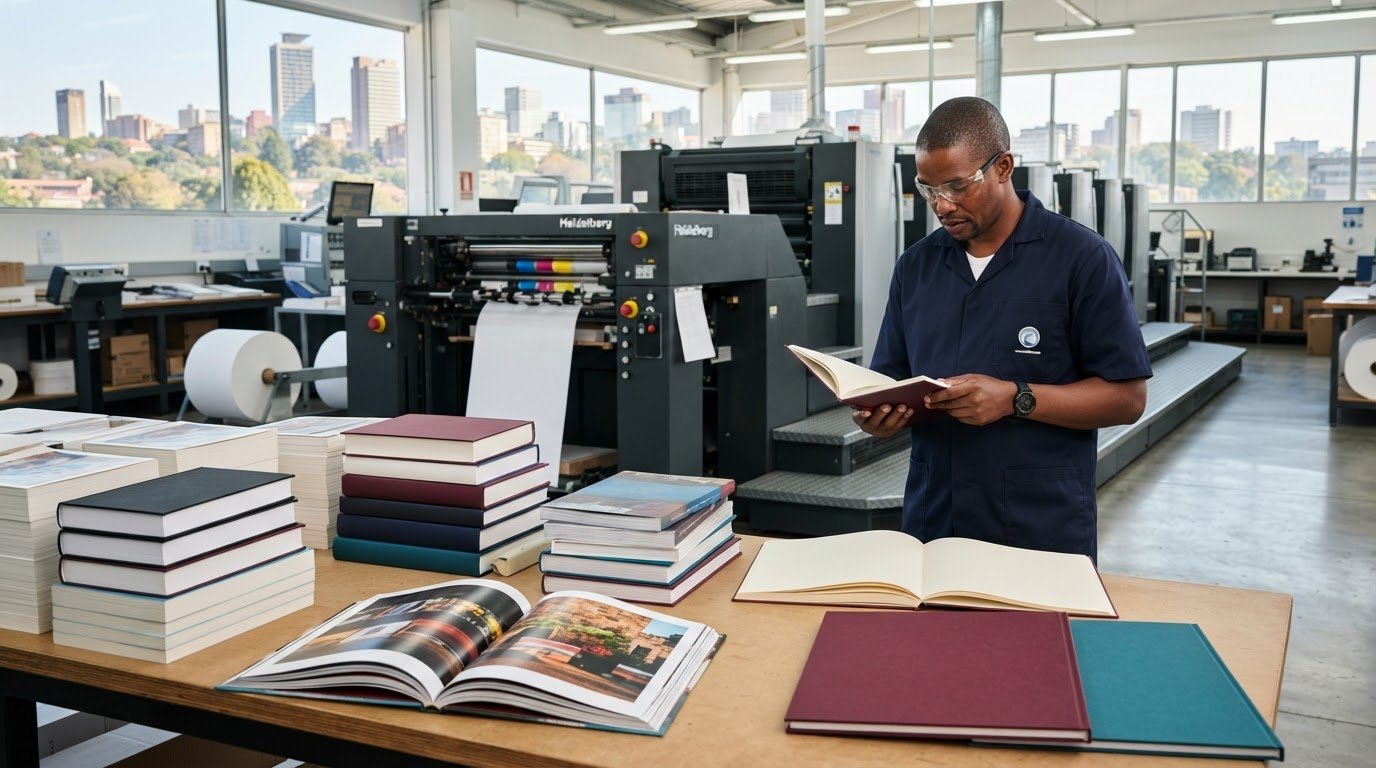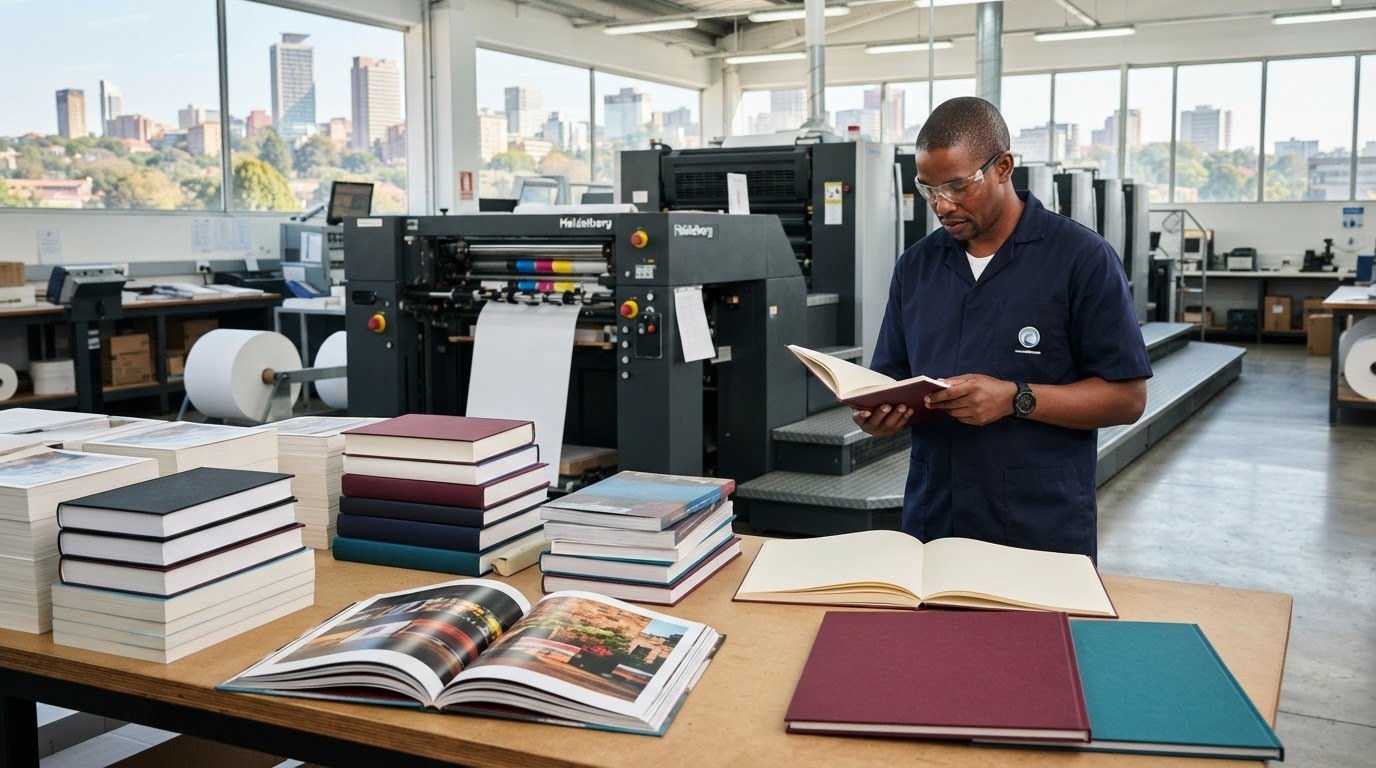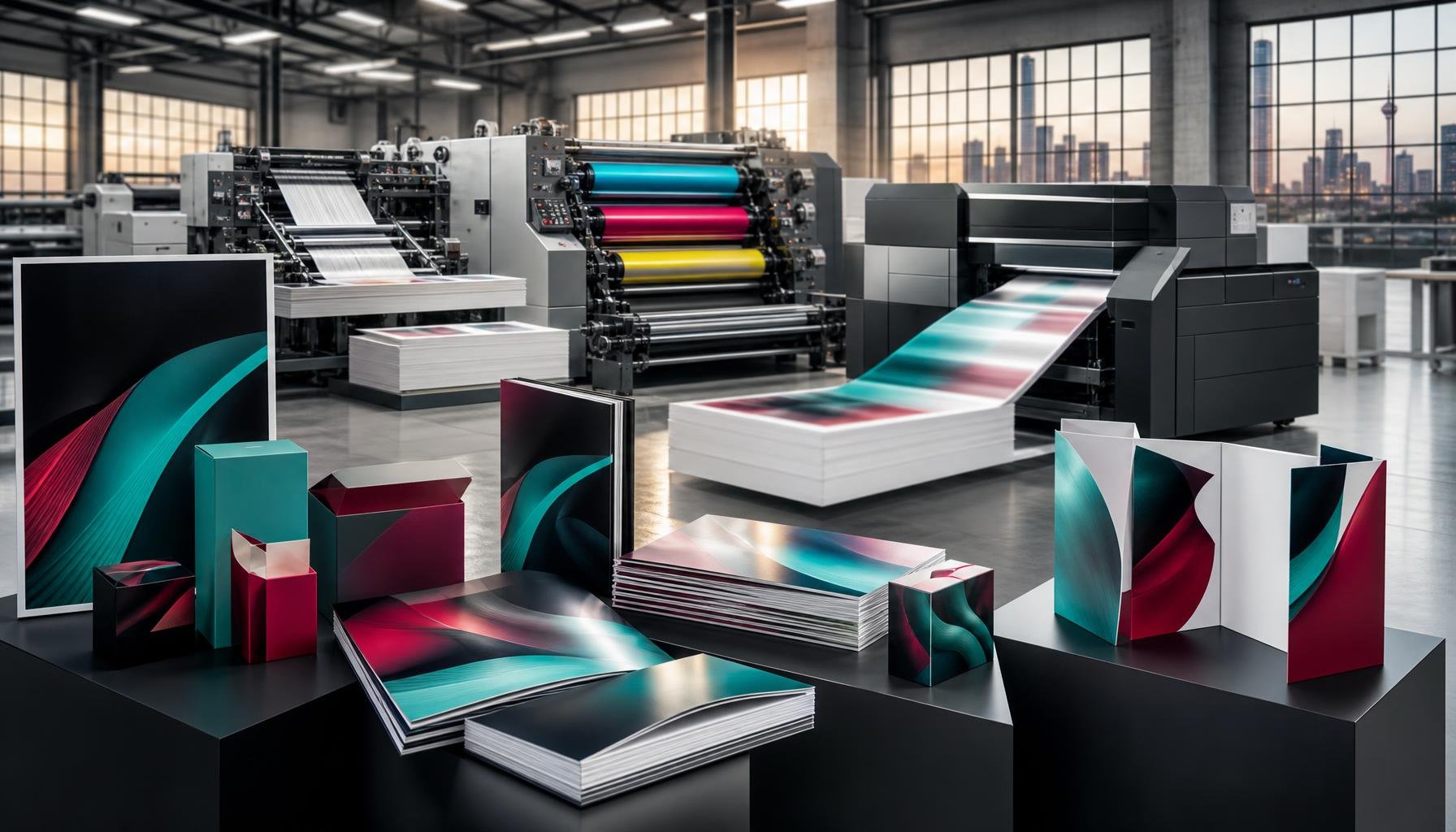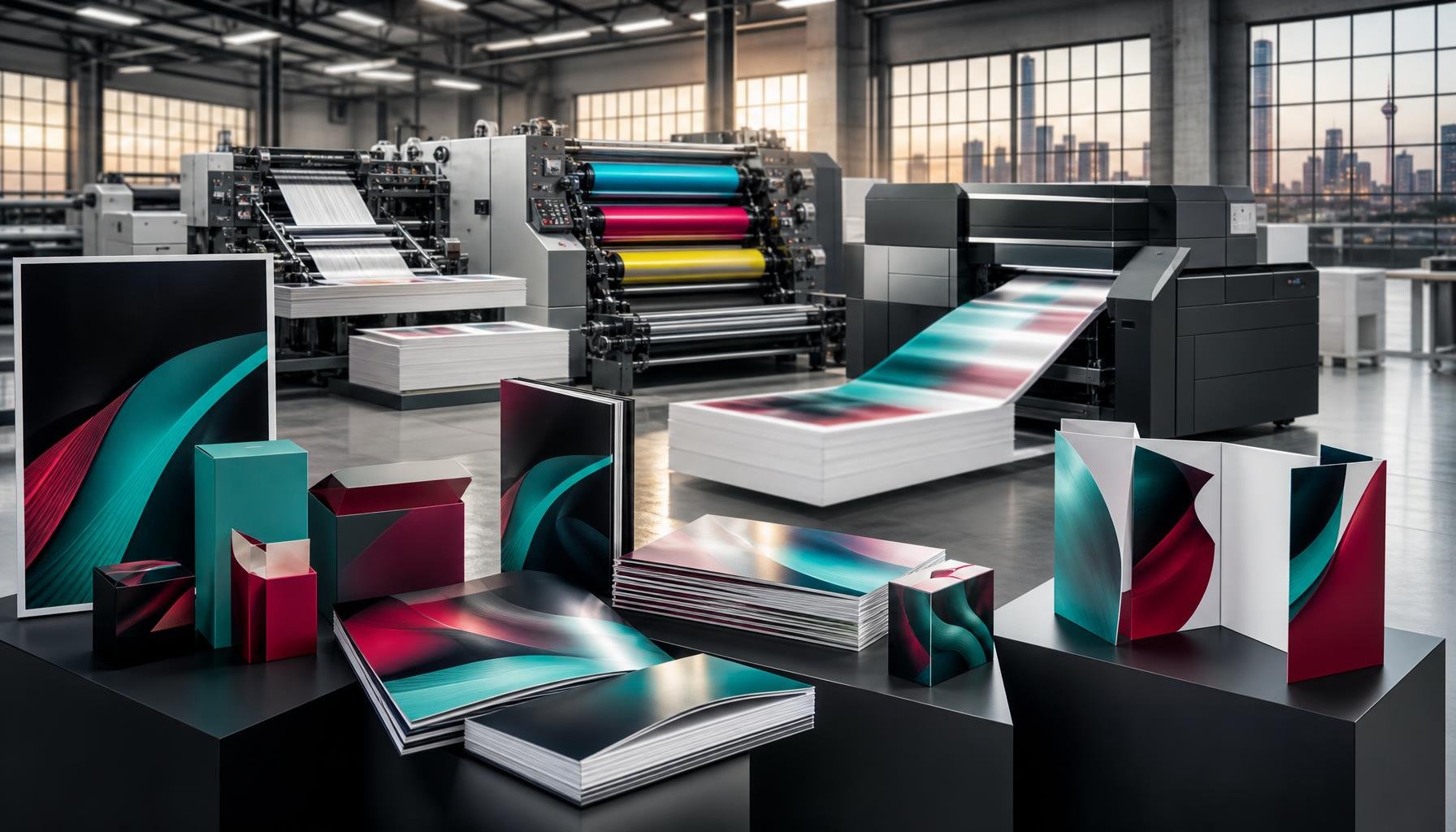

Book printing and binding turn pages and ideas into a finished product people can hold, read, use, and keep. Although digital formats are common, printed books still matter because they offer structure, permanence, and a more focused reading experience. As a result, authors, schools, publishers, training providers, and businesses still rely on professional book printing and binding for everything from novels and textbooks to manuals, guides, and branded publications.In South Africa, book printing and binding cover a wide range of formats and production methods. Some books need an affordable softcover finish. Others need a stronger premium hardcover format. Meanwhile, some projects need durable training manuals or educational books built for repeated use. Because of that, this topic connects directly with books printing, graphic design services, booklet printing, textbook printing, training manual printing, and binding-related services such as perfect binding, PUR binding, case binding, spiral binding, and wiro binding.
What is book printing and binding?
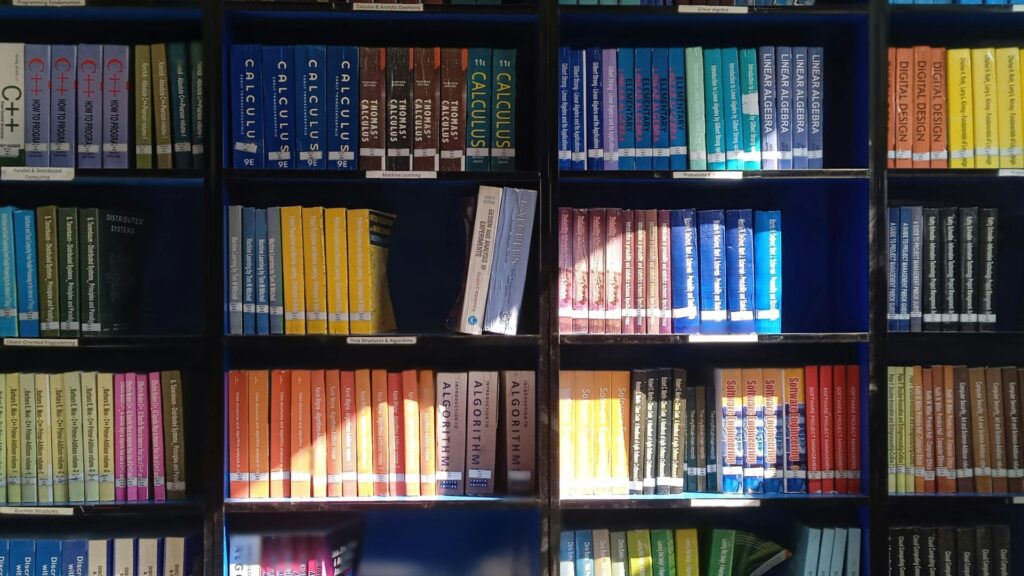
Book printing is the process of producing the inside pages and cover of a book, while binding is the process that brings those printed parts together into a finished format. In simple terms, printing creates the book components, and binding turns those components into a usable product.
Because of that, printing and binding always work together. First, the pages and cover need to be printed correctly. Then, the right binding method needs to match the page count, format, and purpose of the book. Therefore, the final quality depends on both stages, not only one of them.
Why do book printing and binding still matter?
Book printing and binding still matter because a printed book offers something digital content often does not. First, it gives readers a physical format that feels focused and practical. Then, it helps organisations produce material that is easier to distribute, file, annotate, and use in real environments. After that, strong binding improves durability and helps the book hold up over time. Consequently, print still plays an important role in publishing, education, business, and training.
That matters even more when the book needs to support long-term use, classroom learning, staff training, sales presentations, or premium publication goals.
| Why Book Printing and Binding Matter | How They Help |
| Physical usability | Gives readers something practical to hold and use |
| Professional presentation | Makes the content feel more credible and complete |
| Better durability | Helps the book last through repeated handling |
| Flexible formats | Supports different goals from novels to manuals |
| Long-term value | Keeps content accessible over time |
What types of books can be printed and bound?
Book printing and binding support many different use cases. Some projects are commercial books for readers. Others are practical books for study, training, or internal use. Because of that, the right print and binding approach depends on the type of content and how people will use it.
| Book Type | Typical Use |
| Novels and general books | Commercial reading and self-publishing |
| Textbooks | Education and structured subject learning |
| Training manuals | Workplace learning and guided instruction |
| Religious books | Long-term reading and repeated use |
| Branded books | Corporate publishing and premium presentations |
| Reference books | Frequent consultation and durable use |
So, if the project is educational, textbook printing may be the stronger fit. On the other hand, if the project supports skills development or workplace learning, training manual printing may make more sense.
What are the main types of book binding?
The main types of book binding each suit different needs. For example, some methods support premium publishing, while others focus on affordability, strength, or ease of use. Therefore, the right binding depends on the page count, the purpose of the book, and the way the reader will handle it.
| Binding Type | Best For | Main Advantage |
| Perfect binding | Paperback books and standard softcover projects | Creates a clean square spine |
| PUR binding | Books needing stronger adhesive performance | Offers improved durability and flexibility |
| Case binding | Hardcover books | Creates a rigid premium finish |
| Saddle stitch | Shorter multi-page booklets | Cost-effective for lower page counts |
| Spiral binding | Manuals and workbooks | Opens easily and lies flatter |
| Wiro binding | Presentations, guides, and desk-use books | Supports practical open-flat use |
If the project is shorter and does not need a true book format, then booklet printing may be more practical than full book production.

How do you choose the right binding method?
You should choose the binding method based on how the book will be used. First, consider the page count. Then, think about how often readers will handle the book. After that, decide whether the project needs a softcover, a hardcover, or a format that opens flat on a desk. As a result, the best binding method becomes much easier to identify.
For example, a novel often works well as a perfect bound paperback. However, a desk-based training manual may benefit more from spiral or wiro binding. In the same way, a premium commemorative book may suit case binding better than any softcover option.
How does book printing affect binding choices?
Book printing affects binding because page count, paper thickness, trim size, and cover design all influence how the book can be bound. For instance, a thicker book may need a square-spine method such as perfect binding or case binding. By contrast, a shorter manual may suit spiral binding better. Because of that, printing decisions and binding decisions should never be treated as separate choices.
That is also why interior file setup and cover planning matter. The binding method changes how margins, spine width, and cover artwork need to be prepared. Therefore, print planning and design planning should work together from the start.
What paper and cover choices matter in book printing and binding?
Paper and cover choices matter because they affect readability, durability, weight, and the final feel of the book. First, the inside paper should suit the content. Then, the cover should match the level of protection and presentation the project needs. Finally, the binding method should support both of those decisions.
For example, a training manual may need practical writable stock, while a premium hardcover book may need a stronger outer treatment and a more formal finish. Consequently, the material choices should match the way people will use the book.
| Production Choice | Why It Matters |
| Readable inside stock | Supports comfort during reading or study |
| Writable paper | Helps where users need to make notes |
| Softcover or hardcover | Changes protection, weight, and presentation |
| Appropriate binding | Improves usability and lifespan |
| Correct trim size | Affects handling, layout, and production efficiency |
How much do book printing and binding cost?
The cost depends on several factors. First, page count affects the amount of material and the spine requirements. Then, book size, cover type, paper choice, print quantity, and binding method all change the total quote. Therefore, a short softcover book will not cost the same as a long hardcover book or a desk-use training manual with spiral binding.
Because of that, the best way to estimate cost is to define the trim size, page count, quantity, purpose, and preferred binding method before requesting a quote.
| Cost Factor | How It Affects Price |
| Page count | More pages increase print and binding requirements |
| Book size | Larger formats use more paper and cover material |
| Cover type | Hardcover usually costs more than softcover |
| Binding method | Different methods use different production steps |
| Paper choice | Stock changes the total quote and final feel |
| Quantity | Print volume can change unit cost |
Who needs professional book printing and binding?
Professional book printing and binding help anyone who needs a finished book that looks strong and performs well in use. That includes authors, publishers, schools, churches, businesses, non-profits, and training providers. Some need books for commercial reading. Others need books for structured education, internal systems, or premium presentation. So, the right service depends on the purpose, not only on the content.If the project also needs cover or layout support, then graphic design services can help prepare the files properly before production begins.

What should you look for in a book printing and binding company?
You should look for a company that understands both printing and binding, not just one part of the process. In addition, the company should be able to advise on the right format, the right paper, the right binding, and the right file setup for the project. That matters because books need to be planned properly from the inside pages to the final finish.
A practical place to start is with books printing, graphic design services, textbook printing, training manual printing, and the contact page for project planning.
Where can you order book printing and binding in South Africa?
If you need book printing and binding in South Africa, first decide what type of book you are producing, how many pages it needs, how often people will use it, and what level of finish the project needs. Then choose the production route that fits those needs, whether that means a paperback, a hardcover, or a more practical manual-style format.
You can begin with Print It ZA’s books printing, graphic design services, booklet printing, textbook printing, training manual printing, and contact page.
Book printing and binding still matter because they turn content into something structured, durable, and useful. More importantly, when the print quality, materials, and binding method all work together, the final book becomes easier to use, more professional to present, and more valuable over time.
Frequently asked questions about book printing and binding
What is book printing and binding?
Book printing and binding refer to the process of printing a book’s pages and cover, then assembling them into a finished format through the correct binding method.
What are the main types of book binding?
Main types include perfect binding, PUR binding, case binding, saddle stitch, spiral binding, and wiro binding.
How do I choose the right binding for my book?
You choose the right binding by looking at page count, book purpose, durability needs, and how readers will use the finished product.
What affects the cost of book printing and binding?
Cost depends on page count, size, cover type, paper choice, quantity, and the binding method used.
Where can I order book printing and binding in South Africa?
You can order book printing and binding in South Africa from Print It ZA direct, as a provider that already handles books, print preparation, and multiple binding methods.
Contact Print It ZA today, for a Free Quote and Speedy Service.
Print It ZA print and packaging, We deliver Printing Best!