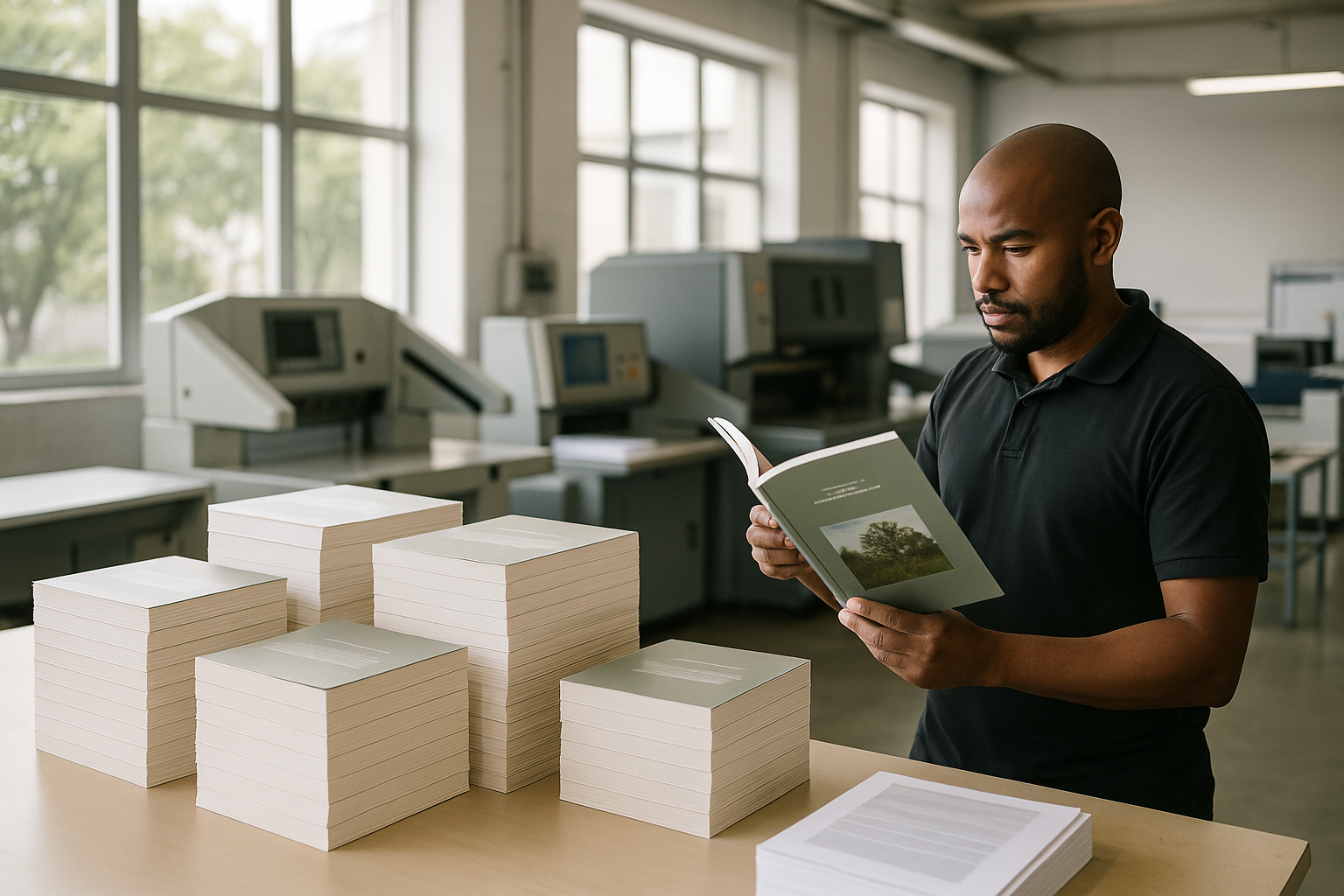
Book printing is the process of turning your manuscript and design files into a finished, sale-ready book; this guide explains every step from file preparation to delivery, with specific options for commercial printing, educational printing and print-on-demand across South Africa.
What is book printing and how does it work?
Book printing is the full production sequence that converts digital files into physical books using methods like litho (offset) and digital printing. The process includes prepress (file checks, colour management, imposition), printing, binding and finishing. In many commercial and educational printing environments — including school textbook printing and training manual printing — workflows are optimised for volume, cost-effectiveness and fast turnaround.
Historically, innovations such as the Gutenberg press made mass production possible. According to Wikipedia, the printing press revolutionised book distribution and literacy. Today’s industrial printers combine that heritage with modern digital control to offer short runs, print-on-demand and large bulk educational printing for schools.
How do I prepare my files for printing?
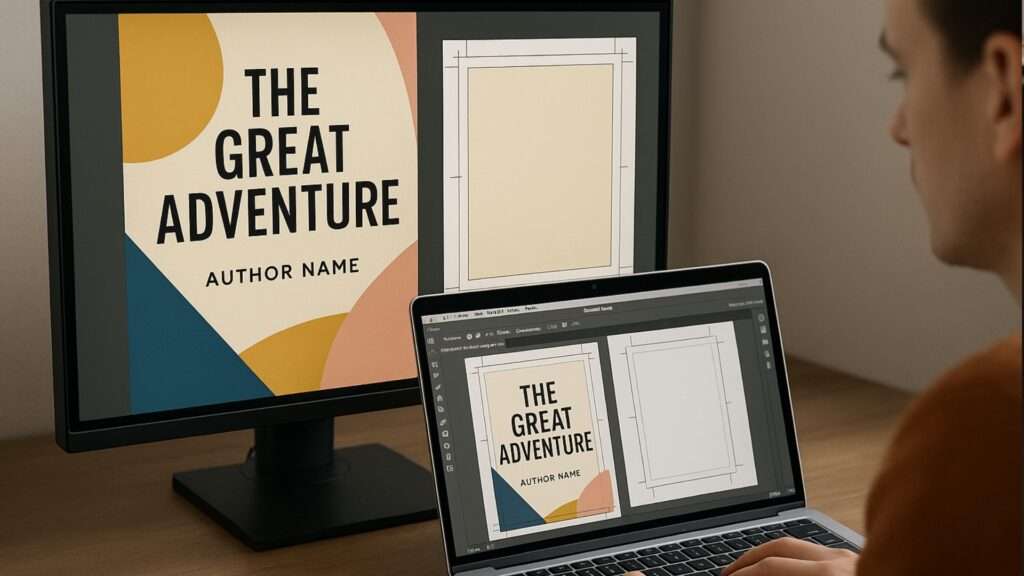
Good file preparation is the single biggest factor that determines the quality and cost of the final book. Prepare a print-ready PDF (embed fonts, convert colours to CMYK, include bleed and crop marks), keep images at 300 dpi, and supply a separate cover file if your cover has different stock or varnish. Many printers provide a checklist to make this simple.
Key file-prep checklist:
- Format: PDF/X-1a or PDF/X-4 preferred
- Images: 300 dpi, CMYK (or high-res grayscale for B&W interiors)
- Margins & bleed: usually 3 mm bleed; ensure inner margins account for binding
- Fonts: embed or convert to outlines
- Pagination: finalised page order and a print-ready cover with spine width calculated
Many commercial printers and custom publishing services offer prepress checks and free proofs — essential for avoiding costly reprints.
What printing methods are available in South Africa?
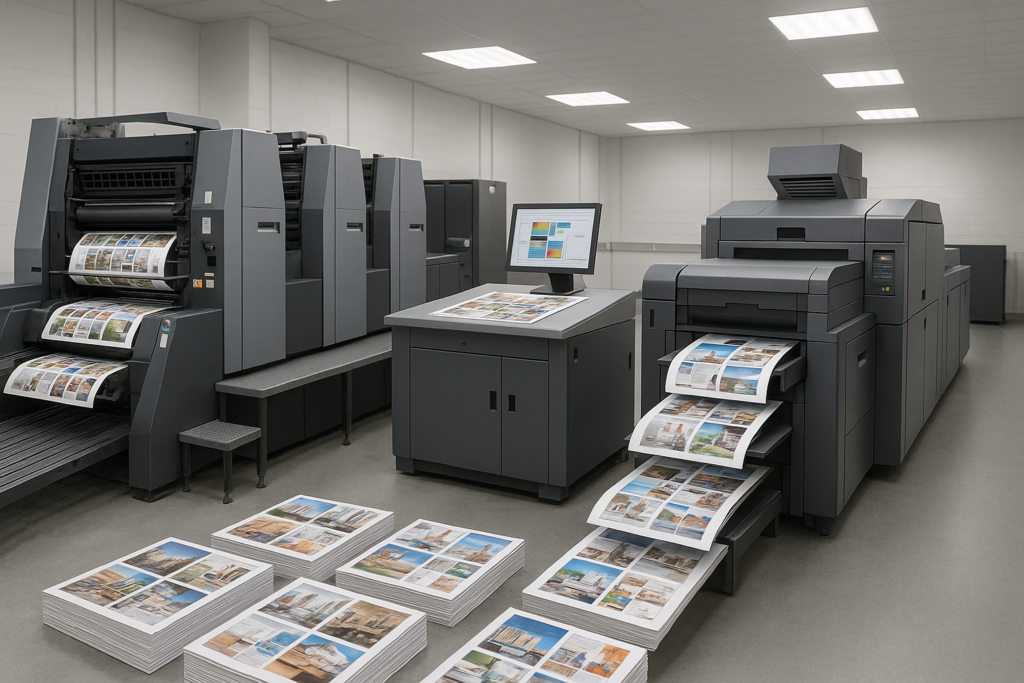
Print houses in South Africa commonly offer both litho (offset) and digital printing. Litho is very cost-effective for large runs and produces excellent colour fidelity; digital is ideal for short runs, personalization and fast turnaround. Many businesses choose a hybrid approach: litho for large quantities like catalogue printing or textbook printing, and digital for small-batch books, brochures and proofing.
| Method | Best for | Typical run size |
| Litho (Offset) | High-volume books, textbooks, catalogues | 500+ copies |
| Digital | Print-on-demand, short runs, variable data books | 1–500 copies |
According to industry reports, the ability to switch between litho and digital has helped printers in emerging markets meet demand for both bulk educational printing and customised marketing materials like brochures and booklets.
How long does book printing take from file to finished delivery?
Turnaround depends on method, quantity and finishing. Digital short runs can ship in days; litho large runs typically take 1–3 weeks including binding and finishing. For school textbook printing ahead of a term, plan 2 to 3 weeks to allow for proofs, printing, binding and nationwide distribution. Fast turnaround printing options are available for urgent promotional books and event catalogues.
Typical stages and time estimates:
- Proofing and approvals: 1 to 2 working days
- Printing (digital): 3 to 5 working days
- Printing (litho): 5 to 7 working days
- Binding & finishing: 2 to 5 working days depending on volume
- Delivery across South Africa: 1 to 5 days depending on location
What costs influence the price of book printing?
Cost drivers include print method, run length, paper stock, ink coverage (full-colour vs black & white), binding type, special finishes (lamination, foil, spot UV) and the need for distribution or warehousing. Bulk educational printing for schools benefits from economies of scale, lowering per-unit cost as quantities increase. Conversely, print-on-demand reduces upfront inventory costs but raises per-unit price.
Cost comparison example (indicative):
- Short, full-colour paperback (digital, 50 copies): higher per-unit cost, low setup
- Trade paperback (offset, 2,000 copies): low per-unit cost, higher setup
- Hardcover with dust jacket (offset, 1,000 copies): premium cost due to binding
When budgeting, ask printers for a breakdown so you can trade off paper and finishing choices against quantity and turnaround needs.
Can you handle bulk textbook and educational printing for schools?
Yes — many South African printers specialise in educational printing and textbook printing for schools, managing cycles that align with school terms and curriculum timelines. Bulk educational printing often includes batch numbering, version control for revised editions, and binding suited to classroom use. Printers experienced in education understand procurement cycles and can coordinate fast deliveries ahead of term starts.
Advantages of specialist educational runs:
- Lower per-unit costs for high-volume orders
- Robust binding options for repeated classroom use
- Options for custom packaging and distribution to multiple school addresses
For training resources and manuals, see services like our training manual printing and comprehensive textbook printing solutions.
What finishing options and custom print finishes are available?
Finishing transforms printed sheets into tactile, branded products. Common finishes include matt or gloss lamination, soft-touch coating, aqueous varnish, spot UV, foil stamping and embossed covers. For marketing materials like brochures, booklets and catalogues, bespoke finishes help your material stand out — for example a spot-gloss logo on a brochure cover or foil lettering on a paperback jacket.
Common finish choices and uses:
- Lamination (matt/gloss/soft-touch): durability and feel
- Spot UV & foil: premium accenting for covers and catalogues
- Emboss/Deboss: tactile branding on hardcover or casebound books
If eco-friendly printing is a priority, water-based coatings and FSC-certified paper offer a balance between finish and sustainability.
Do you offer print-on-demand and short runs for self-publishing or businesses?
Yes — print-on-demand (POD) allows authors and businesses to print small batches or single copies as orders arrive, avoiding large inventory costs. POD is ideal for self-publishers, custom corporate books, event programmes and seasonal catalogues. Many printers pair POD with online ordering portals to streamline reordering and distribution.
Benefits of POD include:
- Zero or low inventory carrying costs
- Ability to update files between runs (editions, corrections)
- Fast turnaround for promotional runs and event printing
For marketing materials that complement books, consider simultaneous runs of brochures and booklets via our brochure printing services and booklet printing.
How is delivery and distribution handled across South Africa?
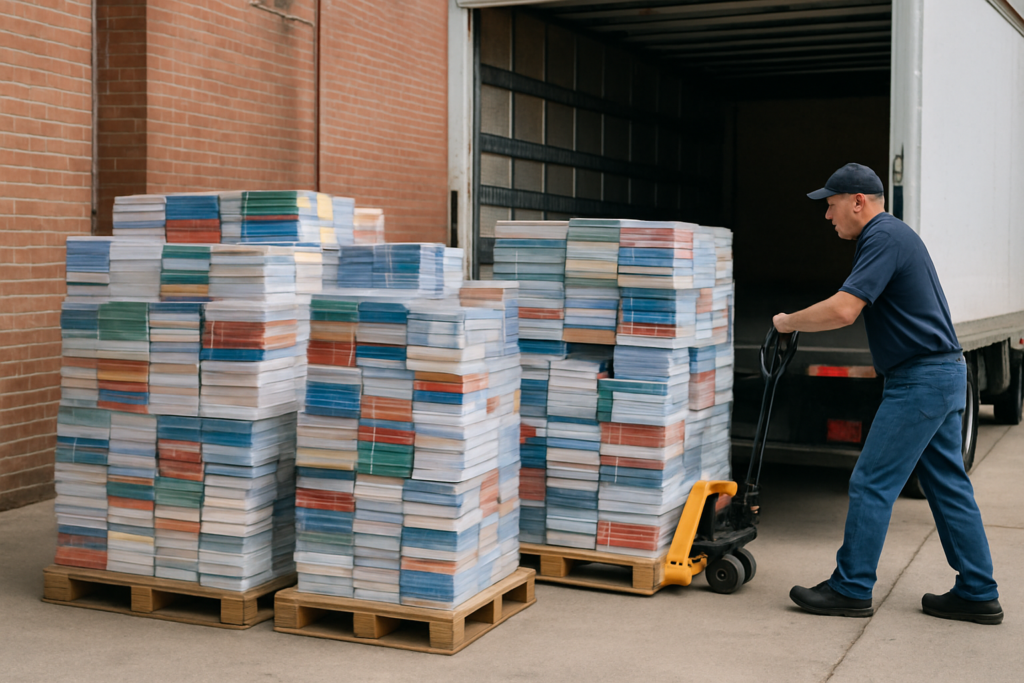
Delivery options range from local courier drop-offs to national palletised freight. Printers offering nationwide delivery coordinate logistics for school districts, retail distribution and direct-to-customer shipping. For bulk orders like catalogue printing or book club shipments, consolidation and scheduled deliveries can reduce costs and simplify receiving.
Distribution considerations:
- Choose door-to-door courier for small parcels and POD orders
- Palletised freight for large bulk textbook or catalogue shipments
- Multiple drop addresses supported for district-wide school deliveries
Ask your printer about insurance, tracking and customs paperwork if you plan to export or import materials.
How do I choose binding, paper and trim sizes for my book?
Binding and paper choice depends on book purpose, budget and expected lifespan. Paperback perfect binding is common for trade books and manuals; casebound (hardcover) works for premium editions. For school textbooks and heavy-use manuals, reinforced sewn binding or smyth sewn binding delivers durability. Paper weights for interiors typically range from 70–120 gsm for text; covers often use 200–300 gsm with optional lamination.
| Binding | Best for |
| Perfect binding | Paperbacks, manuals |
| Smyth sewn | Textbooks, long-lasting volumes |
| Casebound | Hardcovers, premium books |
Trim size choices affect layout and page count; common sizes include A5, 6″x9″ (trade), and A4 for workbooks and manuals. Your printer can provide templates and help calculate spine width based on page count and paper stock.
What sustainability and eco-friendly options exist for book printing?
Eco-conscious printing options include using FSC- or PEFC-certified paper, recycled stocks, eco inks and water-based coatings. Printers may offer carbon-neutral printing through offset programmes, efficient imposition to reduce waste, and low-VOC finishes. Choosing eco-friendly options can be especially relevant for educational printing, where procurement policies may prioritise sustainability.
According to industry groups, sustainable choices are becoming mainstream as customers and institutions look for responsible suppliers. According to some market reports, demand for eco-friendly printing materials has risen steadily in recent years as buyers seek greener supply chains.
How do I get a quote, proof and start a book printing project?
Start by sending a print-ready PDF, a short brief (title, quantity, binding, paper, finishes), and your desired delivery date. A good printer will return a detailed quote, suggest optimisations (e.g., switching to economical paper sizes), and provide a PDF proof or physical proof on request. When approving proofs, check colour, pagination and cover registration carefully to avoid delays.
For specialty jobs like catalogues or multi-product marketing packs, coordinate with your printer early — they can offer bundled savings when you combine books with complementary items like brochures or business cards.
Why choose a local South African printer and what services complement book printing?
Using a local South African printer like Print It ZA reduces lead times, shipping costs and import risk. Local partners understand South African school calendars, event timetables and distribution challenges. Commercial and educational printers often expand services into packaging printing, business card printing, newsletter printing and custom publishing, making them a one-stop shop for authors, publishers and organisations preparing for school terms or promotions.
Complementary services to consider:
- Catalogue printing for product display and retail
- Brochure and booklet printing for marketing and inserts; see our catalogue printing and brochure printing services
- Packaging printing and fulfilment for boxed sets or subscription kits
According to local industry sources, the printing sector in South Africa plays a vital role in supporting education and small business marketing needs, with many providers offering tailored, cost-effective solutions for bulk educational printing and small-batch promotional materials.
Final tips: common pitfalls and how to avoid them
Common pitfalls include submitting low-resolution images, not accounting for bleeds and crop marks, underestimating delivery times, and skipping a hard proof for colour-critical projects. Avoid these by running a preflight check, requesting a proof (digital or physical), confirming binding and spine calculations, and communicating delivery details early.
Remember to compare quotes based on the same specifications and to ask about hidden costs such as artwork corrections, special packaging or expedited shipping. With proper planning you can move smoothly from file to finished book, whether you’re printing a thousand school textbooks, a run of professional catalogues, or a handful of self-published novels.
Contact Print It ZA today, for a Free Quote and Speedy Service.
Print It ZA, we deliver Printing Best!