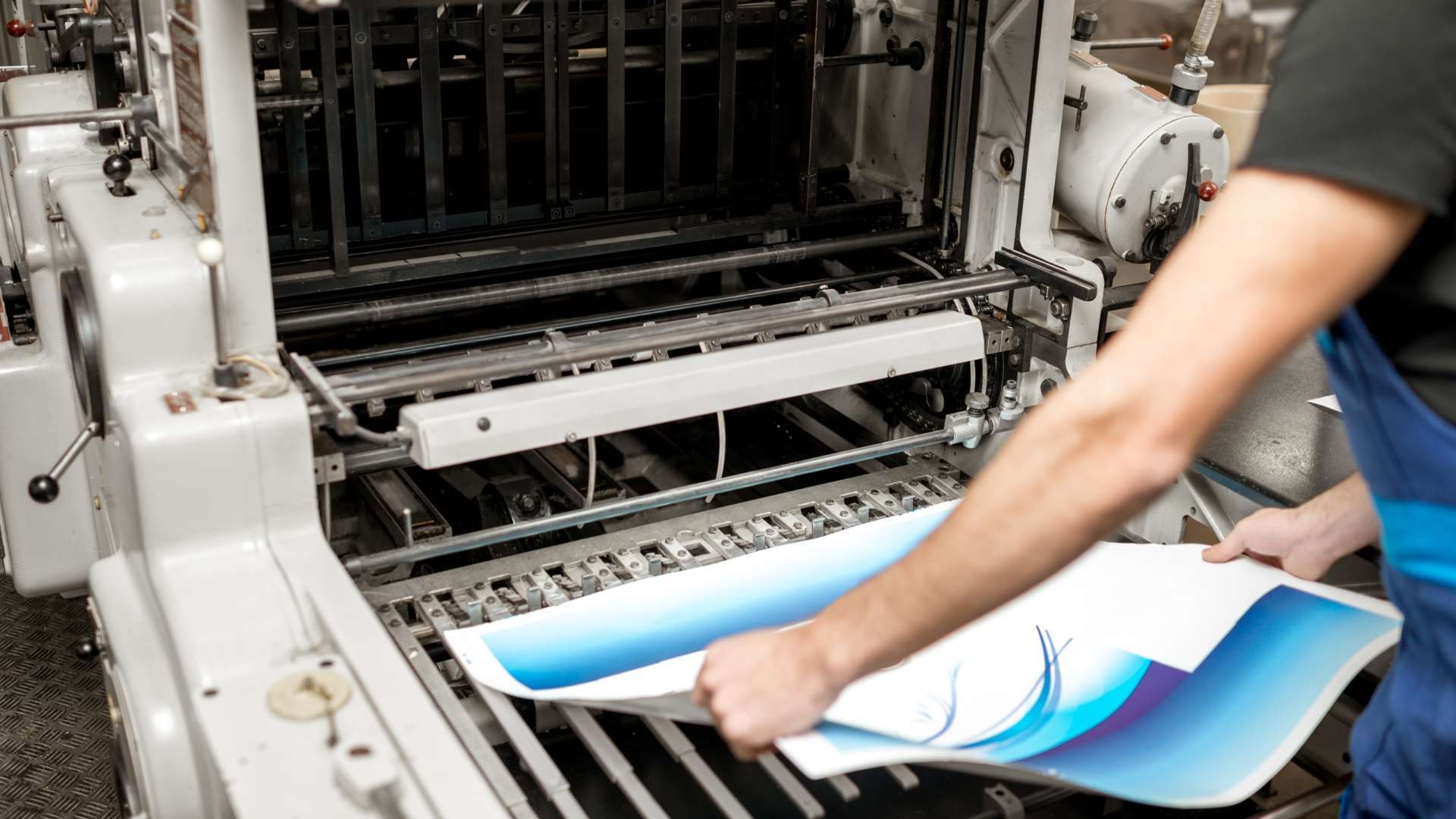
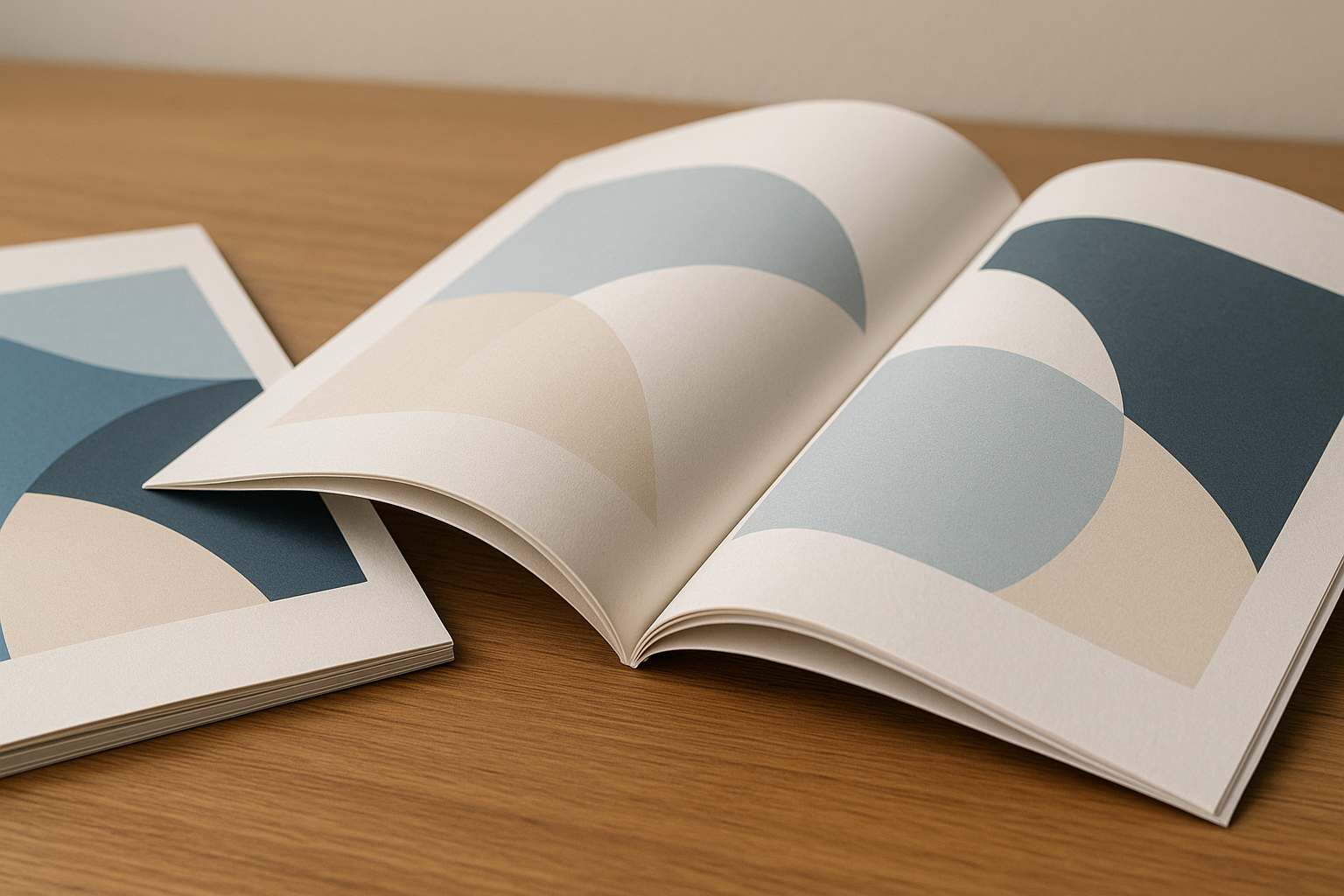
Brochure and booklet printing is one of the most cost-effective ways for small businesses, schools and publishers in South Africa to communicate professionally — from promotional brochures to training manuals and school textbooks.
Brochure and Booklet Printing: Paper, Folds, and Binding Explained
What are the basics? Brochure and booklet printing covers a range of formats — single-sheet folded brochures, stapled booklets, perfect-bound catalogues and saddle-stitched magazines. The choices you make for paper stock, fold type and binding method directly affect durability, perceived value and production cost. This section breaks down the essentials so you can match the outcome to your objective, whether it’s bulk educational printing for schools, a short-run event brochure, or full-colour catalogues for retail.
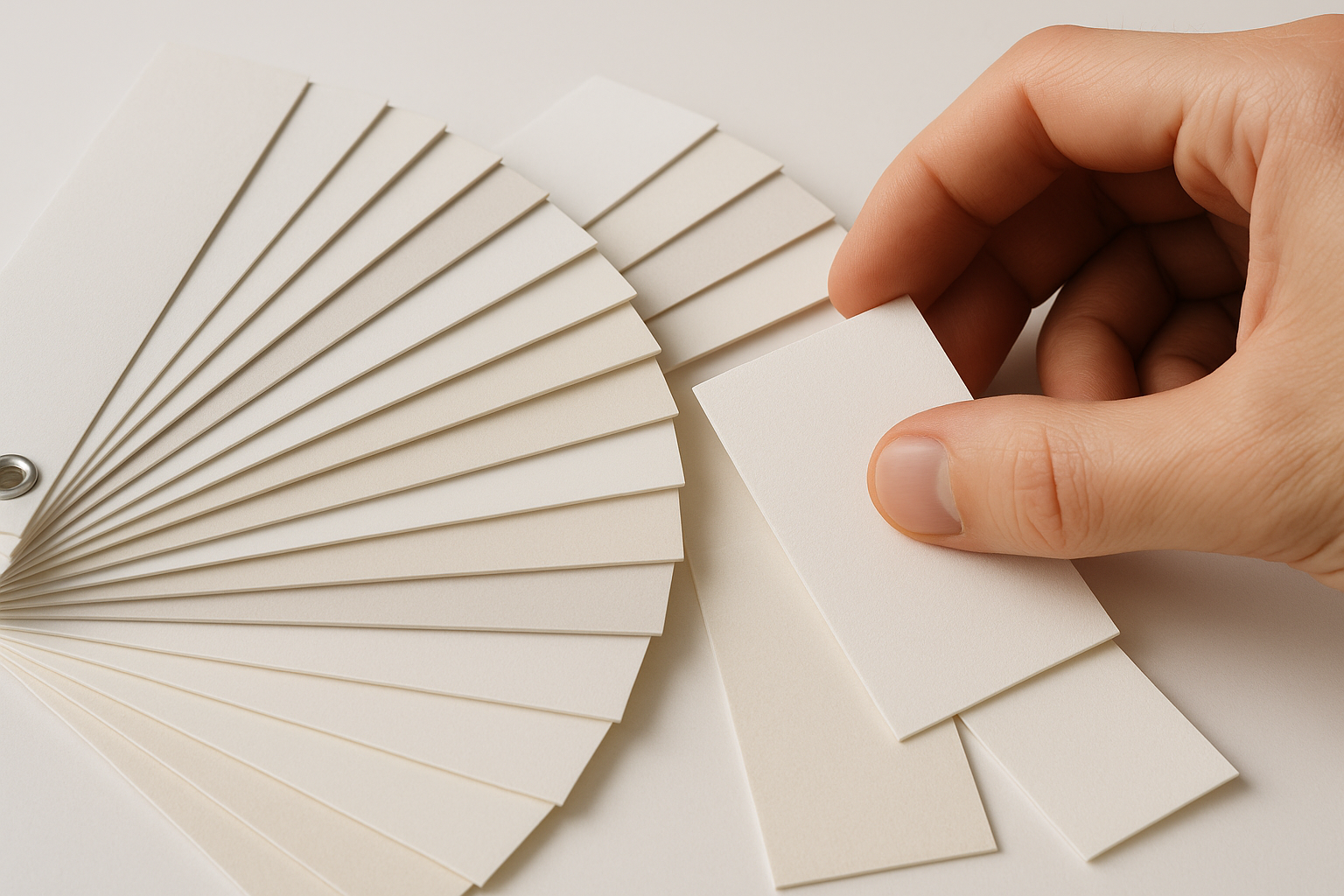
How do I choose the right paper stock for my brochure or booklet?
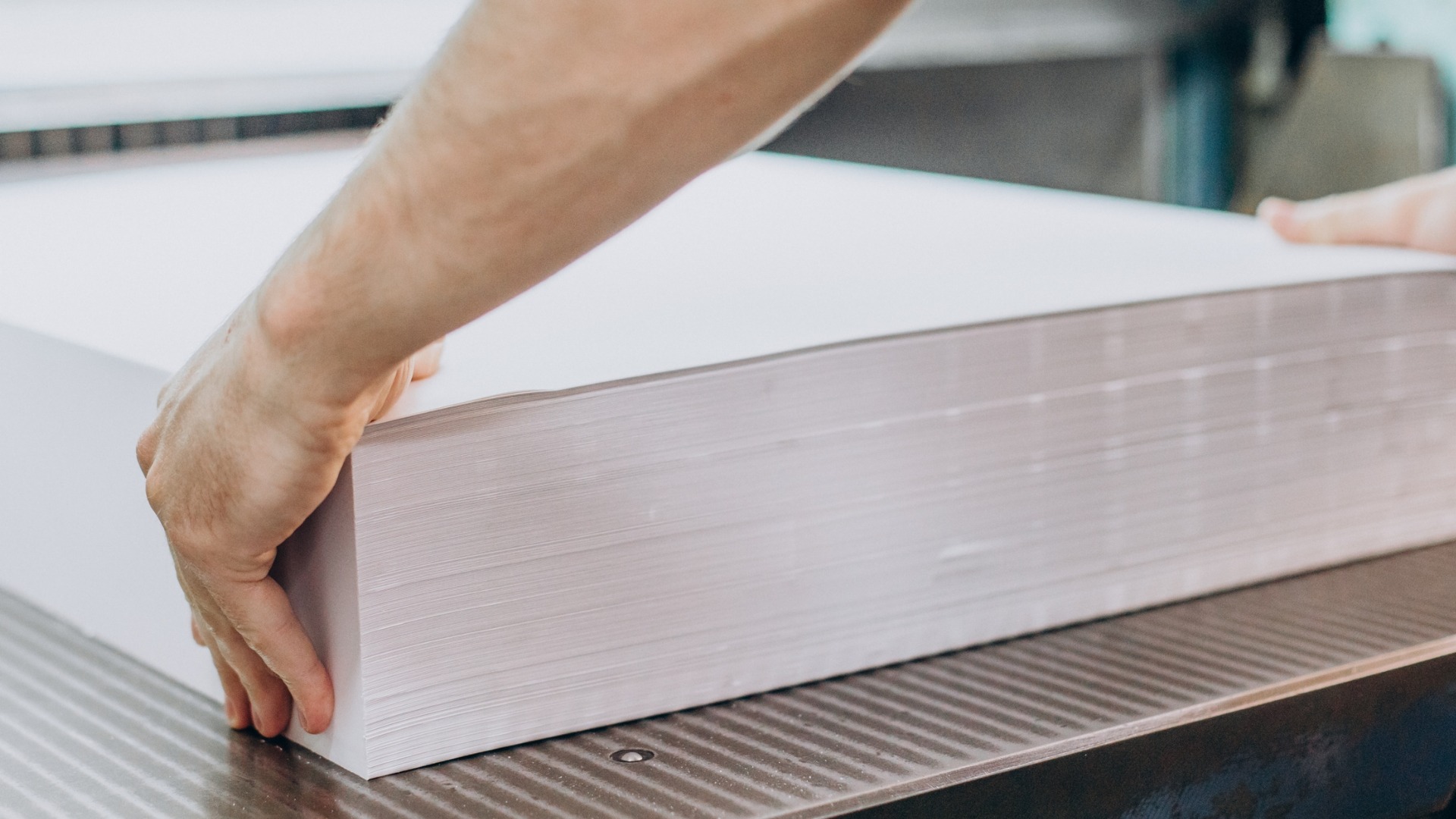
Choosing paper is both aesthetic and functional. Heavier covers and satin or silk finishes convey premium quality; uncoated or matte stocks suit educational workbooks and internal manuals where writing on the page is needed. In South Africa, common choices range from 90gsm to 148gsm for interior, and covers range from 170 to 350gsm.
Consider these factors when selecting stock:
- Purpose: durability for textbooks vs. tactile finish for marketing
- Ink saturation: coated stocks make colours pop; uncoated absorb more ink
- Writing or annotations: use uncoated for school worksheets and training manuals
- Budget: heavier stocks cost more, especially in bulk educational printing
If you’re preparing school material or training manuals in bulk, ask your printer about economy grades and eco-friendly alternatives — many print shops across South Africa offer recycled papers and print-on-demand options to manage storage and cash flow.
What folding options are best for brochures and when should I use them?
Folds affect how content is revealed and how a brochure is handled. Common folds include half-fold, tri-fold, Z-fold, and gate or roll folds. Tri-folds are ideal for compact sales pieces; Z-folds work well for maps or step-by-step instructions; gate folds create dramatic reveals for event or product launches.
Use this quick guide:
| Fold Type | Best for | Notes |
| Half-fold | Simple two-panel presentations | Clean, generous panels for images |
| Tri-fold | Direct mail, menus, short service lists | Compact and familiar |
| Z-fold | Step-wise instructions, maps | Good for sequential content |
| Gate/Roll | High-impact marketing spreads | Requires careful layout for alignment |
Professional folding requires appropriate prepress setup; mismatched folds or inappropriate stocks can cause cracking on coated papers. Talk to your printer early in the design stage to align trim, bleed and folds.
Which binding methods are available and how do they change cost and feel?
Binding affects longevity and how the booklet opens. Common methods include saddle-stitching (staples), perfect binding, spiral/coil, and case binding. Saddle-stitch is cost-effective for up to 64 pages and commonly used for catalogues and newsletters. Perfect binding offers a square spine for thicker catalogues and product books; coil/spiral lets pages lay flat and is favoured for training manuals and workbooks.
Cost and usage snapshot:
- Saddle-stitch: low cost, best under ~64 pages, great for brochures and small booklets
- Perfect binding: medium cost, professional finish, good for catalogues and books
- Spiral/coil: flexible use, ideal for manuals requiring flat open
- Case binding: premium, used for hardback books, textbooks even and keepsakes
For example, schools commissioning bulk educational printing for term books often choose saddle-stitch or perfect-bound formats depending on page counts and durability requirements. Check your intended lifespan: textbooks meant for multiple years often justify the higher cost of stronger bindings.
How do finishes and coatings impact durability and perception?
Finishes — such as gloss UV, aqueous coating, soft-touch lamination, and embossed details — affect both aesthetics and lifespan. Gloss and aqueous coatings enhance colour vibrancy and resist fingerprints, while soft-touch lamination creates a premium tactile experience. For school books and frequently handled manuals, consider scuff-resistant laminates for longer life.
Keep these points in mind:
- Selective varnishes can highlight logos and imagery without coating entire pages
- Eco-friendly inks and coatings are available if sustainability is a priority
- Finishes add to unit cost but reduce replacement frequency for high-use items
According to industry reports, coatings can extend the usable life of printed learning materials by up to 30% in high-wear environments. Choosing the right finish is a balance between budget and the impression you want to make.
What are cost drivers for brochure and booklet printing and how can I save?
Unit cost is driven by paper weight, colour vs black-and-white, binding, quantity, and finishing choices. Turnaround time and special handling (like banding, packing for school term deliveries across South Africa) can also affect price.
Ways to reduce costs without sacrificing impact:
- Print higher quantities if storage permits — per-unit cost drops significantly with volume
- Mix stock: heavier cover with light interior stock saves money
- Use economical binding for shorter lifecycles (saddle-stitch instead of perfect bind)
- Plan earlier — fast turnaround printing often costs a premium
According to Statista, print runs above certain thresholds typically see steeper unit cost reductions due to setup amortisation. For schools and institutions planning multiple term runs, consolidate orders or use a print-on-demand approach to manage inventory and cashflow.
How long does production and delivery take — can I get fast turnaround in South Africa?
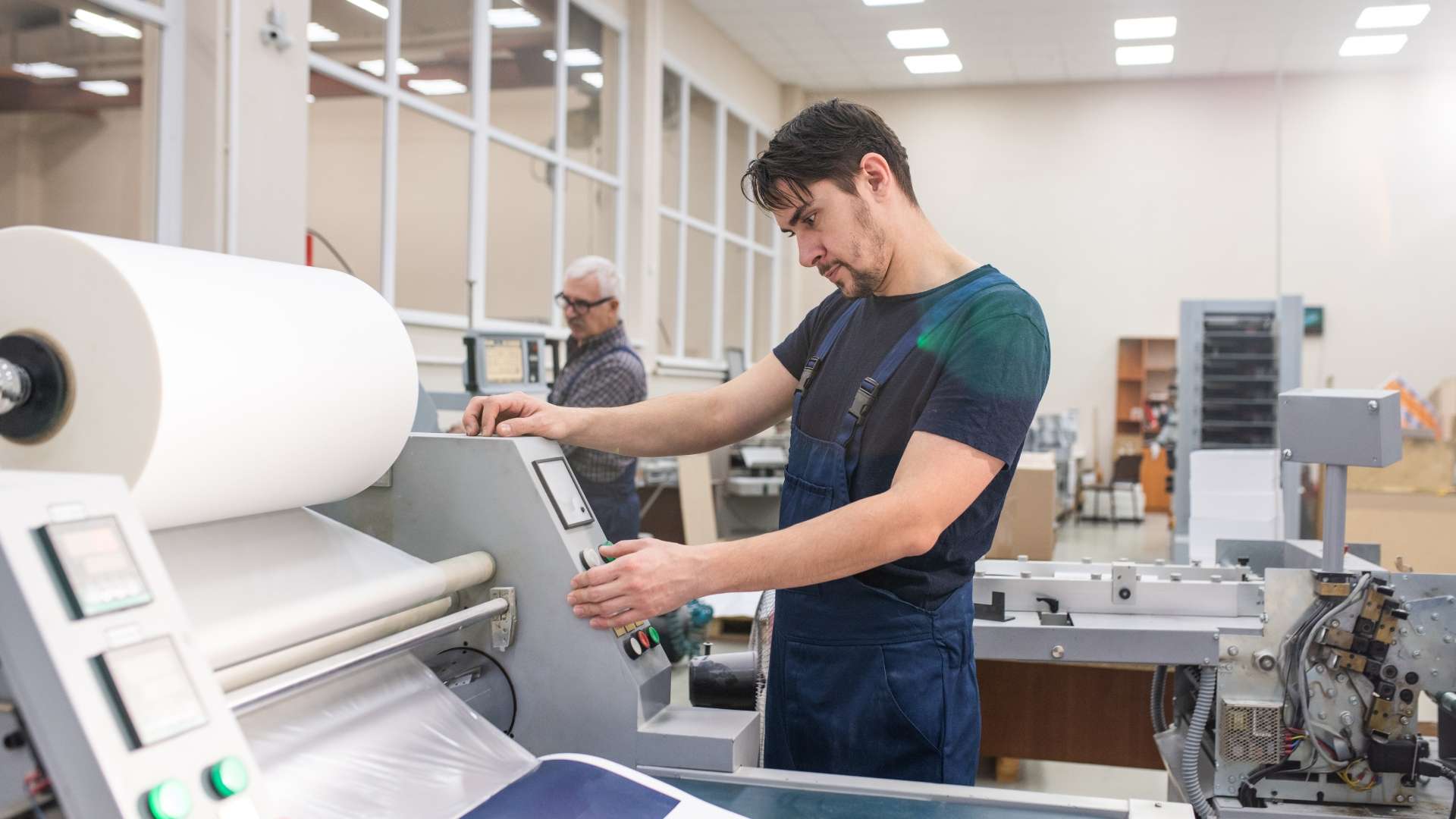
Turnaround depends on complexity. Simple folded brochures can be produced in 3 to 5 business days; perfect-bound books and large catalogues may take 5 to 7 business days or longer. Fast turnaround printing is available at many commercial printers in South Africa, especially those with both litho and digital printing capabilities which Print It ZA provides.
Factors that affect lead time include:
- Print method: digital is faster for short runs; litho is efficient for large runs
- Binding and finishing complexity
- Proofing cycles and client approvals
- Delivery distance — national distribution across South Africa can add 1–3 days
According to Print Industry sources, combining digital for short runs and litho for larger projects is a common hybrid approach to balance speed and cost.
What file specifications and proofs should I provide to avoid delays?
Provide print-ready PDFs with CMYK colour profiles, 3mm bleed, and fonts embedded or outlined. Include crop marks and ensure images are at least 300dpi at final size. For booklets, supply a single imposed PDF if possible — this helps the printer check pagination and imposition for saddle-stitch or perfect-binding jobs.
Checklist for prepress:
- PDF/X-1a or PDF/X-4 preferred
- All images at 300dpi, CMYK where possible
- Bleed: typically 3mm; margins: at least 5–7mm from trim
- Proofing: soft-proof for quick projects, hard-copy proof for colour-critical jobs
Using a professional printer’s template (ask for it) reduces back-and-forth and prevents costly reprints. Link designs to functional requirements like fold alignment and binding margins early in the design stage.
How can I make brochures and booklets more sustainable without breaking the bank?
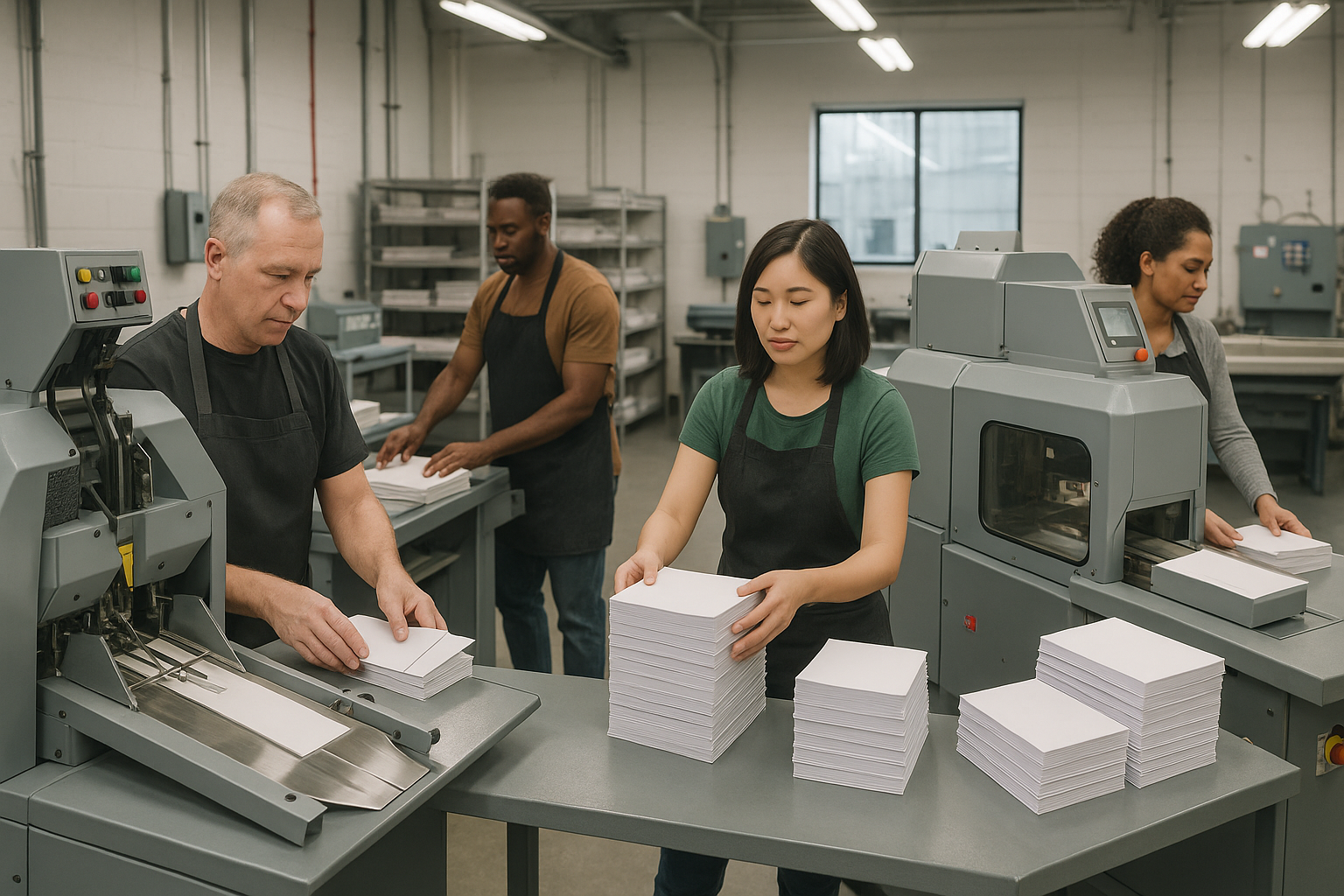
Sustainable printing is increasingly important for schools, NGOs and businesses in South Africa. Options include using FSC-certified or recycled papers, eco inks, and aqueous coatings. Print-on-demand reduces waste from overprinting and unsold stock.
Practical steps for greener print runs:
- Request recycled or FSC-certified stock
- Minimise excess packaging for delivery across South Africa
- Use duplex printing for internal drafts to save paper
- Consolidate jobs to reduce machine warm-up cycles and transport emissions
According to environmental industry data, switching to recycled papers can cut the carbon footprint of a printed piece substantially, and many printers now offer eco finishes that perform like traditional laminates but are easier to recycle.
Should I use litho, digital, or hybrid printing for my project?
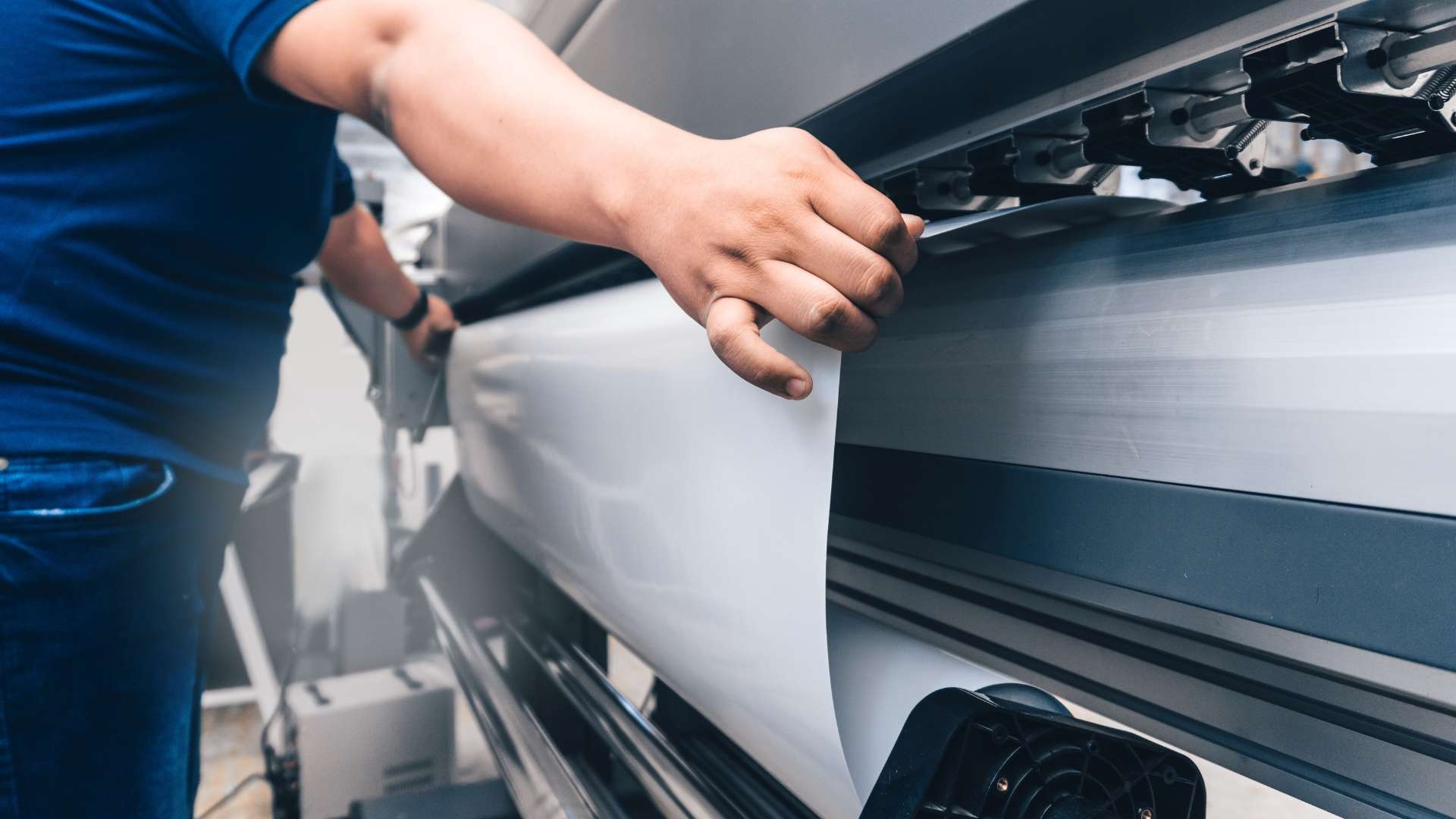
Each method has strengths. Digital printing is ideal for short runs and variable-data printing (personalised brochures, numbered training manuals). Litho (offset) delivers lower unit costs and consistent colour for large volumes and is often used for catalogues and textbooks. Hybrid approaches use digital for short work and litho for larger sections to balance cost and speed.
Decision guide:
| Need | Recommended method |
| Short run, personalised | Digital |
| Large run, consistent colour | Litho (offset) |
| Mixed volumes or tight deadlines | Hybrid workflow |
For example, many educational publishers in South Africa use litho for large textbook printings and digital print-on-demand for supplemental teacher guides and small-batch classroom materials.
How do I distribute brochures and booklets across South Africa: shipping, packing and logistics?
Distribution is a critical but often overlooked cost. Local print companies often offer consolidated packing, banding for schools, and national courier solutions. Consider palletised shipments for large textbook runs to schools and bulk mailings or door-to-door fulfilment for marketing campaigns.
Tips for smooth distribution:
- Use a print partner experienced in school term preparation and bulk educational shipping
- Plan for customs or inter-province courier times if sending between provinces in South Africa
- Ask about drop-shipping to multiple addresses and itemised packing lists
Many printers offer value-added services like kitting, labelling and delivery windows to align with event schedules or term start

Where can I get professional brochure and booklet printing services in South Africa?
Work with printers who understand your sector — commercial printing, educational printing, and custom publishing all have different technical and logistical demands. If you need textbooks or school materials, look for partners like Print It ZA with experience in bulk educational printing and print delivery across South Africa. Same for marketing materials, choose Print It ZA with strong graphic prepress capabilities and finishing options.
Helpful links to consider when comparing suppliers (examples of service pages and formats):
- Brochure printing services — ideal for marketing collateral
- Booklet printing — for saddle-stitched and perfect-bound manuals
- Catalogue printing — for product ranges and retail catalogues
- Education printing — for school textbooks and term materials
Choosing a print partner who offers both litho and digital printing, and understands local delivery logistics, will streamline production and reduce unexpected costs.
What are common mistakes to avoid when planning a brochure or booklet print run?
Poor planning is the number one error. Common pitfalls include underestimating lead times, ignoring binding allowances and bleeds, choosing the wrong paper for the job, and skipping proofs. Don’t forget to budget for packaging and distribution — especially for nationwide delivery in South Africa.
Checklist to avoid costly mistakes:
- Allow time for proofs and corrections
- Confirm trim, bleed and safe zones with your printer
- Test finishes on your chosen stock to check colour and feel
- Plan logistics and delivery windows in advance
Finally, consult an experienced account manager early. Their prepress expertise will help detect layout errors, optimize pagination for binding, and advise on the best cost-effective production route.
For more background on the technology and history of printing, you can read the Wikipedia overview on the subject here: Printing — Wikipedia.
Contact Print It ZA today, for a Free Quote and Speedy Service.
Print It ZA, we deliver Printing Best!