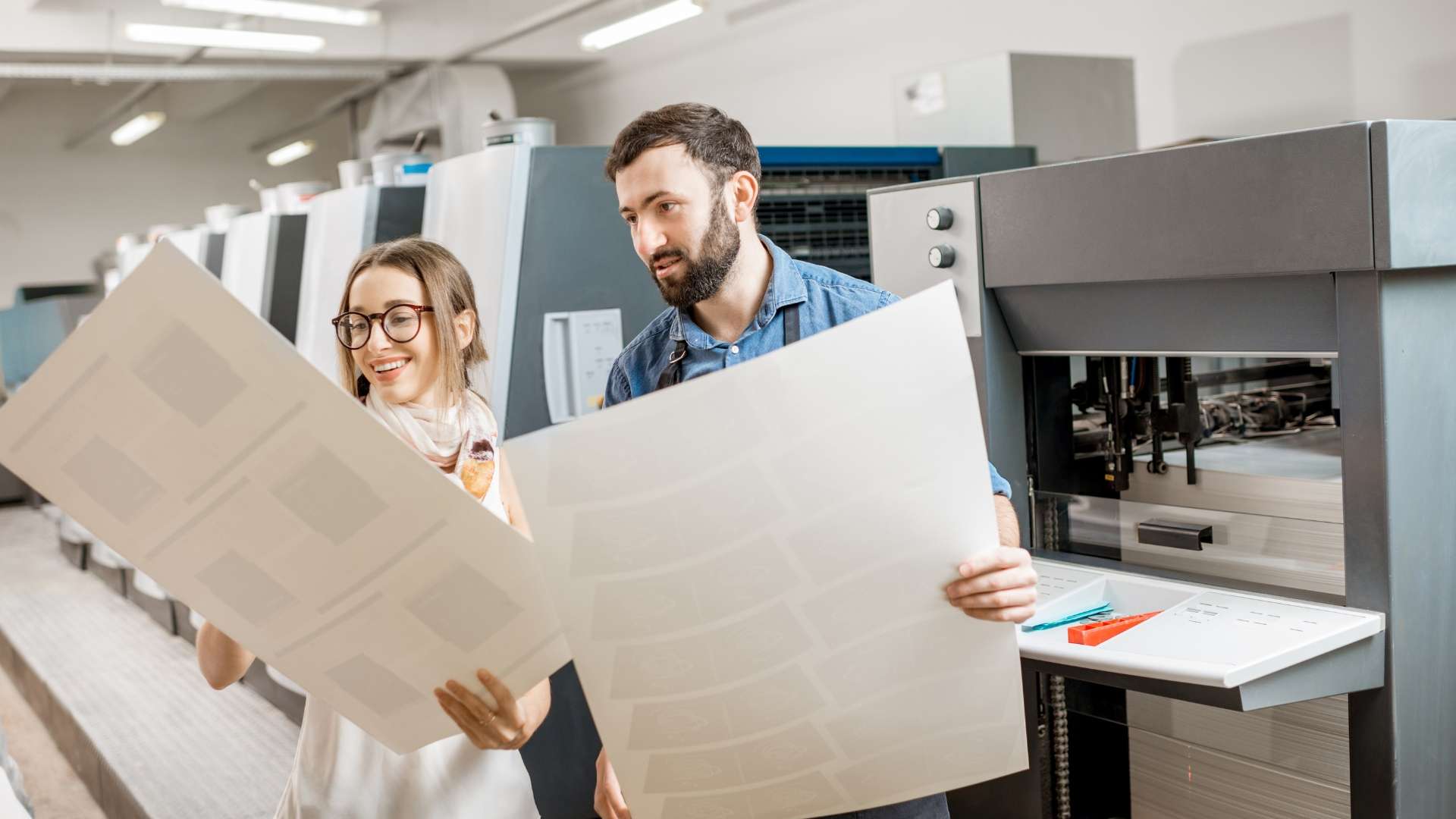
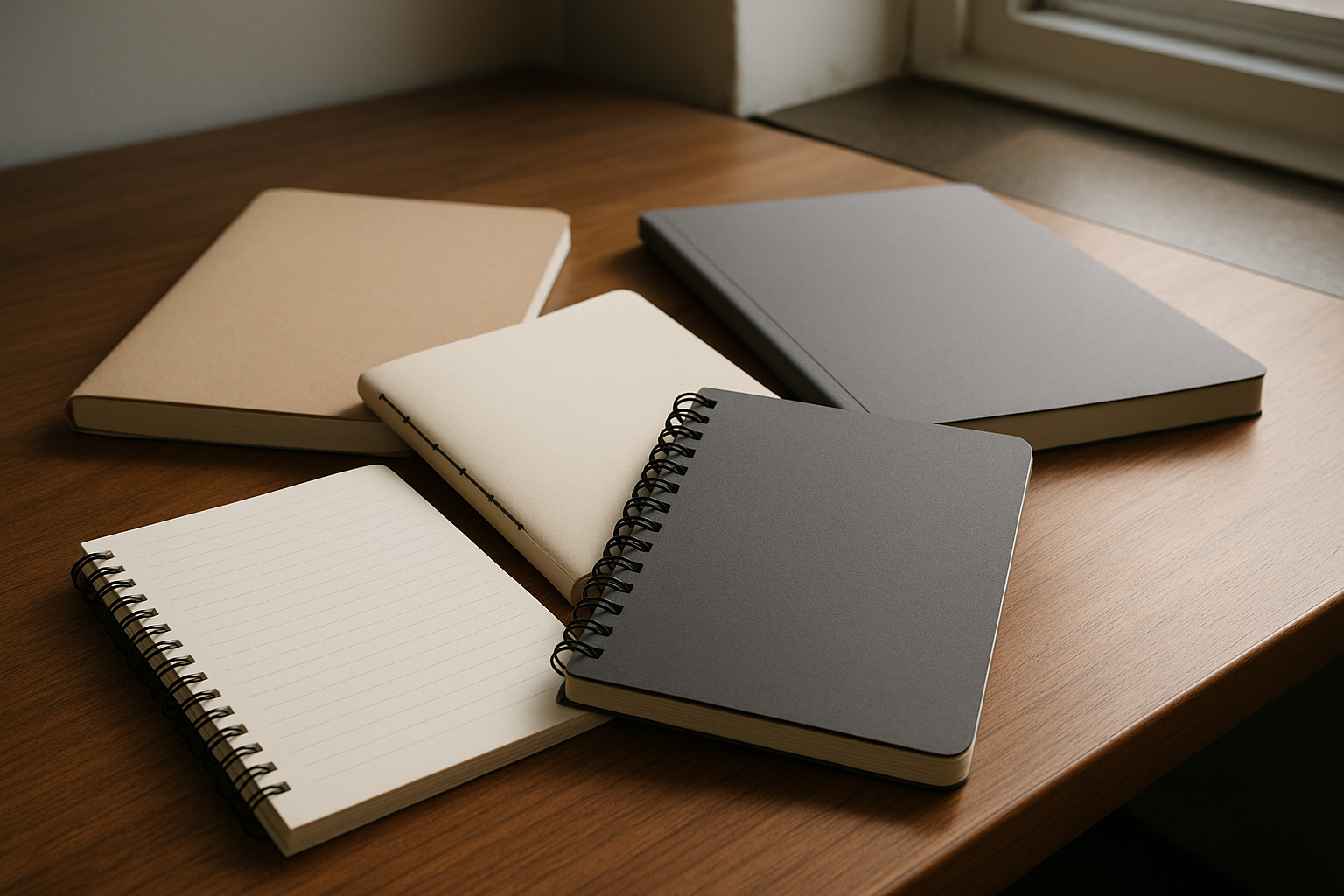
If you want to print notebooks that people keep, start with the basics: paper weight, binding, and a tactile finish that matches your audience in South Africa. A well-made notebook can boost student retention, promote your brand at events, and become a prized marketing tool for small businesses and schools.
What makes a notebook feel premium?
A premium feel comes from how the book looks, feels and functions together: paper that resists feathering, binding that opens flat, and covers with subtle finishes or textures. People subconsciously judge quality by touch — a heavier cover, a stitched binding, or a soft-touch laminate signals value.
For commercial printing and custom publishing, balancing perceived value with cost is key. For example, soft-touch lamination or a spot UV on an otherwise simple cover can transform cheap stock into something people want to keep. For schools, durability and resistance to scuffing are priorities, while event notebooks might emphasise design and tactile finishes to create memorability.
How do I choose paper when I print notebooks?
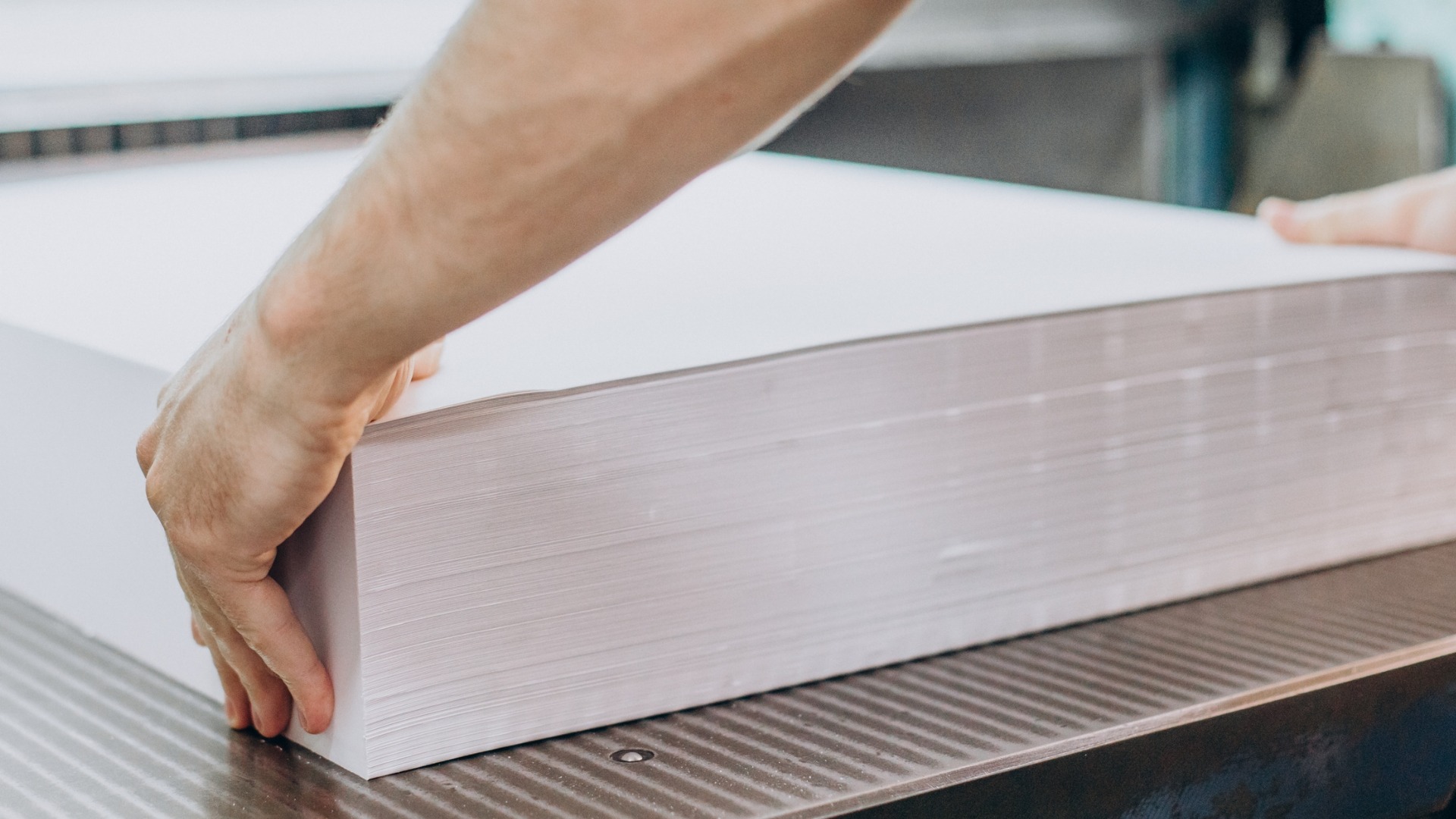
Choosing the right paper is the most important decision when you print notebooks. The paper determines writing comfort, show-through, and durability — and influences binding choices. Common options include:
- 80 – 90 gsm uncoated (economical, good for bulk school workbooks)
- 90 – 120 gsm uncoated (premium interior pages; less bleed)
Use this quick reference table to match paper to purpose:
| Use | Paper Type | Why |
| Student exercise books | 80–90 gsm uncoated | Cost-effective, sufficient for ballpoint and pencil |
| Premium journals | 90–120 gsm cream or uncoated | Smoother writing, lower show-through |
| Notebook covers | 300 gsm coated or textured | Rigid, durable, good for finishes |
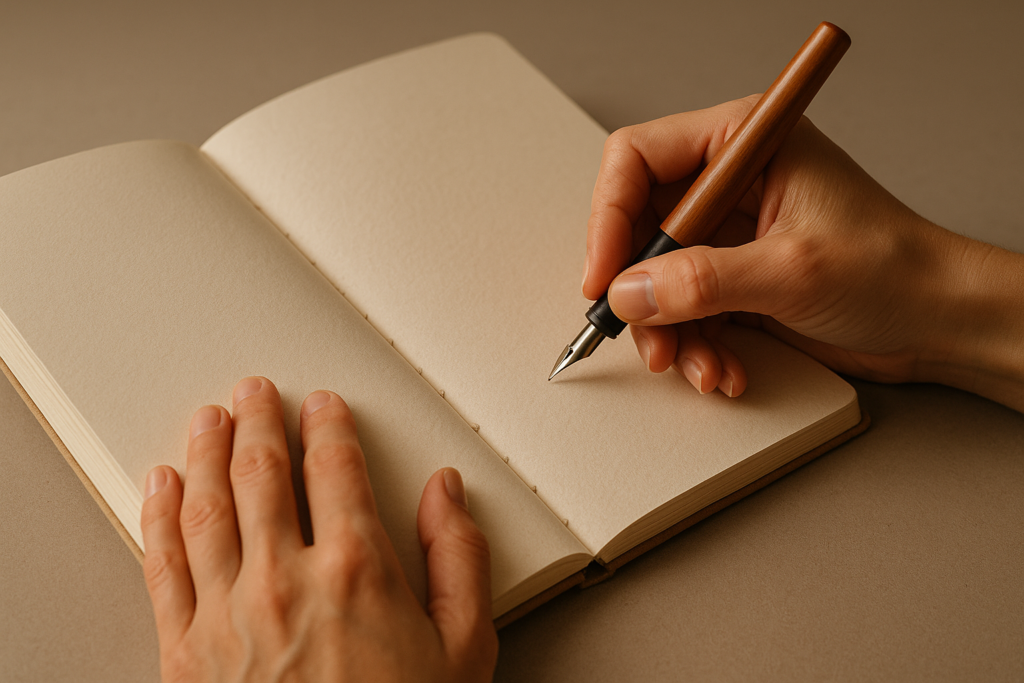
In South Africa’s educational printing market, many schools still prefer economy stocks for bulk term preparation, but a growing number of institutions choose heavier interiors or cream papers for value and readability. According to a 2014 study in Psychological Science, students who take handwritten notes retain conceptual material better than those who type, making paper choice critical for learning outcomes.
Which binding types are best for different uses?
Binding determines how a notebook opens, how it lies flat, and how long it lasts. When you print notebooks, consider the user experience: a workbook that lies flat is more useful for students; a stitched notebook feels premium and lasts longer for journals and training manuals.
Common binding options and where they work best:
- Staple saddle-stitching: Economical for booklets and thin notebooks (up to 64 pages + cover).
- Perfect binding: Clean, book-like spine, good for medium-thickness notebooks and catalogues.
- Sewn binding: Long-term durability and premium feel — ideal for journals and custom publishing.
- Wire-o or spiral binding: Lies flat easily — common for workbooks and training manuals.
For a deeper look at traditional methods, see the Wikipedia entry on bookbinding. In South African commercial printing and booklet printing services, many suppliers mix binding methods depending on order size and school specifications.
What finishes give a high-end look without breaking the budget?
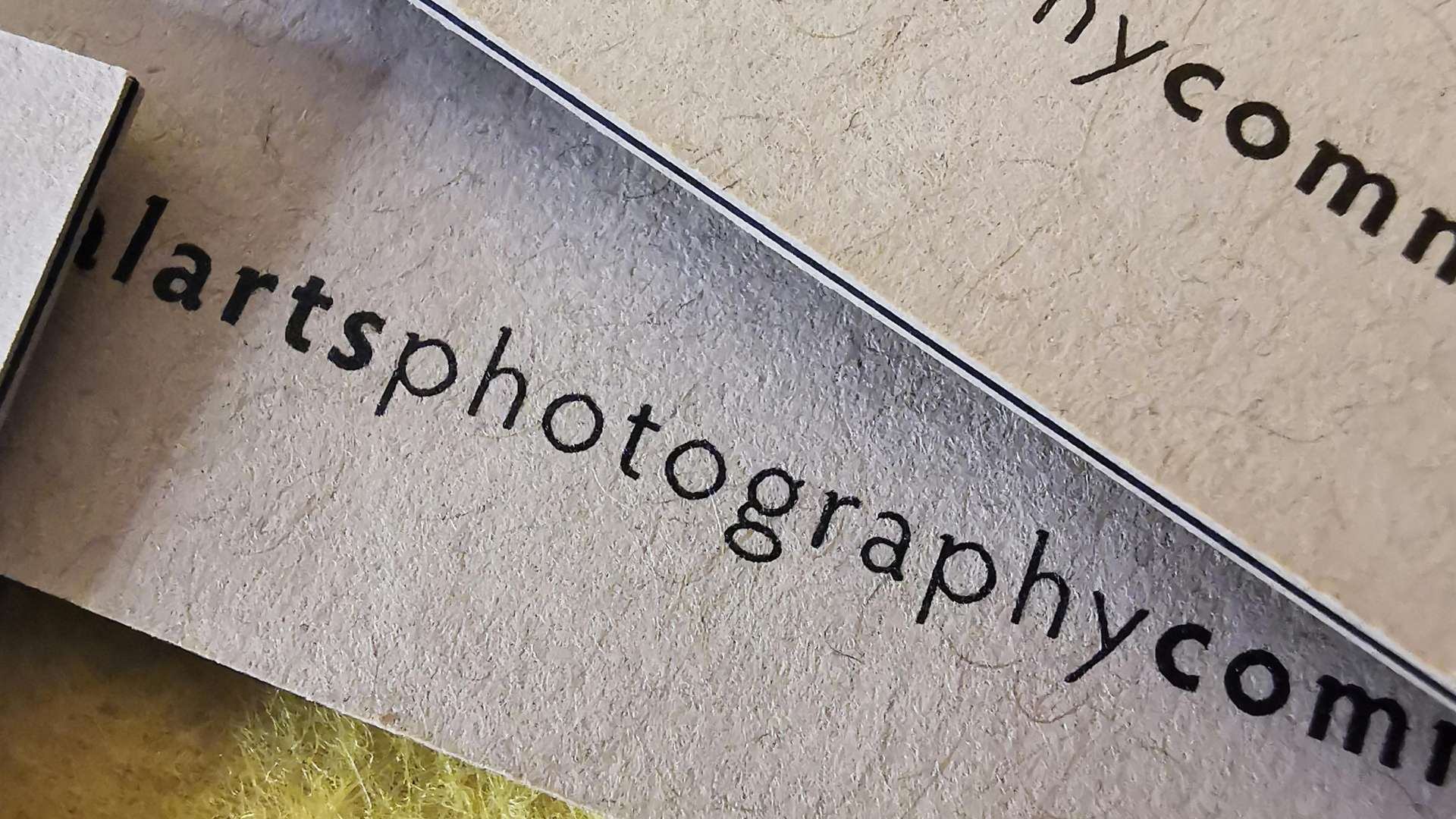
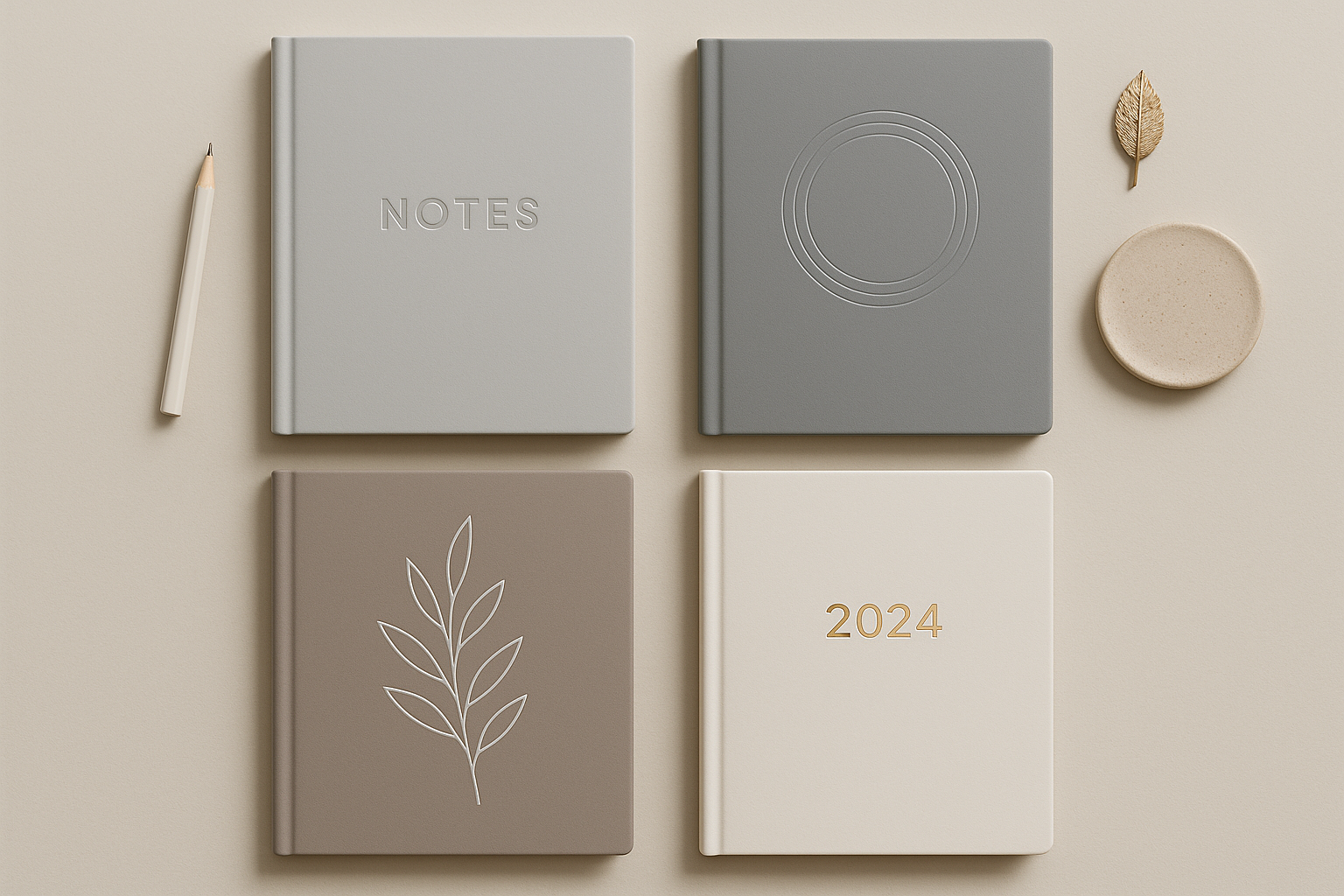
Finishes are where perceived value multiplies. A matte or soft-touch lamination gives a quiet luxury; a spot gloss or foil on the logo creates focal interest without covering the entire print run cost. Spot UV is often used sparingly to highlight names, icons or brand marks, while embossed or debossed elements can add a tactile brand signature.
Cost-effective premium finishes include:
- Soft-touch laminate (moderate cost, premium feel)
- Spot UV on selective elements (low ink coverage, big impact)
- Embossing on logos or title blocks (higher cost but great for executive gifts)
- Eye-catching but economical wrap-around colour covers
When planning finishes for event giveaways or small business marketing material, match the finish to the brand promise. A simple soft-touch cover on a midweight stock can outperform a heavy, glossy cover if the tactile experience aligns with the product.
How can I keep costs down for bulk educational printing?
Schools and training providers often require affordable options for large volumes. To print notebooks in bulk cost-effectively, prioritise these tactics:
- Standardise formats and sizes across terms to enable repeat runs.
- Choose web-offset litho for very large runs and digital for runs under a few thousand copies.
- Use uncoated 80 – 90 gsm interior stocks and heavier covers only where needed.
- Consolidate orders (e.g., print textbooks, workbooks and exercise books together) to reduce setup costs.
For bulk textbook and school orders, partner with printers experienced in bulk educational printing and school textbook printing to ensure fast turnaround and adherence to curriculum schedules. You can also compare options like short-run digital printing against litho for larger orders to find the best unit price.
What turnaround times can I expect for fast jobs across South Africa?
Turnaround varies by project complexity, finishes, and quantity. Simple digitally printed spiral notebooks can be ready in a few days; litho runs with special finishes and binding may take 7–14 business days. For tight school term preparation or event deadlines, plan for express services and earlier sign-offs.
Typical timelines:
- Digital short run (50–1500 units): 3–5 business days
- Litho medium run (1,000–5,000 units): 5–14 business days
- Large litho runs with special finishing: 2–4 weeks
Many South African printers offer express options with additional fees and delivery across South Africa; always confirm shipping windows when scheduling school term printing or event printing.
How do eco-friendly options affect quality and price?
Eco-friendly printing has matured. Recycled and FSC-certified papers now come in a range of weights and finishes that match conventional stocks, though recycled fibres may be slightly more textured. Choosing eco options can be slightly more expensive up front, but many organisations in South Africa prefer sustainable procurement for schools, NGOs and corporate gifting.
Consider these sustainable choices:
- FSC- or PEFC-certified stock for responsible sourcing
- Post-consumer recycled (PCR) paper for interiors
- Eco inks to reduce VOCs
- Minimal plastic packaging and recyclable binding choices
Eco choices can often be blended to manage cost: use recycled covers with standard interiors, or vice versa, to hit both sustainability and budget targets. According to Statistics South Africa, sustainability is increasingly a procurement criterion for educational and public-sector contracts.
What sizes, rulings and formats work best for schools and events?
Formats depend on usage. For school exercise books, classic sizes like A4 and A5 with appropriate ruling (lined, graph, or plain) are common. For events or promotional notebooks, slimmer A5 or pocket-size formats are more portable and used repeatedly.
Common format recommendations:
- A4 lined or grid — study and portfolio work
- A5 lined or plain — journals and note-taking
- Custom ruled interiors for education printing (e.g., narrow-ruled Grade-specific layouts)
For training manuals and corporate notebooks, include a contents page, numbered pages, and optional perforated sections for note tear-outs. If you provide training manuals or booklets, compare layout options; see our booklet-printing and training-manual-printing pages for format inspiration and layout best practice.
How do I design covers and interiors for better retention?
Good design improves usability. For educational notebooks, clarity is king: readable fonts, clear margins, and functional headers help students organise notes. Interior design choices such as wide margins for annotations, numbered pages, and subject tabs increase usefulness and encourage retention.
Design tips:
- Use 10–12pt serif or sans-serif for body text; 14–18pt for headings.
- Leave 10–15 mm inner margins for binding and note-taking.
- Consider light dotted grids for note-taking flexibility.
- Add a cover field for student name, class and year.
For branded notebooks used as marketing tools, place the logo thoughtfully rather than dominating the cover; subtle branding increases the chance the notebook will be used daily instead of discarded. For sample layouts and printing for promotional runs, review brochure-printing-services and catalogue-printing offerings to align cover and interior production quality.
Can you match textbook and catalogue printing quality for notebooks?
Yes. Modern printing houses that handle textbook printing and catalogue printing can apply similar quality controls to notebooks. This includes accurate colour management, consistent paper sourcing, and finishing workflows that ensure all runs meet specified tactile and functional standards.
If your project needs to match existing textbooks or catalogues, provide a physical sample or press-ready specification. Printers experienced in books printing and textbook-printing are adept at colour matching and binding tolerances for consistent school and retail products. According to Statista, demand for high-quality printed educational materials remains strong, reinforcing investment in quality control.
How do I choose a commercial printer for durable, premium notebooks?
Choose a printer based on experience, capability and responsiveness. For South Africa, prioritise printers that offer:
- Both digital and litho capabilities (for flexible runs)
- On-site finishing and binding to control quality
- Clear turnaround and delivery options across South Africa
- Proofing and sample production services
Ask prospective printers for samples of similar work (e.g., training manuals, brochures, or books) and request references for bulk educational printing and school textbook printing. According to industry analysis, the commercial printing sector is increasingly consolidating services — printers that offer integrated services from design through delivery tend to provide smoother timelines and better price breaks on larger orders.

What steps should I follow to start my first print run of premium notebooks?
Follow a simple project checklist to reduce revisions and delays:
- Define purpose (school, event, promo, journal) and target runs.
- Choose size, paper, binding and finish based on use and budget.
- Request physical samples and a detailed quote (including delivery across South Africa).
- Approve a press proof or digital mock-up before production.
- Confirm lead times and logistics for school term or event delivery.
Working with an experienced printer that understands both commercial printing and educational requirements will reduce surprises. For schools and institutions preparing materials for the academic year, early planning and consolidated orders can cut costs and ensure fast turnaround when it matters most.
Whether you’re in Cape Town, Johannesburg or a smaller city in South Africa, the right combination of paper, binding and finish will help you print notebooks that people keep and use. For related printing services, explore textbook-printing, books-printing, booklet-printing and brochure-printing-services to coordinate large projects and ensure consistent quality across educational and marketing materials.
Contact Print It ZA today, for a Free Quote and Speedy Service.
Print It ZA, we deliver Printing Best!