
If you’re asking how much does it cost to print a book, you’re not alone — whether you’re preparing bulk educational printing for schools in South Africa, producing a short-run marketing booklet, or launching a retail paperback. The true price depends on many variables, and this guide breaks them down, gives realistic examples, and points to cost-effective print solutions for commercial and educational printing needs.
How much does it cost to print a book? — What are the main price drivers?
The headline answer to “how much does it cost to print a book” varies widely because several cost drivers determine the final price. Key factors include print run (quantity), printing method (litho vs digital vs print-on-demand), trim size, page count, paper stock and weight, binding type, colour vs black-and-white interior, cover finish (matte, gloss, soft-touch), and turn-around requirements such as fast delivery for school term preparation.
For example, a 200-page A5 paperback printed digitally in a 100-copy short run will cost significantly more per unit than the same book printed litho in a 5,000-copy educational textbook run. Commercial printing for catalogues, brochures and newsletters will balance different trade-offs than textbooks where durability and certification (e.g., for schools) may matter more.
How does print run (quantity) change the cost per copy?
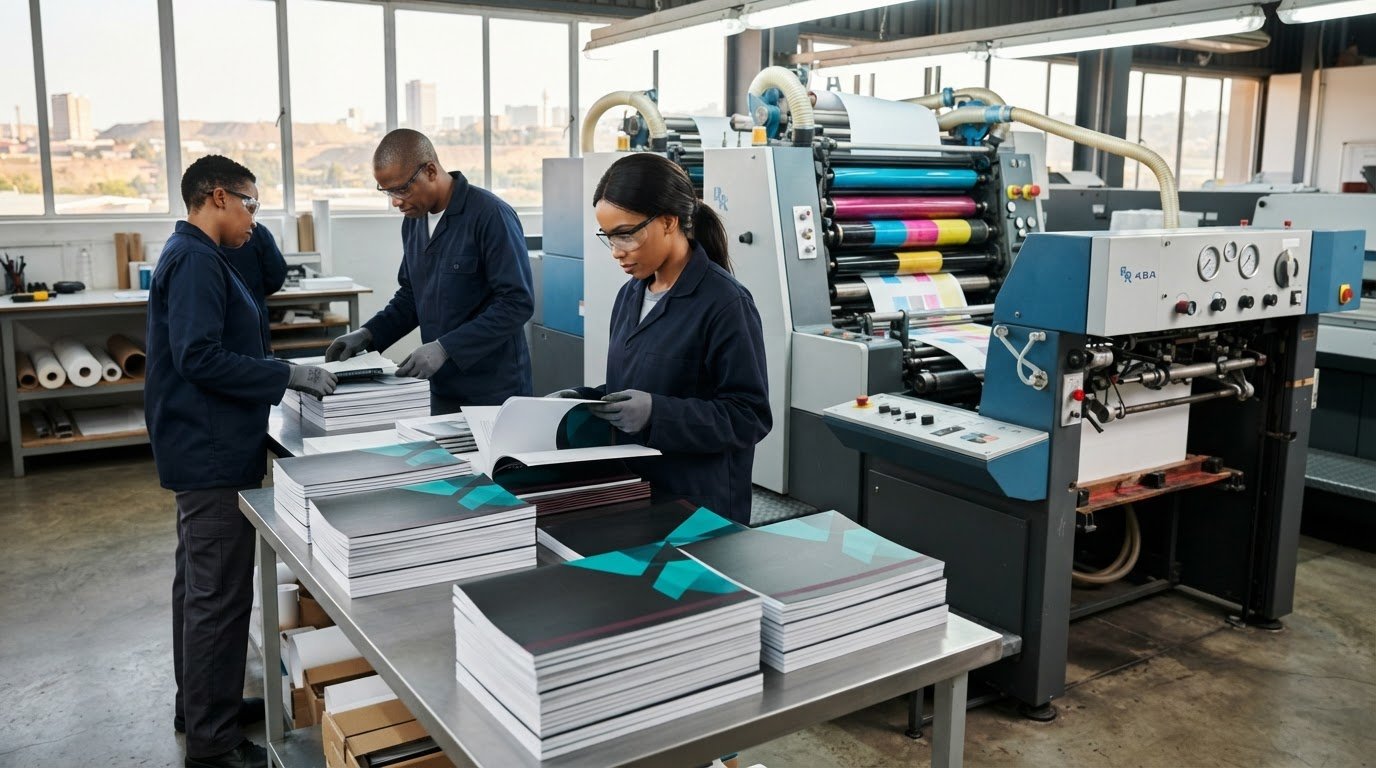
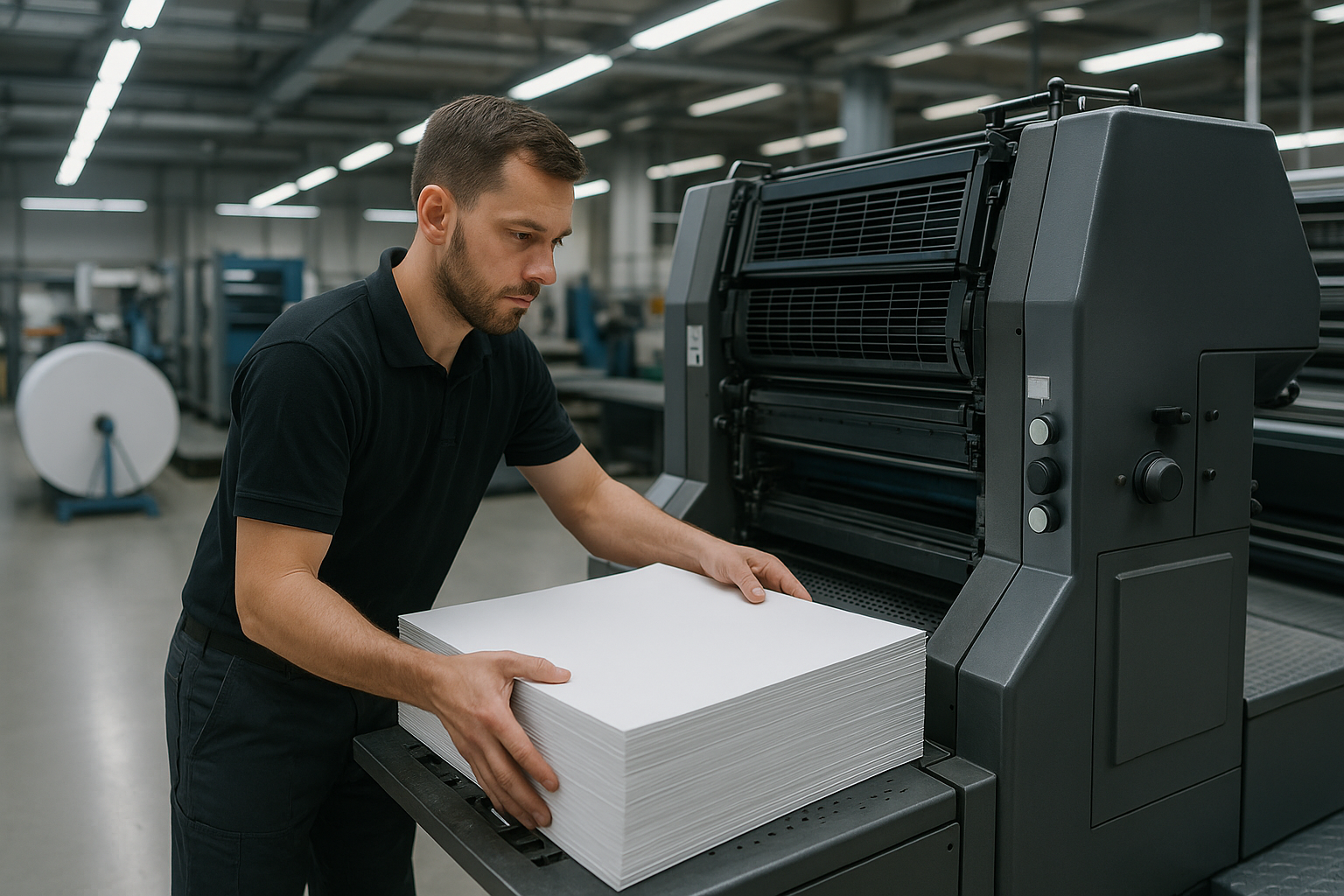
Print run is one of the single biggest determinants of cost per copy. The classic rule is: the larger the run, the lower the unit price, because setup costs and makeready are spread over more copies. For litho (offset) printing, setup costs are higher but per-sheet costs are lower, making offset economical for larger print runs such as school textbook printing or catalogue printing. Digital and print-on-demand (POD) remove much of the setup cost, making them ideal for small runs, sample copies, or fast-turnaround projects.
Typical behaviour in the South African market:
- Runs under 250 copies: mostly digital or POD — higher unit cost but low upfront spend.
- Runs 250–2,000: hybrid options (digital or small offset runs) — mid-range pricing.
- Runs over 2,000–5,000+: best value via offset, especially for educational printing schools commission.
Which printing method should I choose: litho, digital, or print-on-demand?
Choosing the printing method depends on quantity, turnaround and finish. Litho (offset) printing is cost-effective for large runs and offers consistent colour reproduction — a go-to for catalogue printing and bulk educational printing for schools. Digital printing is flexible for shorter runs, personalised print jobs, and quick turnaround. Print-on-demand is perfect when you want to avoid warehousing costs and print as orders arrive — common for self-publishers and small businesses using books as lead magnets.
Decision tip: If you need durable school textbooks for a whole district in South Africa and need thousands of copies, offset is typically the most economical; for training manuals, brochures, and promotional booklets, digital or litho may both be viable depending on volume and finish. See our pages on textbook printing, books printing, and booklet printing for service examples.
How much do paper types and cover finishes add to the price?
Paper stock and cover finishes can dramatically change both unit cost and perceived value. Thicker paper (e.g., 128–170 gsm interior, heavier cover stocks), coated vs uncoated, and specialty papers increase cost. Similarly, finishes like UV varnish, soft-touch lamination, foil blocking or spot varnish add to manufacturing time and materials.
For school textbooks you might prioritise durability (heavier cover, scuff-resistant lamination). For marketing catalogues, you might choose premium silk paper and a soft-touch cover to impress clients. Small businesses printing brochures and newsletters can save cost by choosing standard coated stocks and gloss or aqueous coating instead of expensive foil finishes.
How does binding type affect price and durability?
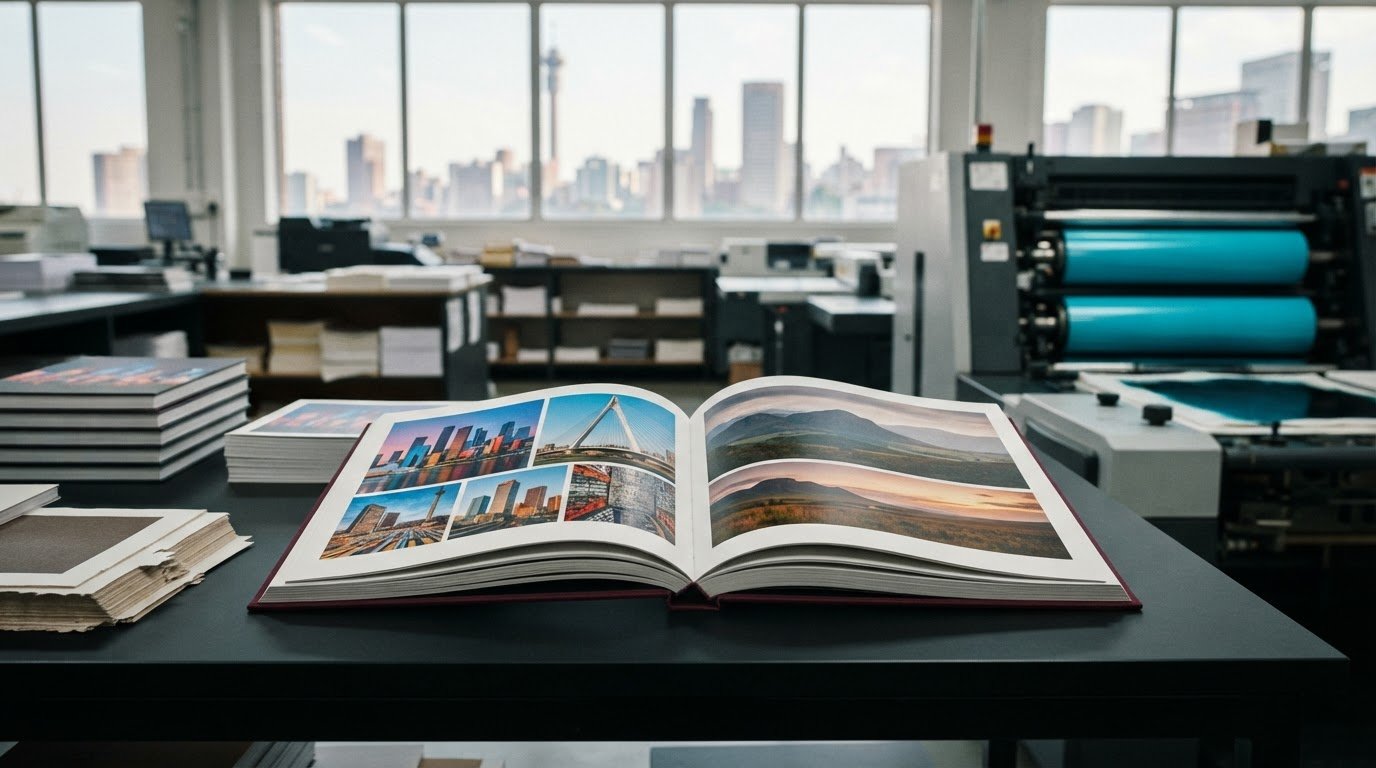
Binding choices — perfect binding (paperback), case binding (hardback), saddle-stitch (stapled), PUR binding (hot melt) — affect both cost and how a book wears. Saddle-stitch is cheapest for thin booklets (up to ~64 pages depending on sheet size), perfect binding is common for trade paperbacks and training manuals, while casebound hardbacks are the most expensive and durable option.
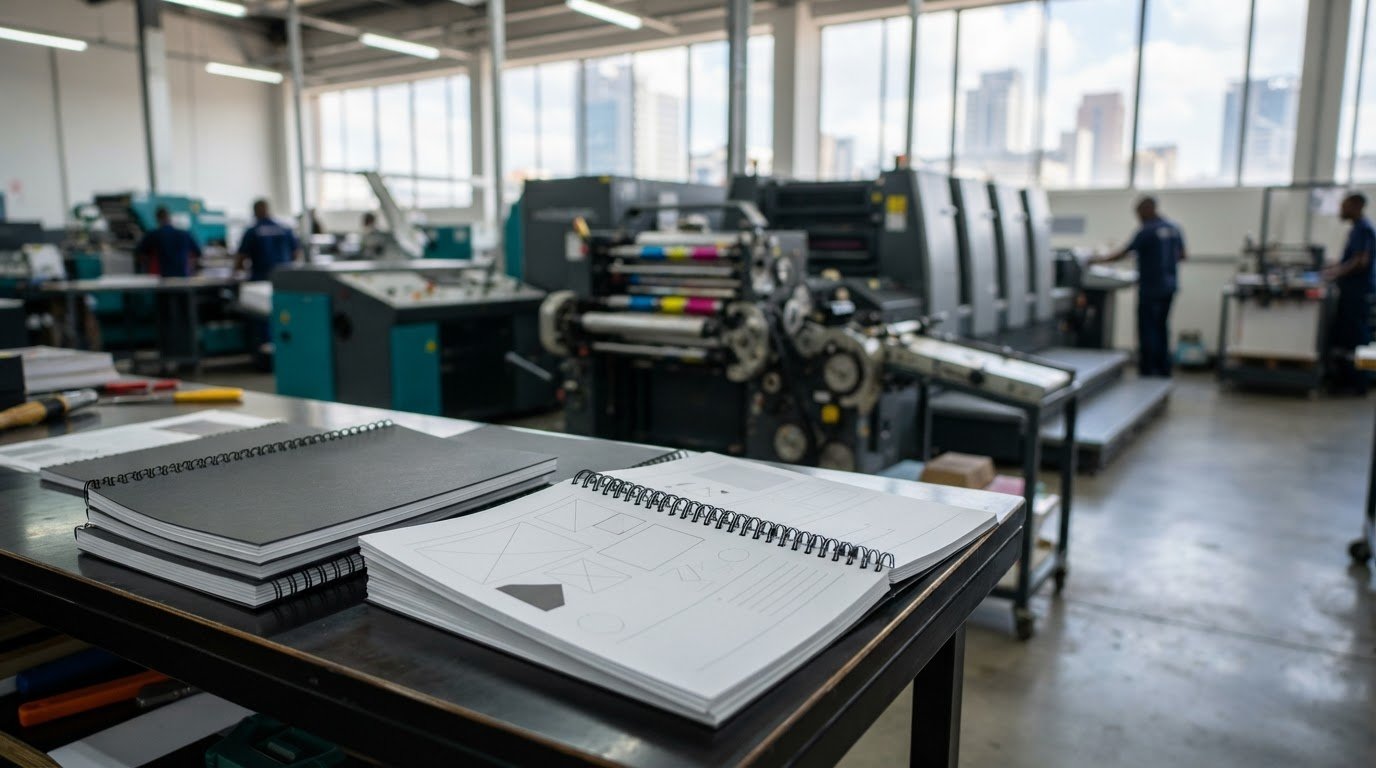
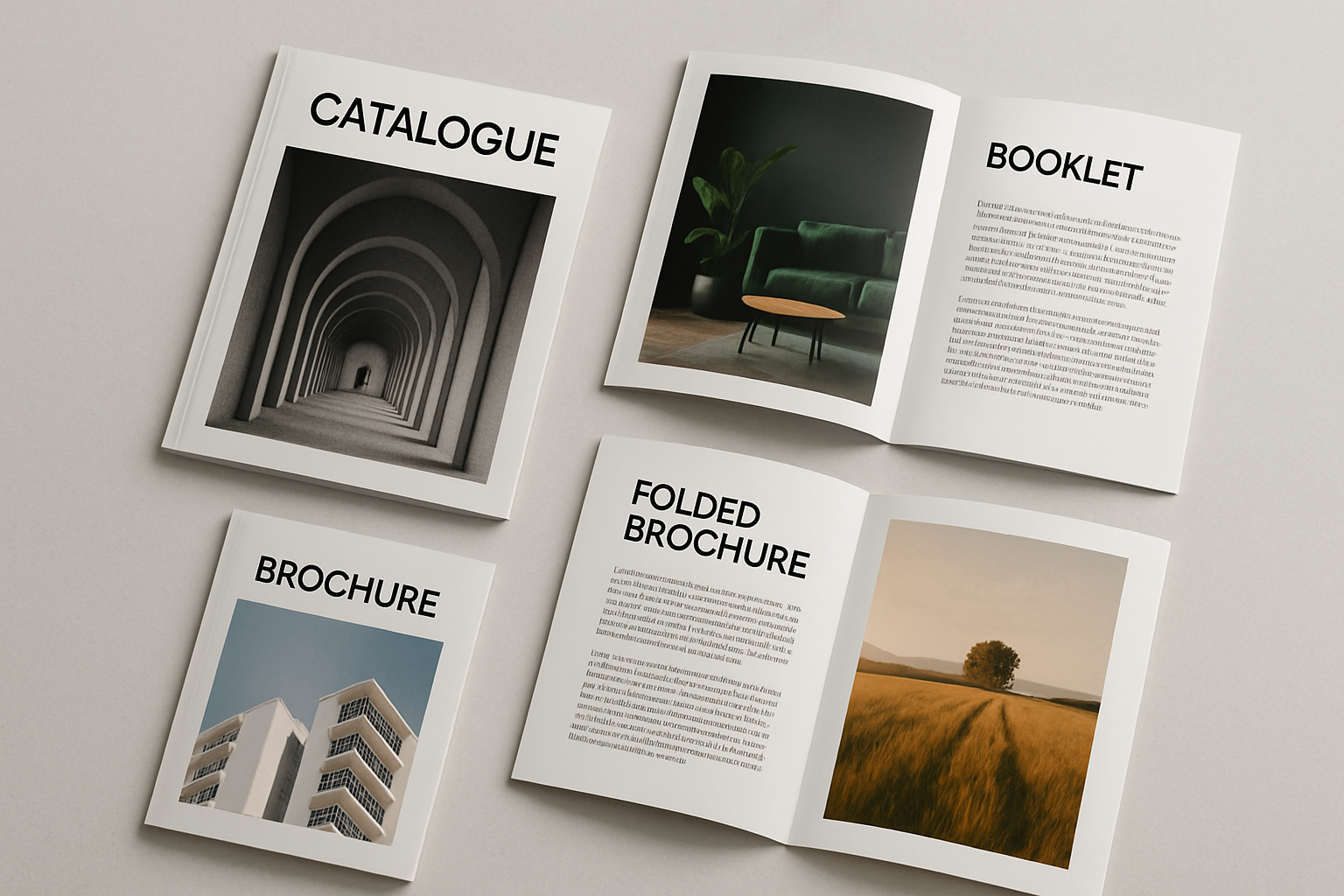
Examples for different industries: school textbook printing often uses durable perfect binding or case binding for library copies; brochure printing and newsletter printing typically use saddle-stitch or perfect bind depending on thickness; catalogue printing may use PUR or wire-o binding for heavy-use, multi-page catalogues.

How much does colour vs black-and-white printing change the cost?
Colour printing is more expensive than black-and-white due to ink costs and sometimes longer press time. Full-colour interior printing (CMYK) will raise costs substantially, especially for litho runs. Many educational textbooks combine colour plates with black-and-white body text to balance cost and clarity. For business materials like brochures and catalogues, full colour is often essential for brand impact.
Cost-saving tactics include printing black-and-white interiors with colour sections, using spot colour for important pages, or limiting high-resolution colour images to the cover and select spreads.
For short runs and test prints, brochure and booklet options can be adapted, and for institutional runs check our education printing services.
How much extra does fast turnaround and delivery add?
Fast turnaround (rush jobs) increases cost because production schedules may be re-prioritised and express freight used. If you need books ready for a new school term, or printed materials for an event, expect a premium of 10–30% on standard pricing depending on how much the schedule compresses.
Delivery across South Africa also varies by weight, distance and carrier choice. For large educational printing jobs destined for multiple schools, bundling and staged deliveries can reduce overall logistics cost. Local printers with nationwide distribution can often provide better rates than shipping from overseas.
Can eco-friendly printing affect the price?
Eco-friendly options — recycled papers, eco inks, FSC-certified stocks, and water-based varnishes — can cost more than standard materials but are increasingly in demand for school textbook printing and sustainable corporate materials. The premium varies: recycled stocks or certifications may add 5–20% to material costs, while process changes (like waterless printing) can also affect pricing.
Many schools and educational publishers in South Africa now ask for eco-conscious options; these are part of the wider trend towards responsible packaging printing and production. Ask printers for lifecycle or certification details to compare true environmental impact, not just headline labels.
How do proofs, ISBNs, and compliance add to cost?
Prepress tasks — proofs, typesetting, colour correction, and file preparation — carry fees. Physical proofs (press proofs or bound proofs) cost more than digital proofs but are recommended for larger runs, especially for textbooks and training manuals where legibility and colour accuracy matter. ISBN registration (if you want your book sold commercially) and barcode generation are additional administrative costs.
For educational printing and school textbook printing, there may also be curriculum compliance reviews and specialist approvals that add time and cost. Allow budget for at least one round of content corrections after the first proof.
How can small publishers and businesses lower costs while keeping quality?
There are practical strategies to reduce cost without compromising perceived value:
- Assess print run vs storage costs — sometimes printing slightly more saves unit cost enough to justify short-term warehousing.
- Mix black-and-white interiors with colour inserts instead of full-colour pages.
- Use standard trim sizes and stock weights to avoid custom sheet waste.
- Consolidate orders across product types (e.g., booklets, brochures, and business cards) for better pricing.
- Plan deadlines to avoid rush charges and work with a printer experienced in catalogue printing or training manual printing for accurate lead-time quotes.
For authors and small presses, print-on-demand remains a strong option to avoid large upfront spend; for schools and publishers, bulk offset runs are usually the cheapest per unit when you factor in distribution.
Where can I get a quote and what information should I provide?
To get an accurate quote from printers, prepare the following details: final trim size, page count, interior colour specification, cover finish, binding type, preferred paper stock weights, target print run, required delivery date, delivery addresses (for bulk distribution) and any compliance needs for educational materials. Including source files (PDFs adhering to printer specs) speeds up the estimate process.
If you’re producing short promotional books or event materials, also check services that combine printing with fulfilment and delivery to avoid multiple vendors. For specialised help on school-focused projects check our textbook printing and books printing pages.
How do industry trends and facts shape printing decisions?
Understanding broader industry trends helps you make cost-effective choices. According to the International Publishers Association, global book publishing revenues were around US$122 billion in 2019, which underscores the resilience of print in the publishing ecosystem. According to UNESCO, the global adult literacy rate is about 86%, which supports ongoing demand for educational and textbook printing worldwide. Finally, according to industry market reports, a significant portion of the worldwide print market remains in commercial and packaging segments, but book and educational printing continue to represent a stable demand stream.
For background on the broader publishing sector see the book publishing article on Wikipedia. Locally in South Africa, selecting a print partner with experience across catalogue printing, brochure printing, school textbook printing and packaging printing will help you navigate local logistics, eco-options, and fast-turnaround needs.
Key takeaways: final checklist before ordering
When you evaluate “how much does it cost to print a book” for your project, use this checklist to avoid surprises:
- Confirm print run and whether offset or digital makes sense.
- Decide interior colour mix vs cost-savings options.
- Choose binding that balances durability and budget (essential for textbooks and training manuals).
- Specify finishes and whether eco-certified stocks are required.
- Obtain proofs and account for delivery and rush fees.
- Compare quotes — ask printers for unit price at a few run sizes to find the break-even point.
Whether you’re a school procuring textbooks ahead of a new term, a small business preparing brochures and booklets for an event, or a publisher evaluating a print run, understanding these drivers will help you get the best value from commercial and educational printing in South Africa.
Contact Print It ZA today, for a Free Quote and Speedy Service.
Print It ZA, we deliver Printing Best!