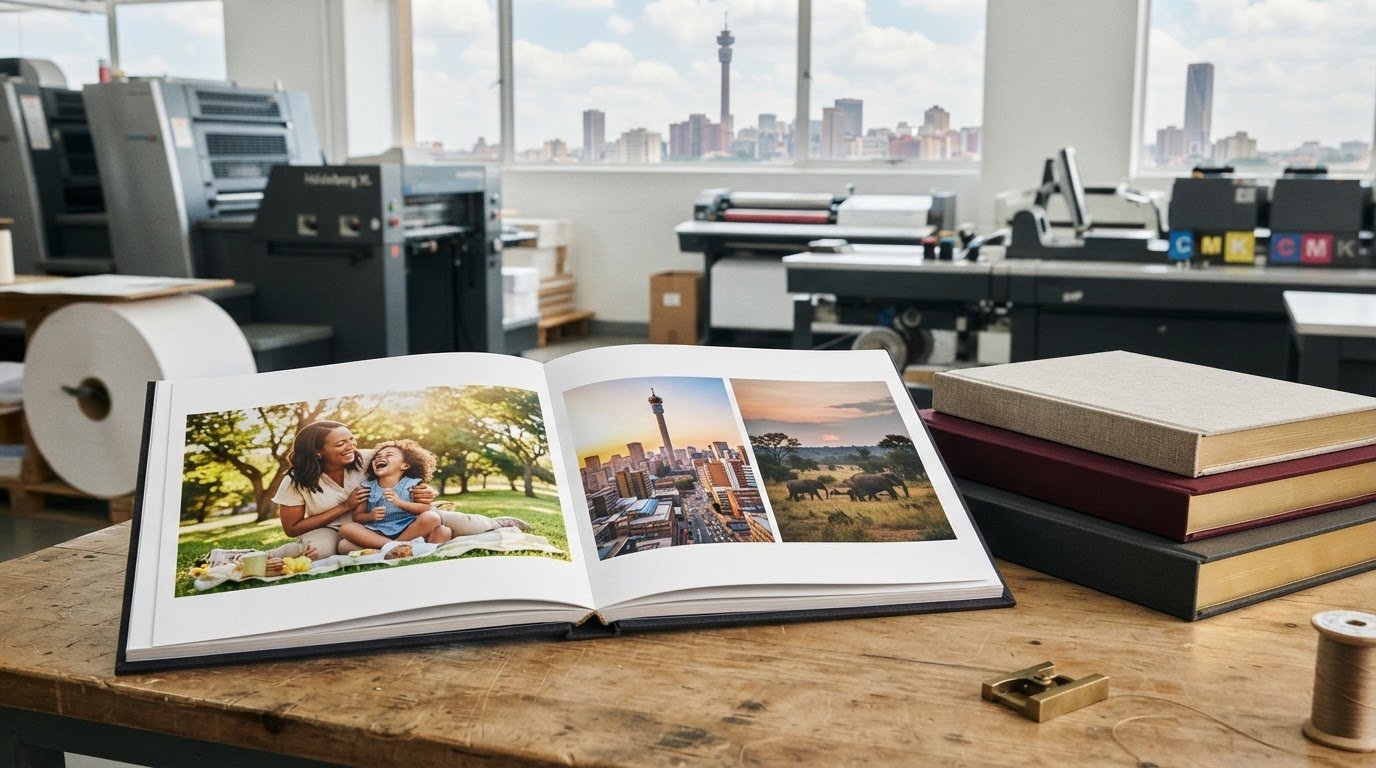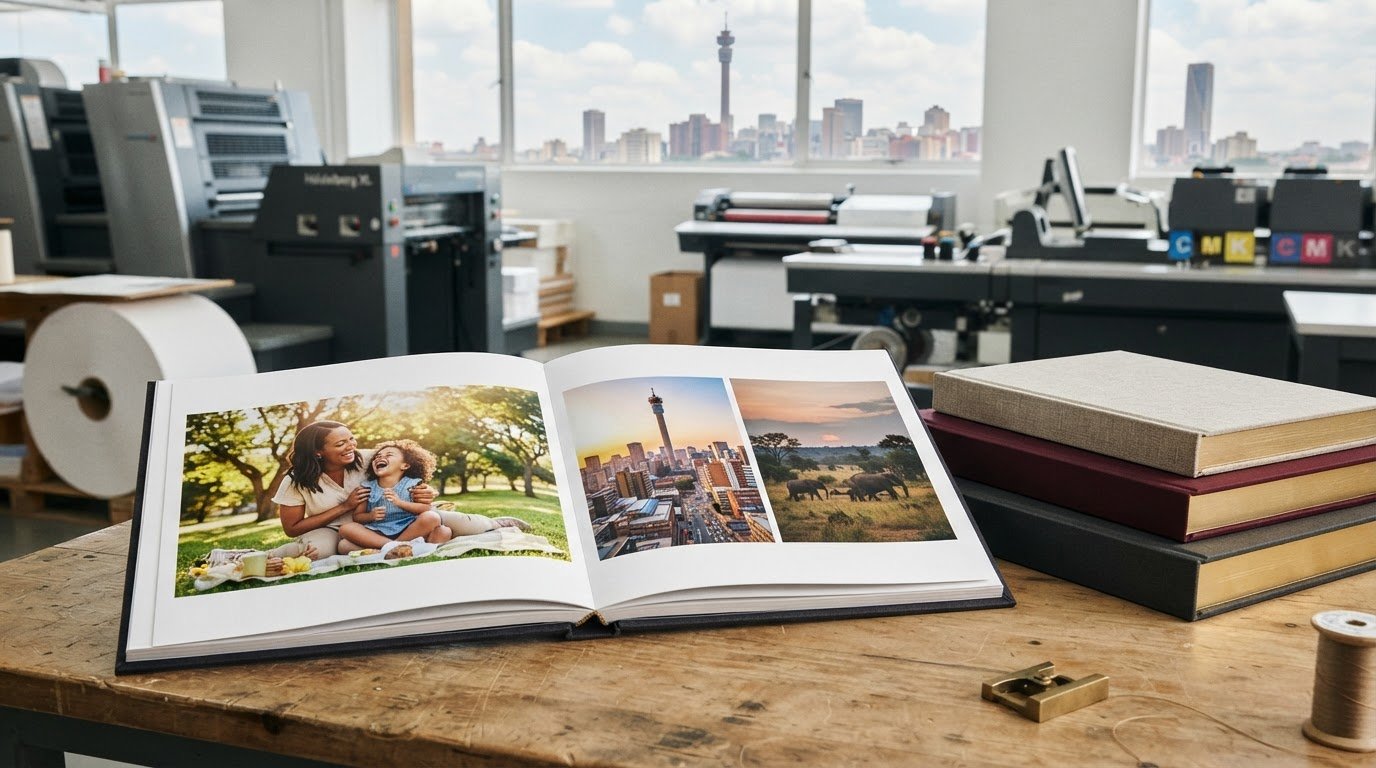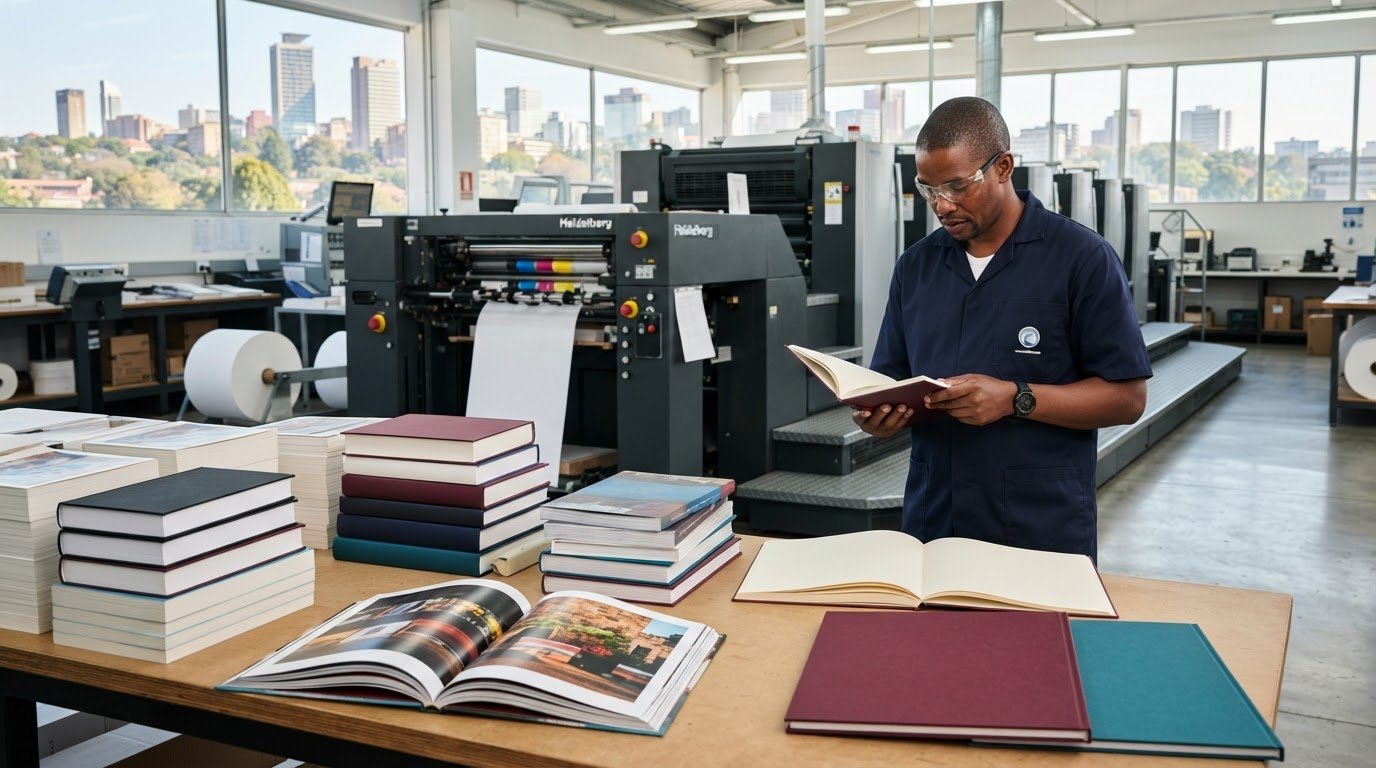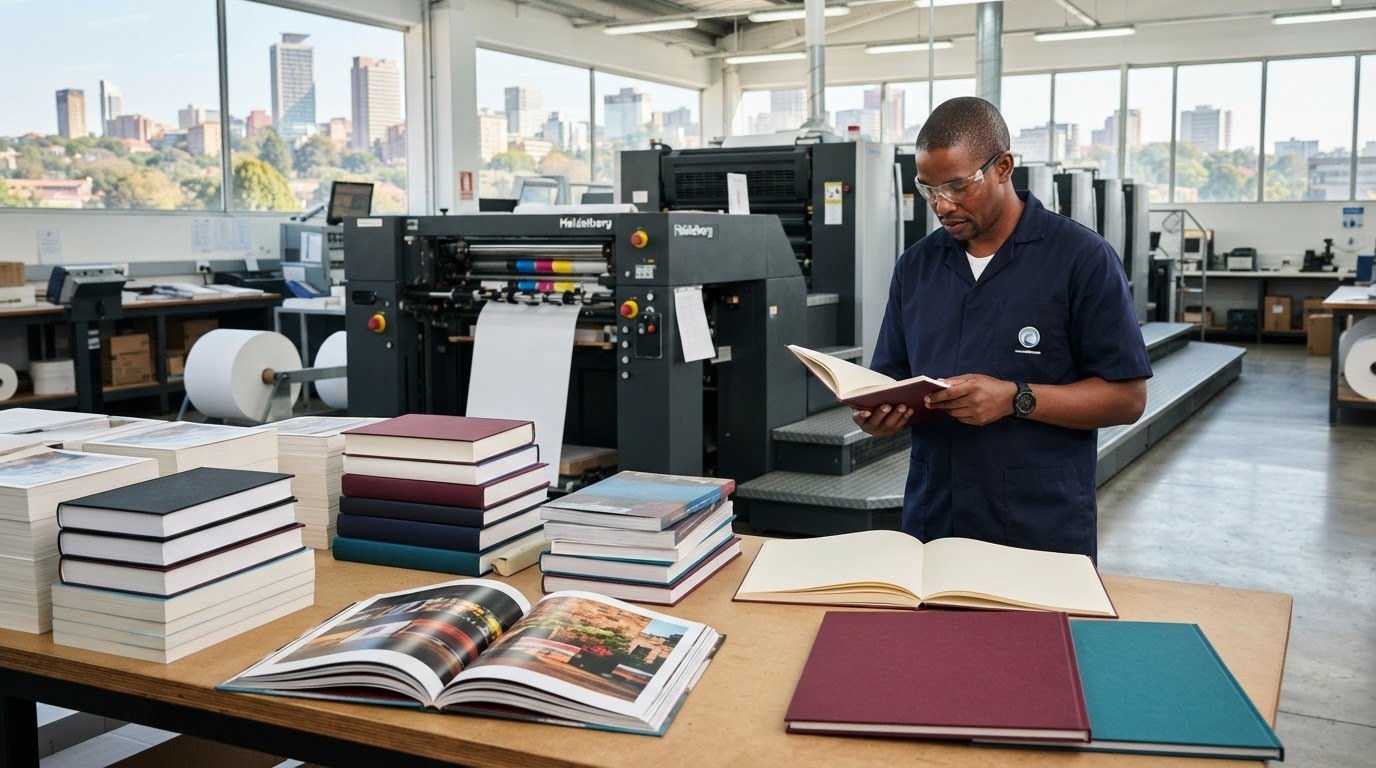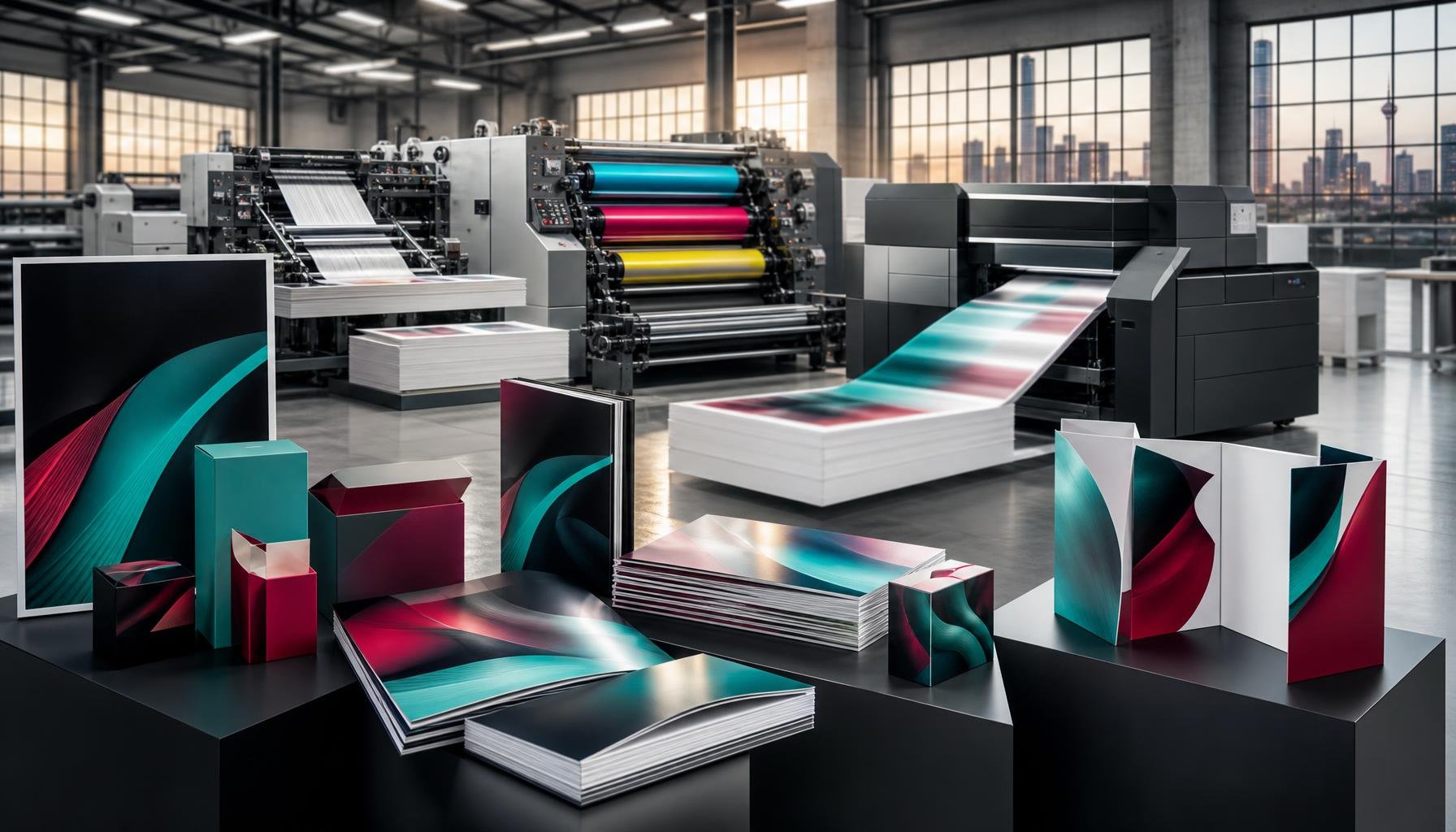
What if the difference between a "home-made" project and a bestseller at Exclusive Books isn’t your plot, but the weight of your paper? You’ve spent months pouring your soul into a manuscript, yet the thought of choosing between digital and litho printing feels like a different language. It’s completely normal to feel anxious about high upfront costs or ending up with a box of books that look amateur. Professional novel printing for new authors doesn’t have to be a technical minefield. Many local writers share these exact fears when they first step into the world of self-publishing.
We’re here to turn that anxiety into action. This guide provides the technical clarity you need to produce a physical book you’ll be proud to sign. We’ll show you how to achieve bookstore-quality finishes while keeping your per-unit costs manageable. You’ll get a clear roadmap on everything from paper types and binding specs to South African essentials like ISBN registration and the barcode requirement. By the end of this article, you’ll have the confidence to transform your digital file into a professional reality that stands tall on any retail shelf.
Key Takeaways
- Learn how to bridge the gap between a digital manuscript and a retail-ready masterpiece that competes with traditionally published titles.
- Discover the industry-standard specifications for novel printing for new authors, including the psychological impact of paper choice and South African trade paperback sizes.
- Identify the “sweet spot” in production volume where cost-effective digital printing gives way to the lower per-unit prices of lithographic runs.
- Master the essential pre-printing checklist, including how to secure your free ISBN from the National Library of South Africa and prepare a press-ready PDF.
- Find out how a dedicated local partner in Johannesburg can mentor you through the final stages of your publishing journey to ensure a high-standard finish.
Table of Contents
-
The Milestone of Novel Printing: From Manuscript to Physical Masterpiece
-
Choosing Your Novel Specifications: Trim Sizes, Paper, and Binding
-
Preparing for the Press: A Pre-Printing Checklist for New Authors
-
Partnering with Print It ZA: Your Creative Partner in Johannesburg
The Milestone of Novel Printing: From Manuscript to Physical Masterpiece
You’ve finally typed "The End." It’s a moment of pure triumph that every writer dreams of, but for many, the next step feels like a steep mountain. Professional novel printing for new authors is the critical bridge that transforms a digital Word document into a retail-ready masterpiece. It’s the point where your story gains physical weight, texture, and a presence that demands attention on a bookshelf. This stage isn’t just about putting ink on paper; it’s about matching the high standards of the industry so your work can stand proudly alongside international titles. When you hold that first copy, the transition from "writer" to "published author" becomes a tangible reality.
Choosing the right partner for this transition is vital. You need a printer that understands the specific nuances of fiction, from the way a spine should flex to how the page color affects reading speed. If you’re looking for a comprehensive overview of self-publishing, you’ll see that the physical quality of the book is often what separates successful independent authors from those who struggle to find an audience. A professional finish tells the world that your story is worth the investment.
Why First Impressions Matter for New Authors
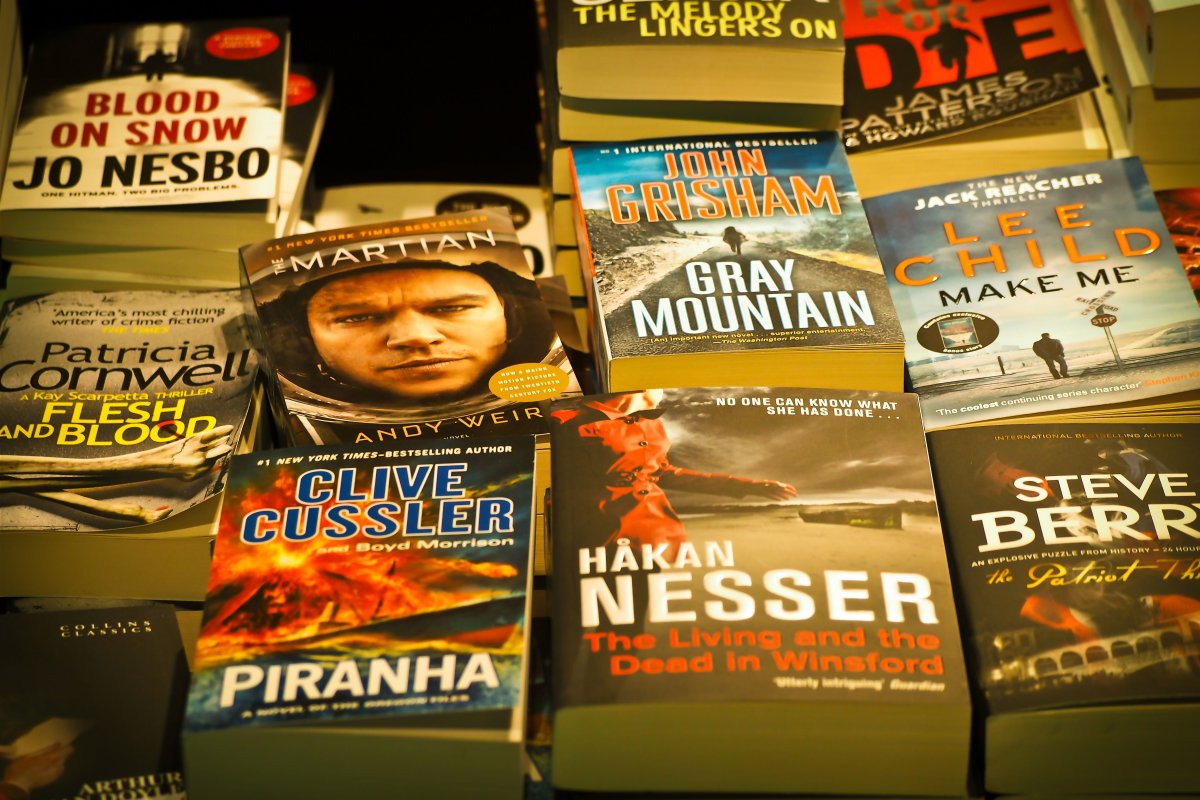
Readers judge books by their covers every single day. It’s often called the "bookshelf test." If your novel looks out of place next to a Penguin or HarperCollins release, you’ve likely lost the sale before the first chapter is even read. A professional finish involves more than just a striking image; it’s about the precision of the spine width, the crispness of the text, and the tactile feel of the lamination. High-quality novel printing for new authors builds immediate credibility. It signals to your audience that you value your work, which makes them much more likely to value your words. This professional branding is what turns a one-time reader into a lifelong fan who eagerly awaits your next launch.
The South African Self-Publishing Landscape
The local market has evolved rapidly over the last few years. South African fiction readers are increasingly supporting local voices, but their expectations for quality haven’t wavered. We’ve seen a massive shift away from expensive, slow international imports toward high-quality, short-run local production. This change allows authors to keep their stock fresh and their costs manageable without sacrificing the "premium" feel readers love. Johannesburg has firmly established itself as the national hub for professional printing services. By producing your books locally, you avoid the headaches of international shipping and gain a creative partner who understands the unique nuances of the South African retail environment.
Choosing Your Novel Specifications: Trim Sizes, Paper, and Binding
Choosing the right technical specifications is where your creative vision meets manufacturing reality. When it involves novel printing for new authors, the goal is to create a physical object that feels familiar and professional to the reader’s hands. These choices influence everything from the weight of the book to the psychological comfort of the person reading it. In the South African market, adhering to certain industry standards ensures your book doesn’t just look the part, but also remains cost-effective to produce and distribute.
Novel-Specific Trim Sizes (A5 vs. US Trade)
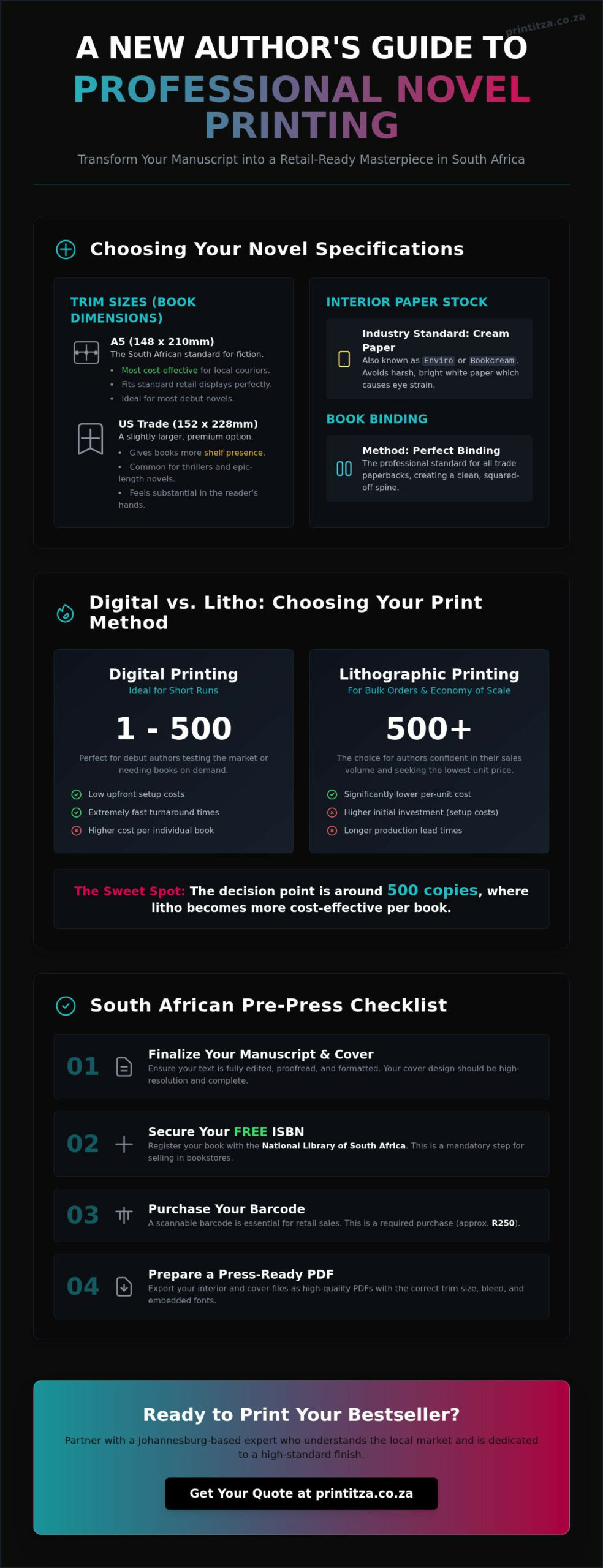
The size of your book, or "trim size," is your first major decision. In South Africa, A5 (148 x 210mm) is the most common standard for local fiction. It’s incredibly practical; A5 is the most cost-effective size for South African couriers and fits perfectly into standard retail display units. However, if you’re writing a "chunkier" thriller or a sprawling epic, you might consider US Trade (152 x 228mm). This slightly larger format is often used for premium paperbacks to give them more presence on the shelf. While genre often dictates size, A5 remains the go-to for most debut novelists looking to balance aesthetics with shipping logistics.
Selecting the Right Interior Paper Stock
The paper inside your book shouldn’t be an afterthought. For fiction or non fiction books cream paper is the absolute gold standard. It provides a softer contrast for the eyes, making long-form reading much more comfortable than stark white paper. White paper is typically reserved for textbooks or novels that include interior photographs and illustrations. Regarding weight, 80gsm is the industry standard for most novels. It provides enough opacity to prevent text from "ghosting" through the page while keeping the book light enough to hold comfortably. If you want a thicker, more substantial feel without adding pages, stepping up to 100gsm is an option, though it will increase the overall weight of your shipment.
Cover Finishes and Binding That Sell
Your book needs to survive the journey from the warehouse to the reader’s bedside table. Perfect binding is the non-negotiable standard for professional novels. This process uses a strong adhesive to attach the pages to a wrap-around cover, creating the clean, square spine you see in bookstores. For a deeper look at your options, this guide to book binding types explains why perfect binding is the preferred choice for paperbacks.
To protect that binding and your artwork, a lamination finish is essential. Matte lamination is currently trending for its sophisticated, velvety feel, while gloss lamination offers superior durability against humidity and shelf-wear. For those wanting a premium "pop," you can add Spot UV or foil stamping to highlight your title. If you’re feeling overwhelmed by these choices, you can always consult with a local print partner to see physical samples of these finishes in person.
Digital vs. Litho Printing: Which is Right for Your Debut?
Deciding between digital and lithographic (litho) printing is often the biggest financial choice you’ll make in your publishing journey. Digital printing uses toner-based technology, acting much like a high-speed, high-precision version of a professional laser printer. There are no plates to create, which keeps the setup fast and affordable. Litho printing, however, uses custom metal plates and liquid ink. While the initial setup is more complex and time-consuming, it offers a level of scalability that digital simply can’t match. Understanding these differences is a vital part of novel printing for new authors because it dictates your initial budget and your long-term launch strategy.
Most debut writers start with a smaller batch to test the waters and build momentum. Before you commit to a specific print run, it’s wise to review the guidelines from the Publishers’ Association of South Africa to ensure your project aligns with professional expectations. This helps you decide if you’re printing for a niche audience or aiming for wide-scale retail distribution across the country. Your choice should always align with your current sales data and distribution goals.
Digital Printing for Short-Run Success
If you need between 10 and 200 copies, digital is your best friend. It’s the perfect way to produce Advanced Reader Copies (ARCs) to send to reviewers, bloggers, or influencers before your official launch. Because there are no physical plates involved, turnaround times are much faster. You can often have books in your hands in a matter of days. This flexibility is a lifesaver for time-sensitive launches or events. If an eagle-eyed reader spots a typo in your first 50 copies, you can simply update your digital file for the next batch without incurring extra setup fees. It’s a low-risk way to enter the market.
Litho Printing for Scalable Production
Once your pre-orders or distribution requirements cross the 500-copy mark, the math shifts heavily in favor of litho. While the upfront cost is higher due to the plate-making process, the per-unit price drops dramatically as your volume increases. This makes high-volume book printing services the only logical choice for authors with established distribution deals or large fan bases. Litho also offers superior color consistency across the entire run. If you have a complex, vibrant cover design, litho ensures the 1,000th book looks exactly like the first. It’s the industry standard for books destined for long-term retail shelf life in major South African bookstores.
Preparing for the Press: A Pre-Printing Checklist for New Authors
The move from a finished manuscript to a print-ready file is where technical precision becomes your best friend. In the world of novel printing for new authors, small errors in file preparation can lead to expensive mistakes once the presses start rolling. Your goal is a high-quality PDF that contains every font, image, and margin setting exactly as it should appear in the final book. Taking the time to get these details right ensures that your creative vision translates perfectly from the screen to the physical page.
Legal Requirements for South African Authors
Before you print, you need to handle the administrative essentials that make your book a legal commercial entity in South Africa. You can apply for an ISBN through the National Library of South Africa. This process is handled through a streamlined digital portal for local authors. While the ISBN is free, remember that a retail-ready barcode carries a costu. You’re also legally required to comply with the Legal Deposit Act. For print runs under 100 copies, you must send one copy to the National Library; for larger runs, you’ll need to submit five copies. Don’t forget to include your copyright notice on the colophon page. In South Africa, copyright protection is automatic under the Copyright Act 98 of 1978, but stating it clearly protects your intellectual property for your lifetime plus 50 years.
Technical File Specifications
Your screen uses RGB (light) to show colours, but printing presses use CMYK (ink). Always convert your cover art to CMYK to avoid dull or shifted colors in the final product. Ensure all images are set to 300 DPI to prevent pixelation, and embed all fonts in your PDF so the text remains crisp. Two of the most critical concepts are "Bleed" and "Safe Zones." Your cover art must extend at least 3mm beyond the actual trim line (the bleed) so that no white edges appear if the blade shifts slightly during cutting. Conversely, keep all vital text and logos at least 5mm inside the trim line (the safe zone) to ensure they aren’t accidentally clipped.
Calculating your spine width is another vital step. This isn’t a guess; it’s a calculation based on your specific page count and the thickness of your chosen paper stock. If you’re unsure about your spine width or bleed settings, reach out to our production team for a technical file review before you commit to the full run. Always request a physical proof before the final print. Reviewing a physical copy is the only way to catch layout errors or color issues that a digital screen might hide.
Partnering with Print It ZA: Your Creative Partner in Johannesburg
Your manuscript represents years of dedication and countless hours of craft. Entrusting that work to a printer is a major milestone. At Print It ZA print and packaging, we aren’t just a service provider; we’re your reliable creative partner. We know that novel printing for new authors involves complex technical choices that can feel overwhelming. That’s why we act as mentors throughout the entire process. We guide you from your initial digital file to a physical book you’ll be proud to sign. Our goal is simple: bookstore-quality results for every South African writer. We take immense pride in being a local business that understands the unique needs of our regional market.
Why Authors Across SA Trust Our Print Facility
Our Midrand facility is the engine behind our success. We house state-of-the-art litho and digital equipment under one roof, allowing us to switch between short-run tests and high-volume production with ease. Because our print facility operates 24/7, we provide the fast turnaround times your launch schedule requires. We’re a hardworking, tech-savvy business that hasn’t lost its human touch. While we’re rooted in Johannesburg, our reach is nationwide. We regularly deliver professional novels to authors in Cape Town, Durban, and across the country. Our commitment to aesthetic excellence ensures that your book arrives in pristine condition, ready for the retail shelf.
Getting Started with Your First Print Run
We don’t believe in one-size-fits-all solutions because every story is unique. We start with a collaborative consultation to refine your vision and ensure all technical specs are met. We’ll help you finalize the details we’ve covered in this guide, from paper weight to the perfect cover lamination. Our expertise in novel printing for new authors ensures that your debut makes a lasting impact on your readers. Our quoting process is transparent and direct, so you’ll see exactly how we maximize the value of your investment. We value your time and your vision above all else. It’s more than a transaction; it’s a creative partnership designed to bring your masterpiece to life.
Ready to print your novel? Contact our team for a professional consultation today.
Take the Next Step Toward Your Publishing Debut
Transforming your manuscript into a physical book is a life-changing experience for any writer. You now have the roadmap to navigate the technical landscape of novel printing for new authors; from selecting the perfect cream paper stock to mastering the legal deposit requirements in South Africa. Whether you’re starting with a short digital run for reviewers or scaling up to a massive litho production for national retailers, the quality of your finish is what builds your credibility as a professional author. Every choice you make, from trim size to lamination, contributes to that vital first impression on the shelf.
At Print It ZA, we’re ready to help you cross the finish line. Our 24/7 Midrand print facility and expert in-house design team ensure that every page meets the highest industry standards. With our nationwide and international distribution network, your story can reach readers far beyond the borders of Johannesburg. We’ve built our reputation on being a mentor to the local creative community and a reliable partner for your vision. Get a Quote for Your Novel Printing Project today and let’s turn your digital file into a physical masterpiece. Your story deserves to be held, read, and shared.
Frequently Asked Questions
What is the minimum number of copies I can print for my novel?
You can print as few as 10 copies using our digital technology. This low entry point makes novel printing for new authors highly accessible for those who want to distribute review copies or test the market before committing to a larger run. Litho printing usually becomes the more economical choice once you scale past 500 copies.
How long does the novel printing process take from start to finish?
The standard turnaround time is usually between 5 and 10 business days once you’ve approved your final proof. Digital orders are typically on the faster end of that scale. Because our Midrand print facility operates 24/7, we maintain a high-energy workflow to get your books into your hands as quickly as possible.
Do I need to get my own ISBN before I contact a printer?
No, you don’t need your ISBN ready just to start the consultation process. We can help you calculate your spine width and prepare your layout while you wait for the National Library of South Africa to issue your number. You only need the final ISBN and barcode when we’re ready to finalize your cover art for the press.
What is the difference between paperback and hardcover novel printing?
Paperback novels use a flexible cardstock cover and perfect binding, which is the industry standard for fiction in South Africa. Hardcover books involve a rigid board cover that offers superior durability and a premium feel. While hardcovers are beautiful for special editions, they involve higher production costs and a longer assembly process than standard paperbacks.
Can Print It ZA help with the layout and cover design of my book?
Yes, our expert in-house design team is available to help you refine your vision. We can assist with interior formatting to ensure your text is readable and correctly margined. We also ensure your cover artwork meets all technical specs, including bleed zones and CMYK color profiles, for a seamless execution.
How do I calculate the shipping costs for my book order within South Africa?
Shipping costs depend on the total weight of your boxes and your delivery distance from our Johannesburg hub. We work with reliable local couriers to provide nationwide distribution to your door. When you request your quote, we’ll include a transparent delivery estimate based on your specific order volume and location.
What happens if I find a typo after the first print run is finished?
Once the ink is on the paper, physical copies can’t be edited. However, one of the biggest advantages of novel printing for new authors using digital technology is the ability to update your file for the very next batch. We’ll simply swap in your corrected PDF so that all future copies are perfect.
Can I print a single proof copy before committing to a larger run?
We always encourage you to review a physical proof copy before we start the full production run. Ask us for a print quote on your physical proof to ensure colour accuracy. Seeing your work in print is the best way to check for layout errors or colour shifts that don’t show up on a digital screen. This step ensures you’re completely satisfied with the final product before the bulk of your budget is spent.
Contact Print It ZA today, for a Free Quote and Speedy Service.
Print It ZA print and packaging, we deliver Printing Best!