Why settle for flimsy paperbacks or exorbitant international shipping when the best craftsmanship in the industry is right here in Gauteng? You’ve spent months or even years perfecting your manuscript. It’s natural to worry about poor binding quality or pages that might fall out after a few reads. You want a result that feels substantial and looks professional on any bookshelf. We understand that the technical jargon around litho versus digital printing can feel overwhelming when you just want a beautiful product.
We’re here to help you print hard cover books that rival international standards right from our 24/7 Midrand facility. This article shows you how to transform your vision into a durable, bookstore-quality masterpiece with fast local turnaround. We’ll demystify the printing process, clarify the cost-to-quality ratio, and help you choose the best binding options for your specific project. Whether you’re a self-published author or a corporate professional, you’ll gain the clarity needed to produce a hardback you’re proud to share.
Key Takeaways
- Learn why case binding is the ultimate choice for durability and how it significantly boosts the professional appeal and retail value of your work.
- Understand the technical differences between litho and digital methods to print hard cover books efficiently based on your specific volume requirements.
- Explore various hardcover formats, from standard A5 novels to oversized coffee table books, and how orientation affects binding strength.
- Master the essential steps for file preparation, including setting correct bleed margins and exporting to PDF/X to ensure a perfect wrap-around cover.
- Leverage the Gauteng advantage with 24/7 local production in Midrand that guarantees fast turnaround for time-sensitive projects like school diaries and annual reports.
The Value of Hardcover Binding: Why Print Hard Cover Books?
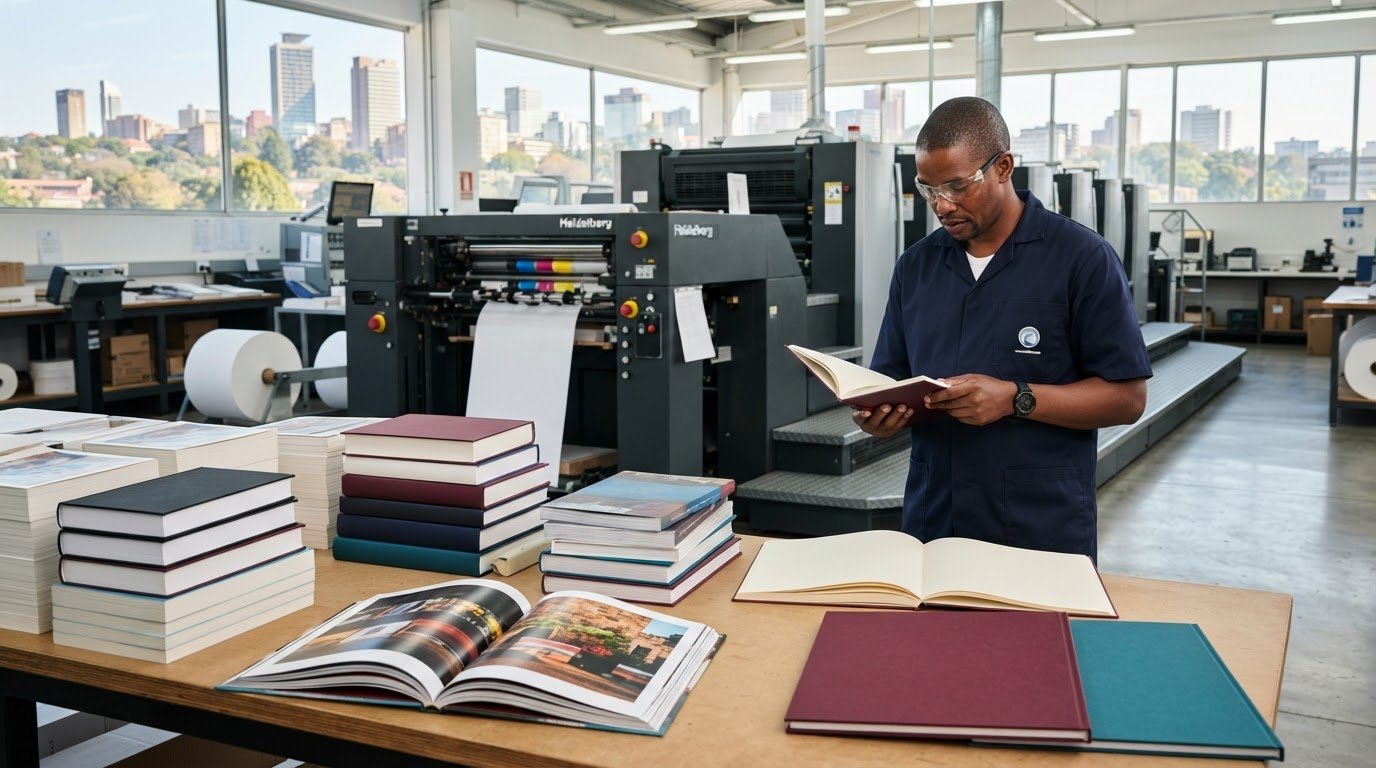
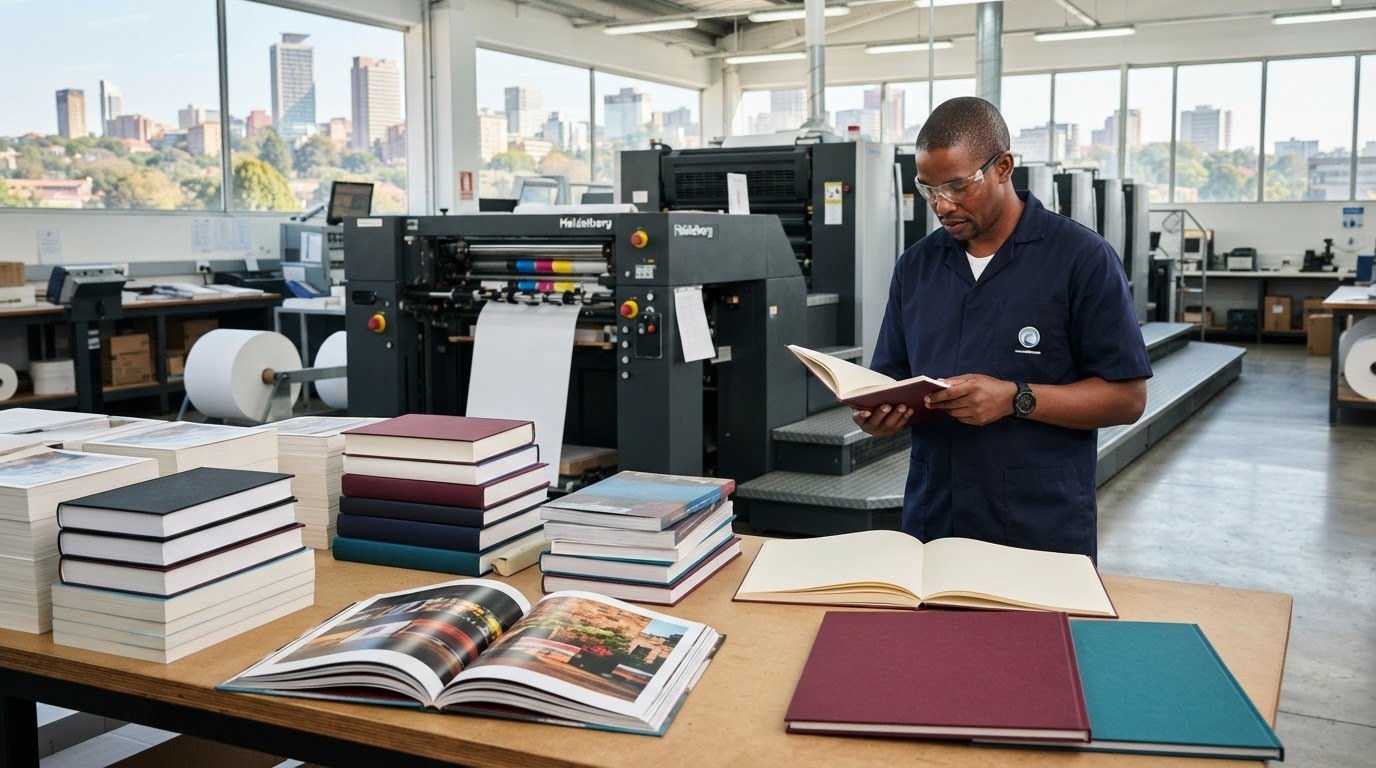
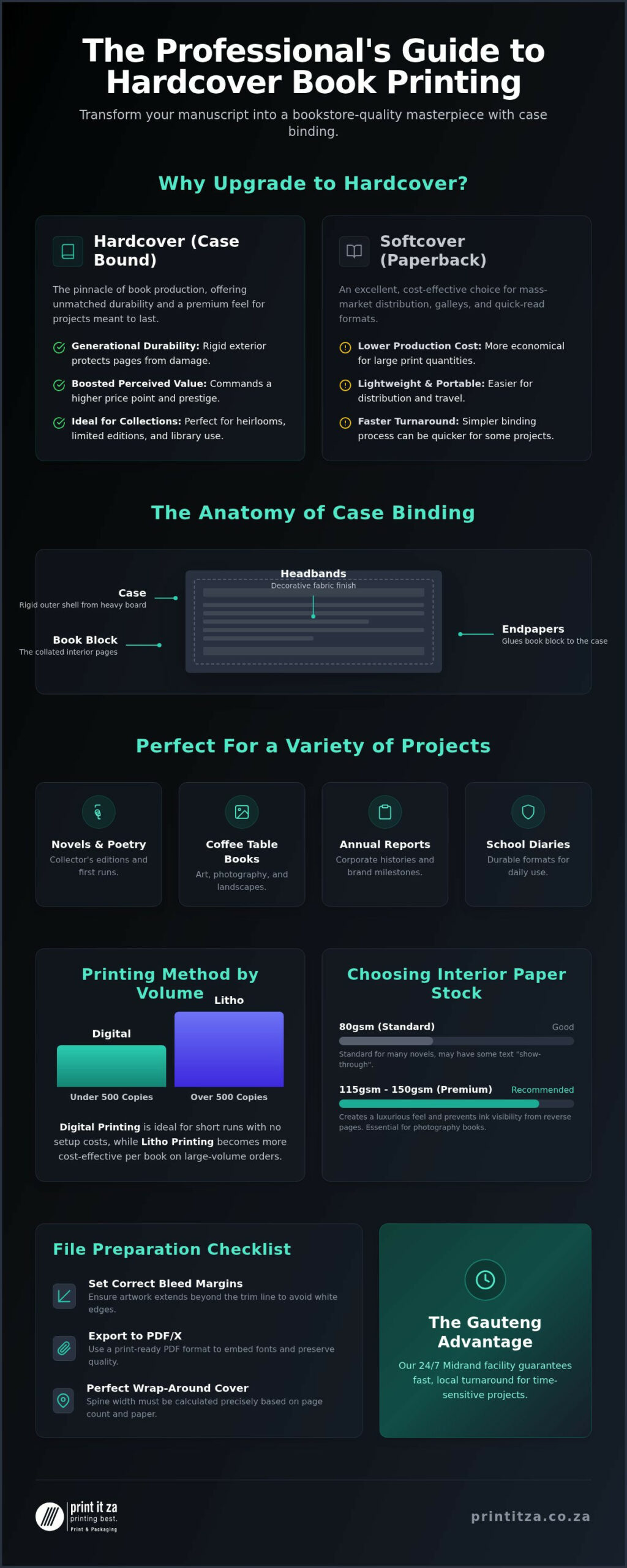
Hardcover printing represents the pinnacle of book production. Often referred to as “case binding” within the industry, this method provides a level of durability and professional aesthetics that softcovers simply can’t match. When you choose to print hard cover books, you’re investing in a product designed to last for generations. The rigid exterior protects the internal pages from environmental damage and frequent handling, making it the ideal choice for heirlooms, high-use reference materials, and premium retail products.
Authors and publishers often opt for hardbacks because of the significant boost in perceived value. A hardcover edition feels substantial in the hand. It commands attention on a retail shelf and justifies a higher price point compared to digital or paperback alternatives. This isn’t just about the physical materials; it’s about the statement the book makes. It tells the reader that the content inside is worth preserving. Beyond the psychological impact, the physical longevity ensures your work remains in pristine condition on a shelf for decades rather than years.
Hardcover vs. Softcover: When to Upgrade
While softcover books are excellent for mass-market distribution and quick reading, upgrading to hardcover is a strategic move for heritage projects and limited editions. Collectors and libraries prioritize hardback editions for their structural integrity. The traditional art of Bookbinding ensures that the spine doesn’t crack and pages remain securely attached even after years of frequent use. For self-publishers in South Africa, the higher production cost is often offset by the prestige the format brings to their personal brand. It transforms a simple manuscript into a legitimate piece of craftsmanship.
Ideal Genres for Hardcover Printing
Certain genres naturally demand a more robust format. Novels and poetry collections often receive the hardcover treatment for special first editions or collector’s sets. High-end coffee table books focusing on South African art, photography, or landscapes rely on the large, flat surface of a hardback to showcase vibrant imagery without the risk of the cover curling over time. Even cookbooks and technical manuals benefit from this format, as they need to withstand the rigors of a kitchen or workshop environment.
In the corporate world, first impressions are everything. We frequently assist Johannesburg businesses with professional annual reports and commemorative company histories. These publications serve as a testament to a brand’s stability and success. By choosing to print hard cover books for these projects, companies ensure their milestones are recorded in a format that reflects their commitment to excellence and high standards.
Understanding the Anatomy and Technical Specs of Case Binding
Case binding is the professional term for the method used to print hard cover books. Unlike common softcovers, case binding involves creating a rigid outer shell separately from the interior pages. This “case” is made from heavy board and then joined to the book block using durable endpapers. This construction allows the finished volume to lay flatter and provides the structural integrity needed for larger projects.
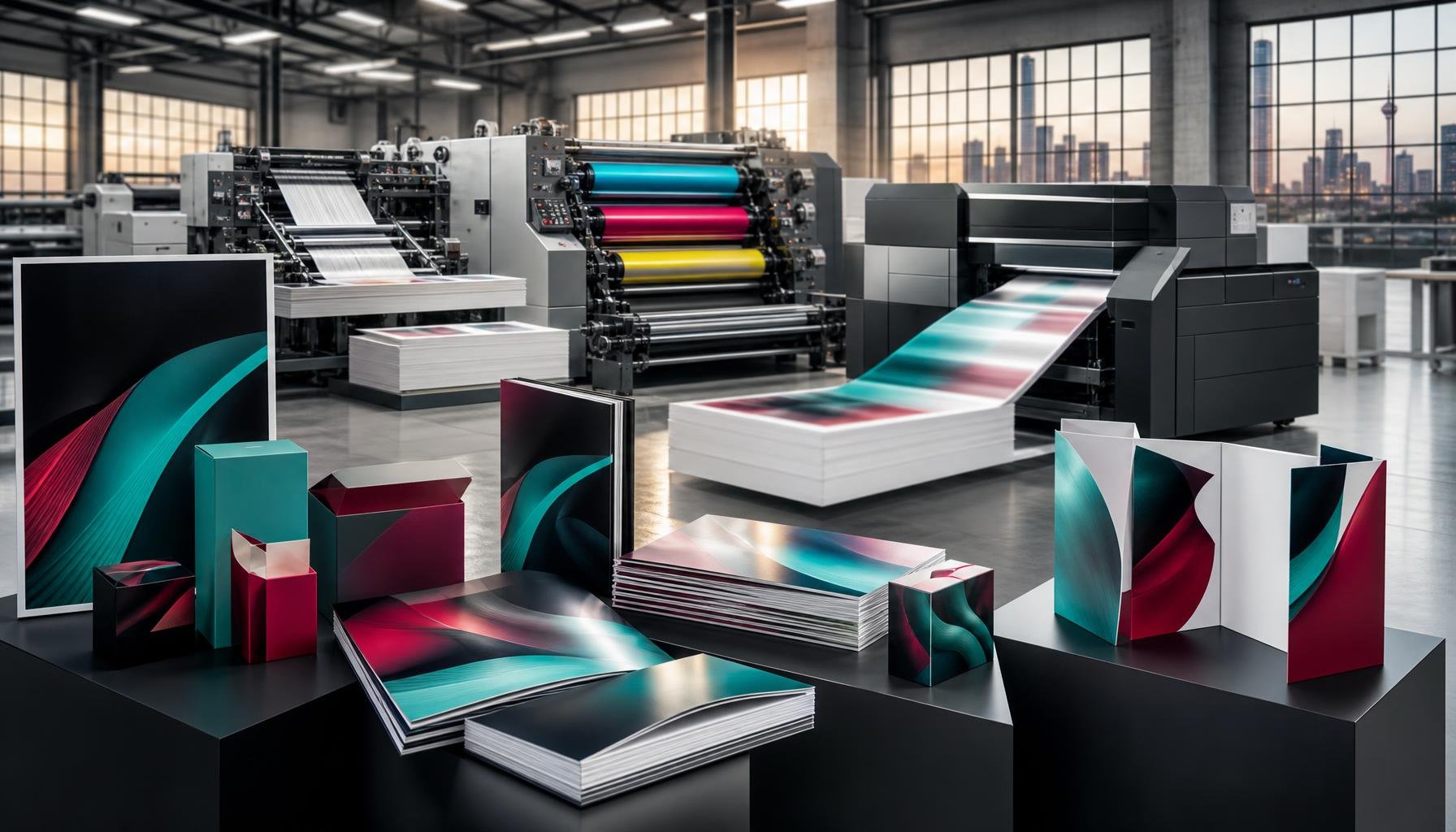
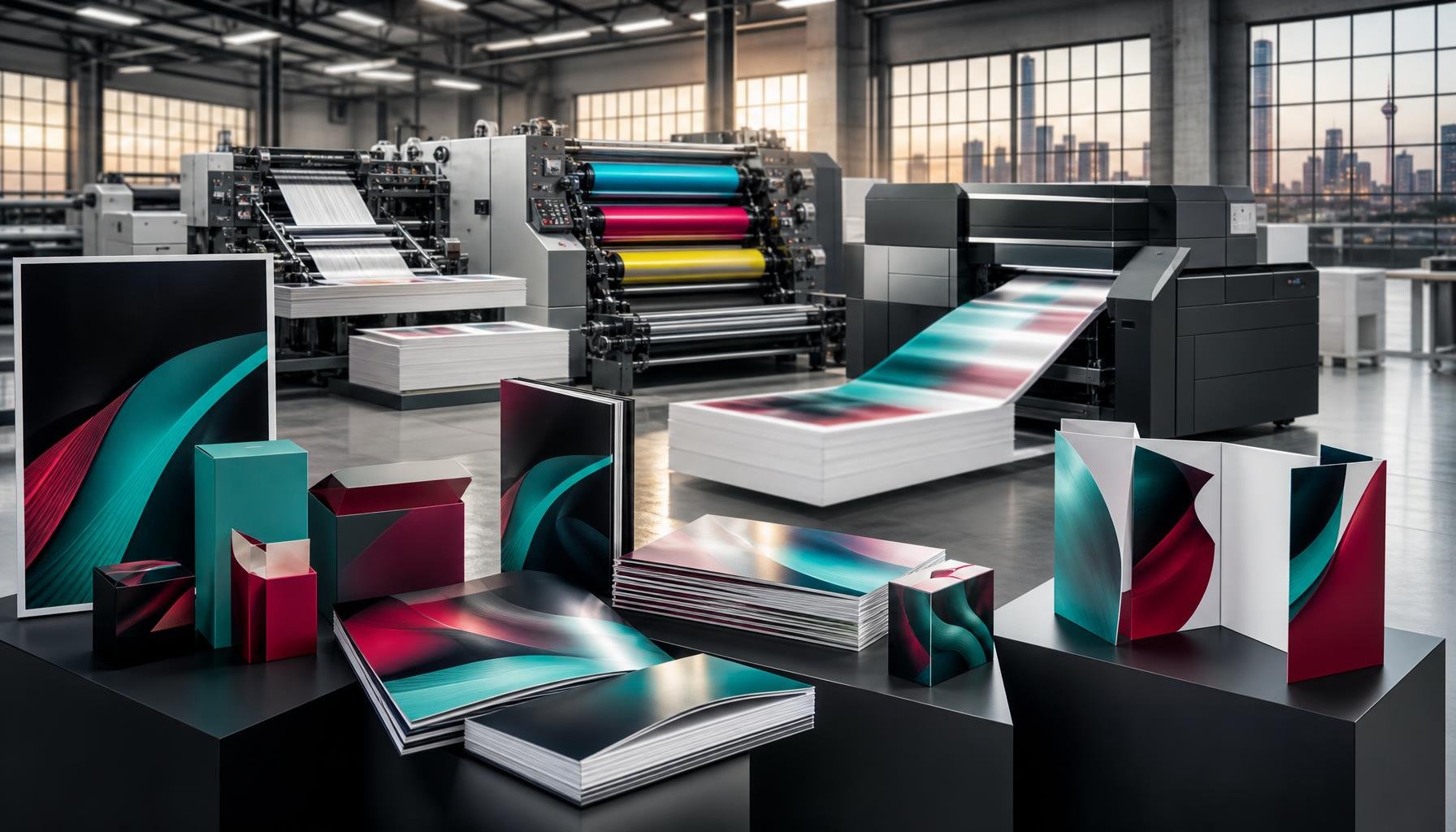
Deciding between litho and digital printing depends on your specific volume. Digital printing is the top choice for short runs under 500 copies, offering sharp detail without high setup costs. If you’re planning a large run for retail distribution, litho printing becomes more cost-effective per unit. Regardless of the method, calculating the spine width is a critical step. A spine that’s even a millimeter off can ruin the alignment of your cover art. We use precise formulas based on your page count and paper thickness to ensure a perfect wrap-around finish.
Small details often signal the highest quality. Endpapers, the sheets that glue the book block to the case, can be plain or custom-printed for added flair. Headbands, those small decorative fabric bands at the top and bottom of the spine, add a final touch of craftsmanship that readers notice. If you’re ready to discuss these technical details for your project, you can get expert advice from our Midrand-based team.
Choosing the Right Paper Stock for Hardcover Interiors
While 80gsm is the standard for many novels, 115gsm to 150gsm paper creates a far more luxurious feel. Heavier stocks prevent “show-through” where text from the reverse side is visible. Coated papers in matt or gloss finishes are essential for photography books to ensure vibrant colors, while uncoated stocks offer a classic, tactile feel for text-heavy projects. We also offer FSC-certified options sourced from sustainable South African forests to ensure your project is as eco-friendly as it is beautiful.
Cover Materials and Finishing Touches
Most modern hardbacks use a printed paper wrap, which allows for full-color designs protected by lamination. For a more traditional look, you might choose cloth or faux-leather covers. You can elevate the design with foil stamping, embossing, or Spot UV to make specific elements pop. When you print hard cover books, anti-scratch matt lamination is a popular choice in Johannesburg for its sophisticated feel and resistance to fingerprints. These finishes don’t just look good; they protect your investment for years to come.
Hardcover Formats: Comparing Premium Options
Choosing the right dimensions for your project is just as critical as the design itself. In the South African market, standard sizes range from the compact A5 novel to the grand A3 coffee table book. Each format serves a specific purpose. A5 is the go-to for portability and comfort during long reading sessions, while larger formats like A4 and A3 are designed to make a bold visual statement. When you print hard cover books, you also need to consider orientation. Portrait is the most stable choice for the spine, while landscape offers a cinematic feel for photography but requires extra attention to binding strength to prevent sagging over time.
Another key decision is whether to include a dust jacket. A removable jacket adds a layer of classic sophistication and protects the main cover from scuffs. However, many modern authors prefer a printed paper wrap, where the artwork is laminated directly onto the board. This creates a durable, streamlined look that’s perfect for high-use items. We see this often with niche applications like school yearbooks, religious texts, and personalized diaries. These projects need to withstand daily handling for years, making the structural integrity of a hardback essential.
The Classic Casebound Novel
For fiction authors, the A5 casebound novel remains the gold standard. It’s often paired with 80gsm cream paper to reduce eye strain and a matt lamination for a soft, premium touch. Many self-publishers choose to print hard cover books as “Special Edition” launches to reward their most loyal readers. This format isn’t just for collectors; educational institutions also rely on hardcover binding for textbooks. The rigid covers protect the book block through multiple school terms, providing a much better return on investment than flimsier alternatives.
Premium Coffee Table and Photo Books
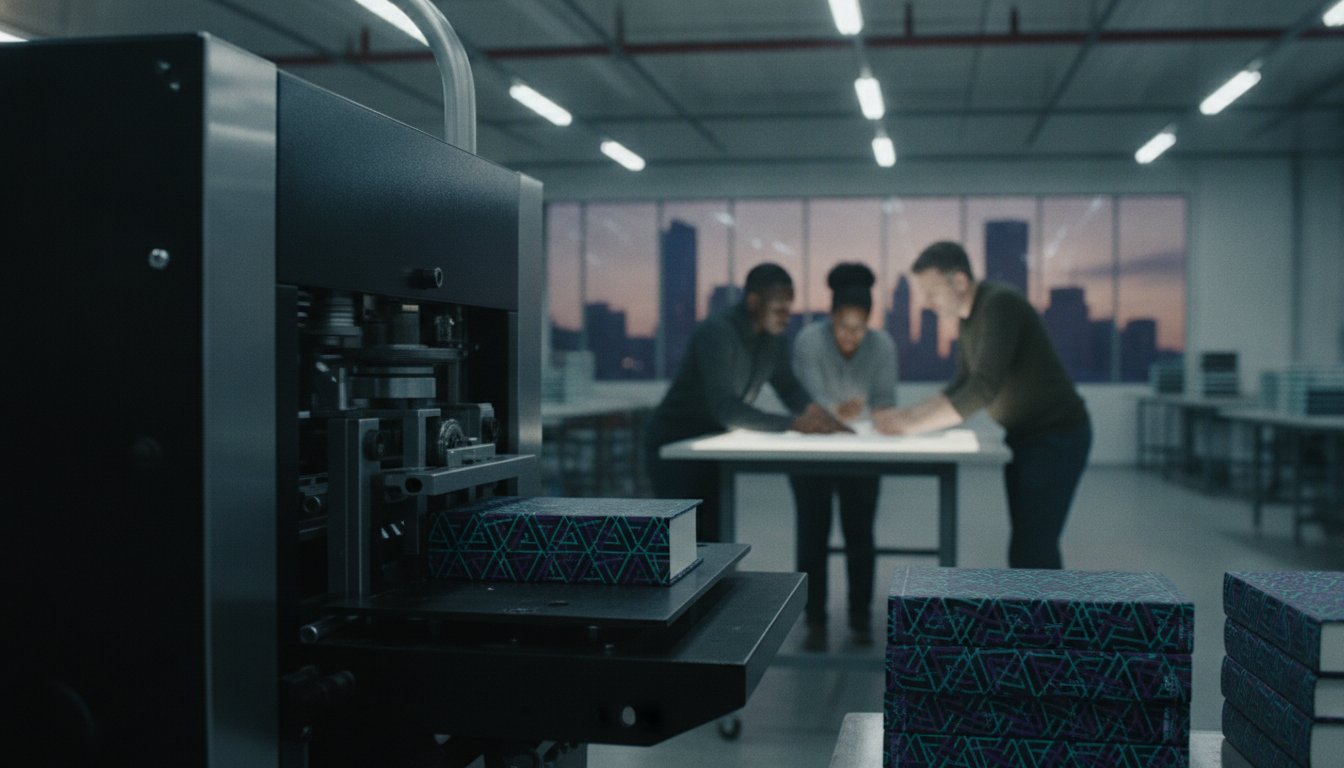
When the goal is visual impact, oversized and square formats are the clear winners. These books leverage large-format printing to showcase high-resolution photography and intricate art layouts. Achieving the perfect “lay-flat” aesthetic is vital here, ensuring that images spanning across two pages aren’t lost in the gutter of the spine. We utilize both litho and digital printing to guarantee vibrant color accuracy and sharp detail. Whether you’re documenting a corporate history or a personal travel portfolio, these premium formats turn a simple collection of images into a professional piece of home decor.
How to Prepare Your Files for Hardcover Printing
Preparing your digital files correctly is the bridge between a great design and a professional physical product. When you’re ready to print hard cover books, the technical setup differs significantly from standard document printing. You aren’t just designing pages; you’re creating a complex blueprint that must account for the physical wrap-around of the case. Errors in bleed or spine calculation can lead to misaligned artwork or text being lost in the binding folds.
The first rule of professional print is colour management. Most design software defaults to RGB, which is meant for screens. For accurate local printing in Midrand, you must convert your designs to CMYK. This ensures the vibrant colours you see on your monitor translate perfectly to paper. A critical step is the spine calculation. This isn’t a fixed number; it changes based on your exact page count and the gsm of your chosen paper. Always export your final files to PDF/X format. This industry standard ensures that all high-resolution images (at least 300 DPI) and fonts are embedded, preventing any “missing link” errors during the production phase.
Cover Design Specifications
Unlike a softcover, a hardback cover is designed as a single, continuous spread that includes the back, spine, and front. You must include a generous bleed of at least 15mm to 20mm. This extra space allows the printed paper to wrap around the heavy board and be glued securely inside. Remember to account for the “hinge” area. This is the 10mm vertical strip on either side of the spine where the cover folds. Keep critical text and logos away from this area. If you’re planning for retail, ensure your barcode and ISBN are placed on the back cover with enough white space for scanners to read them accurately.
Internal Layout Best Practices
Inside the book, gutter margins are your best friend. Because of the way we print hard cover books, the pages don’t open perfectly flat. You need to leave a “safe zone” of at least 10mm to 15mm in the inner margin so your text doesn’t disappear into the spine. For higher page counts, we often recommend section sewing over PUR binding for maximum durability. If this sounds technical, don’t worry. Our in-house design team is available for creative development to ensure your layout is flawless. You can contact our experts today to review your files before we start the press.
Partnering with a Johannesburg Hardcover Specialist
Choosing a local partner in Johannesburg offers more than just geographic convenience. Our 24/7 facility in Midrand serves as a central hub for South African print logistics, allowing us to slash the turnaround times that usually plague international orders. When you print hard cover books with us, you aren’t just getting a vendor; you’re gaining a creative partner that understands the local market’s demands. We’ve built our reputation on meeting the tightest deadlines for time-sensitive projects like school diaries and professional annual reports.
Our location in Gauteng is a strategic advantage for your project. Midrand is the perfect springboard for nationwide delivery, helping you avoid the high cost and complexity of international shipping for small runs. We handle everything from kitting to final distribution, ensuring your books reach Cape Town, Durban, or Gqeberha with the same precision they left our floor. Whether you need a short digital run of 50 photobooks or a high-volume litho project for thousands of novels, our facility scales to meet your vision without compromising on the bookstore-quality finish you expect.
End-to-End Support: From Creative to Delivery
We believe in a partnership-oriented approach that makes complex industry processes feel accessible. This starts with a collaborative consultation where our print experts help you refine your specifications to ensure the best cost-to-quality ratio. One of the most reassuring steps in our process is physical prototyping. You’ll see and feel a proof of your book before we commit to the full run, eliminating the fear of poor binding or falling pages. For authors looking to reach a global audience, we also provide support for the logistics of international export requirements, making the transition from local production to global distribution seamless.
Sustainability and Quality Standards
Maintaining high standards in the South African printing industry is a point of pride for our team. We’re committed to using eco-friendly inks and offering a range of sustainable paper options, including FSC-certified stocks. This focus on efficiency and reliability ensures that every hardback we produce is as environmentally conscious as it is durable. We don’t just facilitate a transaction; we actively assist you in achieving a professional result that stands the test of time. Ready to start your publishing journey? Get a custom hardcover book printing quote today.
Ready to Bring Your Manuscript to Life?
Choosing to print hard cover books is a significant step in your creative or professional journey. It’s about more than just paper and glue; it’s about creating a legacy that lasts for generations. You now understand how case binding provides the structural integrity your work deserves and why precise file preparation is essential for a flawless finish. By keeping your production local, you benefit from our litho and digital expertise without the delays or high costs of international shipping.
Our 24/7 Midrand production facility is equipped to handle everything from short-run digital projects to high-volume litho novels. We take pride in being your reliable creative partner, offering nationwide delivery to ensure your masterpiece reaches its destination anywhere in South Africa. Whether you’re launching a special edition novel or a corporate annual report, we’re here to help you achieve a bookstore-quality result every time.
Request Your Custom Hardcover Book Quote
Let’s transform your vision into a durable, professional reality together. We can’t wait to see your work in print.
Frequently Asked Questions
What is the minimum order quantity for hardcover book printing?
We accommodate a wide range of project sizes by utilizing both digital and litho technology. Digital printing is perfect for short runs, allowing you to print hard cover books in smaller quantities without high setup costs. For larger commercial projects, our litho presses offer a lower cost per unit. We’re ready to discuss your specific needs in Midrand to find the most cost-effective solution for your project volume.
How long does it take to print hard cover books in Johannesburg?
Hardcover production typically takes longer than paperback printing because the case binding process requires extra steps for assembly and drying. However, our 24/7 operational facility in Midrand is designed to meet tight deadlines for projects like school diaries and annual reports. While timelines vary based on complexity, our local production hub ensures we’ve cut out the weeks of waiting associated with international shipping or outsourced assembly. We value your time and vision.
What is the difference between hardbound, hardcover, and casebound?
While you might hear these terms used interchangeably, they all refer to the same premium format. Hardcover and hardbound are general descriptions for a book with rigid protective covers. Casebound is the specific technical term we use in the printing industry. It describes the process where the internal book block is attached to a separate case made of heavy board. This construction method ensures the durability and professional aesthetic that defines high-quality books. It’s the gold standard.
Do I need a dust jacket for my hardcover book?
Deciding on a dust jacket depends on your target audience and the desired look for your project. A removable jacket adds a layer of classic sophistication and protects the main cover from scuffs and fingerprints. It’s a popular choice for fiction and collector’s editions. Alternatively, many authors prefer a printed paper wrap where the artwork is laminated directly onto the board. This creates a durable, modern finish that’s excellent for high-use items like textbooks or manuals.
Can you print a single copy of a hardcover book (Print on Demand)?
Yes, our state-of-the-art digital equipment allows us to facilitate short-run projects, including single-copy prototypes. This is an essential step for authors who want to see a physical proof before committing to a larger production run. While we aren’t a high-volume automated platform, our in-house team provides personalized support for authors who need professional hardbacks. It’s how we ensure your personal heritage project receives the same expert attention as a commercial novel. We’re here to help.
How do I calculate the spine width for my hardcover book cover?
Calculating the spine width is a critical step to ensure your cover artwork aligns perfectly. This measurement isn’t fixed; it changes based on your total page count and the weight of the paper you choose. For example, 100 pages of 150gsm gloss paper will result in a thicker spine than 100 pages of 80gsm bond. Our Midrand design team uses precise formulas to provide the exact dimensions needed for your integrated cover spread before you finish.
Do you offer nationwide delivery for book orders?
We offer comprehensive distribution and logistics management for all our clients across South Africa. Operating from our central facility in Midrand, we’ll ensure that your finished books reach Cape Town, Durban, or any other region with speed and precision. Our team handles the kitting and shipping of your assets, making us a reliable partner for schools and businesses that need their materials delivered directly to multiple locations without the hassle of managing third-party couriers.
Can I choose custom finishes like gold foil for my book cover?
You can absolutely elevate your book cover with a range of specialty finishes. We provide gold and silver foil stamping, embossing, and spot UV to make specific design elements stand out. These premium touches are perfect for special editions or heritage projects. When you print hard cover books with us, you can also choose between anti-scratch matt or high-gloss lamination to protect the artwork while adding a sophisticated tactile feel to the project.