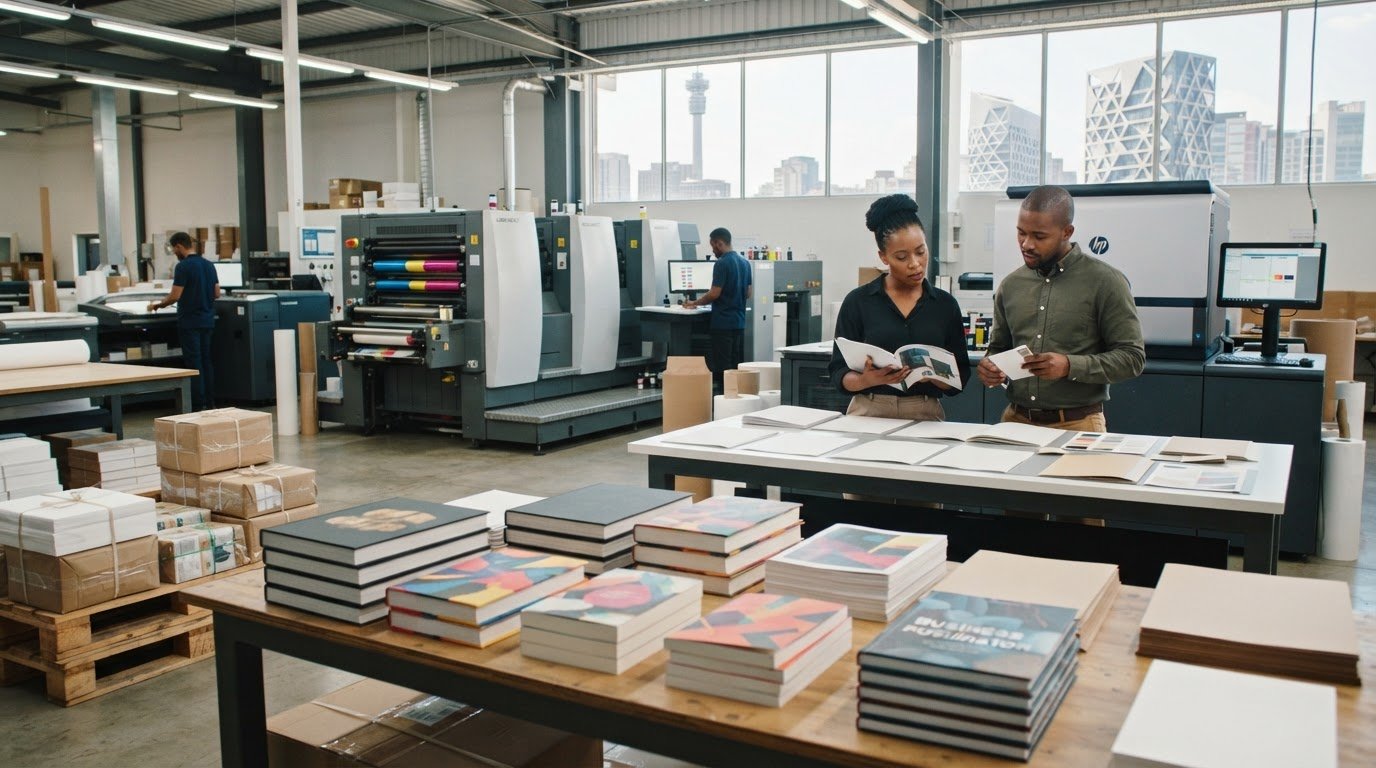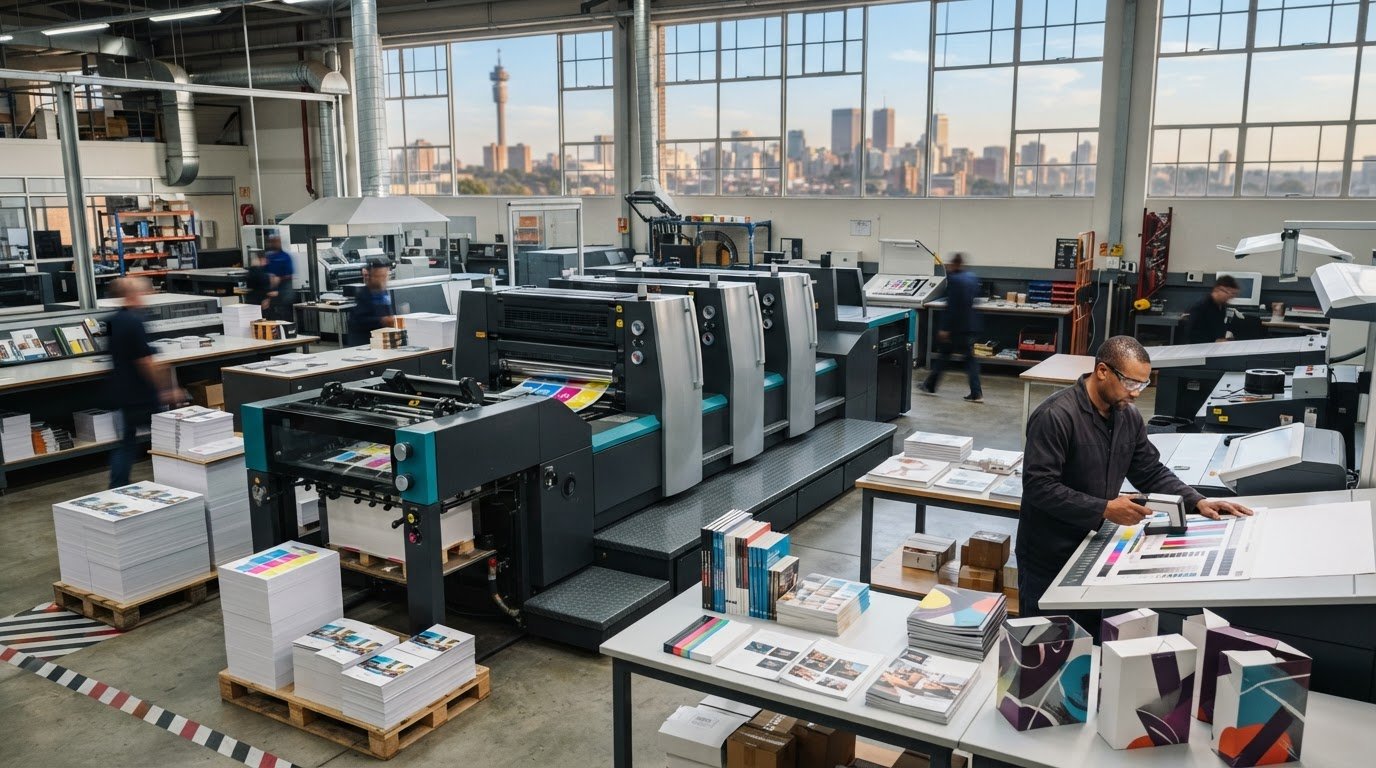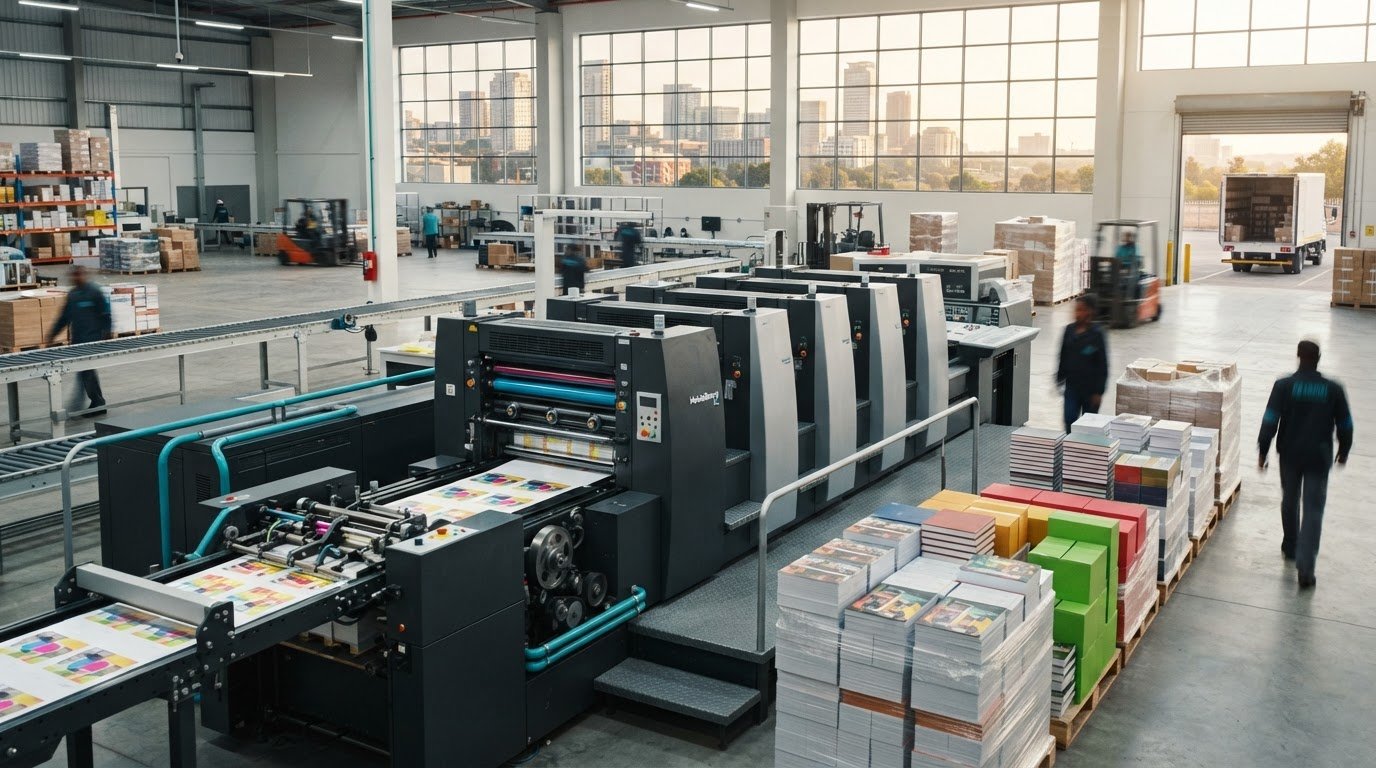
The lowest quote from book printers isn’t always the best fit for your project. A short-run novel, a premium hardcover and a business publication have different production needs, so comparing totals alone can leave important details unchecked.
If you’re an author, school or business in Johannesburg, look for clear answers about print method, paper and binding options, file preparation, project support and delivery. This guide gives you a practical way to compare printers and build a shortlist around the book you need, not just the headline price. You’ll also find what to prepare before requesting a quote, so you can compare proposals on the same basis and reduce the risk of avoidable production delays.
We’ll cover how digital and lithographic printing may suit different quantities, what to ask about print quality and finishing, and how to assess support from design through production. Print It ZA print and packaging offers both printing methods and has an in-house design team, with delivery across South Africa and support for international export requirements. Use the criteria below to assess whether a printer can support your project from files to finished books.
Key Takeaways
- Shortlist book printers by matching their production capabilities and project support to your book’s specific requirements.
- Compare digital and lithographic printing against your quantity, schedule, artwork, finish and consistency needs.
- Request proposals using the same project brief, then check what each quote includes before comparing totals.
- Prepare clear details about your book and confirm file requirements with your chosen printer to support accurate planning.
- Consider how design support, production capabilities and delivery arrangements fit together when selecting a printing partner.
What to look for when choosing book printers in Johannesburg
Choosing a printer involves more than comparing one figure on a quote. The right fit depends on the type of book, quantity, finish, support required and where the books need to go. For authors and organisations in Johannesburg and across Gauteng, clarify delivery arrangements early, especially if copies will be distributed elsewhere in South Africa.
A suitable book-printing partner matches its production capabilities to your project and coordinates the details clearly from planning through delivery.
Match the printer to your book project
An author preparing a novel may prioritise a reader-friendly format and a considered cover. A publisher, such as children’s book platform Bahrku, may need consistent production across a title or series. A business creating a company history, product book or training manual may focus on clear presentation and practical use. Schools and other organisations need to consider their readers, the publication’s purpose and how copies will be distributed.
Before requesting proposals, write down who will read the book, what it needs to achieve, the format you have in mind and how copies will reach readers. A photo-led coffee table book and an educational publication can call for different conversations about artwork, paper, binding and finishing. Binding affects how a book is constructed and how it opens and functions. This overview of the bookbinding process provides useful background before you discuss options with a printer.
Assess service beyond the printed pages
Production support matters if you’re still developing the design or aren’t sure your files are ready. Ask whether the printer can assist with creative development or design, and confirm what support is available for your project. Find out who will handle proofing questions, answer production queries and coordinate delivery. A clear point of contact helps keep decisions together and makes it easier to resolve details as the job progresses.
Ask each prospective provider the same questions:
- Can you produce this type of book in my preferred format and quantity?
- Which binding and finishing options suit the book’s purpose?
- Can you support design or creative development, and what file requirements should I follow?
- Who coordinates proofs, production updates and delivery, and what delivery details do you need?
Clear answers help you assess whether a printer understands the brief, not just the equipment involved. If a proposal is unclear, ask for an explanation before comparing providers. The discussion can reveal whether the project has been scoped around your needs and who will guide it through the next steps.
Digital or lithographic printing: compare the right options for your book
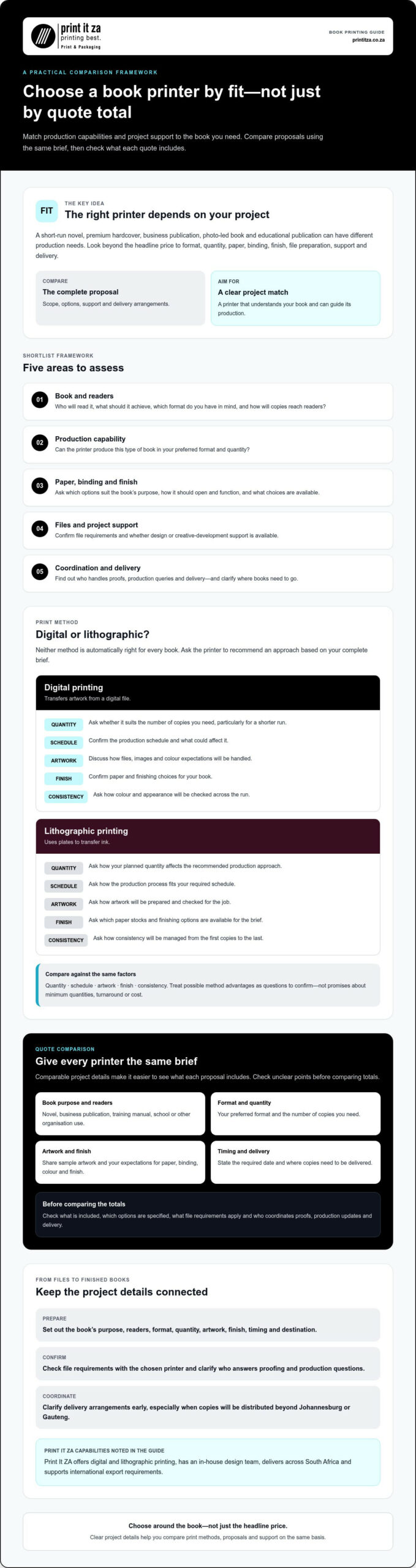
Digital and lithographic printing are different ways to put your pages on paper. Digital printing transfers artwork from a digital file, while lithographic printing uses plates to transfer ink. Neither method is automatically right for every book. Compare them against your quantity, schedule, artwork, finish and consistency needs, then ask the printer to recommend an option based on your complete brief.
| Decision factor | Digital printing | Lithographic printing |
|---|---|---|
| Project quantity | Ask whether it suits the number of copies you need, particularly for a shorter run. | Ask how your planned quantity affects the recommended production approach. |
| Schedule | If timing is important, confirm the production schedule and what could affect it. | Ask how the production process fits your required schedule. |
| Artwork | Discuss how your files, images and colour expectations will be handled. | Ask how artwork will be prepared and checked for the job. |
| Finish | Confirm which paper and finishing choices can be specified for your book. | Ask which paper stocks and finishing options are available for the brief. |
| Consistency | Discuss how the printer will check colour and appearance across the run. | Ask how consistency will be managed from the first copies to the last. |
When digital printing may suit a book project
Digital printing may be worth discussing for a shorter run or a project with a time-sensitive schedule. Treat these as possibilities to confirm, not promises about minimum quantities, turnaround or cost. Share the number of copies, required date, sample artwork and finish expectations. Ask how the printer will manage colour, paper choice and finishing for your specific book.
When to discuss lithographic book printing
For lithographic production, focus the conversation on your quantity and quality requirements. Ask how the provider will maintain a consistent appearance throughout the run and which finishing options can be specified. A useful recommendation should reflect the book’s format, artwork, schedule and intended use, rather than just one detail in isolation.
Method selection is only one part of planning. The Alliance of Independent Authors’ guide to the book production process can help you consider how printing fits into the wider workflow. Print It ZA offers both digital and lithographic printing. You can explore Print It ZA’s book printing support and assess it against your project brief.
How to compare book printers, quotes and production support
A useful comparison starts with a shared brief. If printers quote on different assumptions about format, artwork or delivery, their proposals won’t be directly comparable. Comparable quotes require the same specifications and scope. Jane Friedman’s guide to Choosing the right printer also offers context on preparing to approach print providers.
Build a like-for-like book printing brief
Give each provider the same project information, even if some details are undecided. Include the book’s purpose and intended readers, estimated quantity, format, page count or page details, colour requirements, preferred binding, desired finish, target schedule and delivery destination.
Ask what additional technical information each printer needs to scope the job. If you’re unsure about a specification, mark it as open rather than guessing. For example, state that the cover finish is undecided and ask which options suit the project. This gives providers room to recommend a solution while keeping each proposal based on the same brief.
Check the full scope before choosing a printer
Don’t assess book printers by one quoted amount alone. Check what the proposal includes and what is scoped separately, such as design support, artwork preparation, proofs, printing, binding, finishing and delivery. Confirm whether revisions or additional production steps are covered, and ask the provider to explain unclear line items.
Use this comparison process:
1. Match the specifications. Check that each proposal reflects the same quantity, format, page details, finish and schedule.
2. Map the responsibilities. Ask who prepares or checks final artwork, who approves the proof and who communicates production updates. Clarify which decisions or files you need to supply, and by when.
3. Confirm delivery arrangements. Specify the destination and ask how delivery is handled, whether the books are going to one Johannesburg address, elsewhere in South Africa or an international destination. Confirm the delivery scope and any assumptions in writing.
4. Review the working relationship. Notice whether your questions receive clear, practical answers. A contact who can coordinate proofing, production queries and delivery details can make a complex job easier to manage.
Once the scope is clear, compare proposals for production fit, included support, communication and delivery requirements. If a provider has omitted a detail, ask for clarification before deciding. A consistent comparison shows what each option covers, not just which figure appears lowest.
Prepare your files and schedule before sending a book to print
A clear handoff helps your printer assess the job and identify decisions that still need attention. Before sending files, gather the book’s purpose, format, page count, quantity, artwork status, preferred finish, target date and delivery destination. Consistent details help the provider scope production and raise questions before work begins.
Confirm artwork and content requirements with the printer
Ask for the printer’s current file specifications before exporting final artwork. Confirm how to supply the interior text, images, cover artwork and page order, and whether these should be separate files or assembled in a particular way. Common technical checks include bleed, safe margins, image resolution and colour mode, but requirements vary. Follow the printer’s instructions rather than relying on a generic checklist.
Clarify how proofing works, who reviews the proof and who gives final approval before production begins. Check that the approved version has the correct text, images, page sequence and cover details. If you need design or file-preparation help, confirm what the provider can support for your project.
Plan approvals, production and delivery together
Work backwards from the date the books need to be available, whether for distribution or an event. Ask the printer to discuss the schedule, including time for proof review, revisions, approval and production. Assign one person to collect feedback and return consolidated comments. This helps avoid conflicting changes and makes it easier to track which artwork version has been approved.
Confirm the delivery destination and receiving arrangements directly with the printer. For deliveries outside Johannesburg or international export requirements, check the arrangements for your project rather than assuming they’re included. Print It ZA provides delivery across South Africa and supports international export requirements. Confirm current arrangements for your destination.
Use this preparation sequence:
- Record the book’s format, page details, quantity, finish preferences and target date.
- Request the printer’s current specifications for interior and cover artwork.
- Check content, image quality, page order and file completeness before submission.
- Agree on proofing, approval responsibilities, production planning and delivery details.
For further background, look for Book Printing in Johannesburg: A Complete Guide (2026) and confirm any technical guidance against the requirements for your job. If you’re preparing files for a book project, discuss your book printing requirements with Print It ZA.
What working with Print It ZA can look like for book printing
After comparing printers against your format, production needs, project support and delivery requirements, assess which provider can handle your particular brief. Print It ZA offers book printing using digital and lithographic methods, along with support from an in-house design team. This can bring creative development and print production into one project conversation, depending on the support your book requires.
Connect your brief to the right production conversation
Start by sharing what the book is for, your estimated quantity, preferred format and desired finish. Include the current state of your text and artwork, your target date and where copies need to go. If details such as binding or cover finish are undecided, say so. Clear information helps the team understand the job and discuss relevant production options without relying on assumptions.
Print It ZA’s in-house design team can support creative development. Confirm which design and file-preparation services are available for your book, along with the technical specifications you’ll need to meet. Ask the team to clarify the proposed production scope, proofing and approval steps, and any decisions to resolve before work proceeds.
Choose a partner for production and delivery
For a Johannesburg author, a Gauteng organisation or a business elsewhere in South Africa, consider how design support, printing and delivery arrangements fit together. Print It ZA offers digital and lithographic printing, delivery across South Africa and support for international export requirements. Discuss your destination directly with the team so delivery planning is part of the conversation from the outset.
As you assess book printers, focus on whether the provider can explain its proposed method, clarify who will coordinate the project and confirm what is included. Those details help you understand how the work could move from creative development to finished books and onward to their destination.
Have a project in mind? Discuss your book printing project with Print It ZA and request a quote based on your requirements.
Take the next step towards your finished book
The right printer is the one whose production capabilities and project support fit your book, not simply the one with the most appealing headline quote. Compare proposals using the same specifications, confirm what each includes, and check file, proofing and delivery arrangements before production begins.
As you shortlist book printers, consider whether you need digital or lithographic printing, creative development, or help coordinating the project from artwork to delivery. Print It ZA offers both printing methods, an in-house design team, delivery across South Africa and support for international export requirements. Confirm the design services and delivery arrangements available for your project.
Ready to discuss your format, quantity and finish requirements? Discuss your book printing project with Print It ZA and take a clear next step towards bringing your book to life.
Frequently Asked Questions
What should I look for when choosing a book printer?
Choose a printer whose production capabilities fit your book and whose project support is clearly explained. Check suitable printing methods, format and finishing options, design support, communication, proofing steps and delivery arrangements. Send the same project brief to each provider so you can compare the full scope, not just a headline figure. Ask the printer to confirm technical requirements and clarify who handles artwork, approvals, production updates and delivery.
Should I choose digital or lithographic printing for my book?
The right method depends on your complete project brief, including quantity, artwork, desired finish and schedule. Neither digital nor lithographic printing is automatically better for every book. Share the same specifications with your printer and ask them to explain the proposed approach, including how colour, paper and finishing will be handled. Compare the services included in each proposal, and ask for clarification if a recommendation or scope is unclear.
Can a book printer help with design and file preparation?
Design and file-preparation support varies by printer and project, so confirm what’s available before sending artwork. Some providers can assist with creative development or design, while others may expect print-ready files. Print It ZA has an in-house design team, but check which services apply to your book. Request the printer’s current file specifications early, including how to supply text, images, cover artwork and page order, and clarify who checks and approves files before production.
What information should I provide to get a book printing quote?
Share the book’s purpose, estimated quantity, format, page details, artwork status, desired finish and delivery destination. Include your intended schedule and note unresolved choices, such as binding or cover finish, rather than guessing. The printer may need additional technical information before preparing a complete proposal. For a fair comparison, provide the same brief to each shortlisted provider and ask them to identify assumptions or details they still need to confirm.
How can I compare book printing quotes fairly?
Compare proposals against identical project specifications, then check exactly what each includes. Review the printing method, design or file support, proofs, finishing, delivery and any tasks you’re expected to handle. Ask providers to clarify exclusions or unclear line items before choosing. A lower headline figure may cover a different scope, so don’t assume proposals are equivalent. Comparing responsibilities and included services alongside the quoted amount gives you a clearer basis for deciding.
Do book printers in Johannesburg deliver elsewhere in South Africa?
Delivery coverage and arrangements vary, so confirm the destination and timing directly with each printer. Print It ZA provides delivery across South Africa and caters to international export requirements. Confirm specific timing and arrangements for your project rather than assuming they’re included. Add the destination and any receiving requirements to your initial brief so the printer can explain the delivery scope and account for it in the proposal.
When should I contact a book printer about my project?
Contact a printer once you know the book’s purpose, approximate quantity, format and intended delivery date, even if some specifications are undecided. An early discussion can identify missing information and clarify artwork, proofing and production steps. This is useful for authors and organisations planning a project in Johannesburg or elsewhere in Gauteng. Ask the printer to confirm a schedule based on your brief, and leave time for reviews, approvals and delivery planning.