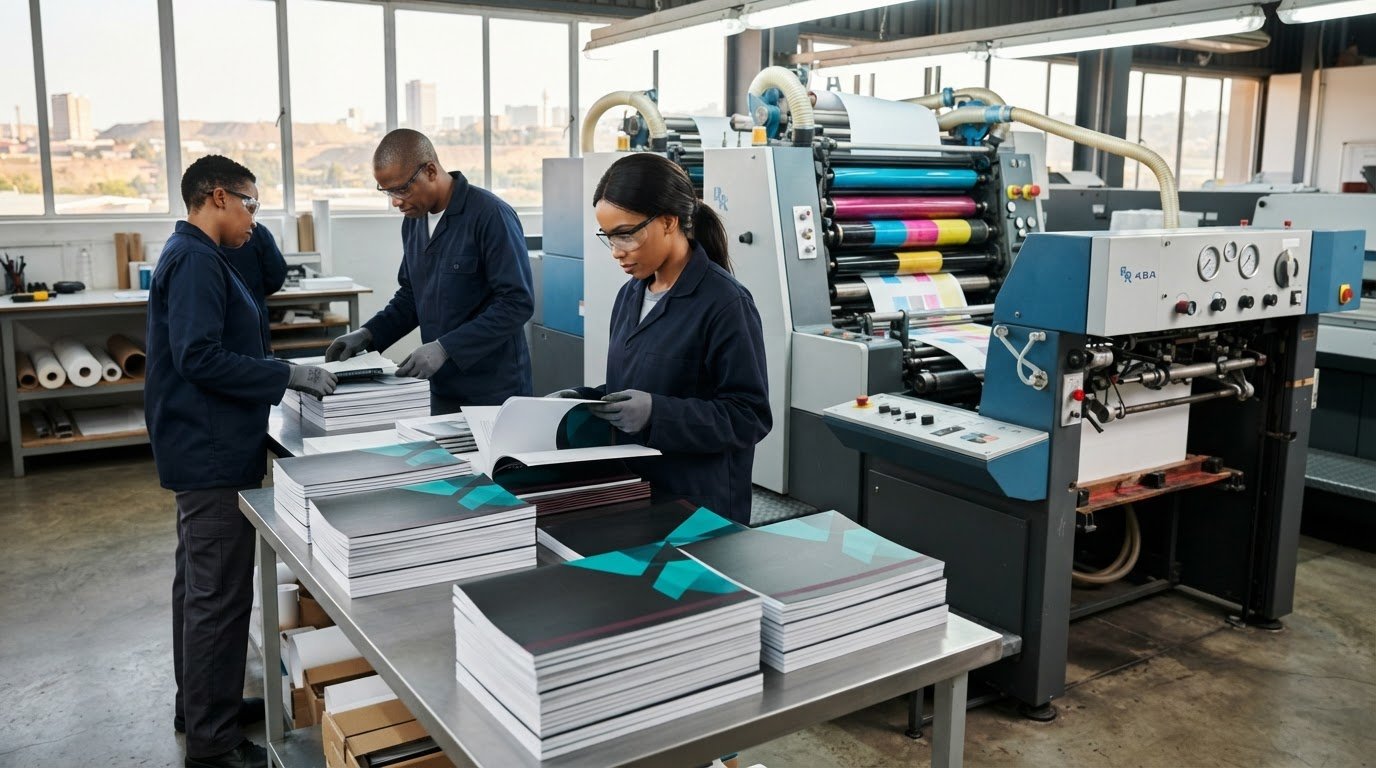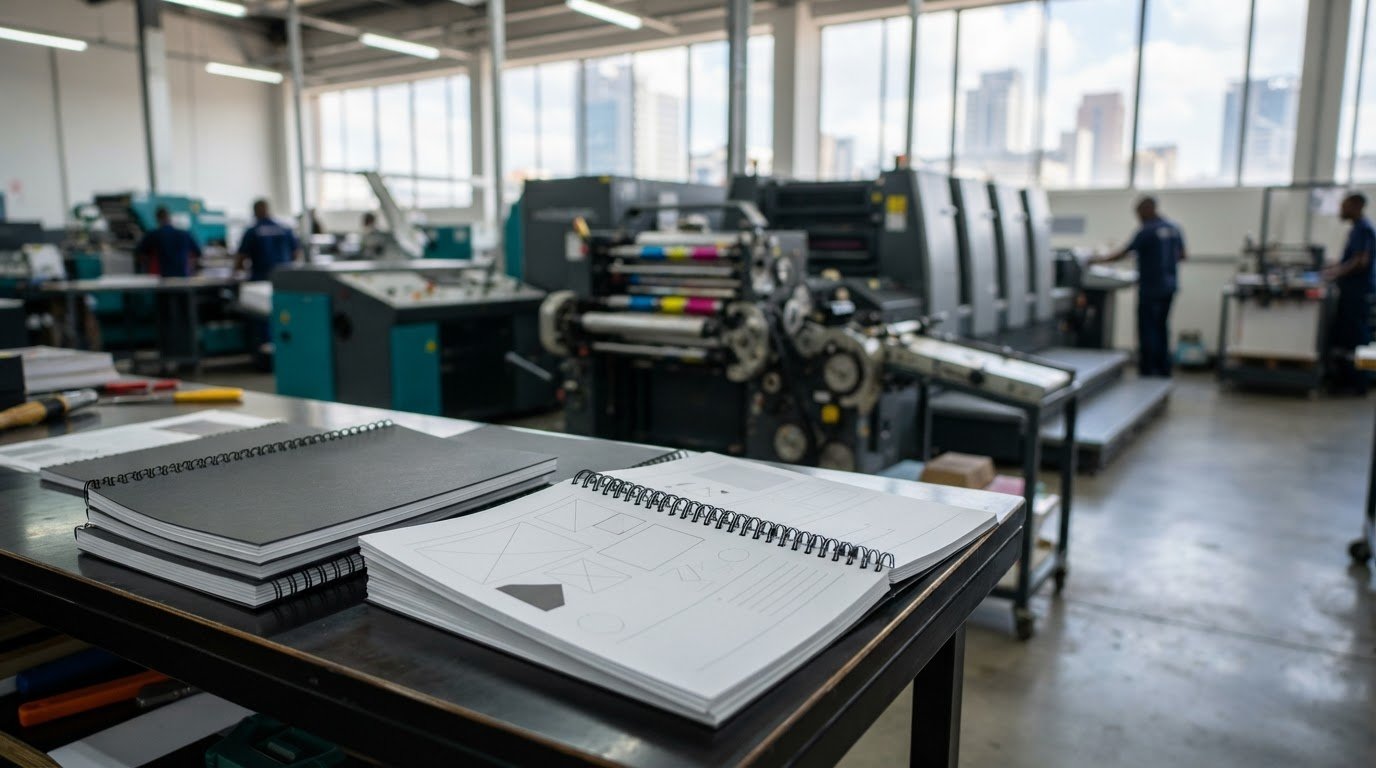
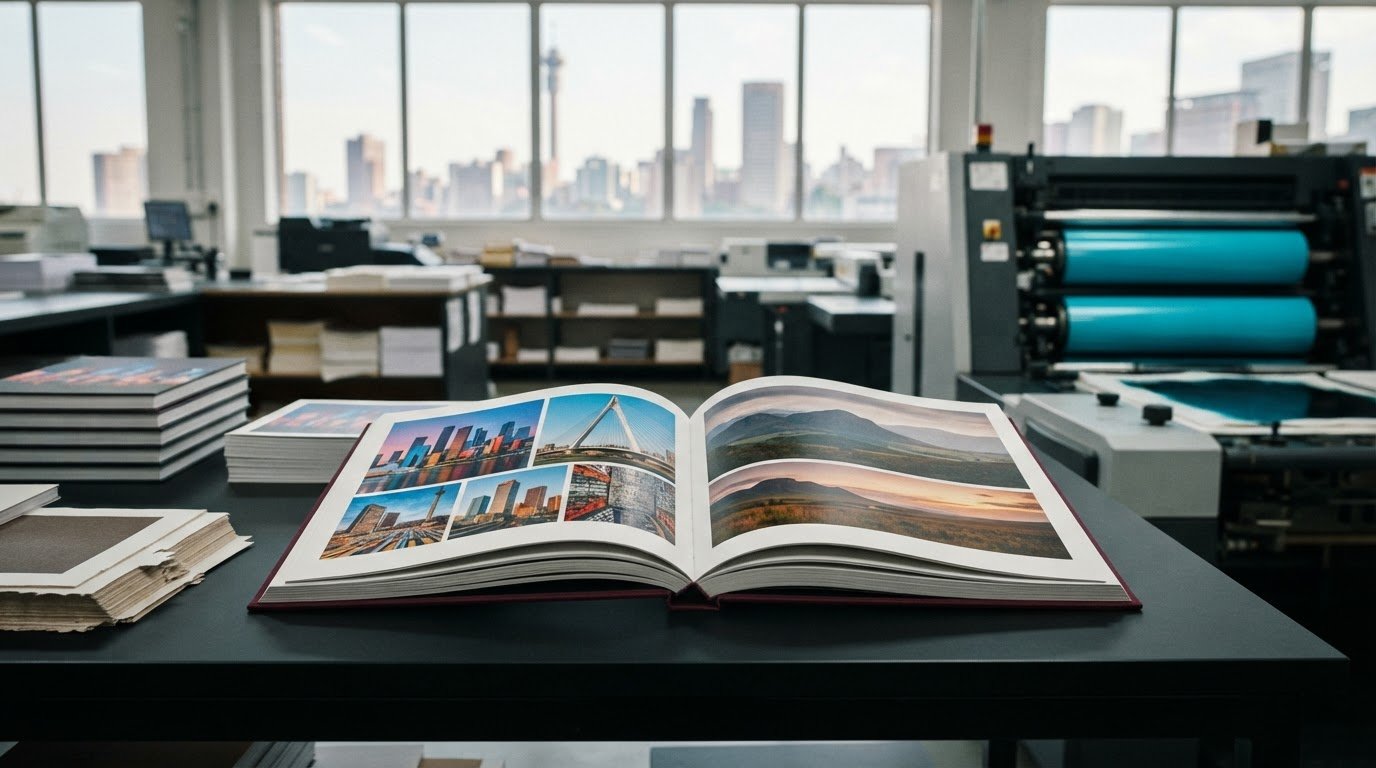
The print method you choose shapes a book just as much as the images inside it. Format, paper, colour and binding all influence how the finished pages look and feel. For coffee table book printing Johannesburg, planning these choices together helps turn a creative idea into a practical production brief.
Start by asking what the book needs to do: present a portfolio, tell a visual story, document a place or showcase a collection? Your answers help guide decisions about paper, layout, print method and finish. A clear brief also makes it easier to compare production options against your quantity and intended result.
This guide explains how to plan your book, compare digital and litho printing, and choose a format, cover and binding that suit the project. Print It ZA produces books using both print methods, with in-house design support for creative development. Based in Gauteng, the company serves Johannesburg-area projects and delivers across South Africa. Use the steps below to prepare a brief that connects your vision with production requirements.
Key Takeaways
- Shape the book around its purpose, whether you’re presenting photography, art, a place, a design project or a business story.
- Plan trim size, page count, image sequence, cover, binding and paper together for a cohesive visual experience.
- Compare digital and litho coffee table book printing Johannesburg against your quantity, artwork and desired finish. Neither method is automatically right for every project.
- Prepare a useful production brief by organising your assets, manuscript, audience, quantity and distribution plans.
- Print It ZA combines book printing with in-house design support to help develop an image-led concept into a production-ready project.
Why choose coffee table book printing for an image-led project?
A coffee table book is a visually led publication where images, their sequence and their presentation guide the reader’s experience. Text can add context, but photographs, artwork or other visuals carry much of the story. The coffee table book format invites browsing and uses visual storytelling to draw readers into a subject.
A photographer might use one to present a carefully sequenced body of work. An artist could bring a collection together, while an organisation or business might tell a story through its people, places, products or history. The format works well for image-rich projects that benefit from considered pacing. It is not automatically right for every subject: a text-led account may need a different structure, and visual projects still benefit from clear captions and supporting copy.
What makes a coffee table book different from a standard book?
In an image-led book, scale and page composition shape how each visual is experienced. A full-page photograph can create a pause, while a sequence of smaller images can invite comparison. Pacing matters too. One spread might pair a striking image with a short caption; another might give more room to explanatory text.
The cover and binding contribute to the book’s presentation and intended use. A portfolio shared with clients may call for a different feel from a keepsake documenting a family or organisational milestone. Consider how readers will handle and display the book, then let those practical needs inform the design.
Who commissions coffee table books in Johannesburg?
Photographers and artists can use a book to present portfolios, collections or a body of work in a form readers can revisit. Organisations may document milestones, while businesses can introduce their work, people or identity through images. Place-based narratives can bring Johannesburg neighbourhoods, Gauteng landscapes, architecture or local creative scenes into focus.
Begin with the story you want the book to tell. A photographic collection might follow a theme or journey; a business story could trace its development and current work. In either case, image sequence shapes how readers understand the subject. That is why coffee table book printing Johannesburg projects benefit from treating content, layout and presentation as connected decisions, rather than leaving format choices until the end.
Which design and print choices shape a coffee table book?
A polished book depends on choices that work together, not on one design feature alone. Before finalising the layout, map out the book’s purpose, intended reader and production needs. Use this checklist to guide the main decisions:
- Trim size: Choose a format that suits the content and feels practical for readers to handle.
- Page count: Allow enough space for the story to develop, including opening and closing pages.
- Image sequence: Arrange images to create a clear rhythm and purposeful transitions.
- Cover and binding: Match the book’s presentation to its purpose and expected use.
- Paper: Consider how the paper affects the appearance of images, handling and the book’s overall feel.
Paper affects how colour and detail appear, as well as the feel of each page. Rather than choosing it in isolation, consider how it supports the content, layout and intended presentation.
How should images and layouts be prepared?
Choose a consistent set of artwork and give each spread a clear role. Cropping can focus attention, while alternating quieter pages with more visually active spreads creates a natural pace. Before production, review image quality, crop edges, colour consistency and page order together. Check captions, fonts, margins and page numbering too, so small layout issues do not distract from the story.
Adobe InDesign is one familiar tool for arranging book layouts, but the priority is a complete, carefully reviewed file, not a particular software workflow. Review the pages in order to catch misplaced content and inconsistent details before the book moves into production.
How do cover, paper and binding affect presentation?
Think about how the book will be used. A book intended for repeated handling may need a different cover and binding approach from one designed mainly for display. Hardcover book printing can suit projects where a durable, presentation-focused format supports the content. Paper choice also contributes to the result, influencing how artwork appears and how the book feels in the reader’s hands.
Print method is another production decision. This comparison of digital and litho printing for coffee table books offers another perspective. The right fit still depends on the project brief and desired result.
Design, image quality and finishing work together to turn a collection of pages into a cohesive book. For coffee table book printing Johannesburg, Print It ZA’s in-house design team supports creative development alongside book production. Explore coffee table book printing support as you shape your project.
Digital or litho coffee table book printing: how do you compare?
Neither digital nor litho printing is the automatic choice for every image-led book. Digital printing can suit a shorter run or a project where flexibility matters; litho printing can suit a larger production plan. Compare the options against your quantity, artwork, format and intended finish before deciding.
| Consideration | Digital printing | Litho printing |
|---|---|---|
| Project scale | An option to evaluate for shorter runs or projects where flexibility is a priority. | An option to evaluate for larger production plans. |
| Flexibility | Can suit a project where quantities or content need a flexible approach. | Works best when the production plan and specifications are clearly defined. |
| Production considerations | Review how the artwork, image treatment and desired finish align with the method. | Consider the quantity alongside the book’s artwork, format and finishing requirements. |
Choose a print method based on the project brief and production scale. This comparison is a starting point, not a substitute for defining the finished book you want. Image content, page layout, binding and cover all help determine the production requirements.
When might digital printing suit a book project?
Digital printing is worth considering for a shorter run or when flexibility matters to the production plan. For example, a photographer developing a focused portfolio can compare digital and litho printing against the planned quantity, page design and final presentation. Include image quality and finishing requirements in the decision, not just the number of copies.
When might litho printing suit a book project?
Litho printing may suit a book planned at a larger scale, particularly when the quantity and specifications are settled. Consider how the artwork, page count, cover and binding fit together, then assess the method against those requirements. A larger run alone does not make litho the right choice; the full brief should guide the decision.
For coffee table book printing Johannesburg, prepare a comparison brief before choosing. Set out the planned quantity, artwork, format, binding and intended finish so the production discussion reflects the book you want to create. Print It ZA produces books using both digital and litho printing, allowing the project requirements to guide the choice.
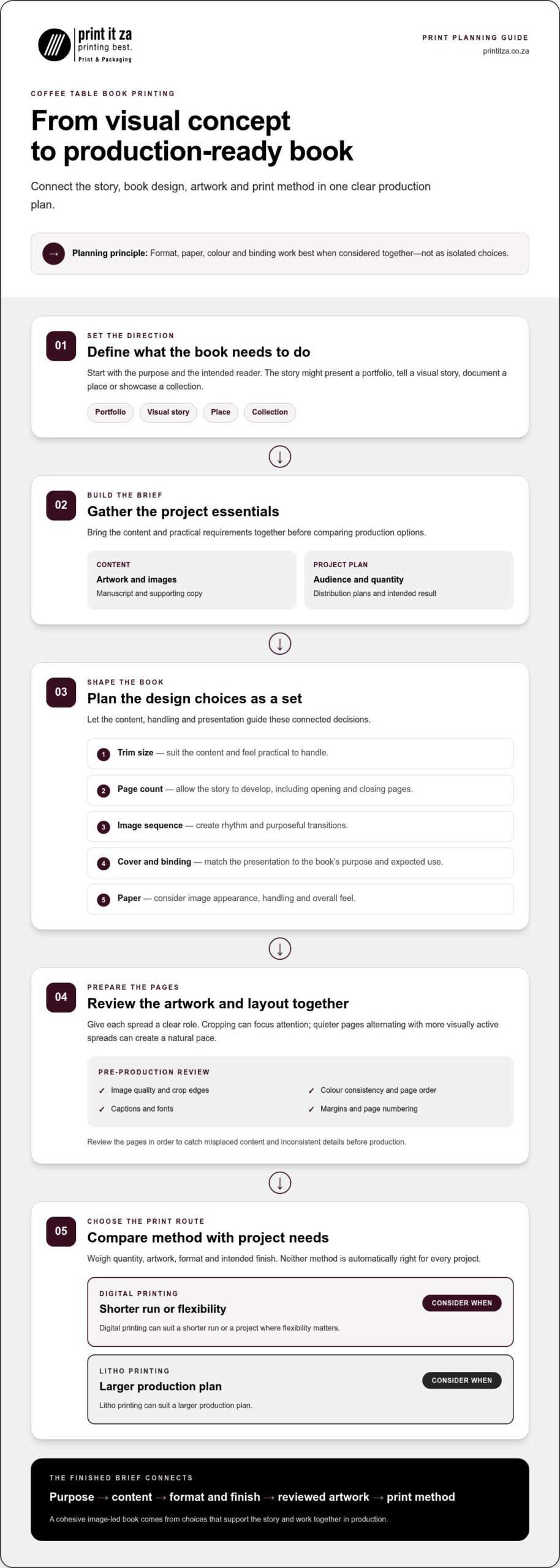
How to prepare a coffee table book printing brief in Johannesburg
A focused brief connects your creative idea to the practical decisions needed for production. For coffee table book printing Johannesburg, use this sequence to organise the story, materials and requirements before moving into layout and print.
- Define the purpose. Explain what the book should communicate, who it is for and how readers will encounter it, such as a portfolio, collection, milestone record or business story.
- Gather your assets. Bring together artwork, image files, captions, manuscript material and any existing layout files. Note what is ready and what still needs development.
- Settle the content. Establish the page sequence and identify the images or text for each section. A clear order makes the intended narrative easier to follow.
- Outline the specifications. Share an approximate page count and desired quantity, along with your preferred format, cover, binding and overall presentation. These details help frame production decisions.
- Plan distribution and delivery. Explain where the books need to go and how they will be used or distributed. This gives the project a practical endpoint from the outset.
What information should your printer receive?
Bring the purpose, audience, approximate page count and desired quantity together in one brief. Add the artwork and image files, manuscript status, page sequence and any layout files. Describe the cover, binding and overall feel you want. References or notes can help communicate the visual direction. Include delivery requirements and intended distribution so the project can be planned as a complete job.
You do not need to settle every creative decision before the first production conversation. Print It ZA’s in-house design team supports creative development as the brief takes shape, helping connect your content and visual direction with a production-ready book.
What should you review before approving production?
Review the complete book in page order. Check spelling, captions, image placement, sequence, page numbering and cover details. Confirm that the supplied artwork and layout reflect the agreed requirements, and check how each spread flows into the next. A careful review can catch content or layout changes while the project is still being finalised.
For broader planning across print projects, explore the Johannesburg print shop guide. When your brief is ready, discuss your book printing project.
Coffee table book printing in Johannesburg with Print It ZA
Turning an image-led concept into a finished book takes more than choosing a print method. Creative direction, artwork, format and production all need to support the same goal. Print It ZA produces books, including coffee table books, using litho and digital printing, with an in-house design team to support creative development.
How Print It ZA supports a book project
Design support helps connect your visual concept to a practical production brief. Bring together the story, artwork and presentation goals, then develop a layout and specification that reflect them. Print It ZA’s book production and printing capabilities connect creative development with print production.
For projects in Johannesburg and across Gauteng, plan around the needs of your local audience and distribution. Print It ZA delivers across South Africa, so your brief can include destinations beyond the immediate area.
What happens next when your book brief is ready?
Gather the details that will guide production: your purpose and audience, artwork and manuscript status, page sequence, approximate quantity, preferred format and intended distribution. Then identify your priorities. You might focus on presenting images effectively, choosing a format for how the book will be used, comparing litho and digital printing, or coordinating delivery. A clear brief keeps these decisions connected.
If your project involves print requirements beyond books, the professional printing services guide offers additional planning context. For coffee table book printing Johannesburg, bring your vision and project details together as a practical starting point.
Plan your coffee table book printing project with Print It ZA.
Turn your book concept into a clear production plan
A compelling coffee table book starts with a clear purpose and a considered image sequence. Format, paper, cover and binding shape how the story feels in readers’ hands, while the print method should suit the brief, quantity, artwork and intended finish. An organised brief brings these decisions together before production begins.
For coffee table book printing Johannesburg, Print It ZA produces books, including hardcover books, using litho and digital printing. Its in-house design team supports creative development, connecting your visual direction with a production-ready book. Delivery services support projects across South Africa.
Gather your artwork, content, preferred format and distribution details, then take the next step with a team that supports both design development and book production. Plan your coffee table book printing project with Print It ZA.
Frequently Asked Questions
What is the best printing method for a coffee table book?
There is no single printing method that suits every coffee table book. Digital and litho printing are both relevant options, and the right choice depends on your brief, planned quantity, artwork and production requirements. Compare each method against those needs rather than choosing by name alone. For a Johannesburg project, Print It ZA offers both digital and litho printing for books, so the production approach can be considered alongside your intended presentation.
How do I prepare images for coffee table book printing?
Start with the final image files and organise them in the intended page sequence. Review cropping, captions and colour consistency in the layout, and check that each image is placed at an appropriate size. Give important visuals room to stand out while ensuring the sequence supports the story. If your layout needs creative development, Print It ZA’s in-house design team can support the process.
Can I print a coffee table book in Johannesburg?
Yes. Print It ZA provides book printing for customers in Johannesburg and serves projects across South Africa. For coffee table book printing Johannesburg, prepare a brief covering the book’s purpose, audience, image assets, approximate page count, desired quantity and delivery needs. These details help frame production decisions and connect your creative concept with a suitable print approach, whether your project is in Johannesburg or elsewhere in Gauteng.
What should I include in a coffee table book printing brief?
Include the book’s purpose and audience, planned content, approximate page count, desired quantity, image assets, manuscript or captions, and delivery requirements. Add your preferences for the cover, binding and overall visual feel. Include a page sequence or layout files if you have them. A well-organised brief brings design and production requirements into the same conversation and helps prevent important details from being overlooked.
Is hardcover binding suitable for a coffee table book?
Hardcover can suit a coffee table book intended to feel substantial and make a strong presentation, but the best fit depends on the project’s purpose, design and handling needs. Consider how readers will use the book, how the cover supports its visual identity and how the binding works with the overall brief. Print It ZA offers hardcover book printing as an option for your project.
How much does coffee table book printing cost in Johannesburg?
The cost depends on project requirements, including quantity, page count, artwork, print method and finishing. There is no useful single figure without those details. For a more relevant pricing discussion, prepare a brief describing the book, its intended presentation and delivery needs. Print It ZA can discuss your project in the context of its requirements, whether it is based in Johannesburg or elsewhere in Gauteng.