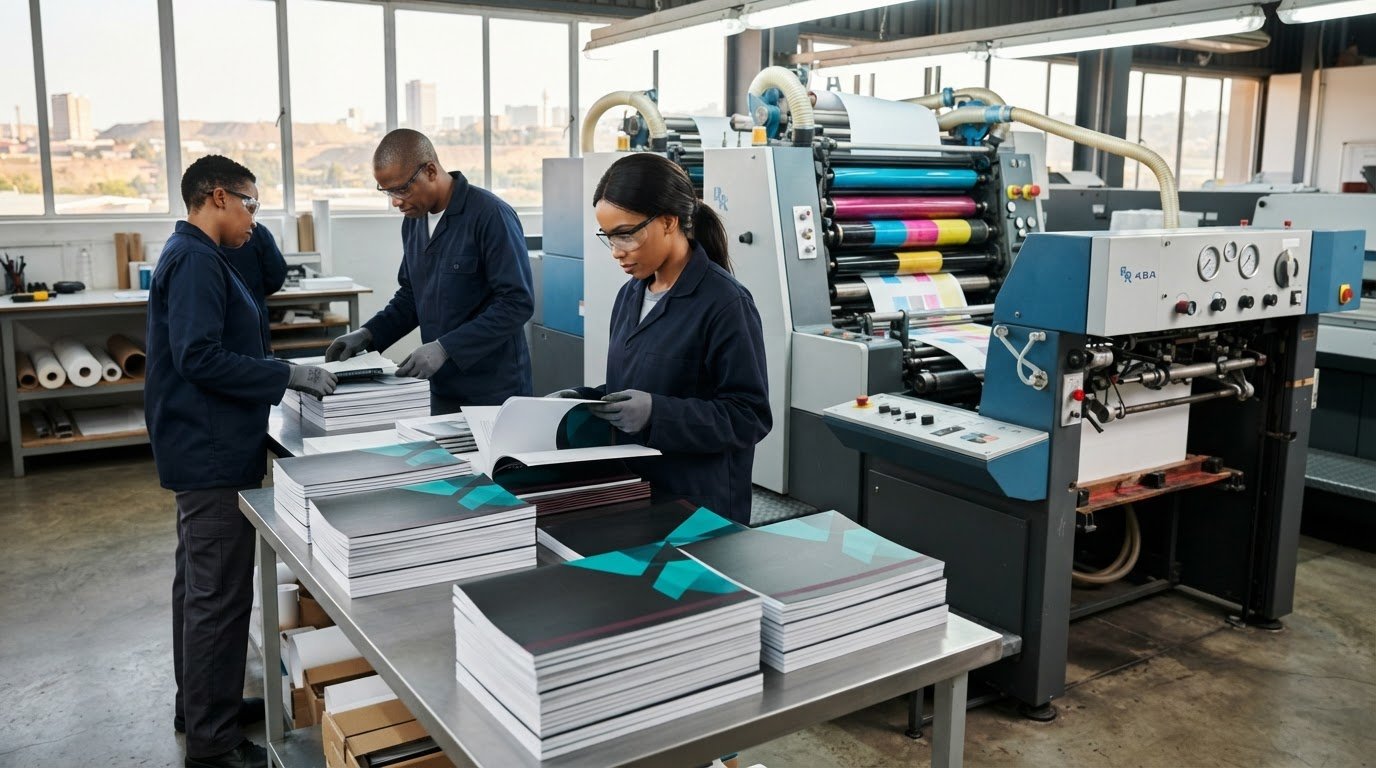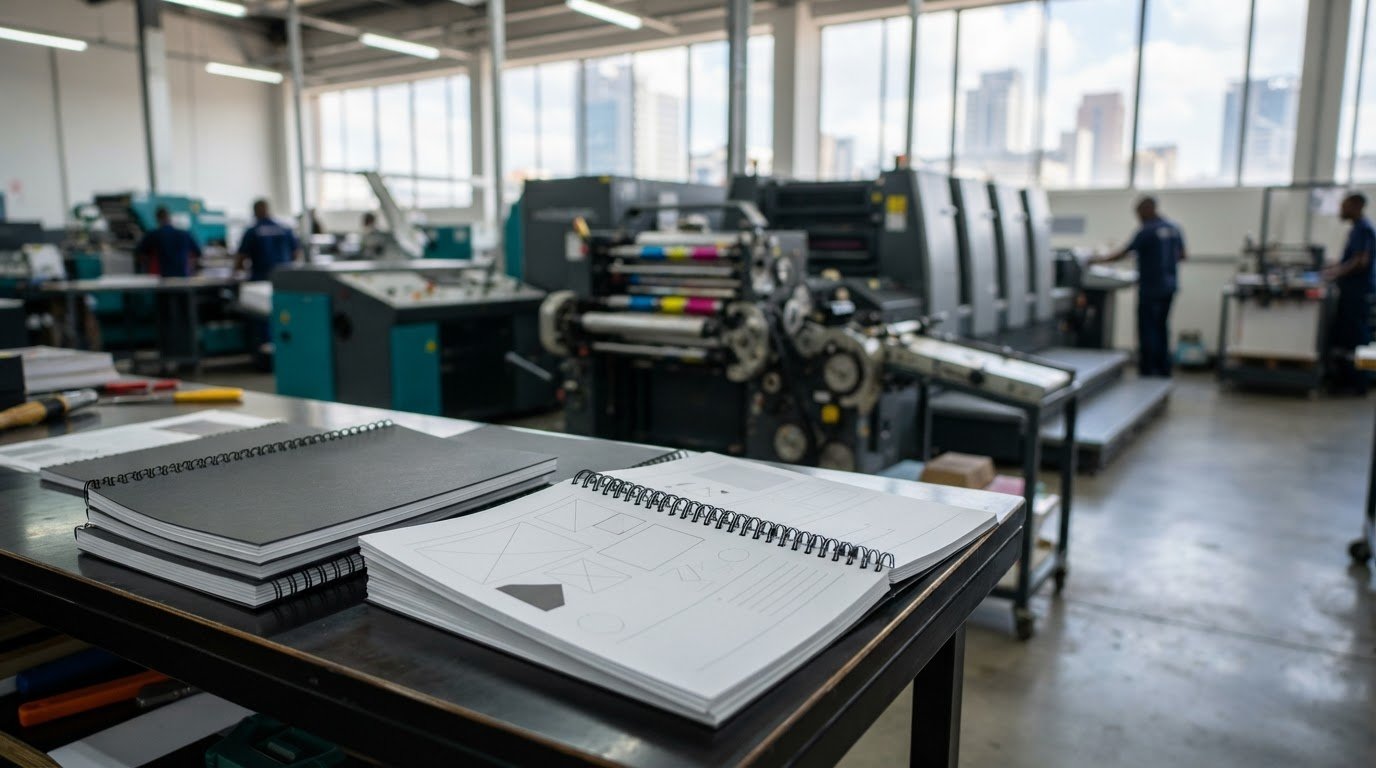

What if the safety manual your team needs is hard to read, awkward to handle or difficult to update? Choosing the right format matters because workers need to find and follow procedures in real working conditions. Effective safety manual printing for industry starts with how people will use the document, not just how many copies you need.
Paper, binding, finishing and print method all affect how a manual works as a day-to-day reference. A practical print plan helps make key information easier to find and keeps copies consistent across sites.
This guide explains how to choose a clear, practical format and plan production and distribution for teams in Gauteng and across South Africa. You’ll learn what to consider when organising content, selecting print and finishing options, and planning for future updates. Print It ZA print and packaging brings together in-house design support, lithographic and digital printing, binding, lamination and nationwide delivery to coordinate your project from preparation through distribution.
Key Takeaways
- Start with how workers will use the manual, then organise procedures so key information is easy to find.
- Match paper, binding and finishing choices to handling needs, print quantity and plans for repeat orders.
- Set a clear revision process so outdated printed copies can be replaced when approved procedures change.
- Use a practical print brief to define page count, colour needs, artwork, quantity and delivery locations.
- Coordinate design, printing and finishing to produce a consistent safety manual for your teams.
Why safety manual printing for industry must start with workplace use
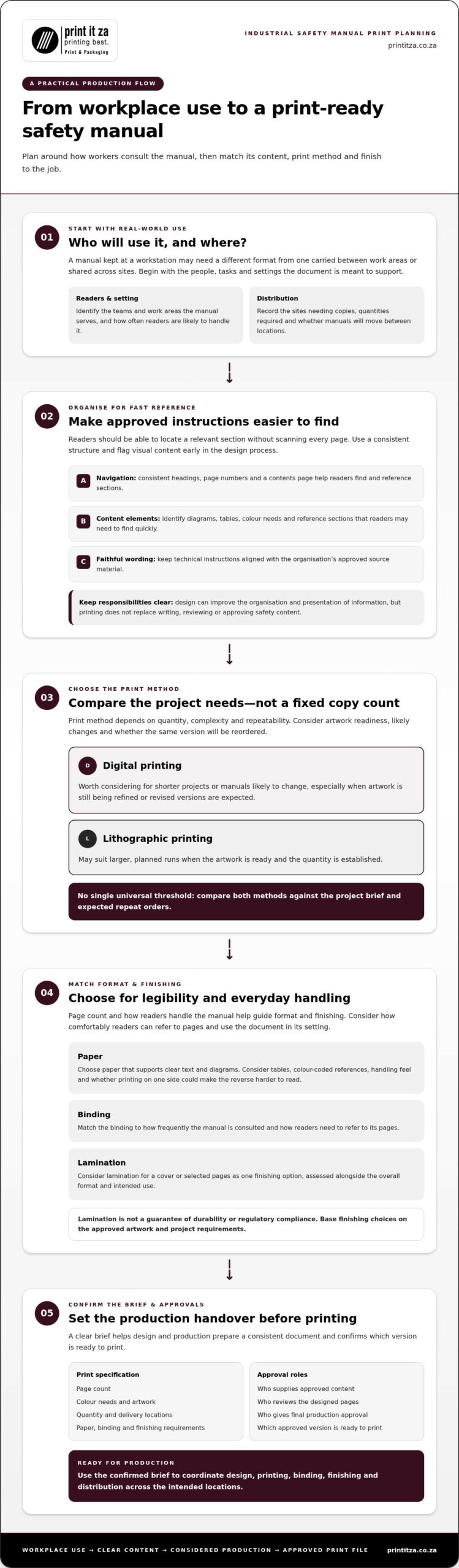
An industrial safety manual is a printed reference for an organisation’s approved workplace procedures and safety information. Its value depends on more than getting the pages onto paper: workers should be able to locate the relevant section, understand its layout and use the information as intended. That’s why safety manual printing for industry should begin with the people, tasks and settings the manual is meant to support.
Consider where and how readers will consult it. A manual kept at a workstation may have different requirements from one carried between work areas or shared across sites. The broad field of Occupational Safety and Health provides useful context, but the procedures and instructions in a company manual must come from that organisation’s approved source material.
What should a printed industrial safety manual help workers do?
A manual should help readers find approved instructions without scanning every page. Consistent headings make sections easier to recognise, page numbers make specific points easier to reference, and a contents page provides a route through the document. These features are especially useful when a manual includes separate procedures, reference material, tables or diagrams.
Keep technical wording faithful to the approved text. Design can improve the organisation and presentation of information, but printing is not a substitute for writing, reviewing or approving safety content. Make content approval a separate project responsibility and complete it before production begins.
Which project details shape the print brief?
First, identify who will use the manual, how many sites need copies, how often readers are likely to handle it and whether copies will move between locations. These details help guide format and finishing decisions. Flag diagrams, tables, colour requirements and reference sections early so they can be considered during design, rather than added as last-minute changes.
Also identify who supplies the approved content, who reviews the designed pages and who gives final approval for production. A clear handover helps keep the document accurate and establishes which version is ready to print.
- Readers and setting: Identify the teams and work areas the manual serves.
- Content elements: Note diagrams, tables, colour needs and sections readers may need to find quickly.
- Distribution: Record sites, quantities and whether manuals move between locations.
- Approval: Name the people responsible for supplying, reviewing and approving the final content.
These details give your print brief a practical starting point and help the design and production team prepare a consistent document suited to how it will be used.
How paper, binding, and finishing shape safety manual printing
Once you know how teams will use the manual, choose production and finishing options to suit the project. Paper affects the readability of text and diagrams, while binding and lamination influence how the finished document feels and handles. These choices should support the content and intended use.
Digital or lithographic printing: how should industry buyers decide?
Digital printing is worth considering for shorter projects or manuals likely to change, particularly when artwork is still being refined or revised versions are expected. Lithographic printing may suit larger, planned runs when the artwork is ready and the quantity is established. Consider repeat orders too: will you need the same version again, or are content updates likely?
The right print method depends on quantity, complexity and repeatability, not a single universal threshold. Compare the methods against your project brief rather than relying on a fixed copy count. OSHA’s OSHA Recommended Practices for Safety Programs offer broader guidance on developing and improving safety programmes. Use them as general context, while keeping the manual’s content aligned with your organisation’s approved material.
How should a buyer compare manual formats and finishes?
Start with the document’s page count and how readers will handle it. A manual consulted frequently may have different binding needs from one used occasionally. Choose a format that lets readers refer to pages comfortably and keeps the document practical for its setting.
Paper should support legibility across both text and visual content. A manual with detailed diagrams, tables or colour-coded references needs pages that present those elements clearly. Consider how the paper feels to handle and whether content on one side could make the reverse harder to read. Choose based on the design and intended use, not appearance alone.
Lamination can be considered for a cover or selected pages. It is one finishing option, not a guarantee of durability or regulatory compliance. Assess it alongside the overall format and intended use. Print It ZA coordinates binding and lamination with manual printing, aligning finishing choices with the approved artwork and project requirements.
- Print method: Compare quantity, artwork readiness, likely changes and repeat-order needs.
- Paper: Consider readability, diagrams, tables and everyday handling.
- Finishing: Match binding and any lamination to how readers will consult the manual.
Explore manual printing options and consider how each production choice supports the way your teams will use the finished document.
Can printed safety manuals stay useful when procedures change?
Yes, when your organisation has a clear process for updating and replacing copies. A printed manual gives workers a physical reference they can consult without needing a screen for every lookup. When approved content changes, however, copies at workstations, in vehicles or across different sites can quickly become outdated unless someone coordinates the update.
For safety manual printing for industry, plan version identification alongside production. Use an edition or revision identifier supplied and approved by your organisation, such as a version label on the cover or a revision record in the document. Readers should be able to recognise the copy they’re using and distinguish it from a superseded one. The identifier supports version awareness, but it does not replace your organisation’s content approval and document-control process.
What are the practical trade-offs of printed manuals?
A physical copy can be kept near the work it supports and consulted directly. It also requires active distribution and replacement planning whenever approved content changes. Clear page structure helps readers locate information, while a consistent revision identifier helps them recognise which version they have. When copies are spread across locations, include a way to account for them during an update.
How can teams plan for revisions and reprints?
Keep an approved master file and a clear record of changes within your organisation’s process. Decide who owns the source content, who approves the final version, who supplies the print-ready file and who coordinates delivery to each site. Clear ownership reduces the risk of printing from an outdated file or failing to distribute replacement copies.
Then choose an update approach that fits the scale of the change and the manual’s layout:
- Revised pages: Consider this when a limited section changes and your organisation can identify and replace affected pages consistently.
- Full reprint: Consider a complete new copy when changes affect many sections or a uniform edition across locations is important.
- Replacement copies: Plan these for sites or users who need a complete updated manual rather than individual pages.
Whichever route you choose, include distribution and removal of superseded copies in the update plan. A printed manual stays useful when the physical reference remains aligned with the approved source content. Print It ZA coordinates design and printing from the approved file to produce consistent revised manuals for distribution across your teams.
What to include in an industrial safety manual print specification
A useful print brief turns an approved document into clear production instructions. A strong print brief combines approved content with format, quantity, finishing and delivery details. For safety manual printing for industry, specify the actual manual and project rather than relying on a generic template. Page count, artwork, intended handling and distribution all shape the decisions.
Which details belong in the print brief?
Build the brief in sequence, so content and use requirements guide the format:
- 1. Confirm the content: Identify the approved master file, page count and any revision identifiers that must appear.
- 2. Set the format: Specify the trim size and note whether you need in-house design support or are supplying print-ready artwork.
- 3. Describe colour and visuals: Flag colour requirements, diagrams, tables and other elements that need clear reproduction.
- 4. Define quantity and finishing: Set quantities based on planned use, then specify the binding and any lamination required.
- 5. Map delivery: List distribution locations and explain how manuals will be handled and stored at each work location.
Include details about how teams use the manuals. Copies kept in one place may have different handling needs from documents carried between work areas or sites. This context helps the design and print team choose a format that supports legibility, reference and distribution.
How should procurement plan proofing and distribution?
Before production, assign a reviewer to check the proof against the approved source. The review should cover text, diagrams, pagination and revision identifiers. This is a production check, not a substitute for the organisation’s content approval. Confirm that the final file is authorised for printing.
Plan quantities by site and intended recipients using your organisation’s actual distribution needs. For Gauteng teams, map delivery destinations and any coordination between locations before production begins. If the project includes sites beyond Gauteng, a clear destination list helps organise nationwide delivery.
Print It ZA combines in-house design support with digital and lithographic printing, binding and lamination. Include your approved content, artwork status, print requirements and delivery plan in the brief. Review the production options for your safety manual project.
Plan safety manual printing with a Johannesburg production partner
A well-planned manual project brings content, design, print production and distribution into one coordinated workflow. Print It ZA supports manual printing for Gauteng organisations with in-house design, digital and lithographic printing, binding and lamination. These options can be matched to your approved content and project brief, while nationwide delivery supports distribution beyond Gauteng.
How can design and print production work together?
Design support can help organise headings, tables, diagrams and page navigation so the approved information is easier to follow on the page. Your organisation remains responsible for supplying and approving the safety content. Once the artwork has been reviewed and approved, it can move into print production using the method and finishing choices suited to the project.
For a broader look at production planning, explore this guide to professional printing services in Johannesburg. For safety manual printing for industry, connect design and production decisions to how your teams will use and distribute the finished copies.
What should buyers prepare before requesting a project discussion?
A clear starting brief makes a project discussion focused and useful. Gather the latest approved files and note whether you’re supplying print-ready artwork or need in-house design support. Include an estimated quantity, the locations that need copies, and your preferences for binding or lamination. Also describe how manuals will be handled and stored, along with any planned revision or repeat-print process.
- Content and artwork: Share the approved file and identify the person responsible for final sign-off.
- Production needs: Note quantity, colour requirements, format and preferred finishing.
- Distribution: List delivery locations, including sites outside Gauteng if nationwide delivery is needed.
- Future updates: Summarise how your organisation expects to manage revisions and reprints.
These details give the production team a practical basis for coordinating design, printing and delivery. You can also read the Johannesburg print shop guide for more context on planning a local print project.
Bring your approved files, project requirements and distribution plan to a discussion with Print It ZA to map out the next steps.
Make your next safety manual print project practical from the start
Useful industrial manuals start with how teams will consult them. Clear navigation, suitable paper and finishing, and a plan for identifying and replacing revised copies all help make printed procedures easier to use. A focused brief covering approved content, format, quantity and delivery locations gives production decisions a practical foundation.
Print It ZA provides manual and training-manual printing, with in-house design support and digital and lithographic printing to bring approved files into production. Nationwide delivery supports projects serving teams across South Africa. The right approach to safety manual printing for industry is shaped around your manual and how your people will use it.
Ready to plan your project? Discuss your industrial manual printing project with Print It ZA and share your approved files, specifications and delivery plan.
Frequently Asked Questions
What should an industrial safety manual include before it is sent to print?
It should contain the organisation’s approved content, organised so readers can find information easily. Prepare a clear contents page, consistent headings, page numbers and any approved revision identifiers. Check that tables and diagrams are included and legible, and confirm that the text matches the authorised source. Assign someone to review the final artwork and approve the print-ready version before production starts.
Is digital or lithographic printing better for safety manuals?
Neither method is automatically better; the right choice depends on the project. Digital printing is worth considering for shorter runs or content that may change, while lithographic printing can suit larger, planned quantities with artwork ready for production. For safety manual printing for industry, compare quantity, artwork readiness, complexity and repeat-order plans. A project-specific comparison is more useful than relying on a fixed quantity threshold.
Can printed safety manuals be updated when procedures change?
Yes. Keep an approved master file and record changes through your organisation’s content-control process. When procedures change, decide whether to replace selected pages, reprint the full manual or supply complete replacement copies. Add a visible revision identifier so readers can distinguish current copies from older ones. If manuals are distributed across Gauteng or other sites, plan how to send updated copies and remove superseded versions.
How do I choose a binding for an industrial manual?
Choose a binding that suits the manual’s page count, how often readers will consult it and how they’ll handle it. A manual used mainly at a fixed location may have different needs from one carried between work areas. Consider whether it should open comfortably for reference and how it will be stored. Include these details in your print brief so the binding can be matched to the project.
Should safety manuals be laminated?
Lamination may suit a cover or selected pages, depending on how the manual will be handled and where it will be used. It’s a finishing choice, not a guarantee of durability or compliance. Consider whether lamination suits the document’s design and intended reference use, and include your preference in the print brief. Print It ZA offers lamination as part of its manual printing and finishing capabilities.
What information should I provide when requesting a safety manual printing quote?
Provide the page count, preferred format or trim size, colour requirements, print-ready artwork status and estimated quantity. Include your preferred binding or lamination, how the manuals will be handled and the delivery locations. If you need design support, note that too. For a Gauteng project, listing each destination helps clarify distribution needs. The production choices can then be aligned with your brief.
Can one print project supply safety manuals to multiple South African sites?
Yes. Plan the project around the quantity required at each site and provide a clear list of delivery destinations. This helps coordinate production and distribution for teams in Gauteng and elsewhere in South Africa. Print It ZA provides nationwide delivery, supporting organisations that need manuals distributed beyond Johannesburg. If copies may be updated later, include the revision and replacement process in your planning from the start.