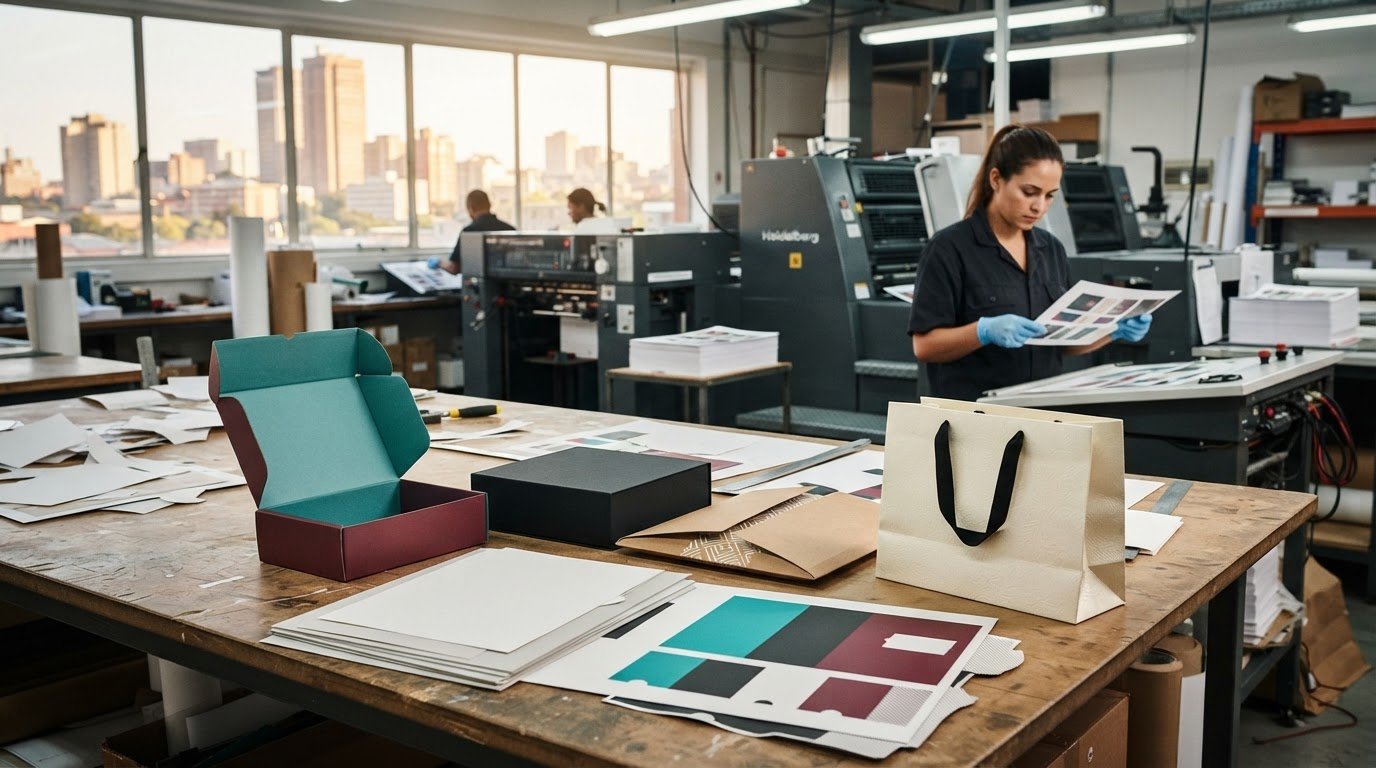
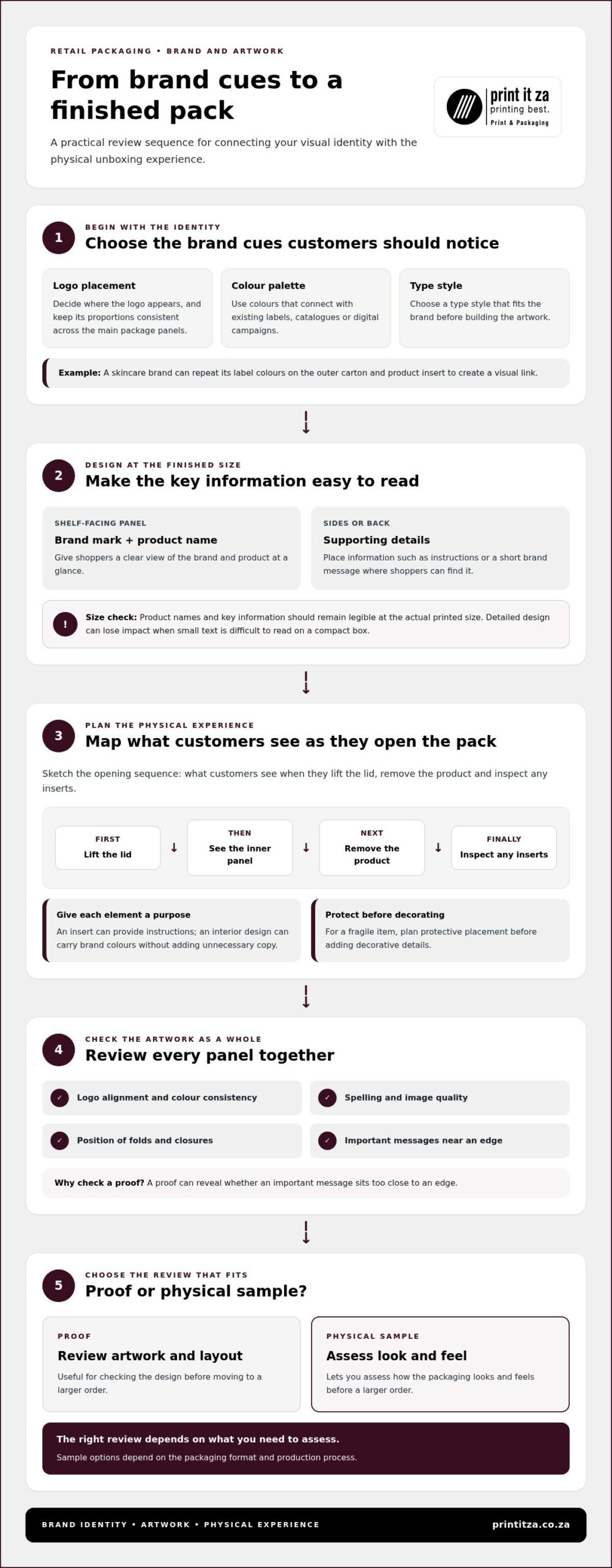
A sample can reveal issues that a digital design cannot, but the right review depends on what you need to assess. With custom retail packaging printing, a proof helps you review artwork and layout, while a physical sample lets you assess how the packaging looks and feels before a larger order. Sample options depend on the packaging format and production process.
It makes sense to want reassurance before committing to bulk quantities. We explain how to weigh sample reviews alongside materials, branding, minimum quantities and order size, so you can make choices that suit your product and retail needs in Gauteng and Johannesburg.
This guide covers the decisions that shape a packaging brief, from choosing a material and preparing artwork to understanding how quantity affects production. You’ll also learn how professional print support can bring your design and finished packaging together for the South African market.
Key Takeaways
- Align packaging colours, artwork and unboxing details with your brand so the experience feels consistent from shelf to customer.
- Review a proof or physical sample to assess different aspects of the design before moving to a larger order.
- Packaging formats and production choices shape minimum quantities, so define what you need before planning your order.
- Compare materials and construction based on how the package will present and protect your product.
- For bulk orders, consider how quantity, packaging specifications and production choices affect the overall pricing.
Brand identity and unboxing presentation
Packaging gives shoppers their first physical impression of your brand. A clear logo, recognisable colours and consistent typography connect the pack with your other marketing. For example, a skincare brand might repeat its label colours on the outer carton and product insert. This visual link makes the package feel intentional and connected to the product.
Start with the brand elements customers should notice first. Choose logo placement, a colour palette and a type style before building the artwork. Then check that product names and key information remain legible at the finished size. Detailed design can lose impact if small text is difficult to read on a compact box.
Consider how the package will appear in its retail setting. A shelf-facing panel may need the product name and brand mark to stand out at a glance. The sides or back can carry supporting details, such as instructions or a short brand message. A gift product, for example, may have a strong front panel, with an instruction booklet inside explaining how to use it.
- Use the same logo proportions across the main package panels.
- Choose colours that match existing labels, catalogues or digital campaigns.
- Keep product names readable at the actual printed size.
- Place supporting copy where shoppers can find it without turning the pack repeatedly.
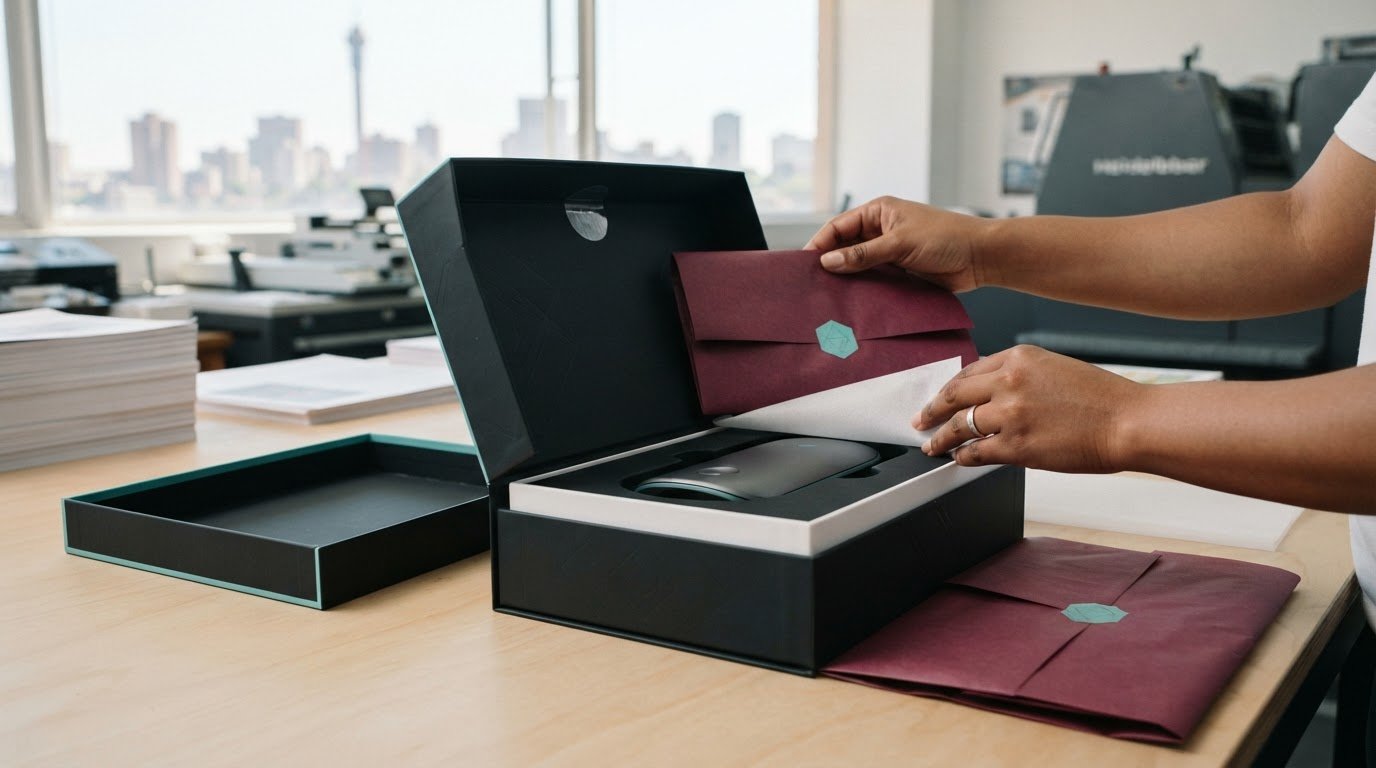
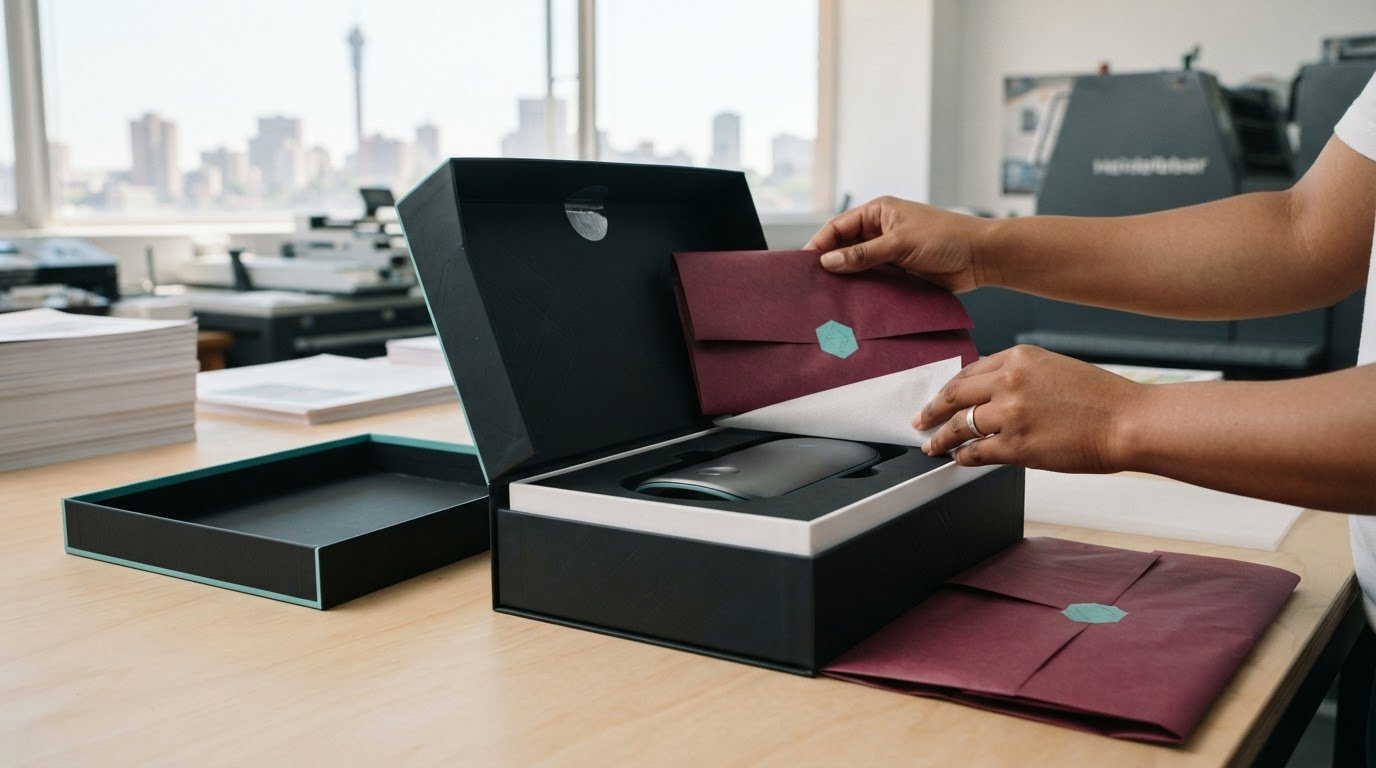
Unboxing offers another moment to express your brand. A customer opening a box might first see a printed inner panel, then a neatly positioned product and a thank-you card. Each element should serve a purpose. An insert can provide instructions, while a simple interior design can carry brand colours without adding unnecessary copy.
Plan the opening sequence as part of the design, not as an afterthought. Sketch what customers see when they lift the lid, remove the product and inspect any inserts. A fragile item may need protective placement before decorative details. A presentation folder or point-of-sale display can also carry related visual cues across a launch or in-store promotion.
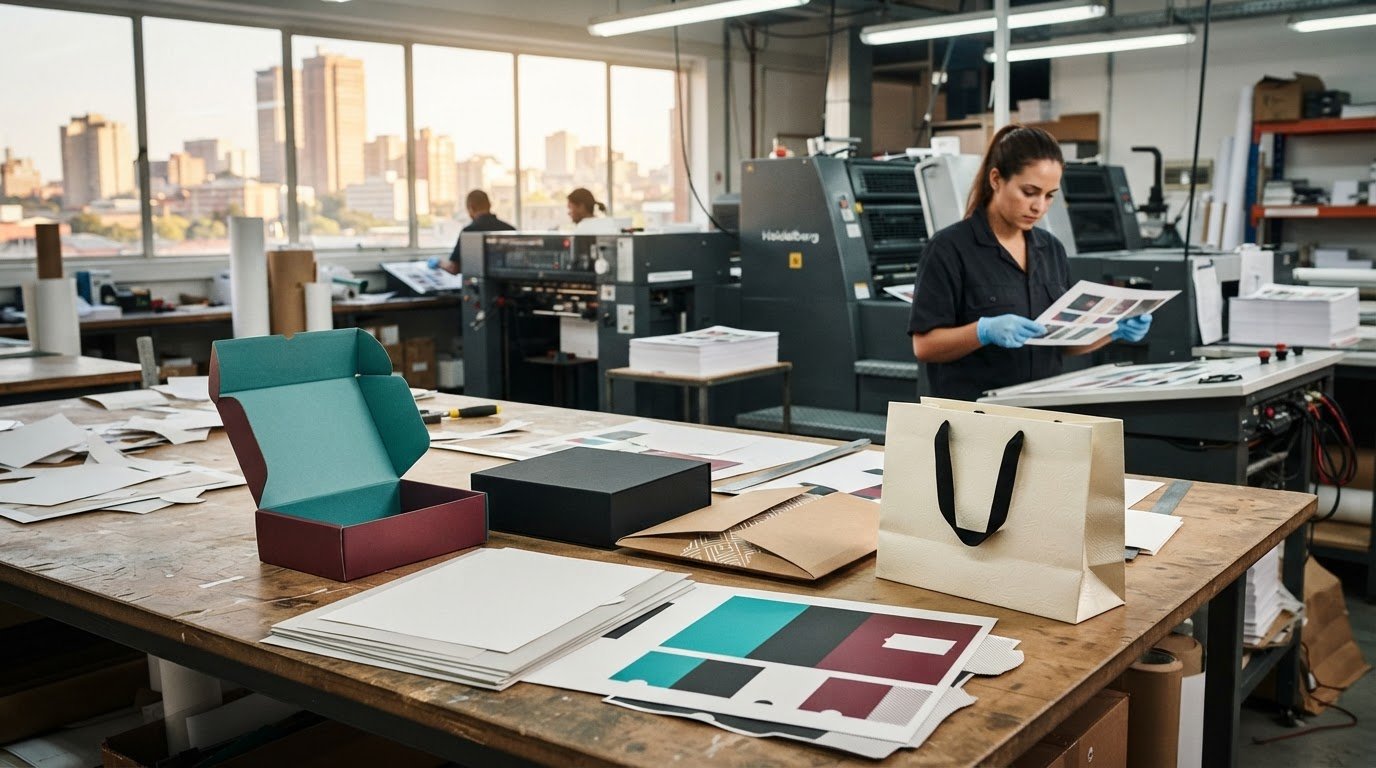
Before approving artwork, review every panel together. Check logo alignment, colour consistency, spelling, image quality and the position of folds or closures. A proof can reveal whether an important message sits too close to an edge. In custom retail packaging printing, this practical review connects brand identity with the finished physical experience.
Do you offer bulk discounts for larger business packaging orders?
In South Africa, packaging, labelling and environmental requirements depend on the product category, packaging materials and producer role. Food, healthcare and general retail products, for example, can have different labelling considerations. Assess the finished pack against the requirements relevant to its contents and use.
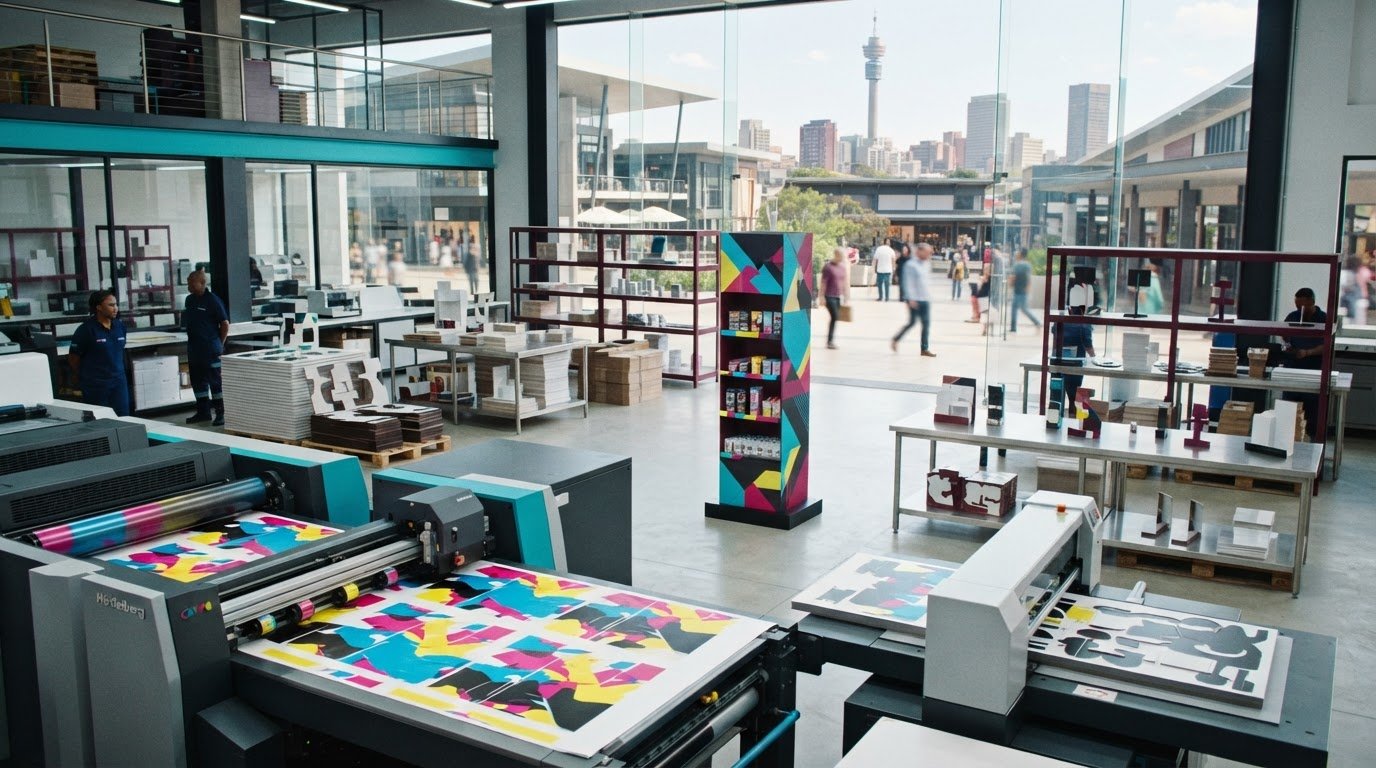
Print It ZA produces retail packaging for South African businesses, including those in Gauteng and Johannesburg. Capabilities depend on the format, print process and production setup, so make your brief specific about the box, bag or other packaging you need.
Larger orders can change the cost per package, but a discount isn’t automatic. Production setup, material choice, print coverage and finishing all affect the quoted price. When fixed setup work is spread across more identical units, the unit cost may fall. Changes to the size, artwork or construction can alter that calculation.
Compare like with like. A quote for plain cartons isn’t directly comparable with one for full-colour boxes with a special finish. Give Print It ZA the same specifications for each quantity you’re considering. Include the finished dimensions, material, printed sides, artwork versions and delivery requirements. This makes the price comparison more meaningful.
For example, a retailer planning a launch across several stores could compare prices for one design at different order quantities. If each store needs a different product name or colour, those versions may affect setup and production planning. Consolidating artwork can simplify the job, while separate versions may require distinct production steps.
Before requesting a quote, prepare these details:
- The packaging format and finished dimensions.
- The material and any required structural features.
- The number of designs, artwork versions and print sides.
- The quantities you want priced and the delivery locations.
Ask for each proposed quantity to be priced against the same specification. Then compare the total order cost, unit cost, storage needs and risk of unused stock. A lower unit cost may not suit a business expecting a design refresh or seasonal change before using every package.
In South Africa, the project price is provided after you request a quote. Quantity, materials, dimensions, artwork and finishing shape the price. Plan your order around actual sales and storage capacity, not just a possible bulk saving.
Once your specifications are ready, plan your packaging order around the format, artwork and quantity your business needs.
There is no single set of requirements for every retail package. Applicable packaging, labelling and environmental obligations depend on the product, materials and producer role. Assess the finished pack against the requirements related to its contents and intended use.
What is the minimum order quantity for custom packaging boxes, mailers and bags?
There isn’t one minimum quantity that suits every box, mailer and bag. The required order depends on the format, material, print process and production setup. A folding carton and a printed pouch have different production requirements, so their order quantities can differ.
For boxes, start with the product’s dimensions and how it will be packed. A small carton for a soap bar differs from a large box for a homeware item. Size, structure, printed panels and finishing choices all shape the production plan. Keep the design and specifications consistent across the order to avoid creating separate versions.
Mailers need a different brief. State what they will hold, how they close and whether the exterior needs printed branding. A mailer for lightweight clothing has different requirements from one for a book. If you want several sizes or designs, treat each variation as a separate production requirement when planning quantities.
Bags and pouches also vary by intended use and construction. A retail carry bag, product pouch and mailer bag are distinct formats. Identify the product, expected use and artwork before requesting quantities. This information helps define a practical order instead of relying on a generic minimum.
Custom printed packaging gives you more control over size, structure and brand presentation than off-the-shelf packaging. Labels and stickers can add a logo or product details to plain stock packaging, but they don’t change its shape. For example, a small business can brand a standard box with a label, while a custom box builds the design into the packaging itself.
To plan an order, write a short specification for each format:
- Packaging type, such as a box, mailer, bag or pouch.
- Product dimensions and how it will fit inside.
- Material and construction preferences.
- Artwork versions, printed panels and finishing choices.
- Quantity needed for each design and size.
Then request pricing for the same specification at quantities your business can use. Compare the total order, per-unit cost and storage needs together. A larger run may reduce the unit cost, but it can also leave you with excess packaging if the product, branding or range changes.
For a new product, a focused first run can help limit leftover stock while you assess demand. For an established product with stable artwork, a larger order may better suit your stock plan. In either case, the packaging format and production setup determine the workable quantity. Clear specifications make the decision easier.
Minimum order quantities
A minimum order quantity, or MOQ, is the smallest production run available for a particular specification. It isn’t one fixed figure for every packaging job. The format, material, print process and finishing determine what can be produced efficiently. A short run of one design differs from several versions produced on the same schedule.
Start by separating the production requirements. For example, one product may need a single carton design, while a range may need different names or colours. Each artwork version can create its own setup and handling requirements. List the quantity for every version separately, rather than combining them into a total that hides the actual job.
Production setup is one factor behind an MOQ. Preparing a print run takes work before the first finished package is ready. If a job uses a specific material, size or finish, those choices shape the setup. A different construction or new artwork version can require separate preparation, affecting the smallest practical run.
Print method also matters. Digital and litho printing have different production workflows, so the suitable run can change with the chosen process. A small test range may suit one approach, while a larger repeat order may make another more practical. The format, artwork and volume together help determine the production plan.
Use a simple quantity plan before asking for prices:
- List each packaging format and finished size.
- Record the artwork version for every product or variant.
- Estimate the stock needed for the current sales period.
- Separate the initial run from any planned repeat order.
This breakdown helps show whether a shared design can serve several products. For instance, a common outer package with a product-specific label may reduce the number of printed packaging versions. Separate printed designs may suit a range that relies on distinct shelf presentation. The choice affects artwork requirements and production planning.
Balance the MOQ against storage needs and product changes. A larger run can spread setup work across more units, but it also ties up space and stock. A seasonal design or product relaunch can leave old packaging unused. A smaller order may better suit uncertain demand, even if the unit cost differs.
For a repeat order, keep the approved dimensions, material and artwork details together. Record changes between runs, such as a new product name or revised panel. That clear specification makes later quantity comparisons more useful. In custom retail packaging printing, the right MOQ fits both production needs and realistic stock use.
Packaging materials and constructions
Choose packaging to suit the product, its use and its display. A lightweight soap carton has different requirements from a box for a glass bottle. Start by recording the product’s dimensions, weight and shape. Include any components, such as a pump, lid or instruction leaflet, that affect the fit.
Paperboard suits many folding carton designs, while corrugated board provides a layered structure. A retailer might use a folding carton for a boxed skincare product and a corrugated box for a heavier item. Paper bags offer another format for carrying purchases. The best choice depends on how the package will be handled, stored and presented.
Construction matters as much as material. A straight-tuck carton closes differently from a box with a separate lid. A box with an insert can hold a bottle in place, while a simple carton may suit a bar of soap. Consider where the product sits, how the package opens and whether staff can assemble it efficiently.
To choose a size, measure the product at its widest and tallest points. Allow space for protective elements or an insert if needed. Then consider how the finished package fits on a shelf or display. A box with excess space can look oversized, while a tight fit may make packing difficult.
Match the finish to the design and the role of each panel. A matte surface can look subdued, while gloss creates a brighter appearance. A restrained finish may suit a premium tea box, while bold colour can help a children’s activity product stand out. Check how the finish interacts with small text, images and brand colours.
Use this practical sequence before finalising specifications:
- Measure the product and note its weight and shape.
- Choose a material based on handling and presentation needs.
- Select a construction that supports packing and opening.
- Place artwork on a dieline and review folds, joins and text.
- Assess a physical sample for fit, appearance and ease of use.
A dieline shows the flat layout, including panels, folds and cut lines. Reviewing it helps prevent a logo from landing across a fold or important copy from sitting near an edge. A sample then lets you test the product fit and opening sequence before finalising production decisions.
For custom retail packaging printing, clear dimensions and construction details help align artwork with the finished package. Discuss your retail packaging requirements with a team that can support the design and print process.
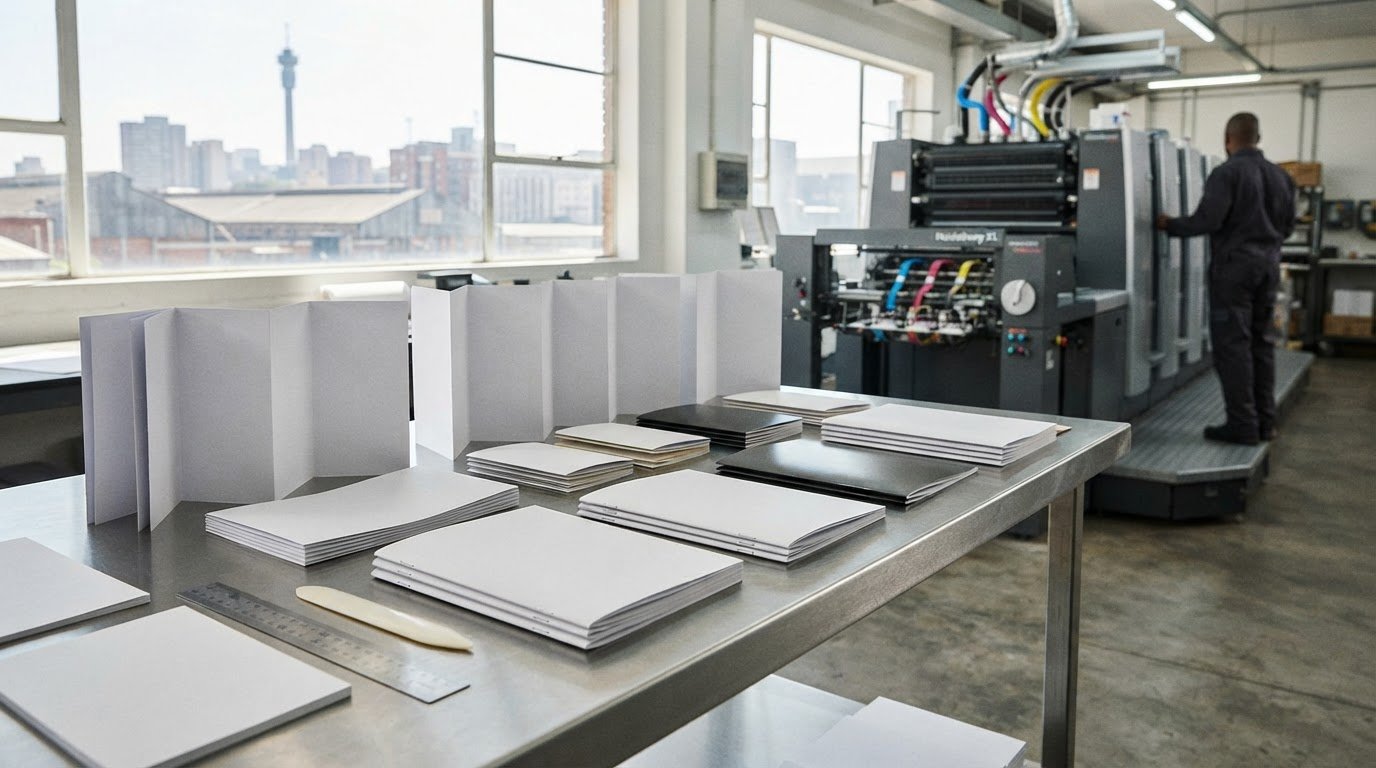
Print It ZA print and packaging: Books
Print It ZA brings retail packaging from creative development through to final delivery. Turn to our team when your packaging brief is ready to become a printed product, or when you need printed materials that support the same brand presentation.
Alongside Retail Packaging, Print It ZA produces Books, Catalogues and Brochures. For example, a product launch can pair branded packaging with a catalogue presenting the range, or a brochure sharing product details. Bringing these print needs together can make planning your materials more straightforward.
Prepare your packaging format, artwork, quantity and delivery requirements to guide the discussion. Contact Print It ZA print and packaging to talk through your retail packaging project.
Shape packaging around your next brand move
Your packaging can support more than a single product launch. Treat it as part of how your brand communicates as products, campaigns and customer needs develop. A considered custom retail packaging printing brief gives your creative direction a clear starting point while leaving room for future updates.
Think about the printed materials customers encounter alongside the package. A catalogue can introduce a product range, a brochure can explain a feature, and a book can provide deeper brand or product content. Print It ZA produces Books, Catalogues, Brochures and Retail Packaging, helping businesses plan related print requirements together.
Bring your packaging idea, artwork direction and project requirements into one brief. That gives the conversation a practical focus, whether you’re preparing a new product or refreshing an existing presentation. Contact Print It ZA print and packaging to discuss your project and take the next step with confidence.
Frequently Asked Questions
Can I get samples of branded packaging products before placing a larger order?
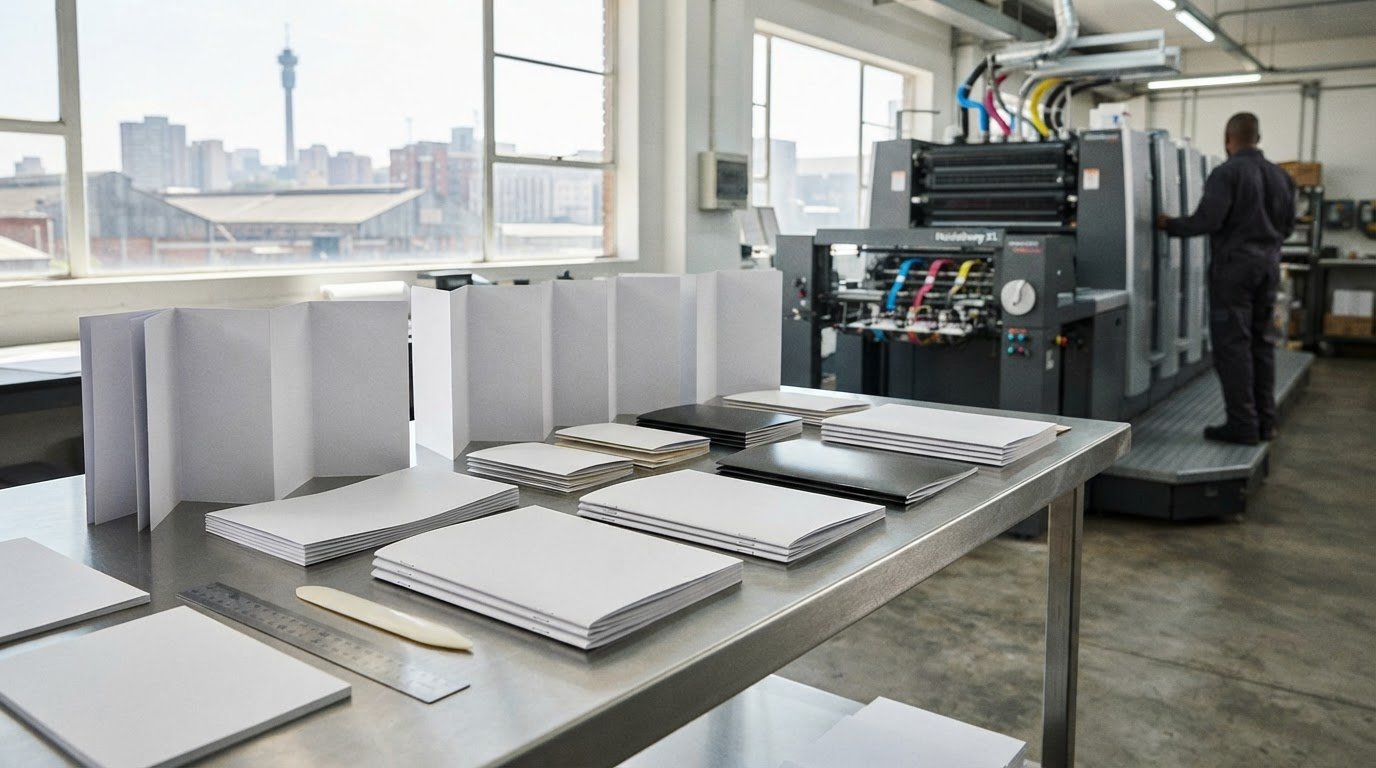
Yes, a prototype can help you assess packaging before approving a larger production run. Check how the product fits, how the package opens and whether key artwork appears as intended. For example, test a bottle inside its proposed carton and review the printed panels under ordinary retail lighting. This practical review can uncover fit or layout changes before you commit to the full order.
Do you offer custom sizes for your packaging printing?
Yes, packaging can be customised to suit your product’s dimensions. Measure the item at its widest points, including closures or parts that affect the fit, then provide those measurements with your brief. For a product sold as a set, include every component that must fit inside. This gives the packaging design a useful starting point and avoids choosing a box based only on the main item.
How do I design my custom product packaging?
Begin with your product details, brand artwork and the information customers need on the pack. Print It ZA’s in-house designers support creative development. Share a clear brief describing the product, target customer and retail setting. For example, a gift set may need space for several items and a concise description, while a single-product pack may prioritise the name and instructions.
What are the benefits of using custom packaging for branding?
Custom packaging gives your brand a consistent presence on the product itself. It can carry your logo, colours and product information in a format designed for your range. For example, coordinated packages can distinguish product variants while keeping the overall brand presentation consistent. Thoughtful packaging also gives you control over how the item appears on a shelf or when opened.
What are the turnaround times and shipping options for custom packaging orders?
Turnaround depends on the approved artwork, packaging specifications, print method and order volume. Delivery is available across South Africa, including to business addresses, warehouses and educational institutions. Orders weighing up to 90 kg qualify for free delivery. Share your destination and project requirements when arranging an order so the production and delivery plan can account for your needs.
What types of custom retail packaging can be printed in South Africa?
Print It ZA produces retail packaging and packaging boxes for South African businesses, including those in Gauteng and Johannesburg. The right format depends on the product and how customers encounter it in store. A box can contain and present a product, while a point-of-sale display can showcase products at the retail location. Define the purpose and product dimensions first, then match the format to the intended use.
What is the minimum order quantity for custom printed retail packaging in South Africa?
There isn’t one quantity that applies to every packaging project. The production run depends on the packaging format, print method, material choices and number of artwork versions. A single design differs from a range with separate product names or colours. To plan stock, estimate how much packaging your business can use before a product or design update, then base the order brief on that demand.
What materials and printing methods are available for custom retail packaging?
Print It ZA print and packaging offers litho and digital printing, with paper stock selected for the project and eco-friendly options available. The suitable combination depends on the packaging design, artwork and production volume. For example, a business may compare print methods for a short product launch run against a larger repeat order. Include your preferred stock and finish in the brief to guide the production discussion.