A premium-looking hard cover isn’t automatically right for every book. A successful case-bound hardcover book printing project starts with a clear purpose: how the book will be used, how often it will be handled and what you want its pages and cover to communicate.
It’s natural to focus on the cover first, but page count, paper, artwork and finishing all shape the result. This guide explains the choices that influence a book’s specification, outlines page-count considerations and explores materials and finishing options. You’ll also learn which projects suit case binding and how to prepare print files for a book project in Johannesburg and across South Africa. Whether you’re producing a coffee table book, yearbook, journal or another publication, understanding these decisions helps you plan a book that fits its purpose.
Key Takeaways
- Compare case binding with paperback construction by considering how the book will be handled and the finish you want, not just the cover style.
- Plan page count alongside paper selection, since paper affects the thickness and practical limits of a hardback.
- Explore printed paper cases and covered materials to match the cover’s look and feel to the book’s purpose.
- Endpapers, dust jackets and other finishing details can add useful protection and a considered finish.
- Case binding is best suited to projects where a sturdy, polished presentation supports the book’s intended use.
How much does a hardcover book cost to print?
There’s no single specification for every hardcover project. Materials, binding and finishing all affect the finished book. Case binding uses a rigid cover, unlike a paperback’s flexible cover; choices such as paper, cloth, board, thread-sewn sections, endpapers and dust jackets shape the final result.
Case Binding and Paperback Methods
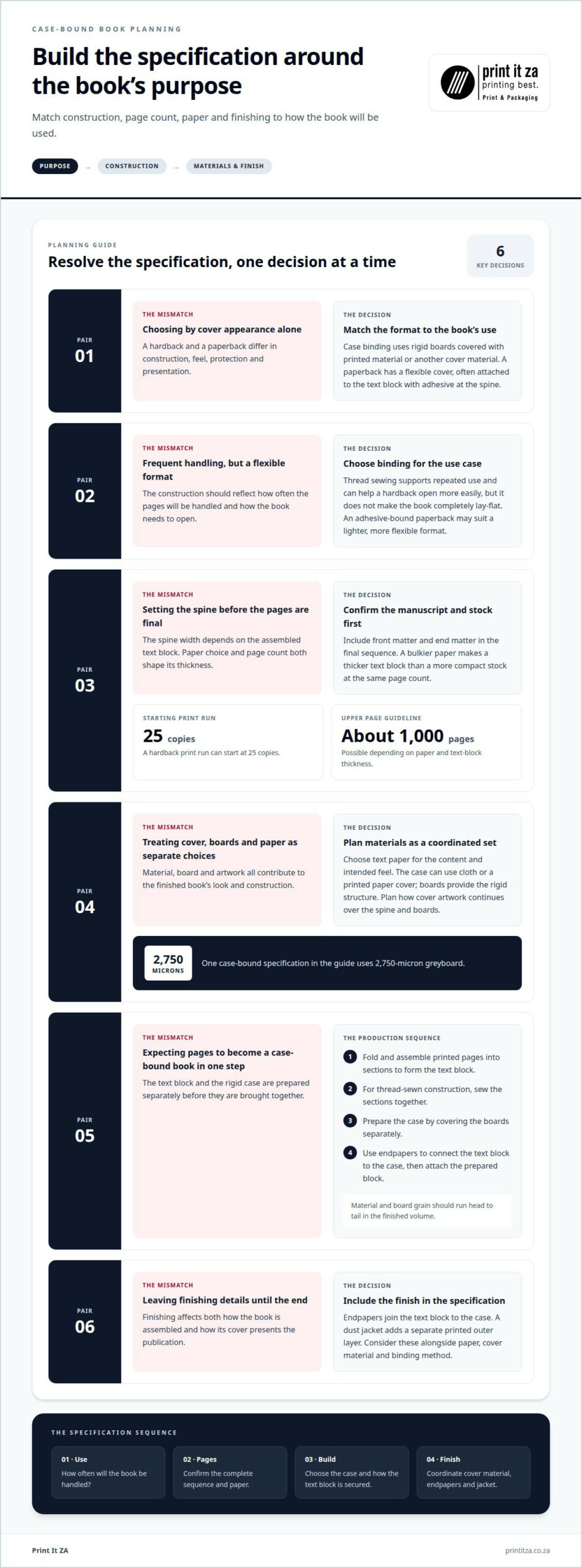
A case-bound book has rigid boards covered with printed material or another cover material. A paperback has a flexible cover, often attached to its text block with adhesive at the spine. This difference affects feel, protection and presentation, so match the format to the book’s purpose. For a frequently handled reference book, a rigid case and thread-sewn text block may suit the brief better than a flexible paperback cover.
Thread sewing supports repeated use and can help a hardback open more easily, but it doesn’t make the book completely lay-flat. Perfect binding is a paperback method, not another name for case binding. When comparing specifications, look at how the cover is constructed and how the pages are secured, not just the cover artwork.
Hardcover Binding Alternatives
Hardcover binding can use a thread-sewn text block or a text block secured with adhesive. The case is the rigid outer cover; the binding method describes how the pages are assembled and attached. Each choice affects how the book opens and handles repeated use.
Consider a sewn text block for a publication intended for frequent handling, such as a reference volume. An adhesive-bound paperback may suit a lighter, more flexible format. These construction choices affect the specification, so define the book’s intended use before deciding on its cover and binding.
Case-Binding Production Steps
Production starts with the printed pages, which are folded and assembled into sections to form the text block. For a thread-sewn book, the sections are sewn together; endpapers can then connect the block to the case. The boards are covered separately, and the prepared text block is attached to create the finished hardback.
Material and board grain should run head to tail in the finished volume. This alignment helps the components work together as the book opens and closes. Handmade case binding usually takes several days, while each production step, from assembling the block to casing-in, shapes the final construction.
Paper, Cover, and Finish Choices
Choose text paper for the content and the book’s intended feel. The cover can use cloth or a printed paper case, while boards provide the rigid structure. One case-bound specification uses 2,750-micron greyboard. For a printed cover, consider how the artwork continues across the spine and boards.
Finishing can include thread sewing, endpapers and a dust jacket. A dust jacket adds a separate printed outer layer, while endpapers join the text block to the case. Together, these choices define the book’s appearance and construction. For a considered specification, plan the format, paper, cover material, binding and finishing as a coordinated set.
Case-bound book page-count specifications
A hardback print run can start at 25 copies, and books can reach about 1,000 pages, depending on paper. Plan the page count around the manuscript, chosen stock and finished book thickness.
Minimum Runs and Page Limits
A minimum run of 25 copies gives authors and organisations a defined starting point for planning production. It can suit a focused release, a limited distribution or a project that needs a set number of finished books. The quantity and page count should be considered together when preparing the specification.
The upper guideline is about 1,000 pages, depending on the paper. Paper weight and bulk affect the thickness of the completed text block, so the same page count can produce different spine widths with different stocks. A substantial manuscript needs a paper choice that works with the intended format.
A text-heavy reference book may need a different page count from an image-led publication. Both can use case binding, but their paper and text-block thickness will differ. Finalise the manuscript and paper choice before designing the spine, since its width depends on the finished text block.
Available Page Counts
There’s no standard page count for every case-bound book. The count depends on the content and layout. A novel, school yearbook and illustrated book organise information differently, so plan the final pagination around how readers will use the pages.
Start with the complete manuscript, including front matter such as a title page or contents, and any end matter. Then arrange the content in a readable sequence. This establishes the final page count before the cover file is prepared, since the spine needs to fit the assembled pages.
Paper selection is part of this decision. A bulky stock makes a text block thicker than a more compact choice at the same page count. Near the upper guideline of about 1,000 pages, that distinction matters particularly for the finished book’s proportions and spine. The paper specification and pagination should therefore be developed together.
Even a shorter project needs a page count that feels intentional. A concise instruction book, for example, can use clear section breaks and illustrations to organise information without adding unnecessary pages. For a longer publication, consistent chapter openings and a well-planned contents section help readers navigate the material.
Before production, the page-count step is to confirm the final sequence and include every printed page in the layout. That gives the cover design a reliable basis and helps align the text block, spine and case. Explore book printing options as you shape the project specification.
Printed paper cases and covered materials
A case-bound book’s durability depends on its materials, construction and handling. A sound cover, well-aligned spine and suitable paper help the finished volume stand up to its intended use.
Cover Materials and Finishes
A printed paper case lets the cover artwork extend across the front, spine and back. A covered material offers a different look and tactile finish. Wibalin Buckram stock is available in 20 colours, giving you a range of colours to consider for a coordinated cover.
Choose a cover approach that suits the book’s purpose and design. A photographic coffee table book, for example, may call for printed cover artwork, while a formal reference volume may suit a restrained material choice. The cover material, image treatment and spine design should work together as a complete composition.
Cover and Spine File Preparation
Prepare the cover as a spread showing the back cover, spine and front cover in the correct order. Spine width depends on the assembled text block, so finalise the page count and paper choice before completing the spine artwork. Keep essential text and logos clear of folds and board edges.
Use the printer’s cover template for the finished dimensions, spine position and bleed area. Bleed extends artwork beyond the trim edge to prevent unprinted slivers after trimming. Use the bleed measurement shown on the project template rather than guessing. Keep a separate copy of the approved artwork for proofing and revisions.
Before sending files, check that the title sits correctly on the spine and that the front and back artwork face the right way. A proof lets the team review placement, spelling and image cropping before production. Make corrections in the source file, then supply the updated spread as the final version.
Durability and Lifespan Factors
Repeated handling puts stress on the cover joints, spine and connection between the text block and case. Thread-sewn sections support repeated use and can help a hardback open more easily, although they don’t make it completely lay-flat. Paper choice and construction also affect how the finished book handles.
Consider the conditions and frequency of use when choosing a specification. A frequently consulted training manual faces different demands from a coffee table book that is displayed occasionally. Accurate spine alignment, suitable cover material and careful handling all contribute to the book’s lasting condition.
Proofing helps protect the finished design. Review the cover spread for trim, spine alignment and image placement, then compare it with the approved layout. A title placed too close to a fold, for example, may be difficult to read once the case is assembled. Clear artwork and a considered material choice bring the cover together.
Endpapers, dust jackets and finishing details
Endpapers, dust jackets and finishing details shape how a case-bound book looks and feels. Plan them alongside the cover and interior so each choice supports the book’s purpose.
Endpaper Options
Endpapers connect the text block to the case and create a transition from cover to content. A 4pp endpaper is folded and attached to the first and last sections after sewing. This sequence matters: the endpapers are part of the book’s construction, not simply extra interior pages.
Colour offers another design choice. Coloured endpapers use Fedrigoni Woodstock stock at 140gsm, available in 13 colours. A coordinated shade can complement cover artwork, while a contrasting colour creates a clear visual break between the case and the printed pages.
Choose an endpaper colour with the cover palette and opening pages in mind. A restrained cover, for example, can pair with a brighter endpaper for a deliberate reveal. Using a consistent choice at both ends also gives the book a balanced finish when opened and closed.
Dust Jacket Details
Dust jackets began in the 1800s as protection for cloth-covered books. Today, they also provide a separate surface for cover artwork and publication details. Their removable format means the design can add a distinct layer without replacing the case beneath.
Plan the jacket as a full spread, including the front, spine, back and folded flaps. Align its title with the hard cover’s spine and make sure the jacket artwork works with the case design. A jacket for a photographic book, for instance, can feature an image while the case uses a complementary colour.
Review the jacket’s folds and text placement during proofing. Important copy placed too close to a fold can be harder to read. Treat the jacket and case as two related designs, not unrelated cover files.
Finishing Details
A marker ribbon adds a practical detail for readers returning to a page. The ribbon described for case-bound books is around 4mm wide. Its colour can relate to the cover or endpapers, making this small feature part of the book’s overall design.
Consider how finishing choices work together. A coloured endpaper, matching ribbon and printed jacket can create a coordinated sequence from the outer cover to the first page. For a reference book, the ribbon may help readers return to a section, while a jacket offers another surface for the design.
Before approving the specification, review the endpaper colour, jacket spread and ribbon choice together. Check that the jacket’s spine aligns with the case and that the endpapers suit the interior palette. These details help the book feel intentionally designed, from its outer cover to its first and last sections.
Suitable uses for case-bound books
Case binding suits books where a rigid cover and polished presentation support the publication’s purpose. The key question is whether the book’s use, audience and format warrant a durable hard cover.
For orders in South Africa, include the delivery destination and consignment size in your planning. Review delivery and any applicable VAT as separate quote components, and understand how each is presented before approving the order.
Choose case binding for reference and display. A coffee table book, for example, benefits from a firm cover that supports its visual presentation. A school yearbook or commemorative publication may also suit a hard cover when readers are likely to keep it. For a frequently consulted reference book, thread-sewn sections can support repeated handling and help the book open more easily.
Case binding can also suit recipe books, family histories and illustrated children’s books. In a recipe book, the rigid cover gives the publication a substantial feel, while clear section divisions help readers find dishes. A family history can use its cover and endpapers to create a considered keepsake. This format is most useful when presentation and ongoing use matter more than a flexible, lightweight cover.
A hard cover isn’t automatically the best choice. A short-lived handout, frequently updated manual or publication intended for easy distribution may suit paperback binding better. A paperback avoids the rigid case and can make sense when portability, flexibility or frequent revisions matter more than a keepsake finish. Match the binding to the publication’s lifespan and how readers will use it.
Plan distribution for Johannesburg and elsewhere in South Africa. Books need suitable outer packaging and a delivery plan that accounts for the destination and order size. For a launch, school event or book signing, schedule arrival around the date the copies are needed. Allow for production and transport in your project timeline rather than treating delivery as an afterthought.
Before production, define the audience, use and distribution plan. A display-led photography book and a practical classroom reference have different priorities, even if both use hard covers. This brief helps align format, materials and finishing with the book’s purpose, while the delivery destination and quantity shape the logistics.
If your project is intended as a keepsake, reference book or display piece, plan your hard-cover book project around its audience, use and delivery needs.
Print It ZA print and packaging
Print It ZA provides Book Printing, alongside Catalogue Printing, Brochure Printing and retail packaging. Its in-house team supports projects from creative development through printing and binding to delivery and distribution across Johannesburg and Gauteng.
Bring your manuscript, preferred format and cover direction into the planning conversation. Clear project details help align the print specification with how readers will use the finished book, whether it’s a reference volume, a keepsake or a publication for local distribution.
Contact Print It ZA print and packaging to discuss your book project.
Turn your book plan into a print-ready project
The next step is to turn your creative direction into a clear production brief. For case-bound hardcover book printing, bring the book’s purpose, audience and design priorities together before production begins. This gives the project direction and keeps practical decisions connected to its intended role.
Your brief can set out the publication’s central idea, visual style and how readers will use it. You can also note whether related printed materials will support the launch or distribution. These choices create a useful starting point for discussing how the finished project should come together.
Print It ZA offers Book Printing, Catalogue Printing and Brochure Printing, supporting projects that pair a book with other printed materials. Share your project goals and preferred direction to begin planning the next steps.
Contact Print It ZA print and packaging to discuss your project. Your idea can take shape one considered decision at a time.
Frequently Asked Questions
How do I design my files?
Prepare the interior and cover as separate print files, then check that page order, orientation and artwork match the finished book. Keep the cover artwork in one spread, with the back cover, spine and front cover positioned correctly. Use the final page count and paper choice to establish the spine width. Before approval, inspect titles, image cropping, margins and text near folds or trim edges.
What is case binding, exactly?
Case binding joins a text block to a rigid cover, or case. The case is made separately from the pages, then attached using endpapers. For example, a sewn text block can be joined to the case to create a hardback suited to repeated handling. The binding method describes the book’s construction, not its cover artwork or subject.
What is case-bound hardcover book printing?
Case-bound hardcover book printing produces a printed book with a rigid outer case attached to its assembled pages. The finished specification combines the interior layout, paper, text-block construction, cover material and finishing choices. A school yearbook, for instance, can use this format when its design calls for a firm cover and keepsake presentation. The term distinguishes this construction from flexible paperback formats.
How is a case-bound book made, step by step?
A case-bound book is produced through a sequence of coordinated steps:
- Print and fold the pages into sections.
- Assemble and, where specified, sew the text block.
- Prepare the case and cover it with the chosen material.
- Attach the text block to the case using endpapers.
- Finish and inspect the assembled book.
Accurate cover dimensions depend on the completed text block.
What are the minimum order quantities and turnaround times for case-bound book printing in South Africa?
Hardback print runs can start at 25 copies. Turnaround depends on the project specification and production sequence, including the page count, paper, cover treatment, binding and finishing. A book with a dust jacket or special cover preparation involves different production tasks from a simpler case. Build production and delivery into your schedule, especially if the books are needed for a launch or school event.
How much does case-bound hardcover book printing cost in South Africa?
There’s no single specification for every hardback project. The production scope depends on print quantity, page count, paper, cover material, binding method and finishing. A printed paper case and a dust jacket, for example, involve different materials and preparation. To create a useful project brief, settle the format and finishing choices alongside the manuscript and artwork.
What file formats, artwork specifications and bleed requirements do South African printers require?
File formats and artwork specifications depend on the production setup, so follow the instructions for your job rather than assuming one standard applies across South Africa. Prepare separate interior and cover artwork, and use the supplied cover dimensions for the spine and spread. Bleed extends artwork beyond the trim edge; follow the template’s measurement and keep essential text clear of trim and folds.