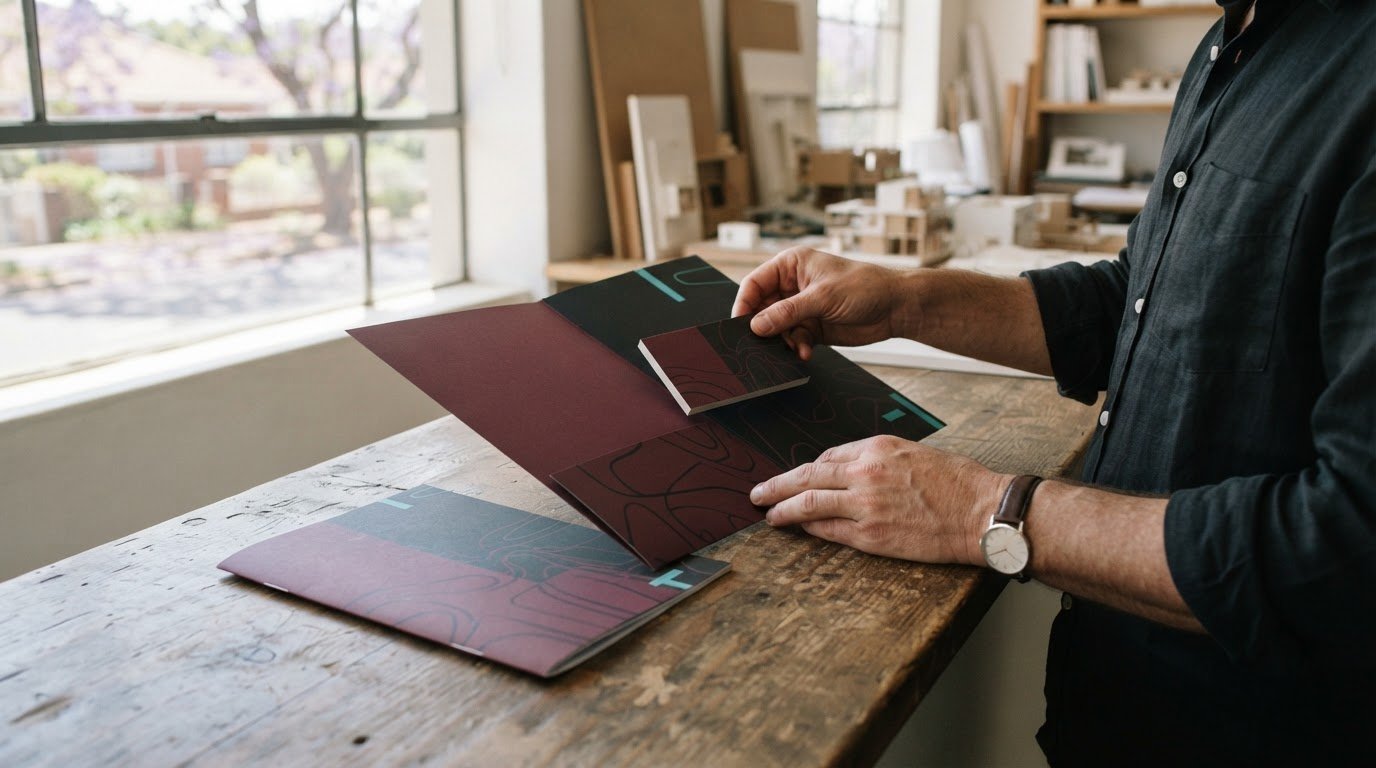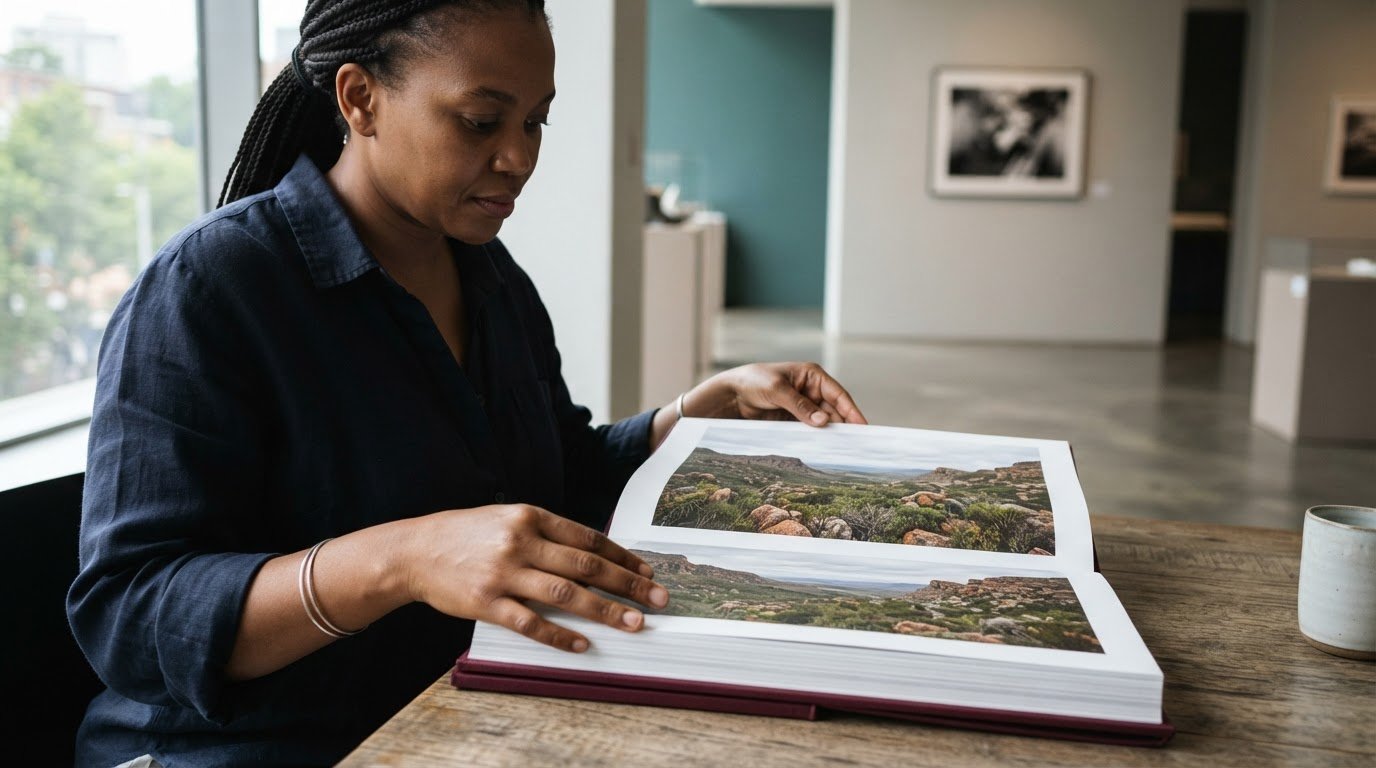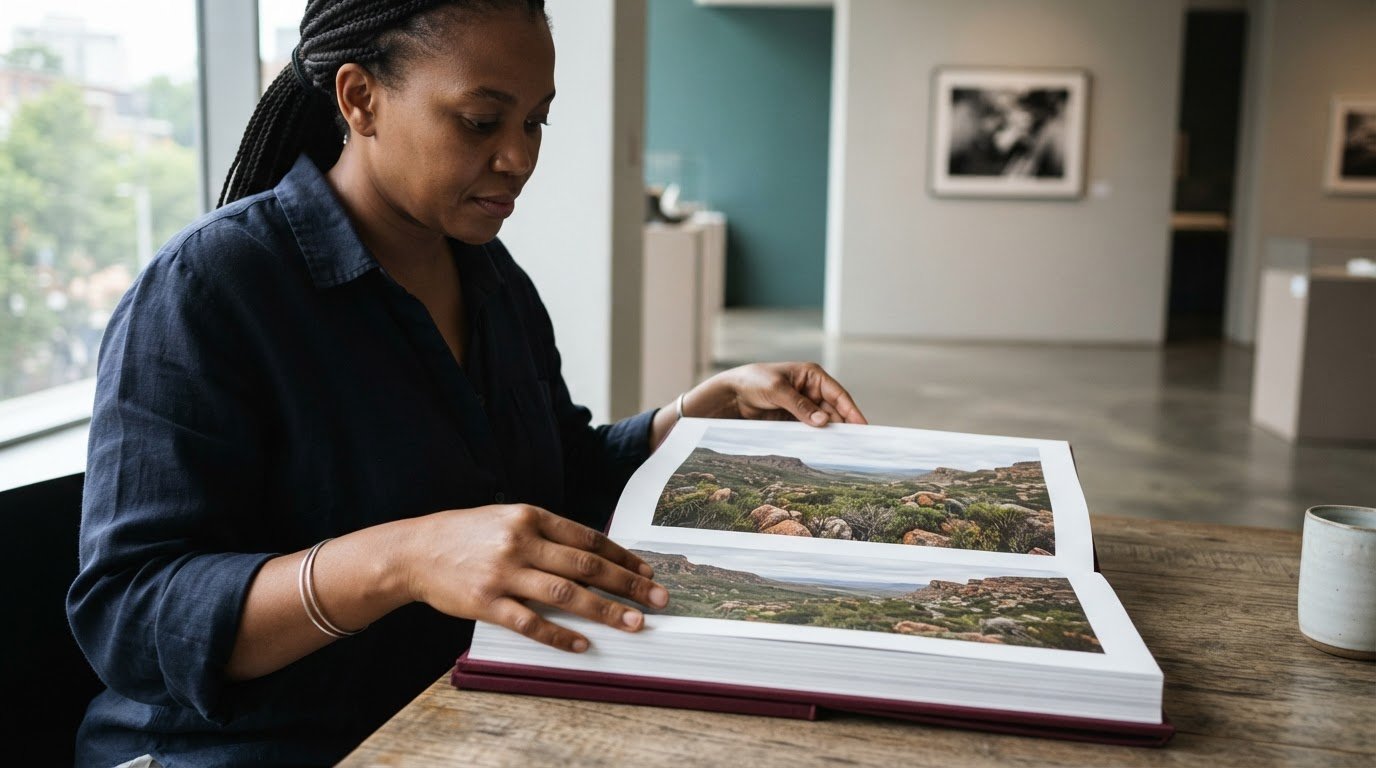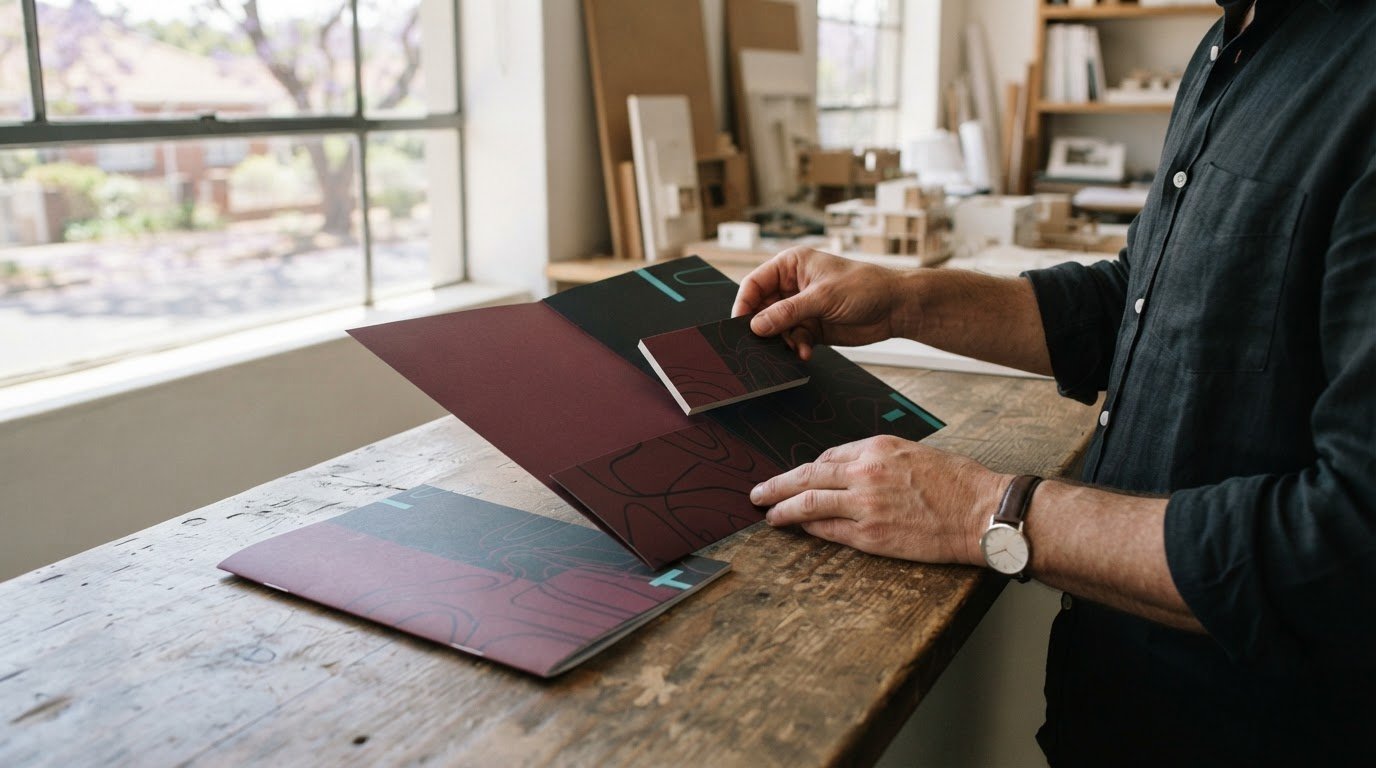
A polished brand can still feel scattered when its business cards, presentation folders and brochures look as if they belong to different companies. Premium business stationery printing works best as a coordinated system, with each item supporting the same clear visual identity.
Choosing what to print takes more than picking familiar formats. The right mix depends on how your business communicates, who will use or receive each item, and what information it needs to carry. A little planning helps you avoid printing materials that won’t be useful and keeps colours, layouts and finishes aligned.
This guide explains how to choose practical business print materials and plan details such as paper type, colour, size, layout and finishing before requesting a tailored quote. You’ll also find a straightforward way to prepare project specifications, including quantity and, where relevant, page count and binding requirements. Print It ZA print and packaging provides in-house design recommendations, printing and binding, with litho and digital printing options. From planning through delivery, the team supports your coordinated print project.
Key Takeaways
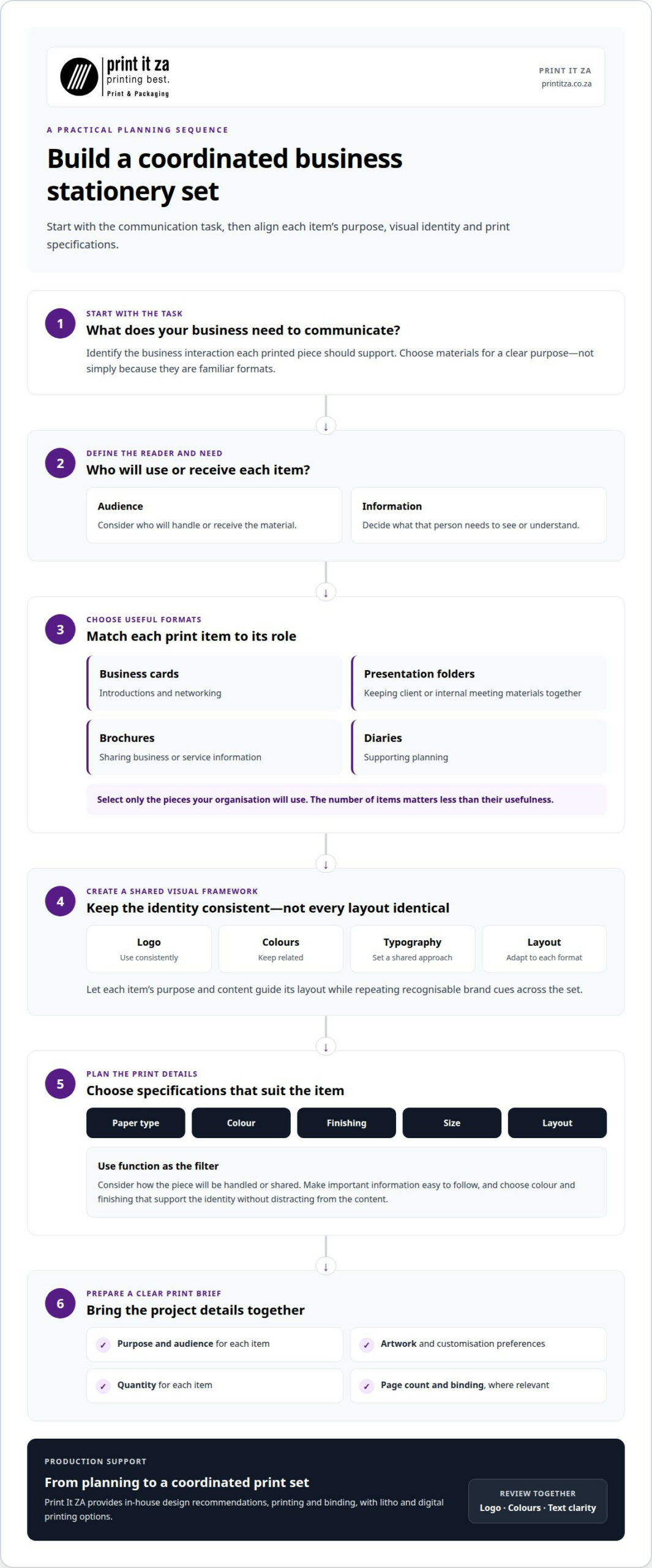
- Choose business cards, presentation folders, brochures and diaries according to how your business communicates, rather than treating them as interchangeable print items.
- Set a consistent visual framework for your brand, audience and print materials so each piece feels like part of the same identity.
- For premium business stationery printing, consider how paper type, colour, finishing, size and layout work together across the items you select.
- Prepare a clear quote brief with each item’s purpose, audience, artwork and customisation preferences. Include quantities and, where relevant, page count and binding requirements.
- Print It ZA handles design recommendations, printing and binding in-house, with litho and digital printing options for your project.
What Does Premium Business Stationery Printing Mean for Your Brand?
Premium business stationery printing isn’t simply a matter of choosing heavier paper or adding a decorative finish. It means planning practical print materials as parts of the same brand, with each item suited to the way your organisation communicates. Business cards, presentation folders, brochures and diaries can each have a distinct role while sharing a recognisable visual identity.
Premium business stationery is a thoughtfully planned set of printed materials that expresses a consistent brand identity through appropriate design, customisation and presentation. The focus is on fit and coherence, not on assuming that one material or finish is automatically superior.
Printed materials support everyday interactions. A business card can introduce a contact, a brochure can explain your services, and a folder can keep meeting documents together. Each item contributes to the impression your business makes, so its content and design should suit the people receiving it and the situation in which they’ll use it. A business that regularly meets clients may find folders useful, while one that needs to explain its services may prioritise brochures.
Which business print materials can form a coordinated set?
Start with the communication tasks your business handles, then select the items that support them. Business cards suit introductions and networking; presentation folders organise materials for client or internal meetings; brochures share business information; and diaries support planning. Not every organisation needs all of these. For a closer look at one item, the guide Business Cards in Johannesburg: The 2026 Guide to Premium Printing can complement your planning for a connected stationery set.
Stationery covers a range of printed business materials. For background on the category, see commercial and business stationery, which includes examples such as business cards and presentation folders. When planning your own set, ask what audience or business task each item supports. The number of pieces matters less than whether they’ll be used.
Why does consistency matter across printed materials?
Repeating colours, layouts and other visual choices helps separate items feel connected. A business card and brochure don’t need identical layouts, but consistent brand elements can make them recognisable as materials from the same organisation. A clear visual framework also gives your team a practical reference for future print decisions and helps prevent each new piece from looking improvised.
Keep that framework useful. Decide which visual elements should remain consistent, then let each item’s format and purpose guide its layout. A diary has different content needs from a presentation folder, for example, but both can still reflect the same identity. Consider paper type, colour, finishing, size and layout in relation to the item and how it will be used.
Before choosing materials, identify who will use or receive them, what information they need and where each piece fits into your communications. This gives the print set a clear purpose and makes it easier to build a polished, consistent brand experience.
How to Make Business Stationery Look Cohesive and Premium
Build your stationery system around four decisions: your brand identity, the people who will use or receive each item, the task it needs to do and the visual choices you’ll repeat. This gives premium business stationery printing a clear purpose. Rather than applying one design unchanged to every format, decide which elements should stay recognisable and which need to adapt.
For example, a brochure may need space for more information, while a business card has a more focused role. Both can use the same logo, brand colours and typographic approach, but their layouts should suit their content and format. Start with what the reader needs to see, then make design and print choices that support it.
Which customisation choices influence the finished look?
Paper type, colour, finishing and size all contribute to the appearance of a printed item. Consider them together rather than as isolated upgrades. A tactile finish may suit a piece intended for a close, personal interaction, while a straightforward finish may better suit a document that gets frequent use. Research on sensory marketing explores how physical brand stimuli can shape perception, providing context for thinking about the experience of printed materials.
Let function guide your choices. Use a layout that makes important information easy to follow, and select a size that suits how the item will be handled or shared. Choose colour and finishing to support your identity without distracting from the content.
How can brand elements stay consistent from item to item?
Create a simple visual reference for your logo, colours, typography and layout, then apply it across the materials you select. Consistency doesn’t mean making every item identical. It means using the same recognisable cues while adjusting their placement and emphasis to suit each format and purpose.
Before preparing artwork, review the items side by side. Check that logos are used consistently, colours feel related and text remains clear in each layout. If several people prepare materials, a shared reference helps them make aligned decisions instead of inventing new treatments for every piece.
A coordinated stationery set starts with these decisions:
- Identity: Which logo, colours and typography should carry through?
- Reader: Who will use or receive each item?
- Purpose: What should the item communicate or help someone do?
- Format: What size and layout suit its content and use?
- Finish: Which paper type and finishing choices support the intended presentation?
Use this checklist when reviewing the full set. It keeps choices connected while leaving room for each item to work well on its own. If you’re planning a coordinated project, explore business print options from Print It ZA as you consider the materials and customisation choices that fit your plan.
Compare Business Stationery Printing Options by Purpose
The right print item is the one that fits a clear communication task. Business cards, presentation folders, brochures and diaries can all carry your brand, but they serve different purposes. Comparing them by intended use helps you choose a set that supports your work instead of adding items that won’t be used.
| Print item | Intended business use | Planning considerations |
|---|---|---|
| Business cards | Sharing contact details during introductions and professional conversations. | Consider the information the recipient needs and how the card will represent your brand. |
| Presentation folders | Organising and presenting business materials for meetings or client discussions. | Think about the documents the folder needs to hold and how its layout supports a clear presentation. |
| Brochures | Sharing information about your business, products or services. | Plan the content, layout and amount of information readers need to understand. |
| Diaries | Supporting planning and day-to-day organisation. | Consider who will use the diary and how its design should align with your brand. |
When are business cards, folders, and brochures useful?
A business card gives someone a straightforward way to keep your contact details. A presentation folder brings related documents together for a meeting or client discussion. A brochure is useful for explaining your business or services in a structured way. Choose based on the interaction you want to support, not simply because an item is familiar.
The title Professional Printing Services in Johannesburg: The 2026 Guide to Quality & Scale points to a related consideration: how a print project’s requirements shape its production plan. Keep your own brief specific to the items, audience and intended use. That gives the print conversation a practical starting point.
What should you consider when choosing a printing method?
Print It ZA offers traditional litho printing and digital printing. To plan your project, describe the items you need and how they’ll be used. Include relevant information about artwork, format and customisation preferences so the team can consider the project as a whole. Avoid choosing a method based on assumptions about cost, speed or minimum quantities.
For another reference on consistent document presentation, the U.S. Government Publishing Office standards provide an example of formal publishing guidance. Use it as a general point of reference, not as a South African requirement or a substitute for your organisation’s own brand guidelines.
Ultimately, the right option depends on the item, its purpose and the project brief. Comparing your needs helps you select materials that serve distinct purposes while keeping the overall presentation considered. That’s the practical foundation of premium business stationery printing.
Plan a Business Stationery Print Brief Before Requesting a Quote
A clear print brief turns a general idea into useful project details. Before requesting a quote, note what each item needs to do, who will use or receive it, and how it should reflect your brand. This makes the conversation more focused and gives the project a practical starting point.
- Set the purpose. Describe the communication need, such as sharing contact details, presenting documents or explaining a service.
- Name the audience. Consider who will handle each item and what they need from it.
- Choose the print items. List the business cards, presentation folders, brochures, diaries or other relevant materials for the project.
- Gather artwork. Collect available logos, brand colours and other current assets, and note whether you need design recommendations.
- Record specifications. Note the preferred size, layout, colours, paper type and finishing. For bound items, include the page count where relevant and any binding requirements. Include the quantity needed for each item in your quote brief.
What information helps shape a useful print brief?
Be specific about how each item will be used. For example, explain whether a brochure will introduce services or provide detailed information, and whether a folder will bring together documents for a meeting. Record preferences item by item rather than using one broad description for the whole set. Add project-specific requirements that may affect the content or presentation.
How can businesses prepare artwork and specifications?
Gather current brand assets and describe each item’s requirements clearly. Share artwork you already have, along with preferred colours, sizes, layouts, paper and finishing choices. Print It ZA supports customers from order planning through delivery, helping keep project details together. Start the quote process with an online request or a phone call.
Keep the brief easy to review. A simple document with one entry per item can help you spot gaps before requesting a quote. If a detail is undecided, describe the intended use and your preference so it can be considered during project planning. You don’t need to guess technical artwork requirements; provide the materials you have and explain what you want to achieve.
For a broader perspective on assessing print needs in Johannesburg, The Essential Guide to Finding the Best Print Shop in Johannesburg (2026) is a related resource. A well-prepared brief also makes it easier to discuss how the elements of a coordinated stationery project fit together.
Ready to discuss your business stationery brief? Start planning your print project with Print It ZA.
How Print It ZA Supports Premium Business Stationery Printing
A coordinated stationery project involves more than choosing print items. You also need to bring the artwork, formats and production details together. Print It ZA handles design recommendations, printing and binding in-house, with support from order planning through delivery. For businesses planning a print project in Johannesburg and Gauteng, this provides a practical way to develop materials around your organisation’s needs.
What does in-house printing support mean for your project?
Print It ZA’s in-house design recommendations, printing and binding bring these stages together as part of the project. Share the purpose of each item and your preferences, then discuss how paper type, colour, finishing, size and layout relate to the overall brief. The focus is on making the choices work together while respecting the role of each printed piece.
This support can help whether your project includes business cards, presentation folders, brochures, diaries or a combination of items. Explain how the pieces will be used and which brand elements should carry across them. The team can provide design recommendations as part of the planning, alongside printing and binding where relevant.
How do you request a tailored stationery quote?
Start with an online quote request or call (010) 446 5618. Share the information you have, even if some choices still need discussion. A focused brief makes the request clear and gives the project a useful starting point.
For each item, include:
- The print item and how it will be used.
- The quantity you need.
- The page count and binding requirements, where relevant.
- Your preferred paper type, colour, finishing, size and layout.
- Available artwork and any project-specific requirements.
If printed materials need to reach an educational institution, warehouse or another facility, include the relevant delivery details with your project information. Keeping item specifications and destination details together makes the request easier to understand. Print It ZA supports customers through planning and delivery, so your brief can cover the project as a whole.
Premium business stationery printing is easier to plan when the items, artwork and preferences are described clearly. You don’t need to have every design decision settled before starting. Share your requirements and the customisation choices you’re considering, then discuss the details as part of preparing a tailored quote.
Request a tailored business print quote from Print It ZA online or by phone to get your stationery project moving.
Take the Next Step Towards a More Consistent Brand
Your printed materials can grow with your business. As your communication needs change, treat each new piece as part of the brand experience you’re building, not as a standalone design task. This gives premium business stationery printing a practical role in keeping future materials aligned with the identity you want people to recognise.
Start with one clear project brief. Note what you need, who it’s for and the impression you want the materials to convey. Then develop the project around your organisation’s needs, rather than trying to settle every future print requirement at once.
Print It ZA’s website displays 8 Google reviews with an average rating labelled EXCELLENT. Your next step is simple: share the project you have in mind and request a tailored quote.
Request a tailored business printing quote and take the first step towards print materials that feel right for your brand.
Frequently Asked Questions
Can a small business order premium business stationery?
Yes. Print It ZA provides business printing for organisations of different kinds, including small businesses. Focus your project on the materials that support your current needs rather than planning a large stationery suite. For example, a small consultancy might begin with business cards for introductions or brochures to explain its services. Include the items and project details in your quote request to plan a tailored print project.
Which items can be included in a coordinated business print project?
A coordinated project can include business cards, presentation folders, brochures and diaries. Choose according to how your team communicates: cards share contact details, folders bring meeting documents together, brochures explain services, and diaries support planning. You can begin with one or two items, then consider how additional materials can carry the same brand identity as your business print needs develop.
What information should I provide when requesting a stationery printing quote?
Describe the project item by item so the requirements are easy to understand. If you need both a brochure and a diary, for instance, explain the audience and purpose of each separately, then include the relevant quantity and, for bound work, the page count and binding needs. Add your paper preference and any artwork or project-specific details you have. This helps shape a quote around your actual brief.
Can printed business materials be customised with brand colours and layouts?
Yes. Print It ZA’s customisation options include colour and layout, along with paper type, finishing and size. Share your brand colours and explain how the design should work for each item. A brochure may need room for service information, while a business card may call for a more focused arrangement. The choices can be tailored to the project.
Does Print It ZA handle business printing in-house?
Yes. Print It ZA handles design recommendations, printing and binding in-house. For a business project, you can discuss how the materials fit together as part of the same planning process. Describe your business communication needs in the brief so the relevant print requirements can be considered alongside your artwork and customisation preferences.
How do I keep different printed business items visually consistent?
Create a simple reference for the brand elements you want to carry across materials, such as the approved logo, colours and typography. Keep it available to anyone preparing or reviewing artwork, and compare the pieces together before finalising the project. A brochure and a presentation folder can have different layouts while still using the same recognisable elements. This helps keep future print decisions aligned with your brand.
Can I request a quote by phone instead of online?
Yes. You can start a quote request by phone or through the online request option. A call is a useful way to explain the project, especially if you’re still deciding which items belong in the set. Have a rough outline of your print needs ready and share the details you know so the quote discussion can focus on your project.