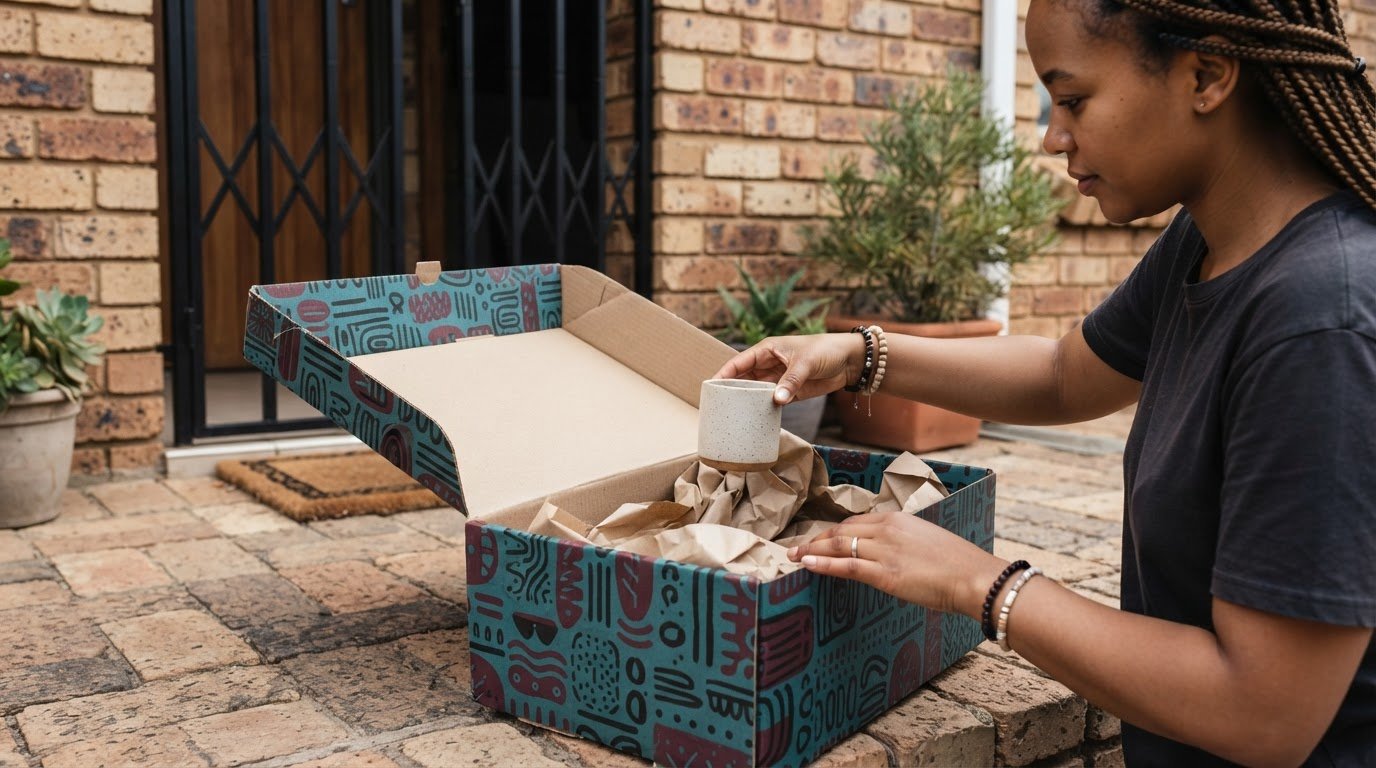
A delivery package can do more than protect an order on its way to a customer. Branded packaging for e-commerce turns the doorstep moment into an expression of your business, helping customers recognise your brand and remember their experience.
Packaging can include the product’s original pack and extra layers that protect it during delivery. The design needs to balance brand identity with practical needs: it should suit the product, withstand handling and make unboxing straightforward. A polished look matters, but it works best when the contents arrive protected and the packaging avoids unnecessary waste.
In this article, you’ll learn how colour, logos and legible design can build recognition, and how recycled or recyclable materials can inform more sustainable packaging choices. You’ll also see how QR codes and concise calls to action can invite customers to connect with your brand after delivery. Together, these elements make packaging a useful part of the customer experience, not just an outer layer around an order.
Key Takeaways
- Use consistent colours, logos and legible design to make parcels easier to recognise and connect with your brand.
- Balance visual impact with product protection, practical handling and packaging that fits the item.
- Consider recycled or recyclable materials and clear sustainability messaging to make packaging choices more purposeful.
- Use QR codes and concise calls to action to guide customers towards useful online content and brand interactions.
- Think of delivery packaging as the product’s original pack plus any extra protective layers needed for its journey to the customer.
Packaging as a brand identity and recognition tool
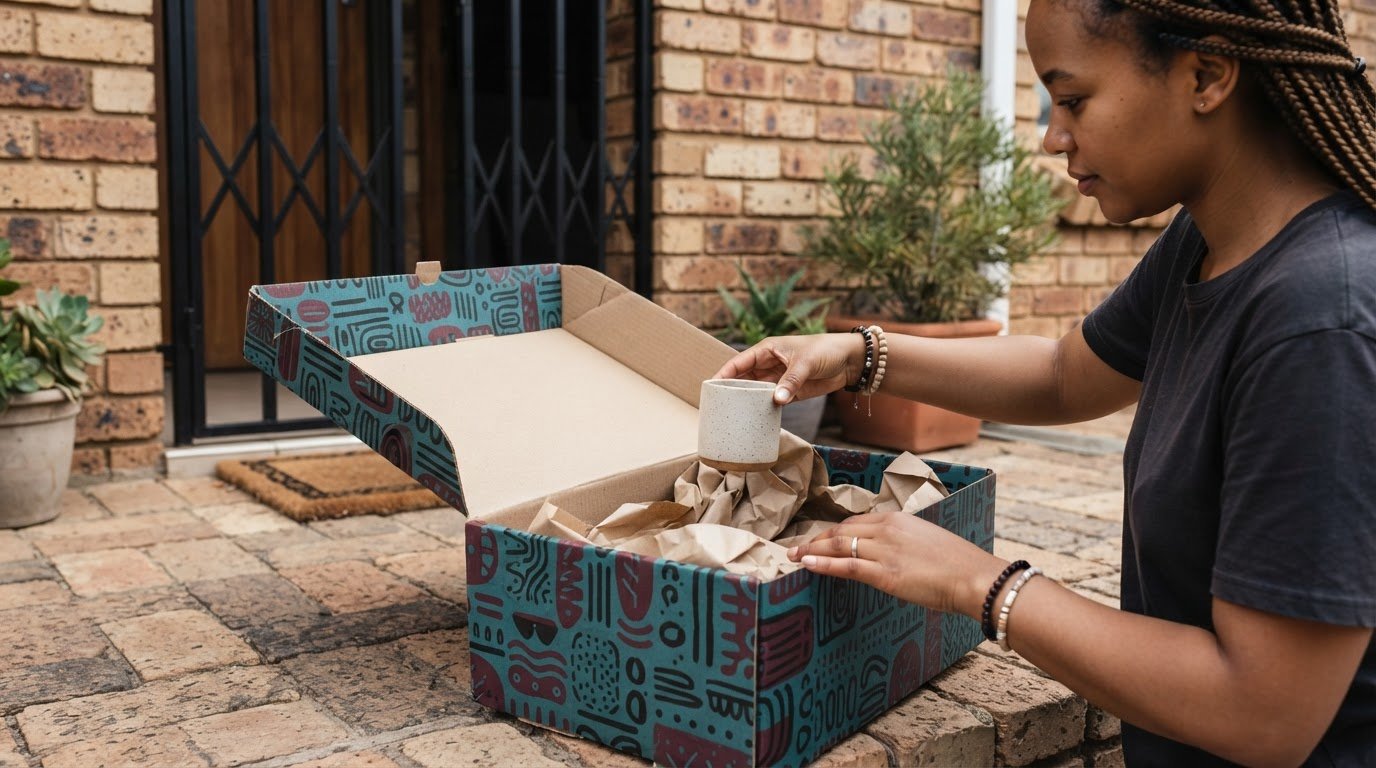
Branded boxes and mailers create a distinctive arrival, while inserts add a message inside. For example, a cosmetics shop might use a printed mailer and separate labels to identify each shade. Choose the format based on product shape, protection needs and the intended unboxing experience.
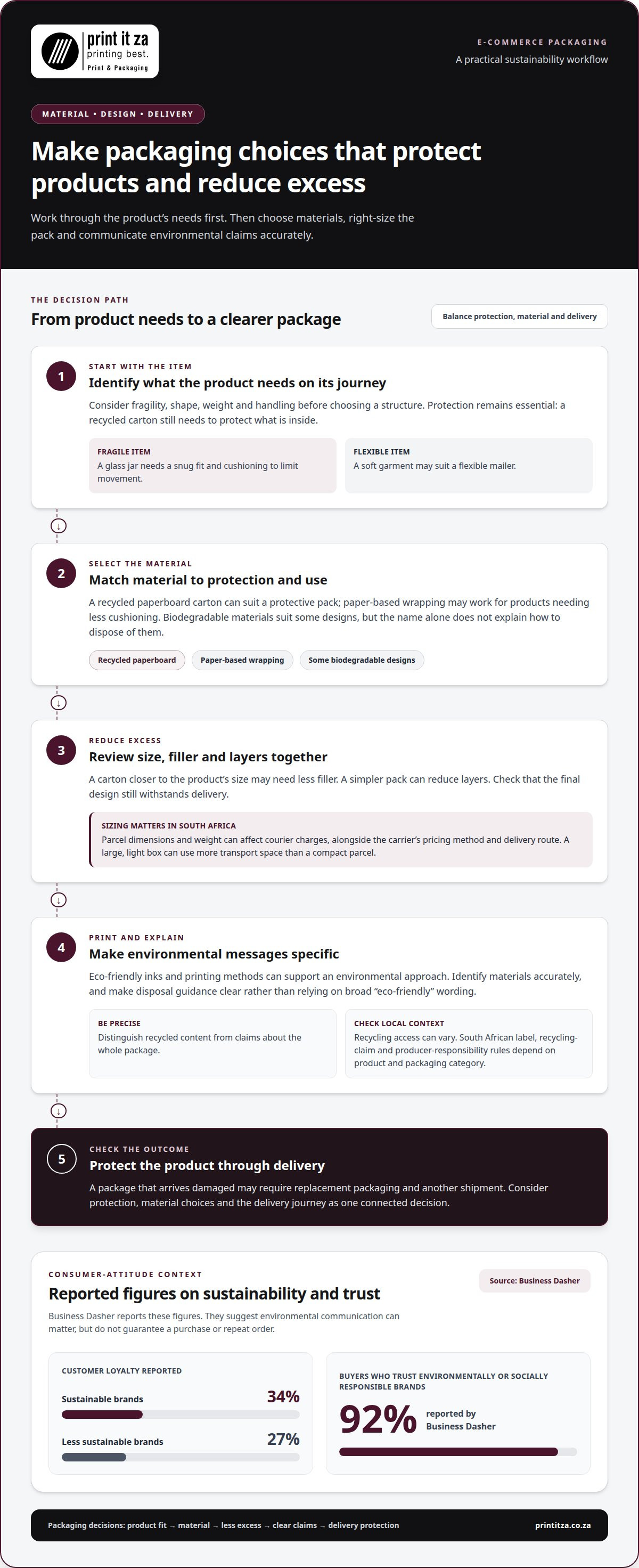
When planning a package, consider the item’s weight, fragility, shape and delivery journey before settling on a structure. A glass jar, for example, needs a snug fit and cushioning to limit movement, while a soft garment may suit a flexible mailer. Strong design matters, but the pack must also protect its contents during courier handling.
In South Africa, parcel dimensions and weight can affect courier charges, alongside the carrier’s pricing method and delivery route. A large, light box may take up more transport space than a compact parcel, so efficient sizing matters. Balance a close fit with enough room for protective material.
Build brand identity by applying the business’s logo, colours, typography and product information consistently. Check contrast and legibility, including how the artwork appears on a mobile screen. A clear front panel makes the brand name easy to spot, while a side panel can distinguish product details.
Custom printed boxes provide a larger surface for colour and brand storytelling, but may add bulk when a product needs only a light wrapper. Mailers can be compact for suitable items, though they offer less space for structured presentation. Inserts add messages or product guidance, but take up space and use additional packaging material.
Before placing a bulk order, a production proof or sample can help you review artwork, fit and handling. For example, assess whether a product label remains readable and whether the item shifts inside its box. This can reveal design or fit issues before production begins.
Common ordering mistakes include low-contrast artwork, missing variant labels and packaging that leaves too much empty space. A skincare brand, for example, needs to distinguish its cleanser from its moisturiser. Approve the artwork, verify product details and define the pack size to help prevent avoidable revisions and identification errors.
Production and delivery timing in South Africa depends on artwork approval, packaging structure, print method, order quantity and delivery arrangements. A complex box design may need more preparation than a straightforward printed mailer. Clear product names, colour cues or variant codes also help customers identify the right item when a store sells similar products.
For online shopping, packaging should make the brand and product name stand out, use good contrast and remain legible and recognisable. E-commerce businesses can brand packaging with their company logo and colours to create a cohesive look and make products recognisable to customers. As a physical expression of a company’s values and aesthetic, packaging can support brand recognition and recall.
E-commerce packaging is one of the first things customers see and can influence how they perceive a brand. Rich branded designs and user-friendly packaging can reinforce brand identity and improve the customer experience. In an example of product specials on an online grocery store, 3 products were judged to have brand names that were instantly easy to read.
Sustainable packaging materials and practices
Sustainable packaging works best when material choices, design and delivery needs support one another. A recycled carton can reduce reliance on virgin material, but it still needs to protect the product. A box that arrives damaged, for example, may require replacement packaging and another shipment.
South African rules for packaging labels, recycling claims and producer responsibility depend on the product and packaging category. Keep environmental claims specific and supportable: describe materials accurately, and avoid implying that every customer can recycle them locally.
Consumer attitudes can shape how a business presents its packaging choices. Business Dasher reports customer loyalty of 34% for sustainable brands, compared with 27% for less sustainable brands. It also reports that 92% of buyers trust environmentally or socially responsible brands. These figures suggest that credible environmental communication can matter, but they don’t guarantee a purchase or repeat order.
Start material selection with the item’s needs. Recycled paperboard can suit a protective carton, while paper-based wrapping may work for products needing less cushioning. Biodegradable materials can suit some packaging designs, but the material name alone does not tell customers how to dispose of the packaging. A clear, accurate disposal message is more useful than a broad “eco-friendly” label.
Packaging design can reduce waste even before a business changes materials. A carton sized closer to the product may need less filler, while a simpler pack can reduce layers. For example, a business shipping a lightweight book could assess whether a protective format can avoid an oversized outer box. The design must still withstand delivery.
Printing choices also shape the overall presentation. Eco-friendly inks and printing methods can support an environmental approach, while restrained artwork can avoid unnecessary coverage. A label made from recycled paper, for instance, should identify the material clearly rather than make a general claim about the whole package.
Practical decisions include:
- Match material to product: choose protection according to fragility, shape and handling needs.
- Reduce excess: review box size, void fill and additional layers together.
- Make claims precise: distinguish recycled content from recyclability.
- Explain disposal clearly: use wording that reflects the packaging material and available recovery route.
Ascendia reports that 70% of consumers agree addressing climate change is more important now than ever. That interest makes transparency valuable. A thoughtful packaging design connects material choices with protection and clear communication, rather than relying on a green colour or symbol to suggest sustainability.
Research shows that, in a recent survey, 65% of respondents said they wanted to buy purpose-driven brands that advocate sustainability, while about 26% actually bought purpose-driven brands that advocate sustainability. The difference suggests that stated interest does not always translate into purchasing behavior when shopping online using branded packaging for e-commerce.
Businesses partnering with Print It ZA print and packaging can reduce e-commerce packaging waste by using recycled and recyclable materials and adopting sustainable practices throughout their supply chains. Recycled or biodegradable materials, sustainable packaging labels, eco-friendly inks and printing methods can all support this approach. These choices work best when they suit the product and are described accurately to customers.
Brand recognition and organic exposure
A distinctive delivery experience can give customers a reason to photograph or discuss an order. A neatly presented parcel from a local skincare store, for example, might feature in an unboxing post. That exposure is organic, not guaranteed: customers decide whether to share, and the product experience must support the packaging.
HubSpot research found that 62% of consumers had watched video content, including unboxing videos, to learn about a brand or product. That finding makes the unboxing moment relevant to brand discovery. Packaging that looks clear on camera can help viewers notice the business name, product and useful details without competing visual clutter.
Recognition grows through repeated, consistent cues. When customers see the same logo placement, colour palette and product naming on a parcel and its contents, those elements become easier to associate with the business. A tea seller, for example, can use a consistent visual system across several blends while giving each a readable label.
The customer relationship continues after delivery. Packaging that is easy to open and presents its contents clearly can make the experience feel considered. A small business might include a concise care note with a reusable product or a simple message explaining how to reorder. Make the message useful, not merely promotional.
Businesses can assess organic exposure by tracking signals over time. Compare social media engagement, customer feedback and online sales before and after a packaging change. If customers mention unboxing in comments but repeat orders stay steady, the design may be attracting attention without yet changing purchasing behaviour.
Useful measures include:
- Social engagement: note mentions, tagged posts and comments that refer to the parcel or unboxing.
- Customer feedback: record recurring comments about opening, presentation or product identification.
- Online sales: compare sales patterns across the same period and product range.
- Customer language: track whether people recall the business or describe a specific packaging detail.
Each signal tells a different part of the story. A tagged post shows that someone shared the experience, while a comment may explain what stood out. Sales data adds a commercial perspective, but packaging is only one influence among product quality, service and customer demand.
For a useful comparison, keep other changes in view. If a retailer launches a product and changes its packaging at the same time, a sales shift cannot be attributed to packaging alone. Record the timing and scope of each change, then review feedback and engagement alongside sales. This helps refine the approach and strengthen customer relationships over time.
Calls to action and QR codes on packaging
A parcel can give customers a clear next step after delivery. A QR code might lead to a product guide, reorder page or feedback form. Pair it with a short call to action, such as “Scan for care tips,” so customers know what they’ll find.
Choose a useful destination for each code. A coffee brand could link to brewing instructions, while a clothing store might share garment-care guidance. The destination should suit the product and provide the promised information quickly. A vague prompt such as “Find out more” gives customers less reason to scan.
Placement affects how easy a code is to notice and use. Put it on a visible, flat area, away from folds, seams and opening tabs. Leave enough space around it to distinguish the code from nearby artwork. A printed label or insert can work when the parcel’s exterior has limited room.
Consider both the customer’s phone screen and the package’s real-world condition. A code printed across a crease may become difficult to scan after handling. Strong contrast with the background helps the code stand out. Clear printed instructions also help customers understand what to do before scanning.
Each QR code can connect packaging with a useful digital experience. A new skincare customer, for example, could scan for directions explaining the order and frequency of product use. A returning customer might prefer a direct route to reorder the same item. Match the destination to the customer’s journey.
Before approving artwork, check that the code opens the intended page and that the call to action describes it accurately. Review the code’s visibility within the complete design, too. A promotional message, for example, should not crowd out the product name or obscure the scan instruction.
Keep the destination working after the packaging is printed. If a product guide moves, an old code may lead customers to an error page. A stable page address and a clear fallback message help preserve the experience. The online content should also work well on mobile, where customers commonly scan packaging codes.
To understand performance, give each code a specific purpose and review the resulting engagement. A feedback link can show whether customers share useful comments, while a product guide can indicate interest in instructions. QR codes don’t measure every interaction, so combine scan activity with customer feedback and online sales for a broader view.
- Make the value clear: tell customers what the scan will open.
- Keep the action focused: use one relevant destination per code.
- Review the full experience: assess the printed prompt and mobile page together.
Definition of e-commerce packaging
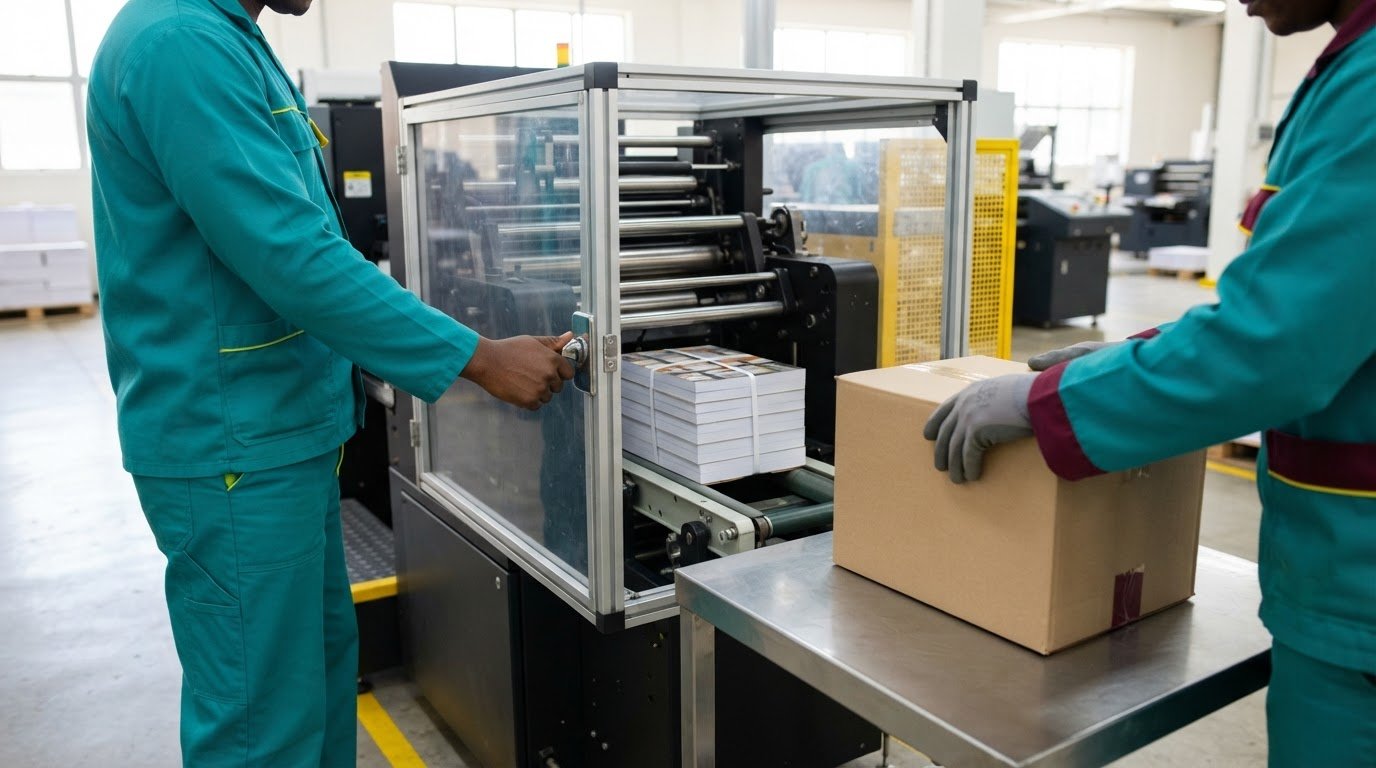
E-commerce packaging is the complete system used to protect and present an online order from warehouse to doorstep. It can include the product’s original packaging and secondary or tertiary layers added for storage, handling and delivery. A boxed mug, for example, may travel in its retail box, cushioning and an outer shipping carton.
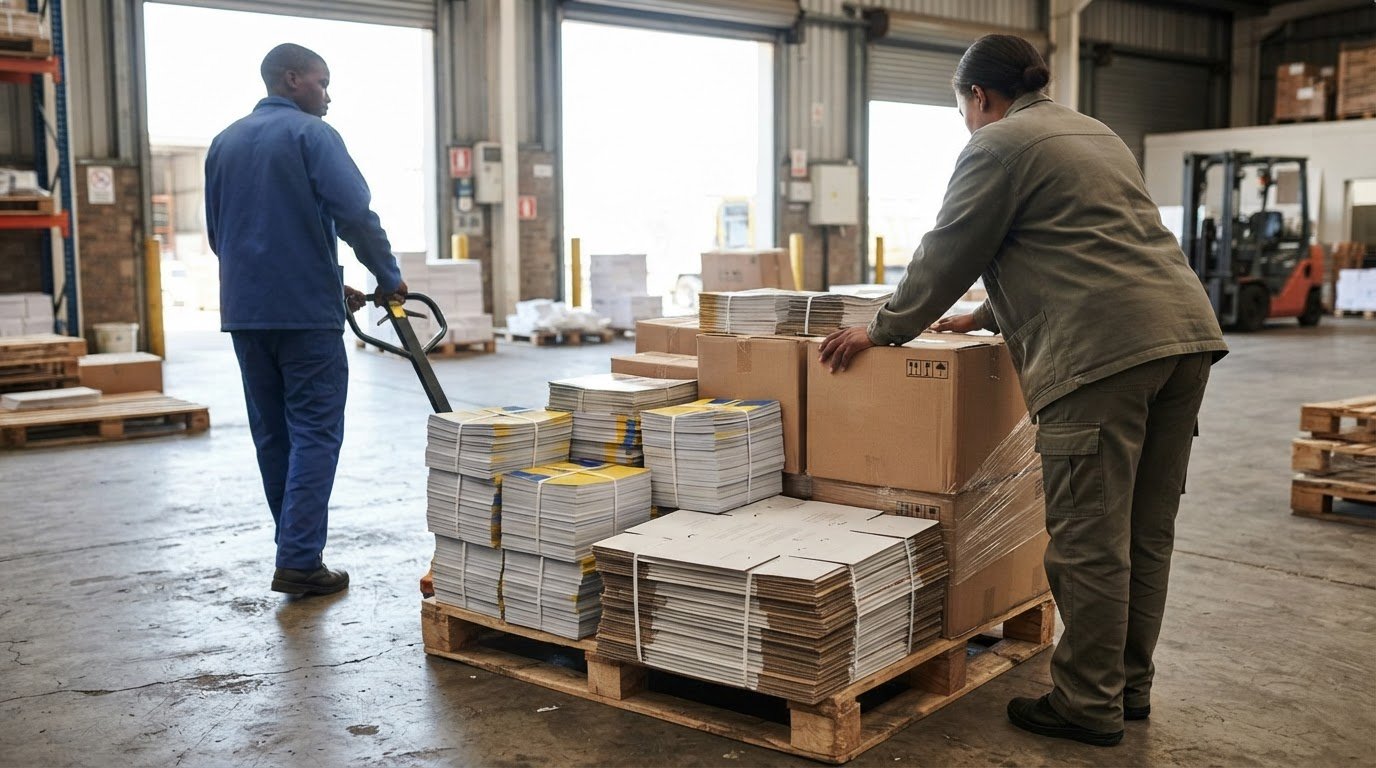
The original package holds or presents the product. A bottle’s branded carton or a garment’s sleeve can identify the item and keep it together. Secondary packaging groups or protects products within an individual order, such as a mailer around a book. Tertiary packaging helps handle or move grouped parcels before dispatch.
These layers serve different purposes. The product pack can carry brand and product information, while an outer parcel protects the order during delivery. A skincare set might use individual cartons for each item, an insert to prevent movement and a shipping box around the order. Give every layer a clear job.
Delivery brings demands that shop shelves don’t. A parcel may pass through sorting, vehicle loading and hand-offs before reaching a customer in South Africa. A pack designed only for display may not protect a fragile item through those stages. A glass container, for example, needs a fit and cushioning that limit movement inside its parcel.
Packaging also affects how customers receive and identify an order. Clear product names and variant details distinguish similar items, such as two sizes of the same supplement. A readable brand mark supports recognition, while opening features should make the contents accessible without compromising protection. The best arrangement addresses these needs together.
For a business, the practical takeaway is to assess the entire journey, not just the visible box. Consider the product’s shape, fragility and presentation needs, then decide which packaging layer protects it at each stage. A compact item may need little extra material, while a delicate item may require a structured outer pack and internal support.
Branded packaging for e-commerce means more than printing a logo on a parcel. It combines the product packaging and delivery layers with a consistent visual identity and a fit-for-purpose structure. A well-designed system helps customers recognise the business while protecting the order between dispatch and arrival.
This distinction is useful when planning packaging: the product’s original pack may be suitable for presentation, but the complete delivery system must also handle transport. Clear product information, suitable protection and considered branding each help a parcel work from warehouse to doorstep.
Print It ZA print and packaging
Print It ZA produces print and packaging for businesses that want to bring brand identity and practical protection together. Turn to the team when planning a new e-commerce pack, refining existing artwork or aligning packaging with printed materials such as brochures, catalogues or books.
Share your product details, brand assets and delivery needs. Print It ZA’s in-house team provides design recommendations, printing and binding, helping develop packaging that presents products clearly and suits their purpose. This supports a consistent customer experience, from the parcel to the materials inside.
For a considered approach to packaging and print, contact Print It ZA print and packaging to discuss your project.
Make your next packaging decision count
Use your next packaging refresh to strengthen the connection between the parcel and your wider brand experience. Decide what you want customers to notice, remember or do after delivery, then align the design and supporting materials with that goal. This gives branded packaging for e-commerce a practical role in your customer journey, rather than making it a one-off visual change.
Print It ZA also produces books, catalogues and brochures, helping businesses create consistent printed materials alongside packaging. A clear project brief can bring these elements together around your brand priorities and customer needs.
Discuss your packaging project with Print It ZA print and packaging, and take the next step towards a more cohesive brand experience.
Frequently Asked Questions
So, what should I take away about packaging for e-commerce?
Plan packaging as part of the complete online order experience, from dispatch through customer use. For a Gauteng retailer, that means keeping product names and packaging information aligned across the online listing, warehouse records and printed materials. A clear process helps staff prepare the right order and gives customers a consistent experience. Review packaging whenever products, branding or fulfilment processes change.
How long do custom packaging orders take to produce and deliver in South Africa?
Production and delivery timing depends on artwork approval, packaging structure, print method, order quantity and delivery arrangements.