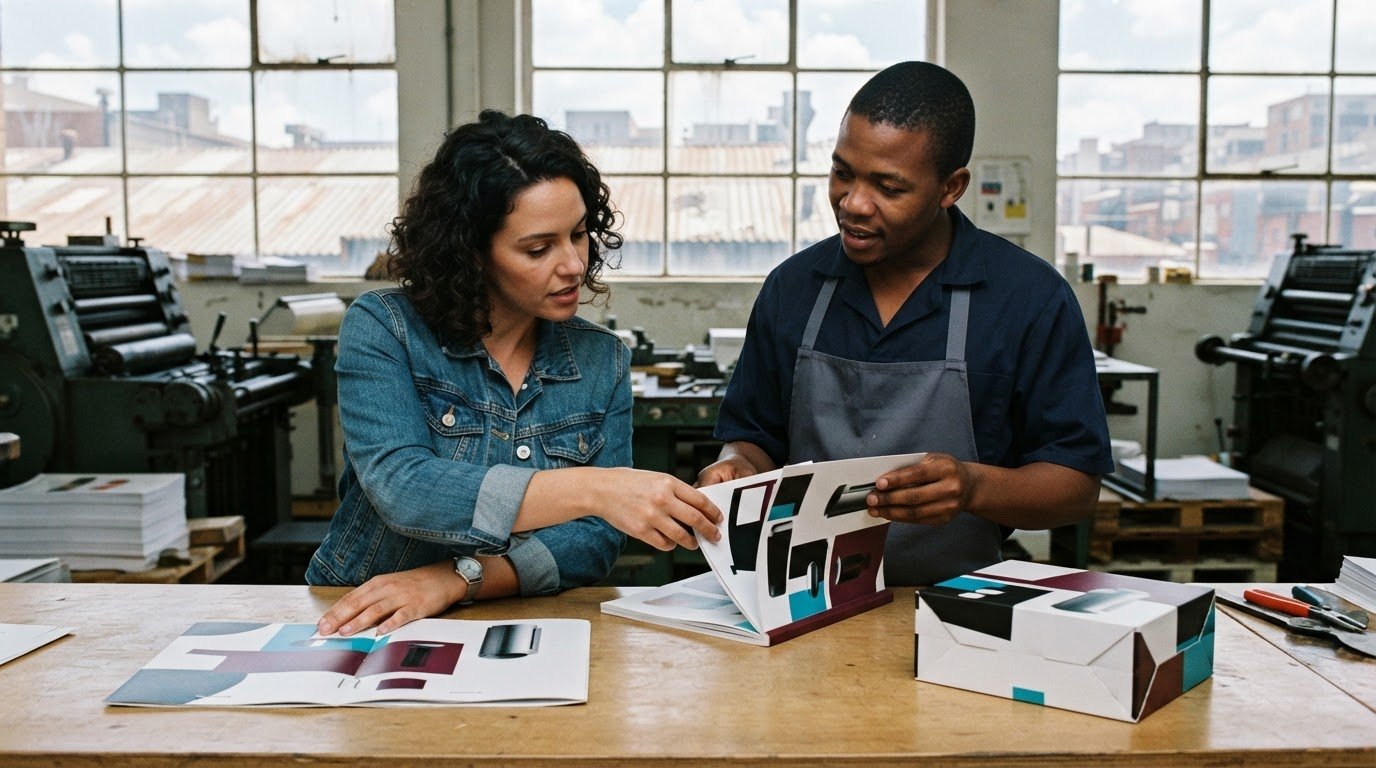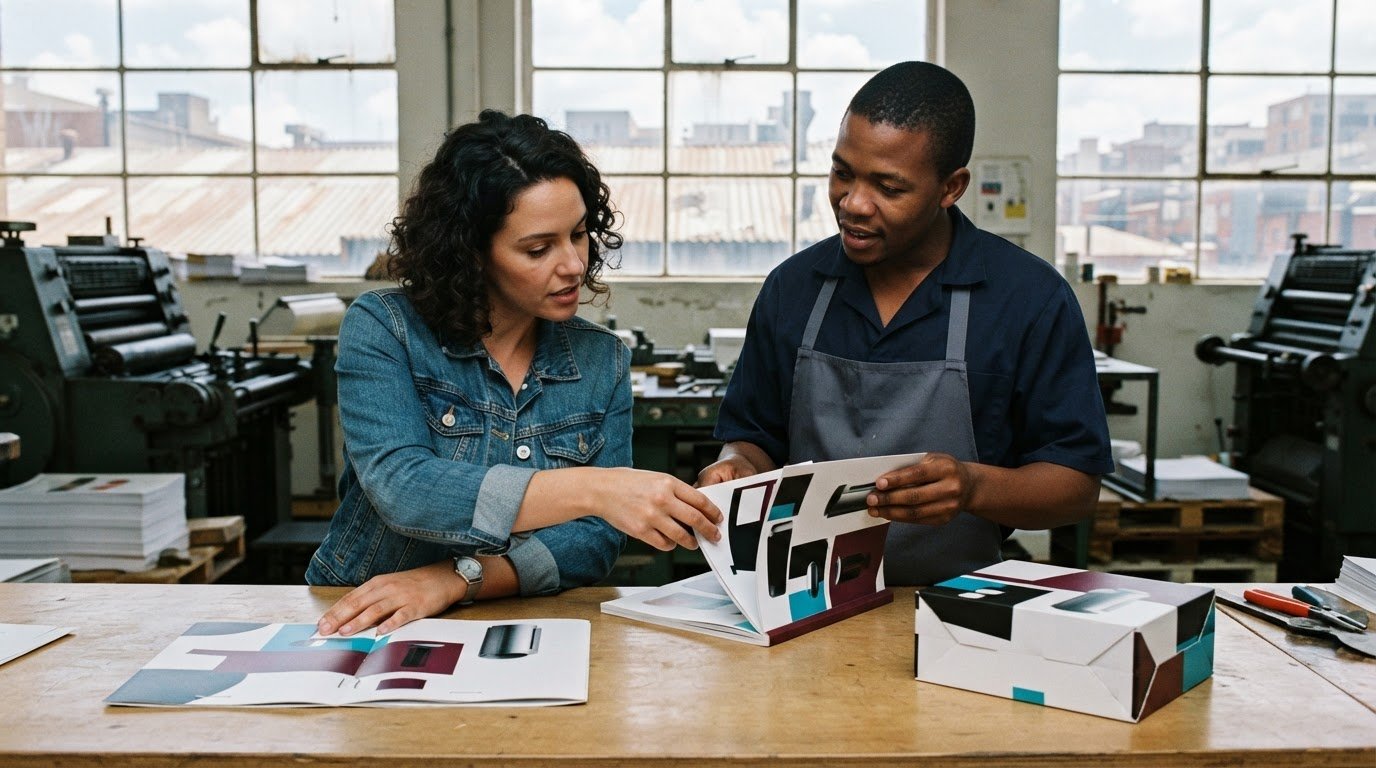

The cover choice isn’t the first thing to settle when preparing a book for print. Paperback or hardcover, we print it all at Print It ZA printers. Start by understanding how the interior page count relates to sheets, and how the cover is counted separately from the pages inside.
Paperback book printing is available, and a sheet printed on both sides contains two pages. This distinction helps clarify a book’s page count, while the cover format affects how the finished book is assembled and presented.
This guide explains the difference between pages, sheets and covers, what to consider when choosing paperback or hardcover, and how to prepare for hardcover printing. You’ll get a clearer idea of which format suits your book and what information helps move a printing project forward.
Key Takeaways
- Choose a cover format by weighing the book’s intended use, presentation and handling needs.
- Understand how the interior page count relates to printed sheets, and why the cover is counted separately.
- Prepare the project details and print-ready files that help shape a clear book-printing quote and order.
- Learn what to consider when preparing a hardcover book for production, from its interior pages to its cover.
- See how Print It ZA print and packaging can support book projects alongside catalogues and brochures.
Paperback book availability
Paperback books are an available print format. The cover uses flexible material rather than rigid boards, giving the finished book a lighter, more adaptable feel. This option suits novels, workbooks, recipe books and other titles readers may carry or handle regularly. The format can also keep the book’s design simple, with the cover artwork setting its visual tone.
Start with the interior page count. A sheet printed on both sides contains two pages, so the number of pages and the number of sheets are different measures. A book with text on both sides of each sheet has two pages per sheet. Count the cover separately from the interior pages.
Clear pagination helps the production team understand a manuscript’s structure. Include every page in the file, even pages without text, such as a blank page between sections. The contents page, introduction, chapter openings and final page all belong in the interior sequence. For a recipe book, make sure the ingredients and methods appear in the intended reading order.
Plan a paperback cover for the complete book, not just the front. The front, spine and back form one cover design. The spine connects the front and back, while the back can carry supporting details or artwork. Its width depends on the finished book specifications, including the interior and paper choices. Accurate project details help the cover fit properly.
- Interior pages: The full sequence of printed content, including blank pages.
- Sheets: The physical paper carrying pages on its sides.
- Cover: The outside design, planned separately from the interior page count.
Paperback printing doesn’t mean every title should use the same setup. A school workbook may need a straightforward, practical format, while a photographic travel book may depend on presenting images well. A novel often prioritises comfortable reading and a cover that signals its genre. Let the book’s purpose guide your format and design decisions.
For a practical print plan, settle the manuscript sequence, trim size, paper choice and cover artwork. Trim size means the finished page dimensions, stated in mm. Paper affects the book’s feel and how text or images appear. These choices work together, so changing one can affect the layout or cover dimensions. A consistent final file gives production a clear reference.
Before production, the print team can review the supplied files for page order and cover layout. A missing page, duplicated chapter or incorrect spine artwork can affect the finished result. Identify the interior and cover files clearly, and note any special layout requirements. This gives the team a shared specification for the paperback and helps the printed copy match the intended design.
Paperback vs Hardcover: Durability, Appearance, and Cost
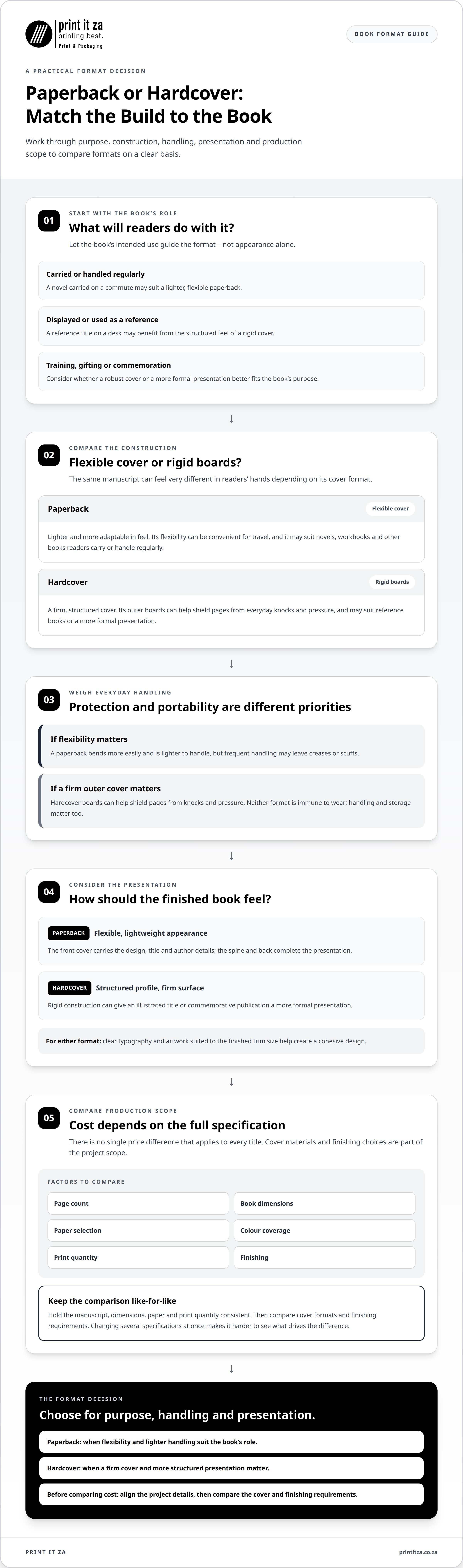
A paperback and a hardcover can contain the same manuscript, yet feel very different in readers’ hands. A paperback has a flexible cover, while a hardcover uses rigid boards. That construction affects handling, shelf presence and production requirements. For a novel carried on a commute, a lighter paperback may feel practical. For a reference title displayed on a desk, a rigid cover can create a more substantial presentation.
Durability: A hardcover’s firm outer boards help shield pages from everyday knocks and pressure. This can suit a cookbook or reference book in regular use. A paperback bends more easily and may show creases or scuffs with frequent handling. Its flexibility can be convenient for travel, but a soft cover offers less physical protection than rigid boards. Neither format is immune to wear, and handling and storage matter too.
Appearance: Hardcover construction gives a book a structured profile and a firm surface for cover artwork. It can make an illustrated title or commemorative publication feel more formal. A paperback has a more flexible, lightweight appearance. Its front cover carries the design, title and author details, while the spine and back complete the presentation. In either format, clear typography and artwork suited to the trim size help create a cohesive design.
Cost: There is no single price difference that applies to every title. Hardcover production uses rigid boards and a case-bound cover structure, while paperback production uses a flexible cover. These material and finishing choices affect the project’s scope. Other factors include page count, book dimensions, paper selection, colour coverage, print quantity and finishing. A full-colour photography book, for example, has different production requirements from a text-led novel.
Compare formats by the book’s purpose, not appearance alone. A training manual used during sessions may benefit from a robust cover, while a novel intended for easy carrying may suit a paperback. A gift edition may call for a more formal presentation. Each example involves a different balance of protection, portability and production scope. Consider readers’ expectations too: the format should suit how they will use and keep the book.
- Choose paperback when flexibility and lighter handling suit the book’s role.
- Choose hardcover when a firm cover and more structured presentation matter.
- Compare project details such as dimensions, paper, colour and finishing before weighing cost.
To make a like-for-like comparison, keep the manuscript, dimensions, paper and print quantity consistent. Then compare the cover formats and finishing requirements. Changing several specifications at once makes it harder to see what drives the difference. A print professional can help translate the intended use into a practical production brief. Explore book format options as you decide which presentation best fits your project.
What information should you provide to receive a book-printing quote and place an order?
A useful book-printing brief connects the finished book to its production requirements. Provide the format, dimensions, page count, print quantity and intended use. A paperback novel and a hardcover reference title, for example, need different cover specifications. Clear details help the print team assess the project and prepare a relevant quote.
Start with the book’s physical and editorial details. State the finished trim size in mm, whether you want paperback or hardcover, and the final interior page count. Include the number of copies needed. If the project has separate versions, such as a standard edition and a revised edition, describe each one independently. This prevents different specifications from being combined in one estimate.
- Format: State paperback or hardcover, and describe any specific cover finish you want.
- Dimensions: Give the finished size in mm, such as a compact format or a larger workbook.
- Quantity: Specify how many copies you need for this print run.
- Interior: Share the final page count and note whether pages use colour or black ink.
- Paper: Describe your preferred paper, or explain the book’s purpose to guide the choice.
- Finishing: List requirements such as a particular cover treatment or other finishing detail.
- Artwork: Identify the interior and cover files, including any separate versions.
- Timing and destination: State your required completion date and delivery location.
File readiness matters too. Supply the complete interior in reading order, with the cover artwork identified separately. For a cookbook, check that recipes, photographs and section dividers appear in the correct sequence. Include any blank pages that belong in the layout. Note special elements, such as full-page illustrations or colour sections, in the project brief.
Describe the print requirements rather than relying on the book’s genre alone. A school workbook may use mostly black text, while a children’s story may need colour illustrations throughout. These choices affect paper selection and print planning. If you’re unsure about a specification, explain the result you want, such as a lightweight book for everyday use or a more formal presentation copy.
Keep the quote details consistent with the files. A change in page count or colour coverage can alter production requirements. Send the latest versions together and label them clearly, for example, “interior final” and “cover final,” to distinguish them from earlier drafts.
Once you’ve gathered the project details, use this sequence to prepare the order:
- Settle the format, dimensions, quantity and intended use.
- Finalise the interior and cover artwork for those specifications.
- List paper, colour, finishing and delivery requirements in the brief.
- Review the quote against the requested format and supplied files.
A complete brief gives the production team a practical basis for planning. For instance, describe a hardcover title with colour photographs by specifying its format, image treatment and cover artwork together. Consistent information helps prevent avoidable changes after production planning begins. Keep the final specification in one place so the files and order details describe the same finished book.
Hardcover books
A hardcover gives a book a firm outer structure and a more formal finish. Its rigid boards surround the interior pages, creating a solid feel in the hand. This format suits titles designed for repeated reference, display or gifting. A family photo book, school yearbook or reference manual can benefit from a hardcover’s distinctive presentation.
Preparation starts with the finished book size and interior layout. The cover must account for the front, spine and back as one connected design. Spine width depends on the book’s specifications, including page count and paper. A change to the interior after cover design can therefore affect the spine layout. Align the cover artwork with the final version of the pages.
For hardcover printing, the cover file needs more than a front-cover image. Plan artwork across the full cover area, keeping important text clear of folds and edges. For example, a title near the spine should remain legible after assembly. Position logos and author details deliberately on the front or back. The print team can use the supplied specifications to prepare the cover for production.
The interior also needs a deliberate sequence. Check that chapter openings, illustrations and blank pages appear where intended. A coffee table book with full-page photographs may need a different layout rhythm from a text-heavy reference book. Confirm that image placement and captions match the final manuscript. This review helps reduce the risk of mismatched content in the finished copy.
Paper and colour choices influence how a hardcover presents its content. A book with photographs may depend on colour reproduction and image detail, while a training manual may prioritise legible text and practical handling. State which pages use colour and which use black ink. Identify sections with different treatments so the production brief reflects the book’s design, not just a general description.
Before production, the print team can compare the cover layout with the final interior specifications. This includes checking the trim size in mm, page sequence and spine artwork. If a revised chapter changes the page count, the cover dimensions may also need adjustment. Keep one approved interior file and one approved cover file to make the intended versions clear.
- Confirm the format: Specify hardcover and the intended use, such as display or frequent reference.
- Finalise the interior: Supply the approved sequence, including images and blank pages.
- Prepare the cover: Include front, spine and back artwork based on final book details.
- Review the proof: Check text placement, image order and cover alignment before production.
For authors, schools and organisations, these details help turn a finished manuscript into a cohesive hardcover edition. A yearbook, for instance, needs its class photographs and captions placed correctly, while a reference title depends on clear navigation and readable text. Start your hardcover book-printing project with the final specifications and artwork ready for production.
Print It ZA print and packaging: Book printers
Print It ZA prints books in paperback and hardcover formats. Whether you’re planning a novel, school title or reference book, we can help you prepare a production brief around your project. Share the book’s purpose and preferred format to get started.
Print It ZA prints paperback and hardcover books, as well as catalogues and brochures for organisations preparing related materials. Having your manuscript and artwork ready gives the project a clear starting point.
Contact Print It ZA print and packaging to discuss your book-printing project.
Turn your book idea into a finished project
Your book’s format is part of its identity, shaping how readers first experience it. Choose a presentation that suits your audience, then move forward with a clear production plan. Print It ZA prints books in both paperback and hardcover formats.
Print It ZA print and packaging produces books, catalogues and brochures, helping authors and organisations bring connected print materials together. Whether you’re preparing a first edition or developing a publication for your business, a clear direction gives the project a strong starting point.
Contact Print It ZA print and packaging to discuss your book project. Your idea is ready for its next step, and a thoughtfully produced book can make that step feel real.
Frequently Asked Questions
What should you provide to prepare files for hardcover book printing?
Provide the final interior artwork, cover design and agreed book specifications. Keep the front, spine and back together as a complete cover layout, and make sure it matches the approved interior. For a Gauteng school yearbook, for example, confirm that names, captions and photographs correspond to the right pages. Clear file names also distinguish approved artwork from earlier drafts during production.
What paperback and hardcover printing services does Print It ZA offer?
Print It ZA prints paperback and hardcover books, giving Johannesburg authors, schools and organisations two formats to consider. A paperback may suit a portable novel, while a hardcover can work well for a reference title or keepsake. Both start with a clear project brief covering the book’s purpose and production requirements, so the format supports how readers will use it.
What are Print It ZA’s paperback and hardcover book sizes and trim options?
Plan book dimensions around the project rather than assuming them from its category. Set the intended finished size in mm and consider the layout: a compact novel and a wide illustrated book need different page proportions. Trim refers to the final page dimensions after production. Matching the interior layout to the chosen trim helps avoid awkward image placement, cramped text or unused space around page elements.
What paper stocks, cover finishes, and binding options are available?
Paper, cover finish and binding should suit the book’s content and intended handling. A text-focused novel has different priorities from a colour-rich photobook, where image presentation matters. Paperback and hardcover construction also call for different binding plans. Include your preferences and intended use in the project brief, so production decisions account for both the reading experience and the finished book’s appearance.
Which file formats, resolution, bleed, and cover-spine specifications should you provide for printing?
Provide the final interior and cover artwork alongside the production specifications for your chosen format. Keep image quality, bleed and cover dimensions aligned with the finished trim and final page count. Spine width depends on the completed book’s construction, so don’t base artwork on an earlier draft. A Gauteng author preparing a revised edition should update the cover layout whenever the approved interior changes.