Leaflets remain one of the most cost-effective ways to reach local audiences, and choosing the right size, fold and paper can mean the difference between a leaflet that’s read and one that’s discarded.
What are the most common leaflet sizes and when should each be used?
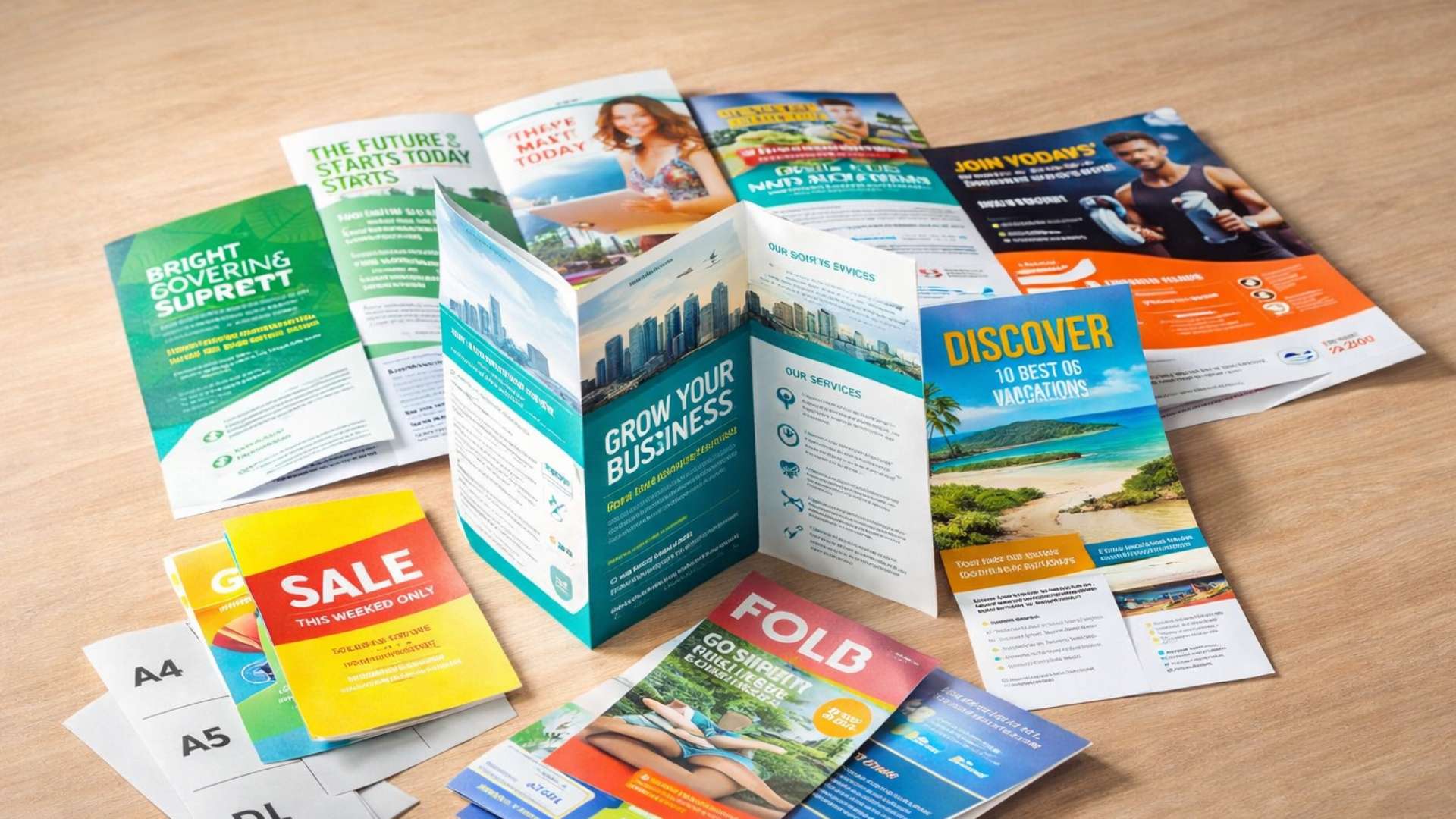
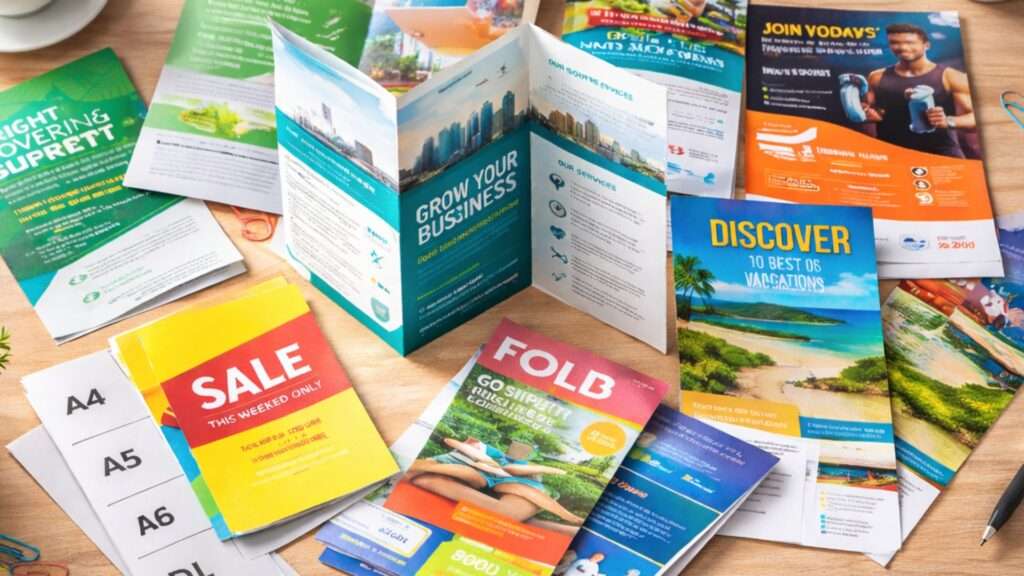
Understanding sizes helps you match a leaflet to its purpose. Standard sizes give designers and printers consistency, speed and cost-efficiency. In South Africa and internationally, the most common sizes are:
| Size | Dimensions (mm) | Best for |
| A6 | 105 x 148 | Handouts, inserts in packs, school notes |
| A5 | 148 x 210 | Door drops, event promotions, menus |
| A4 | 210 x 297 | Detailed product lists, schedules, educational handouts |
| DL (third-fold) | 99 x 210 | Mailers, reception desks, insert pockets |
Choosing a size depends on content length, distribution method and budget. For example, bulk educational printing for schools often prefers A4 or A5 because those sizes align with classroom filing and make photocopying easier. Small businesses promoting a weekend market may opt for A5 or DL for door drops and mail-outs to control postage or distribution costs.
How do folds affect leaflet design and usability?
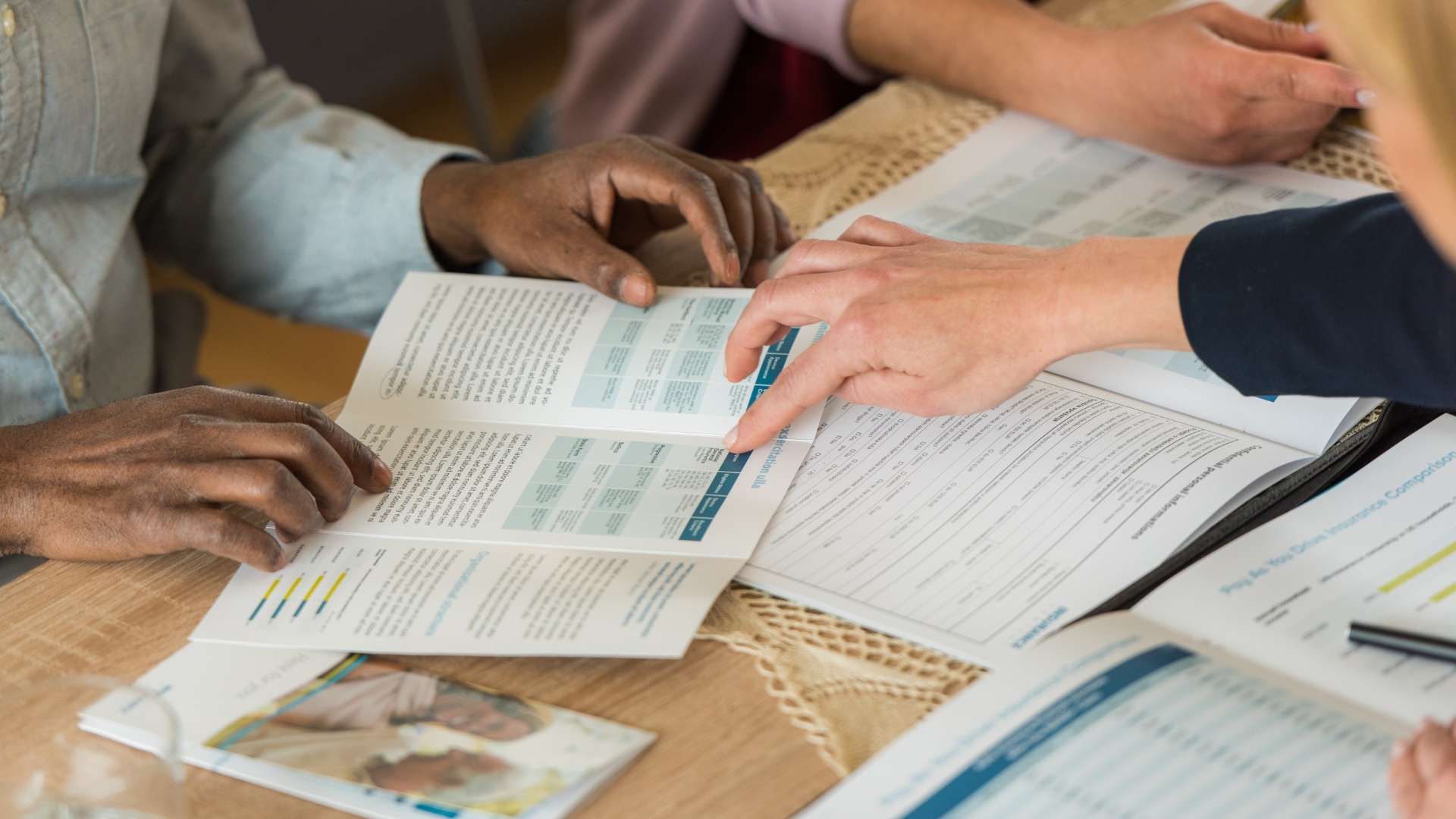
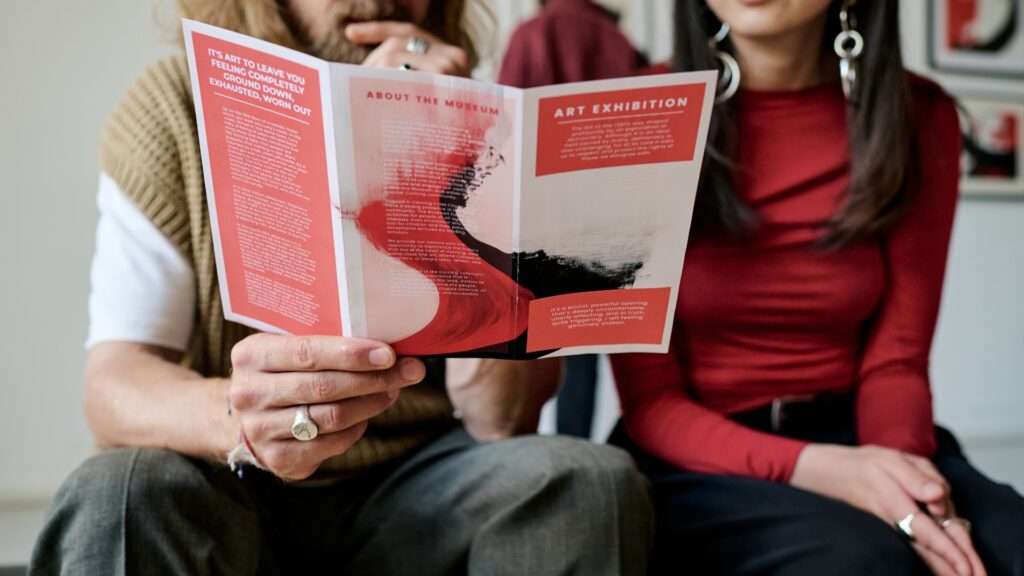
Folds create panels and control reading order — critical for storytelling and for highlighting calls to action. Common folds include single fold, tri-fold, Z-fold and gate fold. Each fold type influences layout, image placement and how readers interact with content.
Folds and their typical uses:
- Single fold (bi-fold): Two panels; good for a clear two-part message (problem/solution) or menus.
- Tri-fold: Three panels; great for step-by-step info, multiple services, or pricing.
- Z-fold: Similar to tri-fold but opens in a zigzag; useful for segmented stories and brochures handed at events.
- Gate fold: Creates a dramatic reveal for a hero image or special offer often used in higher-end promotions.
In South Africa’s event and promotions market, tri-folds remain popular because they fit into pockets and racks while providing structured panels for event schedules, speaker bios and sponsor logos. For booklet-style outcomes, see our booklet printing services for saddle-stitch finishing and pagination options: booklet printing.
Which paper stocks and weights should I choose for leaflets?
Paper choice affects tactile quality, durability and perceived value. Typical options include:
- 80–100 gsm (bond): Lightweight, low cost, good for single-use inserts and very large-volume mailings.
- 130–170 gsm (silk or gloss): Standard for most leaflets — balances cost and sturdiness.
- 200–350 gsm (card stock): Premium feel; used for cards, robust door drops or where a longer life is needed (menus, business card-style promos).
Finishes such as gloss, silk or matt influence readability and image pop. For educational printing — including textbooks and training manuals — heavier stocks are often used for covers with lighter pages inside. For commercial print jobs and catalogue printing, mixing weights (heavy cover, lighter internal sheets) gives durability without excessive cost: see catalogue printing options at catalogue printing.
How do printing methods (digital vs litho) change costs and turnaround times?
Choosing between litho (offset) and digital printing depends on run length, colour accuracy needs and turnaround. Litho is cost-efficient for large runs with excellent colour consistency; digital is best for fast turnaround, variable data and smaller batches.
Quick comparison:
- Digital printing: Low setup, faster turnaround, economical for small to medium runs, great for customisation and print-on-demand jobs.
- Litho printing: Higher setup cost, cheaper per unit at high volumes, superior for spot colours and very large educational print runs where economies of scale matter.
South African schools ordering bulk educational printing for the school term often use litho for textbooks and high-volume leaflets to control unit costs. For fast, on-demand leaflets for events and promotions, digital printing gives the speed to meet tight deadlines. For related services, consider our training manual printing and brochure options: training manual printing and brochure printing.
Can eco-friendly papers and finishes reduce costs or only increase them?
Eco-friendly choices — recycled stocks, FSC-certified paper and eco-inks — often carry a modest premium but can be cost-effective when aligned with brand values and bulk planning. Many organisations in South Africa now prioritise sustainable print as part of procurement policies, especially in education and non-profit sectors.
Benefits beyond cost:
- Stronger brand reputation with eco-conscious audiences
- Often usable in the same presses as conventional stocks
- Possible eligibility for sustainability grants or tenders
According to UNESCO, equitable access to printed learning materials remains important in regions with limited digital access, which means choosing sustainable printed options doesn’t conflict with educational reach — it improves it. If sustainability is a priority, discuss recycled or high-reclaimed-content stocks and water-based varnishes with your printer to balance price and impact.
What finishes and coatings should I consider for durability and impact?
Finishes change both look and longevity. Common finishes include UV coating, aqueous coating, laminates and soft-touch coatings. Each offers trade-offs for cost, finger-mark resistance and recyclability.
When to choose which finish:
- UV coating: High gloss, very durable, ideal for tactile, high-impact leaflets used outdoors or handled often.
- Aqueous coating: Lower-cost gloss/satin option, more recyclable and quicker to cure.
- Lamination: Matte or gloss film for heavy-duty leaflets like menus or long-life educational handouts.
- Spot varnish: Use to highlight logos or special offers without coating the entire sheet.
For book and booklet work, finishes on covers and targeted varnishes inside can help materials last a full school term. For full-service options, see our books printing service: books printing.
How can design and content improve leaflet response rates?
Good design controls attention: clear headline, single main call-to-action (CTA), legible type size and a visual hierarchy that guides the eye. For leaflets, keep messages concise, use high-contrast colours for readability and include contact methods suited to your audience (phone, map, QR code).
Tips for higher response:
- Use an arresting headline and a single CTA.
- Place the CTA on the last panel for folded leaflets so readers see it after unfolding.
- Test two versions (A/B) in small runs to decide which design performs best before large-scale printing.
According to the Wikipedia article on flyers, printed leaflets historically achieved high local penetration because of their simplicity and low distribution cost — many of the same design principles still hold today. Incorporate variable data printing for personalised calls to action when targeting parents, students or local customers.
What are best practices for distributing leaflets across South Africa?
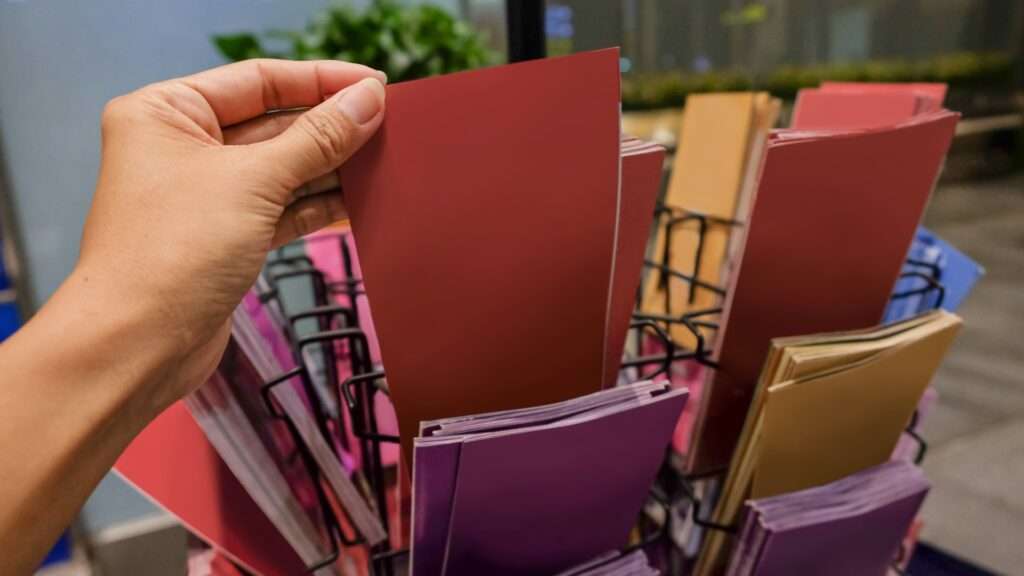
Distribution strategy depends on audience and budget. Options include hand-to-hand at events, door drops, in-store handouts, inclusion in magazines or school packs, and mailed DL-sized leaflets. Planning distribution for school term preparation or events requires timing and knowledge of local footfall patterns.
Distribution checklist:
- Map target suburbs and volume per route
- Choose size and fold for insertion into racks or school bags
- Schedule delivery to coincide with events, weekends or term starts
- Track results with promo codes, QR codes, or dedicated phone numbers
Many businesses in South Africa combine leaflets with digital follow-up for measurable ROI. For larger print orders intended for wide distribution, consult a printing partner experienced with nationwide print delivery and fast turnaround printing to meet event timelines.
How do costs scale for bulk orders versus small runs?
Pricing follows a classic curve: higher fixed setup costs are spread across more units, so per-unit cost falls as quantity increases. Litho printing is most cost-effective for large bulk educational printing for schools or mass promotional leaflets, while digital is best for small batches or personalised runs.
Typical cost drivers:
- Run length (units)
- Paper weight and finish
- Full colour vs spot colour
- Folding, perforation and finishing
- Delivery and rush charges
For cost-effective school textbook and booklet distribution, bundling multiple print products (leaflets as inserts in book packs) often reduces handling fees. See our textbook printing and education printing pages for bundled possibilities: textbook printing and education printing.
How do I measure the success of a leaflet campaign?
Measure using both quantitative and qualitative methods: track redemption of coupons, QR code scans, dedicated phone numbers, and web traffic spikes correlated with distribution windows. For school or training materials, survey teachers and learners about usability and retention.
Useful KPIs:
- Redemption rate from offers or coupons
- QR code scan counts and time-on-page
- New enquiries or registrations linked to leaflet campaigns
- Distribution compliance checks (were leaflets actually handed out?)
According to industry surveys, physical marketing materials — when integrated with digital tracking — can produce measurable uplifts in local engagement. Track results and refine designs and distribution for future term-based or event-based runs.
Which partners and services should I look for in a reliable printer?
Choose a printer with transparent pricing, proofing options, local delivery networks and a track record across relevant industry segments like commercial printing, catalogue printing and custom publishing. Look for firms that offer fast turnaround printing, eco-friendly options and print-on-demand capabilities for flexible replenishment.
Key capabilities to ask about:
- Proofing (digital and hard-copy proofs)
- Variable data and personalisation
- Finishing options (folding, trimming, lamination)
- Bulk distribution and school delivery logistics
- Quality control and colour management
Working with a single supplier for brochures, leaflets and booklets simplifies colour consistency and scheduling. If you need a full suite of services, our booklet printing and catalogue options can be combined with leaflets for integrated campaigns: booklet printing and catalogue printing.
How should small businesses and schools plan their next leaflet print run?
Start with a brief: audience, quantity, size, desired finish, distribution method and timeline. For school term preparation, align print runs with term dates and order early to access better litho pricing. For events, allow time for design revisions and test prints.
Planning checklist:
- Define objective and CTA
- Decide size, fold and stock
- Choose printing method (digital vs litho)
- Request proofs and confirm finishes
- Schedule distribution and tracking
For many South African clients, blending cost-effective bulk print with on-demand top-ups gives the best balance between preparedness and flexibility. If you need help scoping a project, our commercial printing and custom publishing teams can provide a quote and timelines quickly.
Contact Print It ZA today, for a Free Quote and Speedy service.
Print It ZA, we deliver Printing Best!