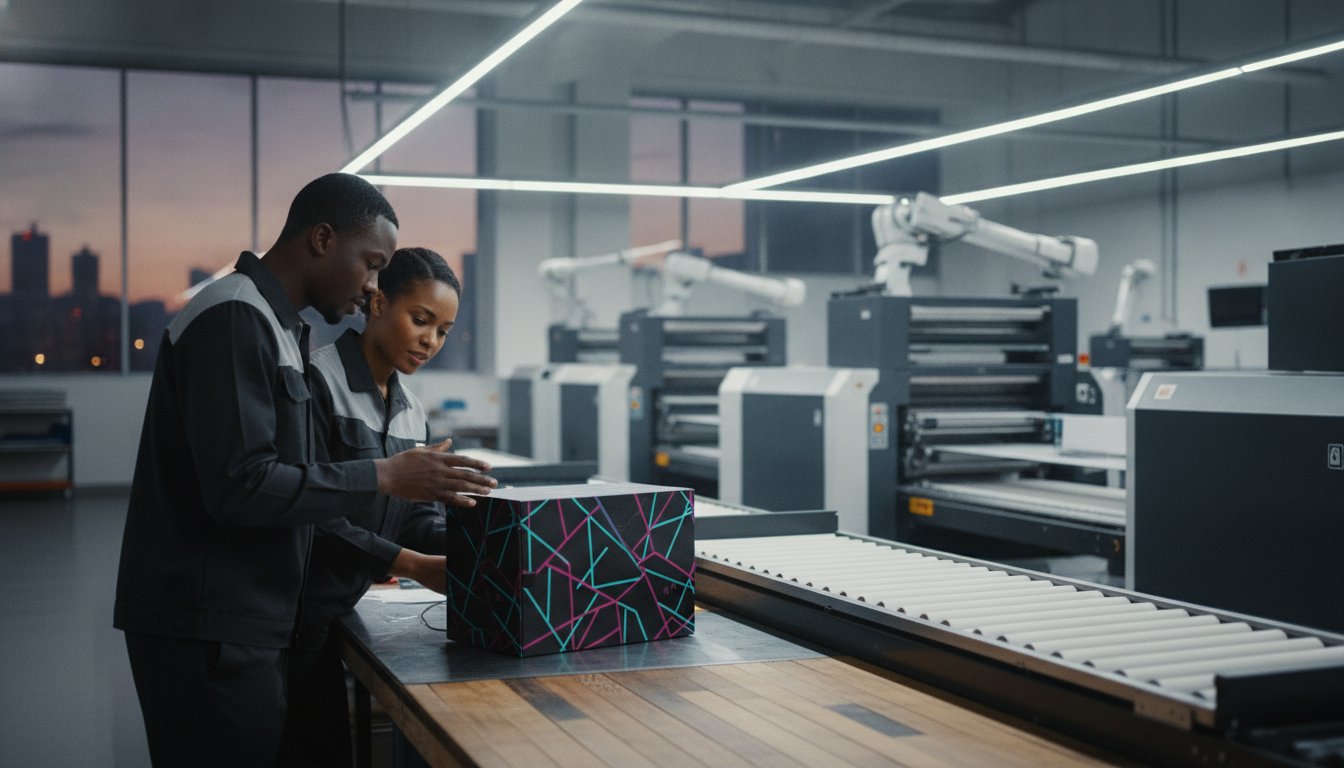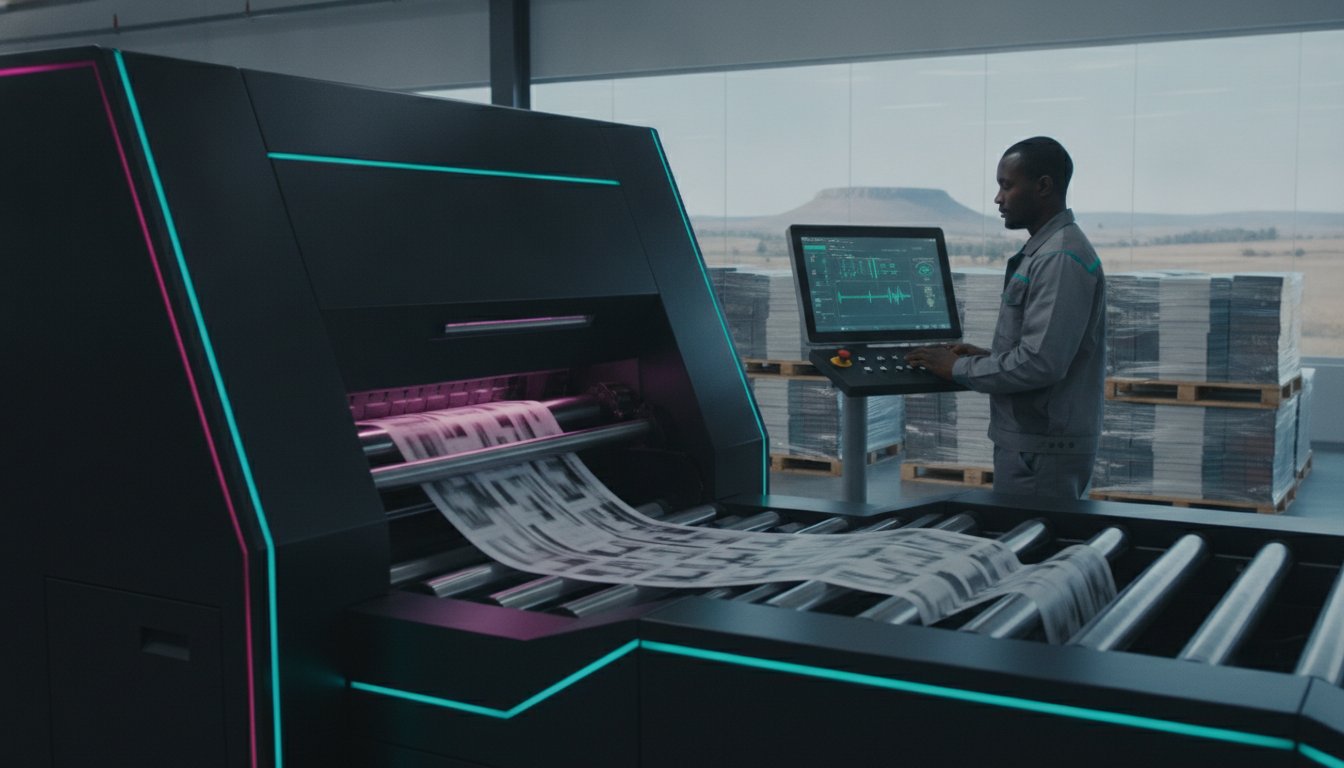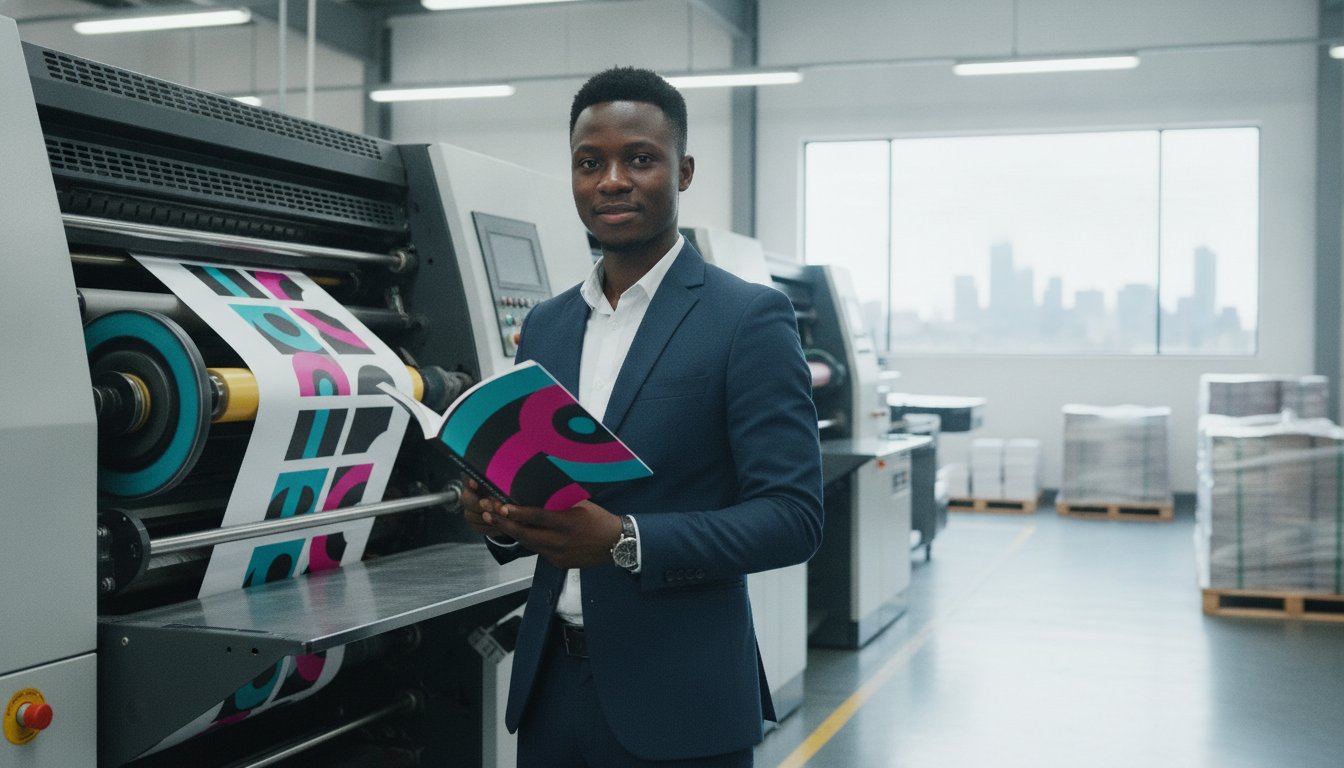
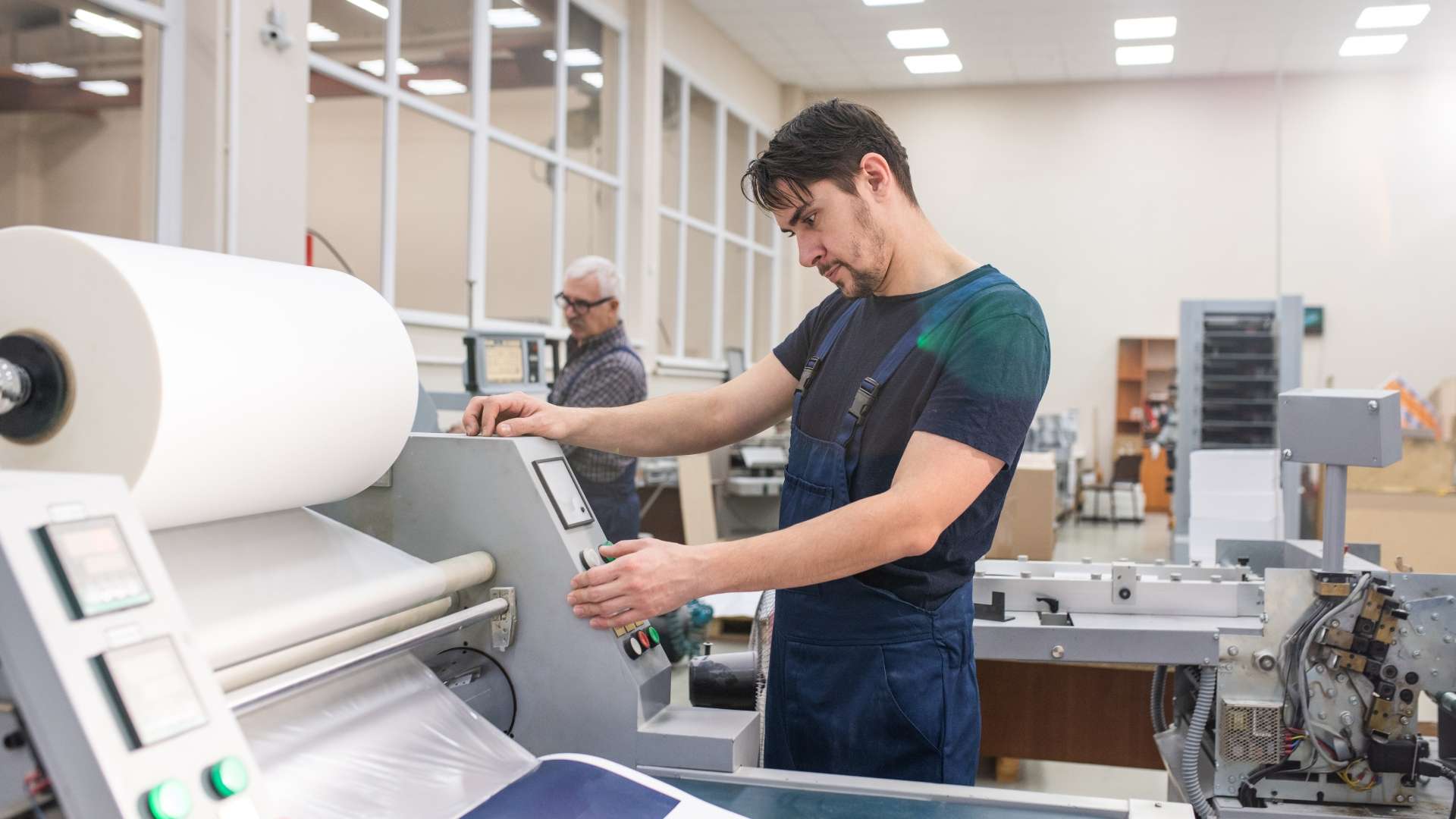
The printing press remains central to producing high-impact learning materials, brochures and packaging; choosing between digital and litho printing affects cost, speed and finish.
What is the printing press and why does it still matter?
The term printing press originally referred to the mechanical press that made mass reproduction of text and images possible. According to Wikipedia, Johannes Gutenberg developed the movable-type printing press in the mid-15th century, revolutionising information access. Today, “printing press” is also used broadly to describe both traditional offset (litho) systems and modern digital presses that serve commercial printing, educational printing and small business marketing materials.
For industries such as textbook printing, booklet printing and catalogue printing, the printing press — in whichever form — remains the backbone of distribution. In South Africa, printers combine classic litho presses and digital workflows to deliver cost-effective print solutions, fast turnaround printing and print-on-demand services for schools and publishers preparing for the school term.
How does the printing press differ: digital vs litho?
At a high level, litho (offset) printing transfers ink from a plate to a rubber blanket then to paper; digital printing transfers toner or ink directly from a file to the substrate without plates. Each approach uses the “printing press” concept but with different production mechanics, economies of scale and setup times.
- Litho (Offset): Best for long runs, consistent colour, a wide range of paper stocks and special finishes.
- Digital: Best for short runs, variable data (personalisation), fast turnaround and on-demand production.
Both serve the commercial printing and custom publishing markets: litho often leads for catalogue printing and brochure printing services when thousands of copies are needed, while digital is excellent for training manuals, newsletters and print-on-demand book projects.
Which printing press type is more cost-effective for bulk educational printing?
For bulk educational printing for schools — such as textbooks, workbooks and exam booklets — litho printing usually offers the lowest cost per unit once setup costs are covered. The printing press setup for litho requires plates and pre-press time, but when producing thousands of copies, those fixed costs are amortised over the print run.
Schools preparing for the term often prefer litho when ordering in bulk because it provides consistent colour, stronger ink laydown for textbooks and the option of economical coated papers for durability. For very large textbook orders, request quotes that include finishing (saddle-stitching, perfect binding) and protective coatings that extend lifespan in classroom use.

When is a digital printing press the better choice?
Digital printing presses shine when turnaround time, flexibility and short runs matter. If you need fast turnaround printing for events, promotions or small business marketing materials, digital eliminates plate costs and can produce finished pieces within days or hours.
Digital is ideal for print-on-demand school materials, personalised training manuals and pilot runs of a new booklet or brochure. It also reduces inventory risk: instead of warehousing thousands of catalogues or brochures, you print what you need when you need it, with print delivery across South Africa coordinated to meet deadlines.
- Good for: on-demand textbooks in low volumes, short-run brochures, personalised newsletters and business cards.
- Advantages: no plate costs, rapid proofing, quick revisions.
How do turnaround time and delivery differ between digital and litho presses?
Turnaround depends on press type and workload. A digital printing press can often complete short jobs within 3 to 5 days, while litho jobs may take longer because of plate-making and drying/curing times. Printers in South Africa balance schedules to offer fast turnaround printing for urgent school or event needs while scheduling litho runs for large-volume production.
Print delivery across South Africa is a logistical element: many commercial printers offer regional distribution and timed delivery to schools and retail channels. For time-sensitive projects like school term preparation, confirm production and transit timelines before committing to quantities.
What are the quality differences between litho and digital printing?
Quality comparisons hinge on paper, ink and finishing rather than just the printing press technology. Litho typically produces sharper halftones and a wider colour gamut on coated stocks, making it the preferred choice for high-end brochures, catalogues and packaging. Digital presses have closed the gap significantly, offering excellent colour stability and reproduction, especially on coated and uncoated papers suited to brochures and book interiors.
Colour management (ICC profiles, proofing) is important regardless of press. For catalogues and brochure printing services, ask for press proofs and discuss Pantone matching and varnish options to ensure the final product meets brand expectations.
What finishing and custom print options are available on modern presses?
Finishes transform printed pieces into durable, tactile and branded products. Both litho and digital jobs can include options such as soft-touch lamination, UV varnish, aqueous coatings, embossing, die-cutting and spot gloss. Custom print finishes are often decisive for invitation-level brochures, luxury catalogue printing and the outer covers of textbooks and books.
| Finish | Best For | Available With |
|---|---|---|
| Soft-touch lamination | Premium brochures, catalogue covers | Litho & Digital |
| Spot UV | Brand accents, business cards | Litho (commonly) & some digital workflows |
| Perfect binding | Books, training manuals, textbooks | Litho & Digital (for short runs) |
Many schools and publishers in South Africa choose additional protection for textbooks to extend service life in classrooms, and event promoters commonly add lamination or spot varnish to signage and promotional materials.
How does print-on-demand and custom publishing work for schools and small businesses?
Print-on-demand (POD) leverages digital printing presses to produce copies as orders arrive. For educational printing and custom publishing, POD reduces inventory costs and allows quick updates to content—ideal for training manuals and seasonal course packs. Small businesses use POD for brochures, newsletters and promotional booklets, controlling spend and avoiding waste.
Key benefits include reduced storage, minimal waste, and the ability to personalise each copy. For example, schools can order class-specific workbooks in small batches, while publishers can release updated textbook editions with lower initial print runs.
To explore textbook and education-oriented printing services, see specialised options for textbook printing and education printing.
How do you estimate cost per unit for a printing press job?
Estimating cost depends on press type, paper stock, finishing, quantity and turnaround. A simple rule of thumb:
- Obtain a unit price for the run (including paper and ink).
- Add setup costs (plates for litho, pre-press time).
- Factor finishing and binding costs.
- Include delivery and small-business services (e.g., variable data printing).
For many brochure and booklet projects, digital printing lowers the total because there are no plate charges; for catalogue and large-book print runs, litho usually reduces the unit price. For specific project pricing, request quotes from commercial printers that specialise in brochure printing, catalogue printing and booklet printing.
What environmental choices exist when using a printing press?
Eco-friendly printing options are increasing: eco-inks, FSC-certified papers, waterless lithography and post-consumer recycled stocks reduce environmental impact. Many commercial printers in South Africa offer greener alternatives and carbon-offset delivery services to meet sustainability goals.
Choosing eco options can influence cost and finish; discuss trade-offs with your printer. For educational institutions ordering in bulk, selecting durable recycled stocks can balance sustainability with longevity for textbooks and manuals.
How do I choose the right commercial printer in South Africa for my project?
Select a printer based on expertise, equipment, lead times and service offerings. Ask about their presses (digital and litho), finishing capabilities, proofing standards and experience with your materials—books, training manuals, catalogues or packaging. A reputable printer will show samples, provide references and offer transparent pricing.
Consider vendors who specialise in school-focused runs (textbook and training-manual printing), as they understand binding and durability needs for education. For publishers and businesses, choose a partner that supports fast turnaround printing, print delivery across South Africa and custom print finishes to meet marketing goals. Useful service pages to review include training manual printing and books printing to compare workflows and sample outputs.
What practical checklist should I use before sending files to the printing press?
Before you send files, follow a checklist to avoid delays:
- Finalise content, images and pagination; PDF/X export with embedded fonts.
- Confirm colour space (CMYK for most presses) and provide bleed (usually 3mm).
- Choose paper stock and finishing; request a proof for colour-critical work.
- Confirm binding method (saddle-stitch, perfect bind) for books and manuals.
- Verify delivery timelines and packaging for distribution across South Africa.
A shared proofing process reduces surprises. For educational and event projects, factor in extra time for approvals when multiple stakeholders are involved.
Summary: matching your project to the right printing press
Deciding between digital and litho requires balancing cost, quantity, quality and timing. Use litho for large-volume, high-finish projects like catalogues and extensive textbook orders; choose digital for speed, personalisation and low to medium runs. Across South Africa, commercial printers bridge both technologies to offer bespoke printing solutions for schools, small businesses and publishers, including eco-friendly options and reliable print delivery.
According to UNESCO, textbooks and printed learning materials remain pivotal to education and access to learning in many regions, making careful press selection important for schools and publishers. According to Wikipedia, the invention of the printing press transformed societies by enabling scalable information spread. According to the Printing Industries Federation and local commercial printers, demand for fast turnaround printing and print-on-demand continues to grow as organisations prioritise agility and cost-effective print solutions.
Contact Print It ZA today, for a Free Quote and Speedy Service.
Print It ZA, we deliver Printing Best!