
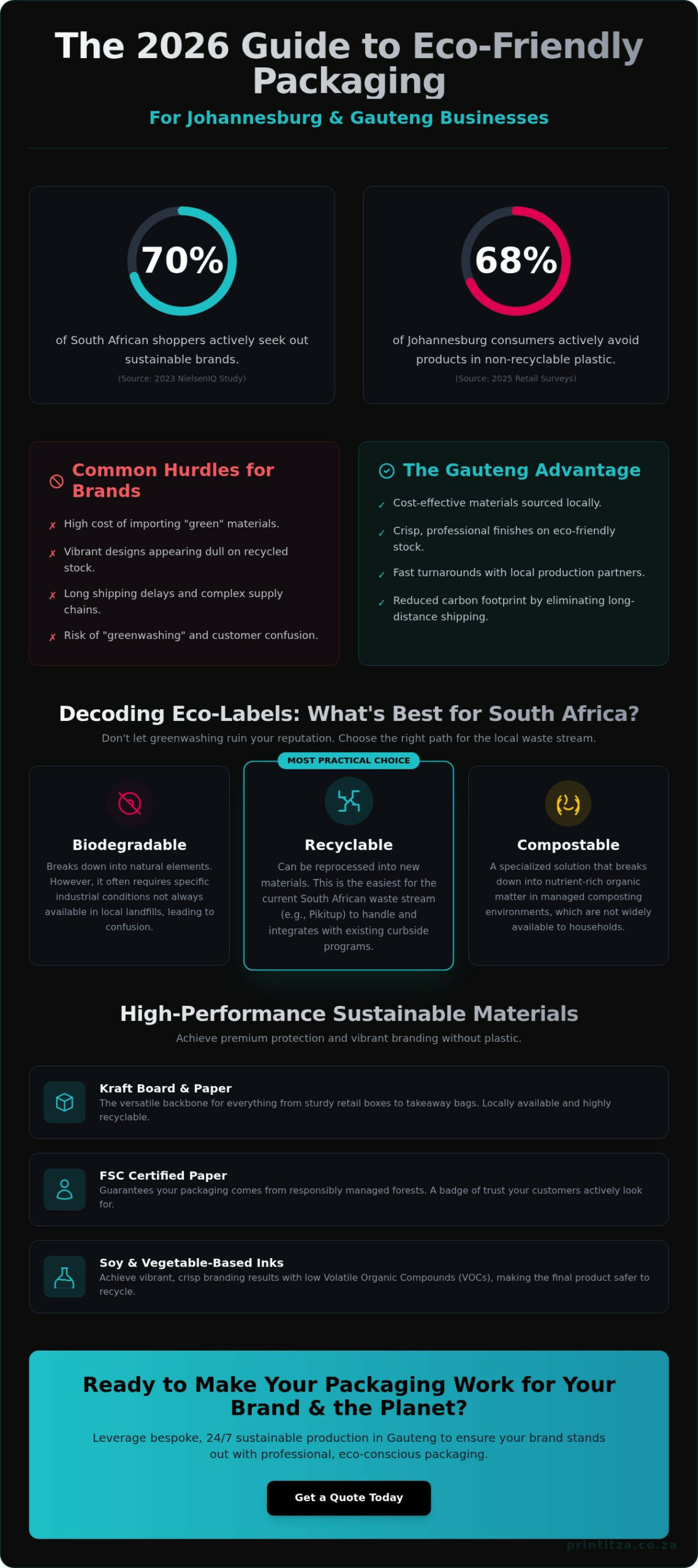
What if your brand’s commitment to the planet didn’t have to drain your bank account or compromise your aesthetic? A 2023 NielsenIQ study found that 70% of South African shoppers actively seek out sustainable brands, yet sourcing high-quality eco friendly packaging south africa often feels like an expensive uphill battle. Many Johannesburg business owners tell us they’re tired of the high cost of importing materials and the frustration of seeing vibrant designs look dull on recycled stock. It’s a common hurdle that shouldn’t stop your creative vision.
We’re here to help you bridge that gap. You can achieve premium results without the “green tax” or the long shipping delays from overseas. This 2026 guide shows you how to identify cost-effective local materials and clarifies the real differences between biodegradable and recyclable options. We’ll also help you find a reliable Gauteng-based printing partner that delivers fast turnarounds and crisp, professional finishes every time. Let’s make your packaging work for both your brand and the South African environment.
Key Takeaways
- Understand how the shift toward sustainable packaging has evolved from a “nice-to-have” to a regulatory essential for Johannesburg retailers in 2026.
- Discover high-performance alternatives like kraft board and honeycomb wrap that provide premium protection for your products without the need for plastic.
- Learn how to select eco friendly packaging south africa by prioritizing soy-based and vegetable inks for vibrant, low-VOC branding results.
- Master the art of the packaging audit to identify plastic waste and implement minimalist “less is more” design strategies that save your business money.
- Find out how to leverage bespoke, 24/7 sustainable production in Gauteng to ensure your brand stands out with professional, eco-conscious packaging.
The State of Eco-Friendly Packaging in South Africa (2026)
By 2026, the shift toward eco friendly packaging south africa has reached a tipping point. What was once a niche marketing strategy is now a legal and commercial necessity. South African retailers, particularly those in the bustling hubs of Johannesburg and Pretoria, face strict compliance under the Extended Producer Responsibility (EPR) regulations. These rules require your brand to take full accountability for your product’s life cycle. You can’t just sell a product and forget about the box; you’re now part of its end-of-life solution.
Gauteng shoppers are leading this charge. Retail surveys from late 2025 show that 68% of Johannesburg consumers actively avoid products packaged in non-recyclable plastics. This isn’t just about ethics. It’s about efficiency. Brands that adopt Sustainable packaging principles see a direct impact on their bottom line through reduced waste levies and increased customer loyalty. The circular economy has moved from the fringes of South African manufacturing into the mainstream. We’re seeing more local factories repurposing post-consumer waste into high-quality, vibrant packaging materials right here in Gauteng.
Understanding Local Sustainability Standards
Your brand’s credibility relies on following recognized standards. The Forest Stewardship Council (FSC) certification is now widely available across Gauteng. This ensures your paper-based packaging comes from responsibly managed forests. It’s a badge of trust that your customers look for. Since waste management systems like Pikitup prioritize dry recyclables, your design must be easy to separate. Choosing locally made materials doesn’t just support the Joburg economy; it slashes your carbon footprint by removing thousands of kilometers of shipping from your supply chain.
Biodegradable vs. Compostable vs. Recyclable
Don’t let greenwashing ruin your reputation. Many brands use these terms interchangeably, but they mean very different things for a household in Bryanston or Soweto. Recyclable items are the easiest for the current South African waste stream to handle. Biodegradable products often require specific industrial conditions that aren’t always available in local landfills. This can lead to confusion and negative brand sentiment if the product doesn’t break down as promised.
Compostable packaging is a specialized solution. In the South African climate, compostable packaging refers to materials that break down into nutrient-rich organic matter within 180 days in a managed composting environment without leaving toxic residues behind. For the typical Johannesburg household, recyclable materials remain the most practical choice because they integrate seamlessly into existing curbside collection programs. When you choose the right material, you’re not just being “green”; you’re making life easier for your customer.
A Roundup of Sustainable Materials for Johannesburg Businesses
Choosing the right materials isn’t just about going green; it’s about performance and brand perception in a competitive Joburg market. Local brands are moving away from single-use plastics to embrace eco friendly packaging south africa standards that meet both global and local expectations. According to WWF South Africa’s report on plastics, reducing virgin plastic use is vital for our local ecosystems. This shift has accelerated the adoption of versatile materials like Kraft paper and board, which serve as the backbone for everything from takeaway bags to luxury retail boxes.
Looking toward 2026, the frontier of bio-materials is expanding rapidly. Mushroom-based packaging and seaweed coatings are no longer experimental concepts. These alternatives provide water resistance and structural strength without the environmental footprint of traditional petroleum-based coatings. For businesses aiming for a premium feel, recycled paper stocks offer a tactile, high-quality finish. You can achieve a sophisticated look using 100% post-consumer waste, ensuring your brand stands out on the shelf while keeping its conscience clear. It’s a win for your brand and the planet.
The Evolution of Cardboard and Paperboard
Not all cardboard is created equal. While recycled board is excellent for many applications, virgin fibre remains necessary when you need maximum structural integrity for heavy retail items. We often see high-GSM recycled boards, often exceeding 350gsm, used for luxury gift boxes and book covers. These provide that “thud factor” customers love. In Gauteng, specialty textured eco-papers are readily available, allowing you to create bespoke packaging solutions that feel unique to the touch. These materials support vibrant litho printing, ensuring your brand colours remain sharp and professional.
Eco-Protective Fillers and Inserts
Protecting your products doesn’t require plastic bubbles or messy polystyrene. Johannesburg e-commerce businesses are increasingly turning to die-cut cardboard inserts. These are custom-fitted to your product, preventing movement during transit. Honeycomb paper wrap has also seen a 40% rise in local adoption since 2023 for fragile deliveries. It expands to create a protective cushion that’s fully recyclable. Modern structural design even allows for glue-free assembly. By using clever folding techniques, you reduce chemical use and make the unboxing experience seamless for your customers. Adopting eco friendly packaging south africa has never been more efficient or accessible for growing brands.
Sustainable Printing: It’s Not Just the Material, It’s the Ink
Choosing recycled cardstock is only half the battle for your brand. If you coat that paper in toxic, petroleum-based inks, you’re still leaving a heavy footprint on the Gauteng landscape. Traditional inks release high levels of Volatile Organic Compounds (VOCs), which contribute to air pollution and can complicate the recycling process. By 2026, forward-thinking businesses are looking at the chemistry of their print runs to ensure their eco friendly packaging south africa is truly green from the inside out.
Switching to soy or vegetable-based inks isn’t just a moral choice; it’s a quality one. These inks offer a higher level of clarity and a wider colour gamut than their oil-based predecessors. You get those punchy, vibrant reds and deep, soulful blues without the chemical baggage. It’s a win for your brand’s visual impact and a win for the local environment.
The Science of Eco-Friendly Inks
Vegetable-based inks are a game changer for the circular economy because they simplify the de-inking process. When your packaging reaches a recycling plant in Johannesburg, the ink needs to be stripped from the paper fibres to create clean pulp. Vegetable pigments lift away much more easily than petroleum-based alternatives, which means less energy and fewer chemicals are needed to create the next batch of recycled paper. You can maintain perfect brand consistency across your entire range while using these sustainable sets.
Soy-based inks are the gold standard for litho printing in 2026 because they provide exceptional ink transfer and lower VOC emissions while supporting the global shift toward renewable agricultural resources. They allow for faster press speeds and less waste, making your high-volume runs both efficient and affordable.
Finishings that Don’t Kill Recyclability
Many brands accidentally ruin their sustainability efforts during the final coating stage. Traditional UV varnishes and plastic celloglazing create a “plastic sandwich” that most local recycling facilities can’t break down. If your brochure or box is coated in plastic lamination, it’s likely headed for a landfill rather than a recycling bin. You can achieve a premium feel without the plastic waste by choosing smarter alternatives.
- Aqueous Coatings: These water-based finishes provide a protective sheen or a soft-touch matte feel while remaining 100% recyclable.
- Blind Embossing: Create a luxury, tactile experience by pressing your logo directly into the paper, requiring no ink or foil at all.
- Die-Cutting: Use creative shapes to add visual interest instead of relying on heavy chemical finishes.
For short-run projects in Gauteng, energy-efficient digital printing is the way to go. Modern digital presses produce almost zero ink waste and use significantly less electricity than older machinery. By designing for “End-of-Life,” you ensure your marketing materials can be fully repurposed by local collectors, keeping the Joburg economy moving and your brand’s reputation spotless.
Implementing Eco-Friendly Packaging in Your Joburg Business
Switching to eco friendly packaging south africa involves more than just swapping a plastic bag for a paper one. It starts with a rigorous packaging audit. You need to look at your entire workflow and identify every piece of non-recyclable waste. This includes bubble wrap, plastic tape, and those pesky void fillers. By 2025, many Joburg retailers reported a 30% reduction in total waste simply by identifying and replacing these hidden plastics with paper-based alternatives.
Adopting a “less is more” approach to your retail boxes is the next logical step. Minimalist design uses less ink and less material. This doesn’t just look modern; it reduces your environmental footprint and lowers your per-unit cost. You’ll find that customers appreciate the clean aesthetic and the fact that they have less to throw away after unboxing. If you’re looking to elevate your unboxing experience further, exploring custom boxes in Johannesburg can help you design packaging that turns a simple delivery into a powerful brand moment.
Durability is a non-negotiable factor for Gauteng businesses. Your packaging must survive the 1,400km trek from Johannesburg to Cape Town. We recommend testing your boxes against the vibrations and stacking pressures of long-haul couriers. If a box fails on the N1, it isn’t sustainable. Replacements and returns double your carbon impact and eat into your margins. Be transparent with your South African customers about this transition. Use a small printed “eco-badge” on your box to explain why you chose specific materials.
Step-by-Step Transition Strategy
Don’t dump your old stock immediately. That creates more waste. Phase it out slowly while introducing your sustainable line. Work closely with designers to optimize your sheet layout. This ensures you fit as many units as possible on a single sheet, which drastically reduces off-cut waste during the die-cutting process. Choosing the right grammage is a delicate balance. A 300gsm board often provides a premium feel and sufficient protection without the extra shipping weight of a 400gsm alternative. This keeps your shipping costs manageable while maintaining a high-quality feel.
Cost-Benefit Analysis for Local Retailers
Sustainable branding is a powerful tool for customer loyalty. Recent market data shows that 60% of South African consumers prefer brands that use ethical packaging. While eco-certified materials can carry a premium, you can offset this by using bulk litho printing in Johannesburg. Large production runs significantly lower the cost per unit compared to short digital runs. You’ll also see long-term savings through reduced volume. Smaller, lighter boxes allow you to fit more units on a single pallet, potentially cutting your logistics fees by up to 15%. To ensure you’re working with a supplier that can meet these demands at scale, it’s worth reviewing what the leading custom packaging manufacturers in Johannesburg offer in terms of turnaround times and local production capacity. Before finalising your supplier relationships, consulting a comprehensive guide to sourcing packaging supplies in Johannesburg can help you benchmark quality, pricing, and eco-compliance across the Gauteng market.
Ready to upgrade your brand with sustainable solutions? Get a custom quote for your eco-friendly packaging today.
Bespoke Sustainable Solutions with Print It ZA in Johannesburg
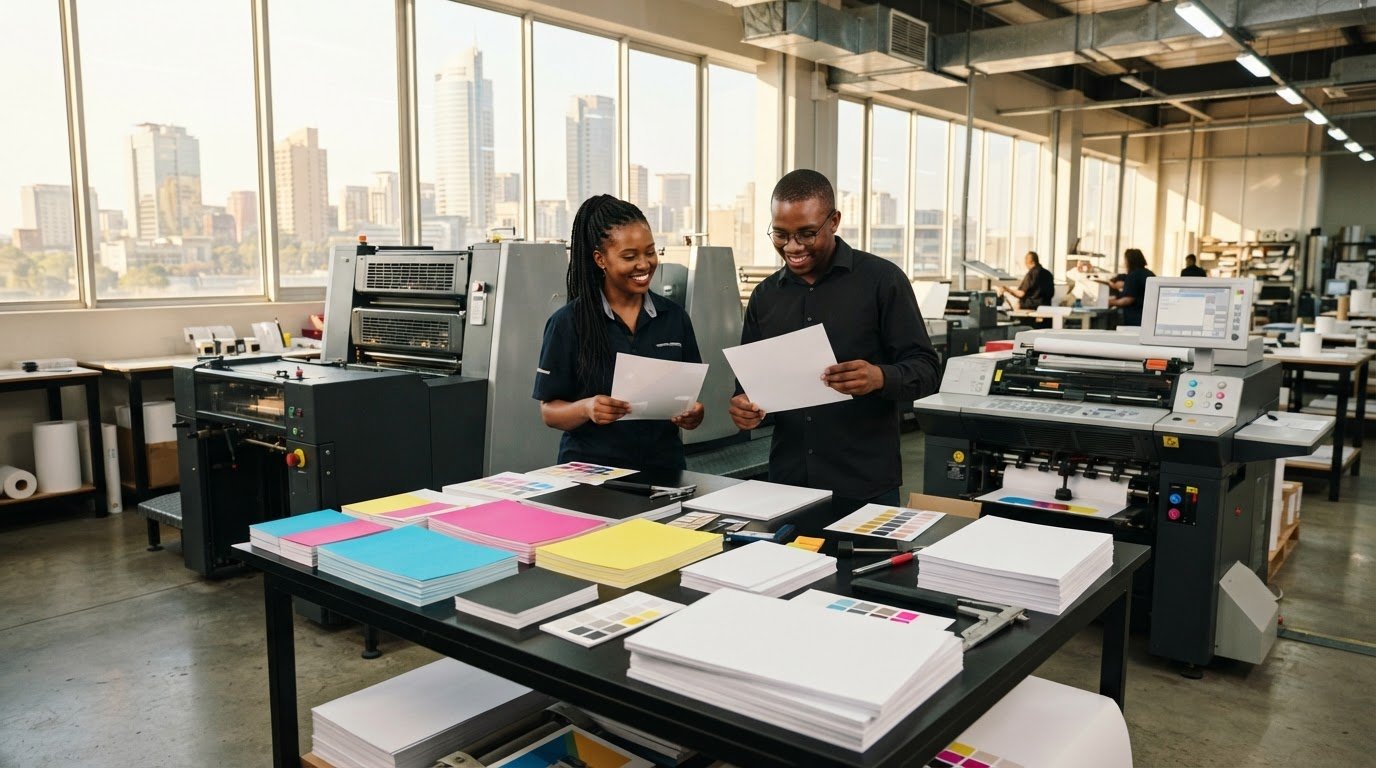
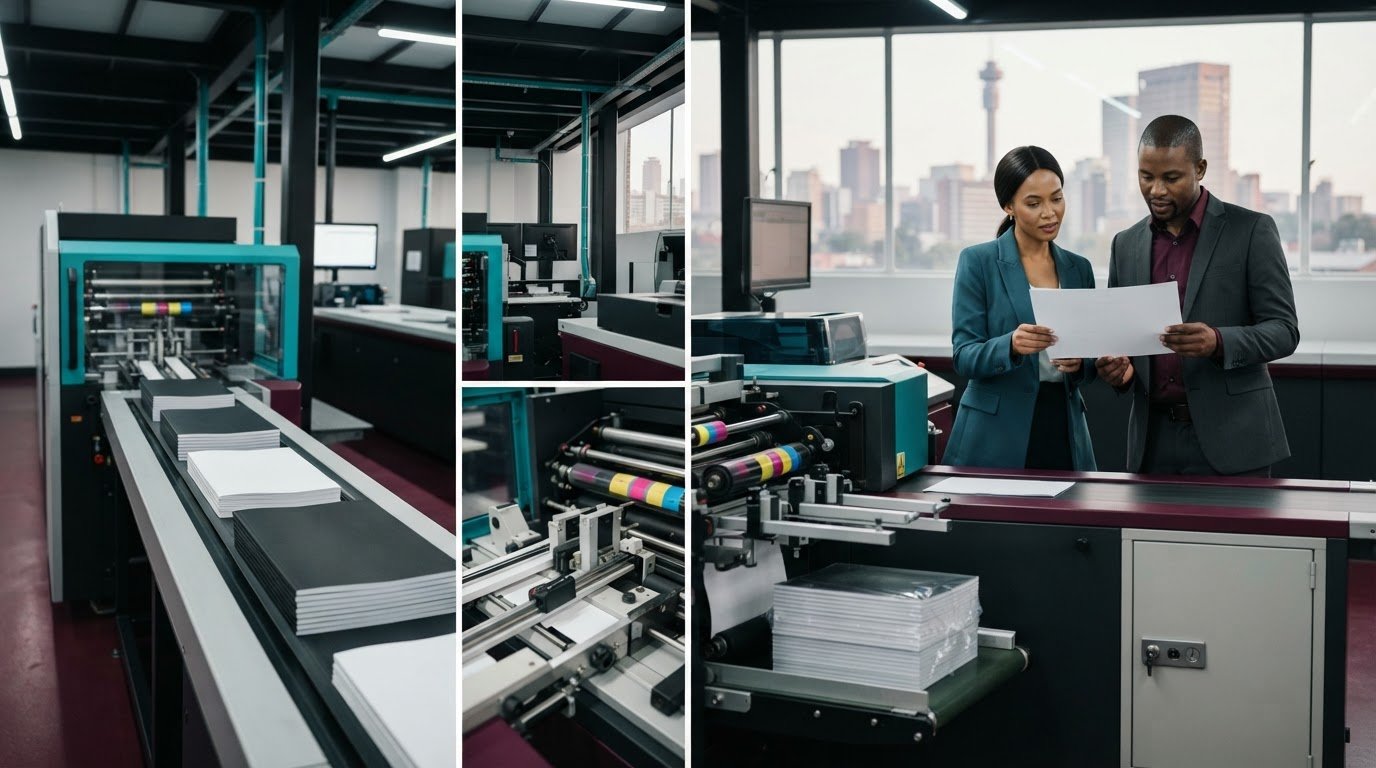
Print It ZA operates around the clock to meet the demands of a fast-paced market. Our 24/7 production facility in Gauteng ensures your brand meets tight deadlines without compromising on eco-conscious values. Choosing local Johannesburg manufacturing is the ultimate sustainability flex. By keeping production within the province, we slash transport emissions and support the regional economy directly. It’s a no-nonsense approach to business that prioritizes the environment while keeping your supply chain lean and responsive.
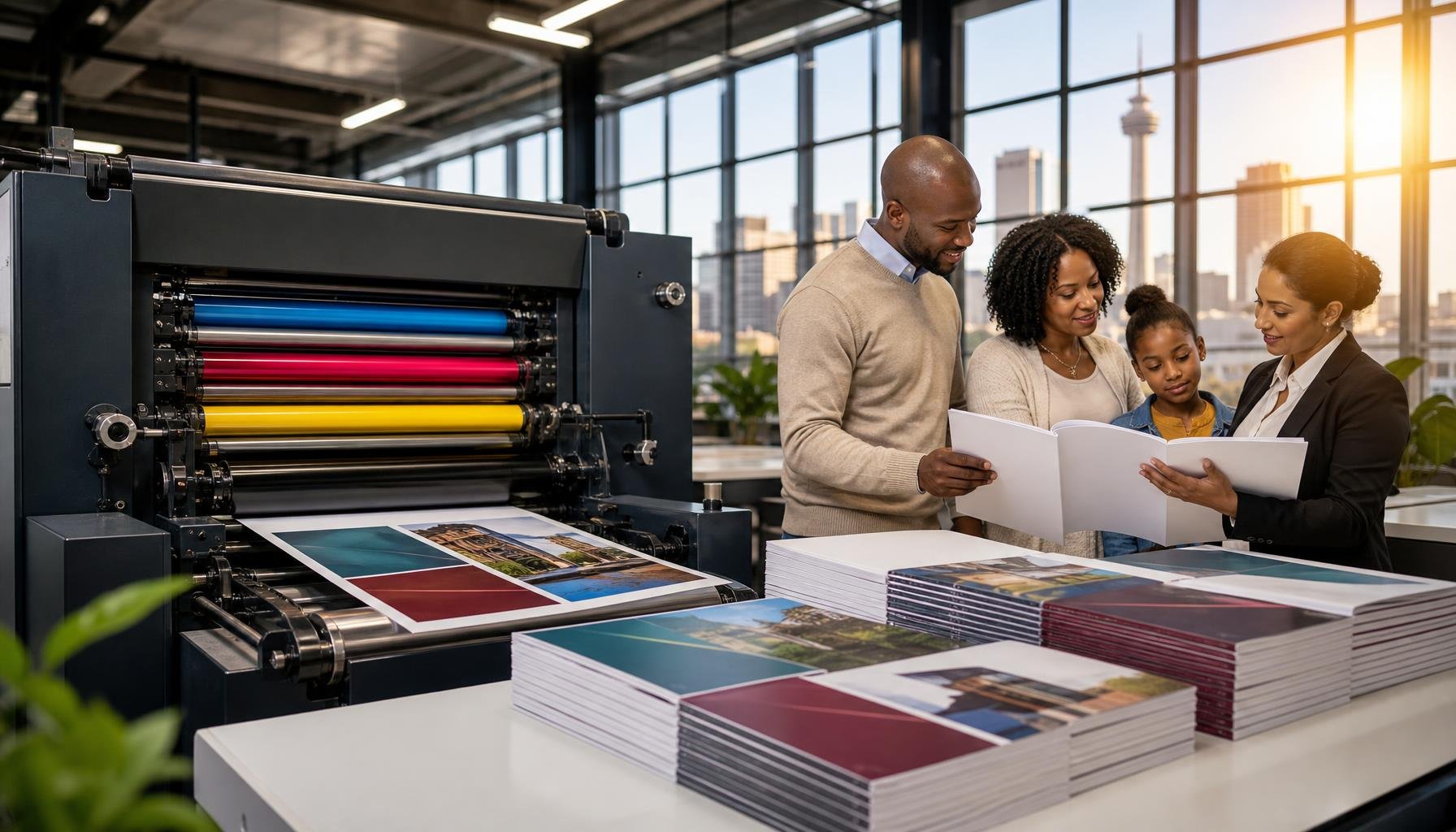
We apply strict green standards to every project that passes through our doors. Whether you need vibrant brochures or premium retail boxes, we use materials that respect the planet. Finding reliable eco friendly packaging south africa can trust means looking at the entire lifecycle of the product. We’ve helped hundreds of local businesses transition to greener materials, proving that high-quality results and environmental responsibility go hand in hand.
- 24/7 production capacity for rapid turnaround times.
- Locally sourced materials that reduce carbon footprints.
- High-energy, tech-savvy team dedicated to quality control.
- Scalable solutions for startups and established corporations.
Our In-House Design and Prototyping
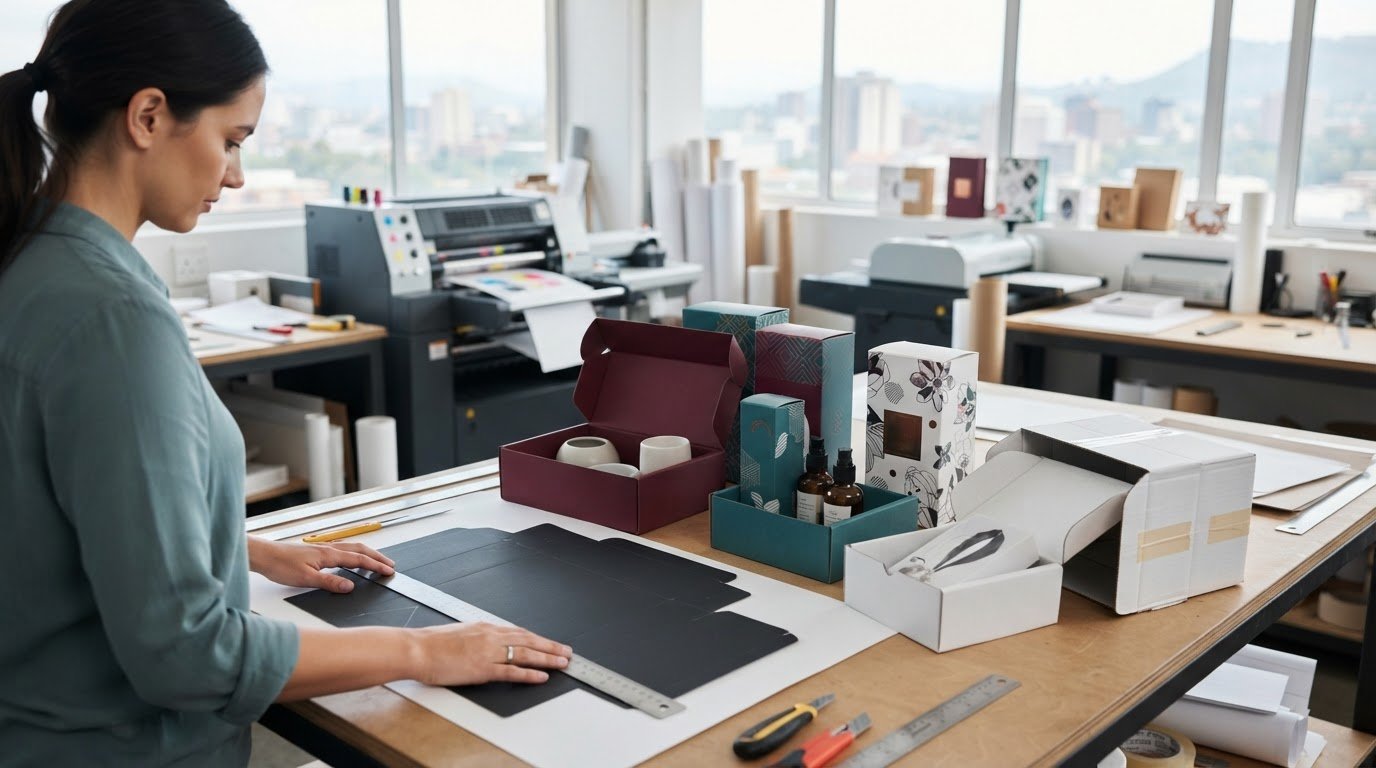
Waste reduction starts on the screen. We use digital prototypes to perfect your design before a single sheet of cardstock is cut. This precision saves thousands of kilograms of paper waste annually. Our bespoke die-cutting techniques allow for unique, glue-free retail solutions. These interlocking designs are 100% recyclable and easy for your customers to dispose of responsibly. From our Gauteng hub, we manage seamless distribution for national retail chains and international exporters who demand sustainable excellence.
Partnering for a Greener South Africa
We bring a “can-do” attitude to every complex request. If you have a vision for a unique sustainable box or a carbon-neutral catalog, we find the way to make it happen. We take pride in supporting South African self-publishers and small businesses by offering affordable, eco-friendly book printing. This gives independent creators a professional edge without the heavy environmental toll. You don’t have to be a massive corporation to make a positive impact on the world. Our team acts as your creative partner, assisting you in achieving a professional result that aligns with your ethics.
Lead the Green Revolution in Johannesburg
Choosing the right materials and inks defines your brand’s environmental footprint in 2026. Joburg businesses are moving away from single-use plastics toward compostable alternatives and soy-based inks to meet rising consumer demand. By adopting eco friendly packaging south africa, you’re not just following a trend; you’re building long-term brand loyalty. Quality remains non-negotiable. Your packaging should reflect a premium feel while staying sustainable.
Print It ZA supports your transition with a 24/7 operational facility right here in Gauteng. We specialize in high-volume litho and digital printing, ensuring your large-scale orders meet strict deadlines every time. Whether you need nationwide delivery or international shipping, our team handles the logistics so you can focus on growth. It’s time to elevate your brand with solutions that respect the planet and your bottom line. We’re ready to help you make the switch today.
Request a Bespoke Eco-Friendly Packaging Quote and let’s start your sustainable journey together.
Frequently Asked Questions
Is eco-friendly packaging more expensive in South Africa?
The price gap is closing fast as local demand increases. While sustainable materials once carried a 25% premium, 2024 industry data shows the cost difference has dropped to between 5% and 12% for bulk orders in Gauteng. You often save money in the long run by avoiding future plastic taxes and reducing waste management levies. We help you choose the right grammage to keep your budget on track while going green.
Can I get high-quality colour printing on recycled paper?
You get vibrant, premium results on recycled stocks that look just as sharp as virgin paper. Modern digital and litho printing technologies ensure that 100% post-consumer waste paper holds ink beautifully without bleeding. Colors remain professional and punchy. We often recommend a slightly higher grammage for a luxury feel. Your brand won’t lose its visual impact just because you’ve chosen eco friendly packaging south africa.
What is the most sustainable packaging for e-commerce in Johannesburg?
Corrugated cardboard boxes with at least 70% recycled content are the most sustainable choice for Joburg e-commerce brands. These boxes provide excellent protection for local shipping and are 100% recyclable through South African municipal programs. Using FSC-certified materials ensures your shipping process remains carbon-neutral. It’s a seamless way to show your customers you care about the environment while ensuring your goods arrive safely.
Are biodegradable plastic bags really eco-friendly?
Biodegradable bags only break down effectively if they reach industrial composting facilities. If these bags end up in a standard South African landfill, they can take years to decompose and might release methane gas. South African standards like SANS 1708 regulate these claims to prevent greenwashing. We suggest switching to paper-based alternatives or reusable bags to ensure a truly positive impact on our local ecosystem.
How does FSC certification work for South African printing?
FSC certification tracks the “chain of custody” from sustainable forests directly to your finished product. It guarantees that the wood used for your paper or cardboard comes from responsibly managed sources that protect biodiversity. When you see the FSC logo on your boxes, it confirms the material was harvested legally and sustainably. We ensure your bespoke packaging meets these vital global environmental standards.
Can Print It ZA help with custom structural design for eco-boxes?
Yes, our team provides full structural design services to create the perfect fit for your specific products. We focus on “right-sizing” your boxes to eliminate excess waste and reduce your shipping costs. This bespoke approach means you don’t need plastic fillers or bubble wrap to keep items secure. Just share your dimensions and we’ll craft a secure, eco-friendly solution that’s ready for the retail shelf.
What is the turnaround time for sustainable packaging in Gauteng?
Our standard turnaround for eco-friendly packaging in Gauteng is 5 to 7 business days once you approve the artwork. We pride ourselves on being a fast and reliable local partner for businesses of all sizes. If you have a tight deadline for a product launch in Johannesburg, let us know immediately. We always aim for a quick, seamless delivery to keep your business moving forward without delays.
Do soy-based inks smudge more than traditional inks?
Soy-based inks are incredibly durable and don’t smudge more than traditional petroleum-based options. They actually produce brighter, more vibrant colors because soy oil is naturally clearer than mineral oils. These inks make the recycling process much easier since they’re removed more efficiently during de-inking. It’s a high-quality choice for brands looking for eco friendly packaging south africa without compromising on a premium finish.