The most eye-catching box isn’t always the right one for your product. Choosing custom printed retail boxes means balancing fit, protection and brand presentation, while making sure the design can move smoothly into production.
If you’re deciding on a box format, dimensions or artwork layout, start by clarifying what the packaging needs to do. A useful brief covers the product, how it will be displayed and handled, what shoppers should notice first, and where the finished packaging needs to go. Comparing print options and coordinating design with production can feel like a lot to manage, but working through these decisions in order makes the project easier to shape.
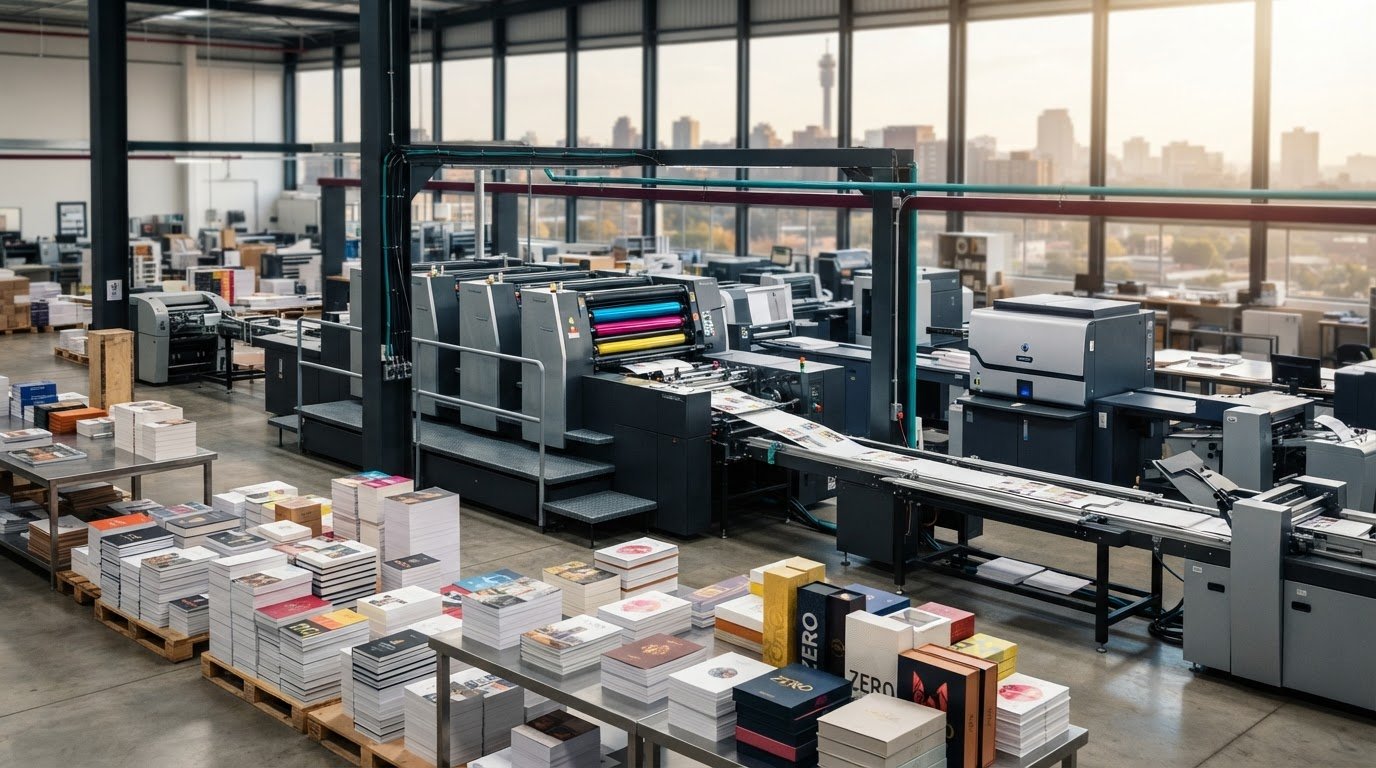
This guide explains how to define your product and retail needs, prepare artwork for review, and compare production approaches. Print It ZA’s in-house design team supports projects from creative development through production. Prototyping and die-cutting help translate packaging concepts into practical designs, while lithographic and digital printing provide options to consider for the project. For businesses in Gauteng and Johannesburg, Print It ZA offers a local partner for developing retail packaging, with nationwide delivery also available.
Key Takeaways
- Start your box brief with the product’s measurements, how it will be used and the brand impression you want to create.
- Use custom printed retail boxes to bring product presentation and brand identity together at the point of sale.
- Compare digital and lithographic printing in relation to your project’s scale, design complexity and required output.
- Review the structure and artwork during development so key decisions are made before production begins.
- Prototyping and die-cutting can help translate a packaging concept into a practical box design.
Why custom printed retail boxes matter at the point of sale
On a busy shelf, packaging needs to hold the product appropriately and help shoppers recognise the brand at a glance. A box has a practical role, but it also shapes how the product appears beside competing items. If its size, structure or design feels disconnected from the product, the display can look less considered and the brand may be harder to identify.
Plan custom printed retail boxes around both the item and where customers will encounter it. A well-considered box can present the product neatly, support routine handling and create a consistent look across a range. For example, a retailer displaying several products from one brand can use shared visual cues to make them feel connected, while distinct product names or images help shoppers tell them apart.
Retail packaging isn’t simply a smaller version of shipping packaging. Shipping packaging is generally focused on moving goods between locations; a retail box also needs to work as part of the product’s presentation in store. The Packaging and labeling overview describes packaging’s broader roles in marketing and logistics. For a retail project, focus on how the box will look, be handled and fit its selling environment.
What makes a retail box custom printed?
Custom printing uses artwork created for a particular brand or product, rather than generic packaging. Printed panels can carry a logo, product name, imagery and relevant product information. Their arrangement creates a visual hierarchy: shoppers should be able to notice the brand and understand what the product is without having to study every panel. The design needs to work with the box’s structure, not just look appealing on screen.
That connection matters. A panel that folds out of sight or leaves too little room for key information may not serve the design as intended. Identify the surfaces most visible on the shelf, then decide what shoppers should notice first. Prioritising the brand, product name and essential information helps keep the artwork clear and the presentation coherent.
When does bespoke packaging make sense?
Bespoke packaging can suit a retailer launching a product, refining an existing range or building a more recognisable brand presence. Rather than placing a product in generic packaging, a business can develop a box around its identity and the way customers encounter the item. The goal isn’t decoration for its own sake. It’s a considered match between product, presentation and practical use.
Start with the actual retail setting. Will the box sit upright, be stacked or be viewed mainly from one direction? How will staff handle it, and what should customers understand quickly? The right solution depends on the product’s dimensions, retail context and brand objectives. Answering these questions at the outset gives the design a clear purpose and helps the packaging feel intentional, both as a single box and as part of the wider shelf display.
How to brief custom printed retail boxes: dimensions, structure and artwork
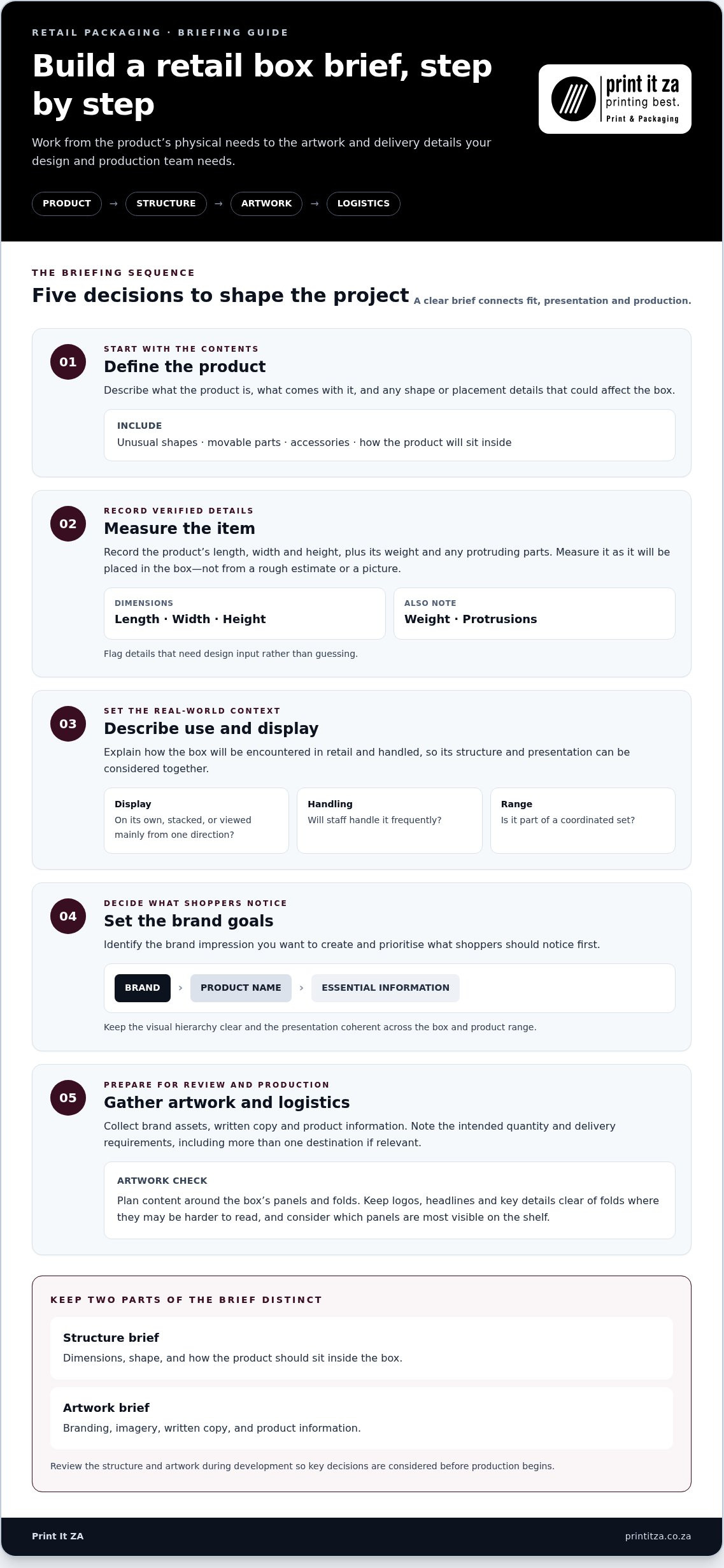
A useful brief turns a packaging idea into decisions a design and production team can work with. Start with the product, then record how it will be packed, displayed and handled. Keep the physical requirements separate from the visual goals: structure determines how the product sits inside, while artwork shapes what customers see and read.
Build your brief in this order:
- Define the product. Describe what it is, what comes with it and any shape or placement details that could affect the box.
- Measure it. Record its length, width and height, plus its weight and any protruding parts or accessories.
- Describe its use. Note whether the box will be displayed on its own, handled frequently or presented as part of a set.
- Set brand goals. Identify the logo, product details and brand impression that should be most noticeable.
- Prepare artwork and logistics. Gather brand assets and copy, and note the intended quantity and delivery requirements.
Which product and box details belong in the brief?
Measure the product as it will be placed in the box, not from a rough estimate or a picture. If it has an unusual shape, movable parts or accessories, describe those too. This information helps inform the box’s dimensions and structure, including the space needed to position the product appropriately. Avoid guessing measurements. Record what you can verify and flag details that need design input.
Then explain the retail setting. A box that sits beside similar products may need a different layout from one displayed as part of a coordinated set. Include the intended quantity and delivery destination so these practical requirements are considered from the start. If the packaging is going to more than one location, include that in the brief as well.
How should artwork be prepared for a printed box?
Plan artwork around the box’s panels and folds. A logo, headline or key product detail placed across a fold may be harder to read, so consider which information belongs on each visible panel. Keep brand assets, written copy and product information organised in your working files. This makes it easier to review each element for accuracy and confirm that the visual hierarchy supports the product.
Keep the structural design brief distinct from the artwork brief. One describes dimensions, shape and how the item should sit; the other covers branding, imagery and information. Print It ZA’s in-house design team can support packaging artwork development alongside the structure. A complete brief should state the product’s verified dimensions and weight, its use and retail setting, structural needs, brand goals, artwork assets, quantity and delivery requirements.
If you’re developing custom printed retail boxes, bringing these details together early gives the design process a practical starting point. Print It ZA’s packaging design support can help align the artwork with the box structure.
Compare print and production choices for custom retail boxes
Print method and box construction are connected decisions, not separate boxes to tick. The right approach depends on the project’s scale, design complexity and required output, as well as the structure the packaging needs. Rather than choosing based on one rule, consider how each part of the brief affects the finished box and weigh the trade-offs with the design and production team.
Lithographic or digital printing: what should guide the choice?
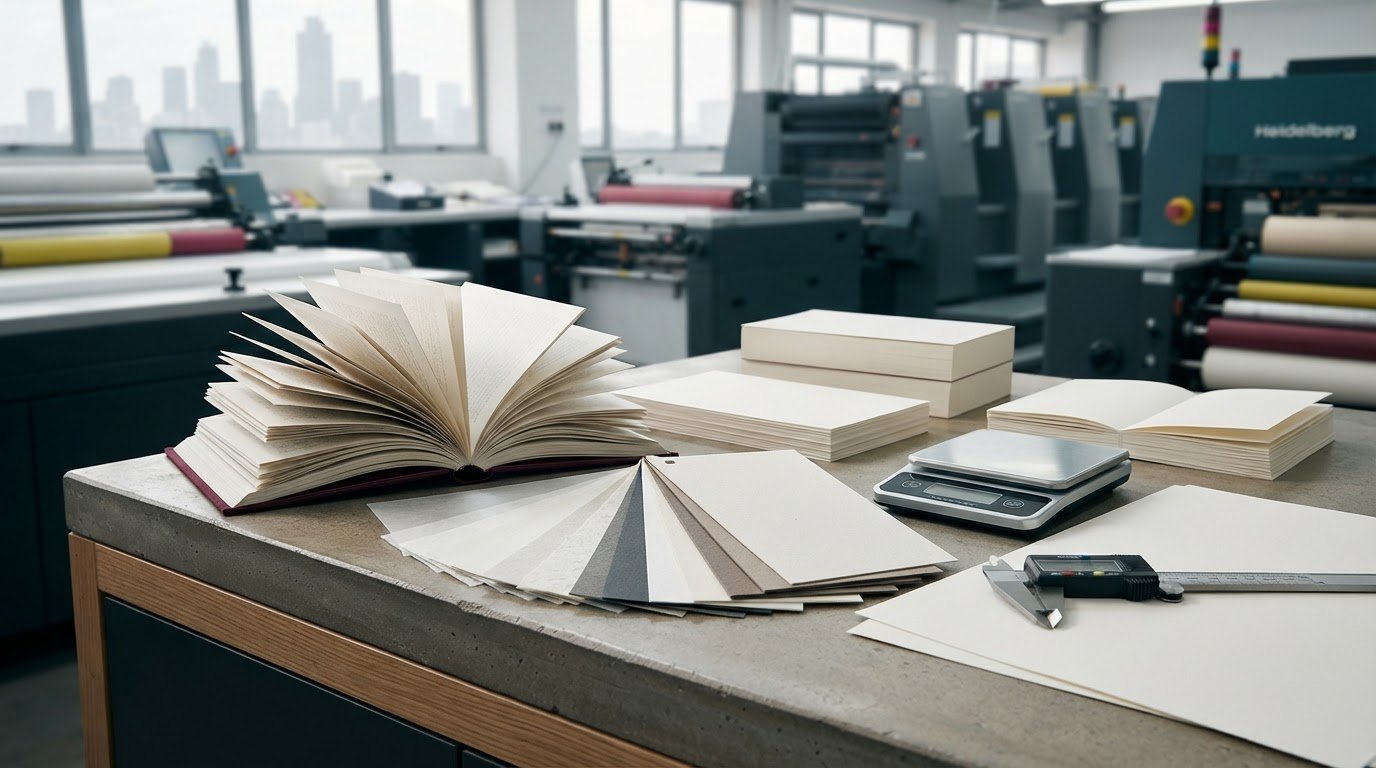
Lithographic printing transfers an image using printing plates, while digital printing works from digital artwork without plates. Both are established approaches, but neither is automatically right for every project. Print It ZA provides both lithographic and digital printing, so the method can be considered in relation to the specific brief instead of treated as a one-size-fits-all decision.
Start with the intended quantity, the complexity of the artwork and the output you need. Then consider production planning: are you preparing one packaging design or coordinating different versions? Do particular details need careful positioning across the box panels? These questions help frame the decision without relying on a universal quantity threshold or assuming one method guarantees a particular result.
| Project consideration | Question for the design and production team |
|---|---|
| Project scale | How does the intended quantity inform the print approach and production plan? |
| Artwork | How will the chosen approach handle the artwork’s layout and level of detail? |
| Output | What should the finished printed panels communicate, and how will they be reviewed? |
| Box structure | How will the design be shaped and checked against the product’s dimensions? |
Compare the answers against your actual requirements. This keeps the decision grounded in the project instead of assumptions about what a print method can or cannot do.
Why do prototypes and die-cutting matter?
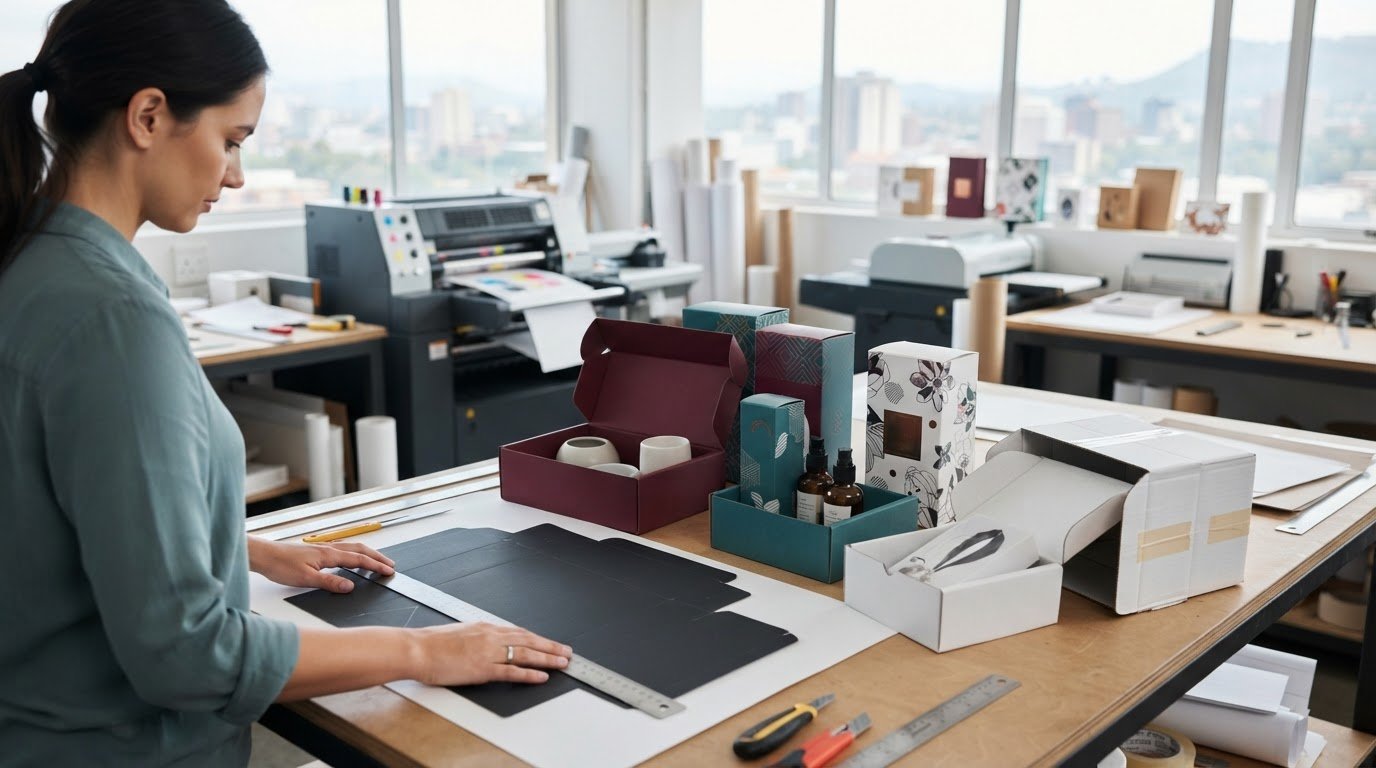
A prototype gives the team a way to review a packaging concept before production. It can help assess the proposed shape, proportions and how the product sits within the box. Use the review to identify design questions while there’s still an opportunity to refine the concept. Decide what needs to be assessed, such as the product’s position or the visibility of key panels, and record feedback clearly.
Die-cutting shapes packaging components to a designed outline. It links the intended structure to the pieces needed to form the box, making it a relevant part of bespoke packaging development. Print It ZA provides prototyping and die-cutting as part of custom packaging design and production.
For custom printed retail boxes, bring print and structure into the same planning conversation. Review how the artwork, box shape and product requirements fit together, then use the team’s input to guide the next development decisions.
Plan a retail-box project from first brief to delivery
A clear project sequence keeps decisions visible as a packaging concept moves towards production. Agree what needs to be resolved at each stage, who will review it and what information must be ready before the next step. This gives everyone a shared reference point and helps reduce avoidable changes later in the process.
- Set the project brief. Describe the product, its intended use, approximate quantity and delivery destination. Establish the main structural requirements and brand objectives before design work begins.
- Develop the design. Align the proposed box structure with the product and agree on the visual direction. Gather input from the people responsible for the product, brand and retail presentation.
- Review the prototype. Assess the concept as a physical box, considering whether its structure suits the product and whether the design works when formed. Collect feedback before moving forward.
- Prepare for production. Confirm the approved artwork, product details and quantity requirements. Resolve outstanding changes before production planning progresses.
- Plan delivery. Provide the destination and distribution requirements, including whether packaging is going to one location or several.
What happens during design development?
Design development brings the product’s practical needs, brand identity and proposed box structure into the same conversation. Artwork must work across the panels and folds, while the structure needs to support the intended presentation. Since a change to one can affect the other, review these elements together rather than treating visuals as a separate final layer.
Print It ZA’s in-house design team supports projects from creative development through production. Collaborative review helps clarify the design direction, surface questions early and move the concept towards production. Businesses organising packaging procurement can also explore the Custom Packaging Manufacturers in Johannesburg guide as a related resource.
How should retailers prepare for production and delivery?
Before production planning, gather the approved artwork, final product details and quantity requirements. Make sure the relevant people have reviewed the version that will be used, so outdated copy or earlier design changes don’t carry forward. For delivery, specify the destination and how the packaging will be distributed after arrival. These details connect production planning to the project’s practical needs.
Print It ZA supports packaging projects from design through final delivery, serving clients locally and nationally. Businesses looking for a broader overview can also read about custom packaging solutions in Johannesburg.
For a retail-box project in Gauteng or Johannesburg, use the brief to bring product details, artwork requirements and delivery plans together. Explore retail-box project support from Print It ZA.
Develop custom printed retail boxes with Print It ZA
A successful packaging project starts with the product, then brings its structure, artwork and production choices into alignment. Each decision affects the next: the product informs the box design, the structure shapes the artwork layout, and the brief helps guide production planning. Keeping these elements connected makes it easier to develop packaging that serves a clear purpose for your brand and retail setting.
Print It ZA supports custom packaging projects from creative development through production and final delivery. Its in-house design team works on packaging design alongside lithographic and digital printing, prototyping and die-cutting. For businesses in Gauteng and Johannesburg, this offers a local route from an initial concept to a developed packaging solution, with design decisions considered in relation to the product rather than in isolation.
What can Print It ZA support on a packaging project?
Support can begin with your product requirements and brand goals, then develop into a packaging design and production plan. The design team can bring the visual direction and box structure together, while prototyping and die-cutting form part of bespoke packaging development. Print It ZA’s printing options include lithographic and digital approaches, with the choice considered in the context of the project’s needs.
This joined-up process is useful when several details need to work together, such as how the product is positioned, what the box needs to communicate and how the artwork relates to its panels. You don’t need to have every design decision resolved before starting the project. A clear description of your product and objectives gives the team a practical starting point.
What should you prepare before requesting a project discussion?
Gather the information that will help the team understand what you’re aiming to produce. A concise brief can include:
- Product dimensions, weight and any shape or placement considerations.
- How the packaging will be used and where it will be displayed.
- Brand assets, artwork, copy and product information available so far.
- The approximate quantity required for the project.
- The intended retail setting, delivery destination and distribution needs.
These details connect the packaging concept to practical project requirements. If some artwork is still in development, explain what’s ready and what still needs creative input. That gives the design conversation a clear focus and helps identify the decisions to resolve as the project moves forward.
Print It ZA is a South African printing and packaging partner serving clients locally and nationally. If you’re planning custom printed retail boxes, share your product details, brand goals, approximate quantity and delivery needs with the team. Get in touch with Print It ZA to discuss your retail-box project and share your brief.
Make your next packaging decision count
Packaging can become part of how customers recognise your brand, not just a container for a product. As your range develops, consider how each new box will sit alongside existing products and whether the overall presentation still feels consistent. A clear design direction can give future packaging decisions a useful reference point.
Turn your preferred direction into a starting brief. Bring together what you know about the product, the look you want to achieve and the practical needs of the project. You don’t need every detail finalised before starting the conversation. A focused discussion can help shape the next decisions around your goals.
Ready to develop custom printed retail boxes for your brand? Discuss your custom printed retail box project with Print It ZA and take the first step towards packaging designed around your product and retail ambitions.
Frequently Asked Questions
What information should I provide for custom printed retail boxes?
Provide the product’s dimensions, intended use, brand assets, required copy and approximate quantity. If the product is sold with accessories, note which items need to sit inside the box and whether they’re always included. Include the retail setting too, such as a shelf display or counter presentation. If some copy or artwork is still being developed, identify what’s final and what may change.
Can custom printed retail boxes be designed around my product?
Yes. A bespoke design can be developed with your product’s shape, use and brand requirements in mind. For example, if you sell a product with a separate component, describe how the parts should be presented together. Print It ZA’s in-house design team supports custom packaging design and production. Its Gauteng and Johannesburg focus makes it a local option for businesses developing retail packaging in the area.
How do I choose between digital and lithographic printing for retail boxes?
Compare the approaches against your project’s scale, artwork needs and production requirements. Describe whether you need one design or several versions, and whether those versions share the same core artwork. Print It ZA provides both digital and lithographic printing. These details give the team a clear basis for considering an approach suited to your project.
What happens if my box artwork does not fit the packaging design?
The artwork can be reviewed alongside the packaging structure so any needed adjustments are identified before production planning progresses. One practical check is to mark which copy or visual elements must stay together, then review their placement in the proposed layout. If product information changes during development, flag the update clearly so the latest wording is considered in the design review.
Can I review a prototype before custom retail boxes are produced?
Prototyping can form part of bespoke packaging development, giving you an opportunity to review the concept before production. Use that review to consider whether the proposed shape reflects the intended presentation and how the product is positioned in the concept. Bring feedback together in one set of notes so the design team has a clear record of changes to consider.
Does Print It ZA deliver custom printed retail packaging across South Africa?
Yes. Print It ZA serves clients locally and provides nationwide delivery. For a project in Gauteng or Johannesburg, share the destination and whether the packaging is intended for one site or distribution to several locations. Include relevant delivery requirements with your project details so the team can plan how the finished packaging needs to reach its destination.
How much do custom printed retail boxes cost?
There isn’t one figure that describes every custom box project. The scope depends on details such as the packaging concept, artwork requirements, quantity and production needs. To make the project discussion more useful, prepare an approximate quantity and explain what the box needs to achieve. You can also note which parts of the artwork or design are ready and which still need development.