What Defines a Premium Coffee Table Book in 2026?
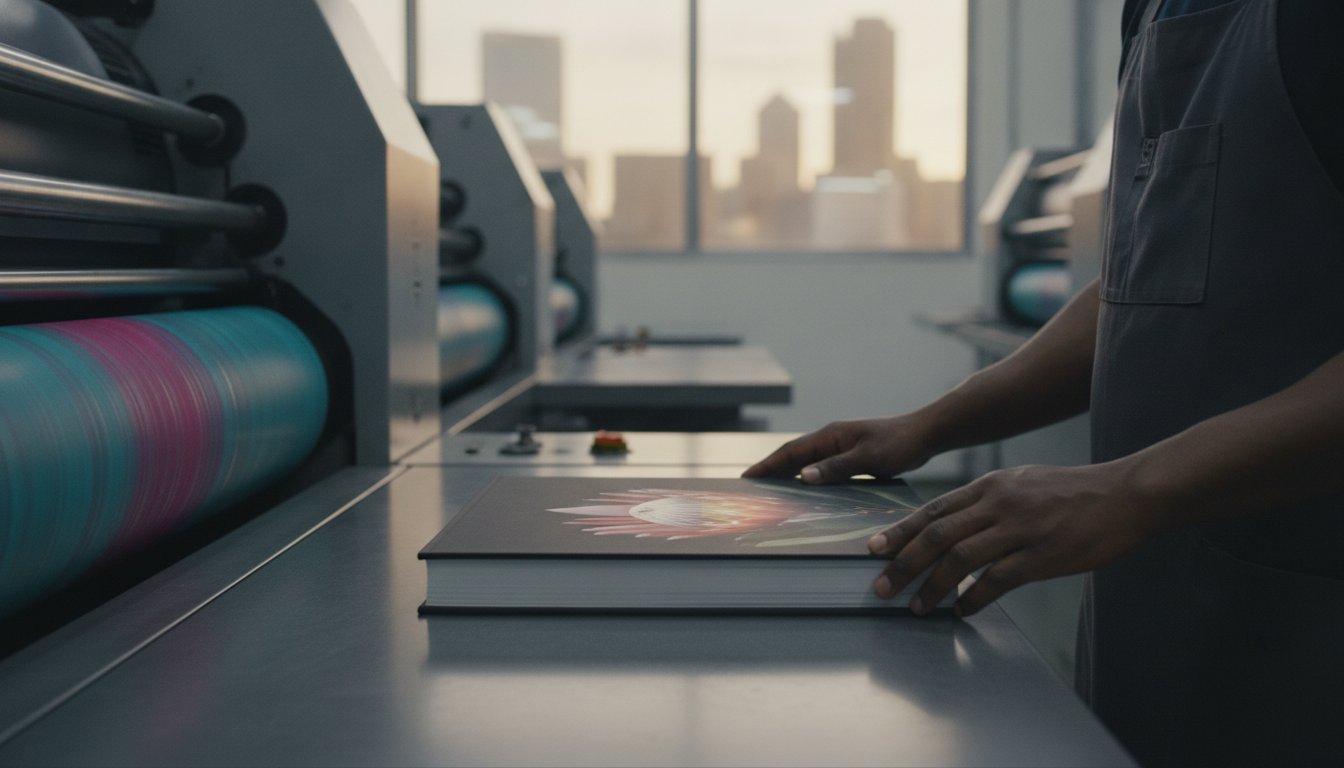
In an increasingly digital world, a Coffee table book is more than just a collection of images; it is a physical statement of quality, a piece of art, and a powerful branding tool. By definition, it is a large-format, visually-driven book produced with exceptional quality, designed for display and to tell a compelling story. The tactile experience of turning its heavy pages offers a welcome escape from the fleeting nature of online content, making it a permanent fixture in homes, offices, and waiting rooms.
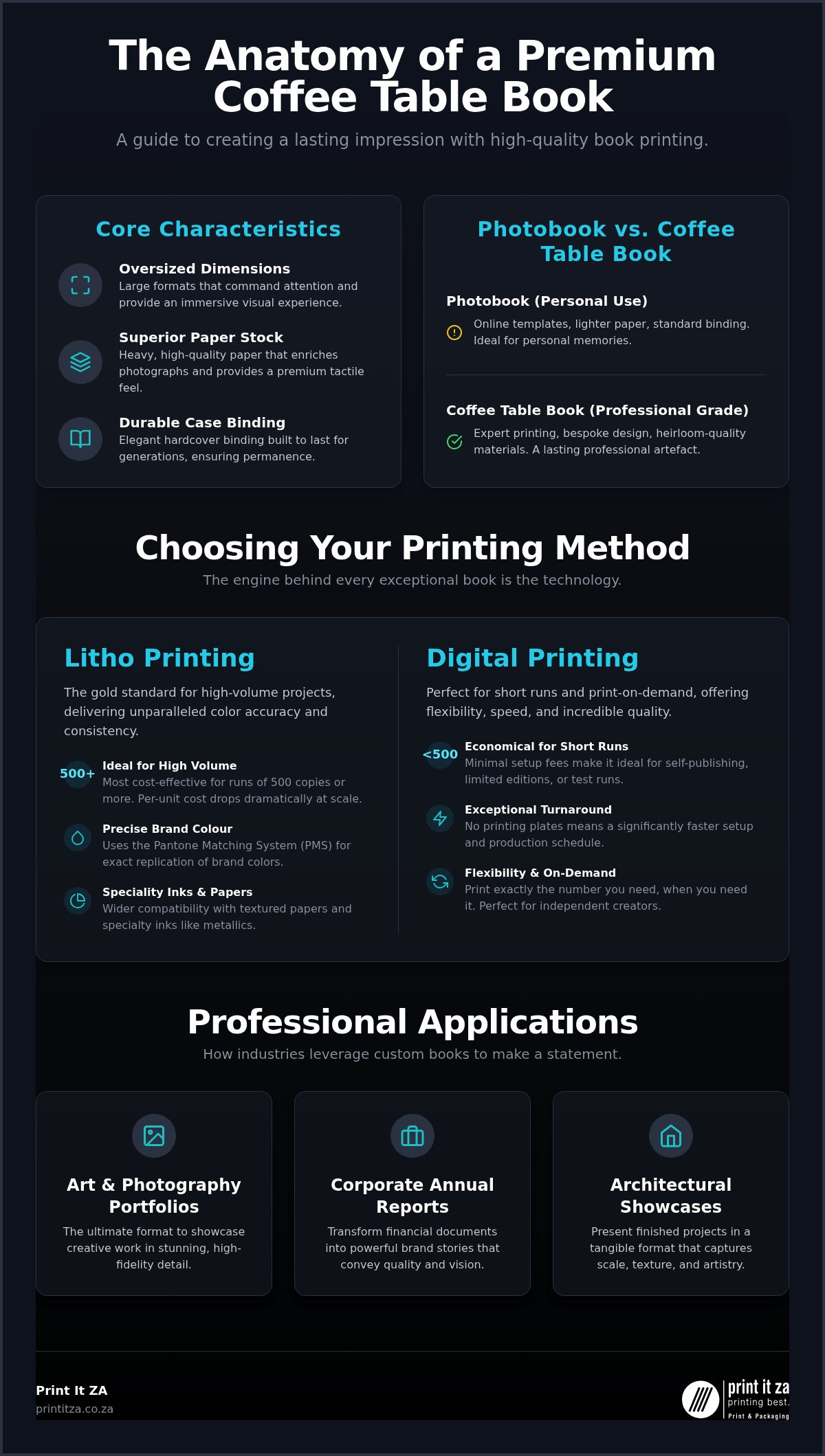
- Core Characteristics: The hallmarks of a premium coffee table book include oversized dimensions that command attention, superior paper stock that enriches every photograph, and durable, elegant case binding (hardcover) built to last for generations.
- The 2026 Shift: Today, brands and artists use these books as a form of "tactile branding." In a world saturated with digital ads, a beautifully crafted book offers a tangible connection, conveying a message of permanence, quality, and investment.
- The Local Advantage: South African authors, photographers, and corporations are increasingly choosing local production. This decision supports the national economy, reduces the carbon footprint associated with international shipping, and allows for closer collaboration with the printing partner, ensuring the final product perfectly matches the creative vision.
The Difference Between Photobooks and Coffee Table Books
While often used interchangeably, these two formats serve very different purposes. Understanding the distinction is crucial for aligning your project with the right production process and achieving your desired outcome.
- Photobooks: Typically created using online templates and digital-only printing, photobooks are ideal for personal memories like holidays or family events. They often use lighter paper stocks and standard binding methods, making them a more casual and cost-effective option.
- Coffee Table Books: These are professional-grade publications. They demand expert lithographic or high-end digital printing, bespoke design layouts, and heirloom-quality materials. The focus is on creating a lasting artefact that reflects professional standards.
- Choosing Your Format: Consider your goals. If you are documenting personal memories for a small audience, a photobook is suitable. If you are a self-publishing author, a professional photographer, or a brand aiming to create a legacy piece, investing in professional coffee table book printing in South Africa is essential.
Common Uses for Custom Book Printing in SA
The versatility of the coffee table book format makes it a valuable asset for a wide range of professional applications across South Africa. These books serve as powerful communication tools that leave a lasting impression.
- Art and Photography Portfolios: For artists and photographers, a coffee table book is the ultimate portfolio, showcasing the breathtaking landscapes, diverse cultures, and vibrant wildlife of South Africa in stunning detail.
- Premium Corporate Annual Reports: Forward-thinking companies are transforming their annual reports from simple financial documents into beautifully designed books that tell the story of their brand, vision, and achievements throughout the year.
- Architectural and Interior Design Showcases: Professionals in the design industry use bespoke books to present their finished projects, capturing the scale, texture, and artistry of their work in a format that clients can physically engage with.
Choosing Your Printing Method: Litho vs. Digital
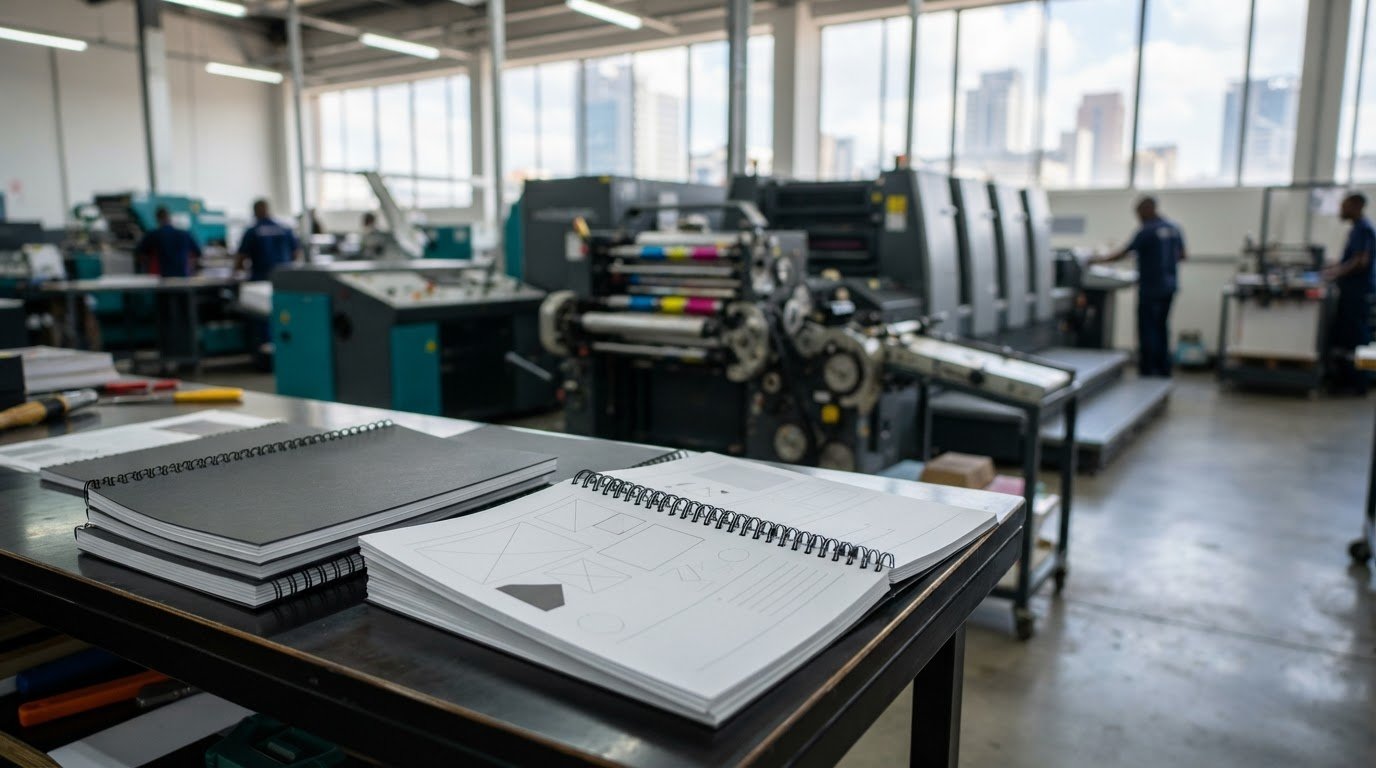
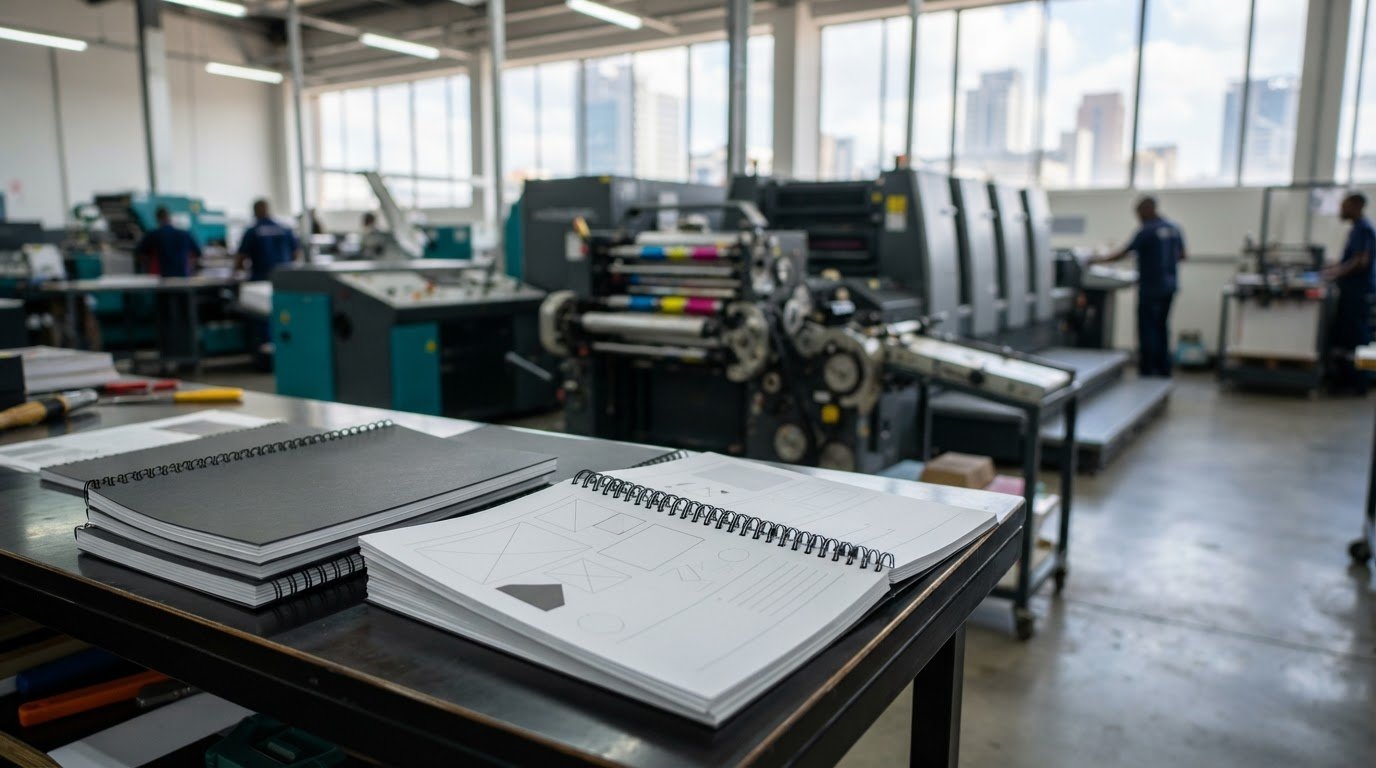
The engine behind every exceptional coffee table book is the printing technology. The choice between lithographic (litho) and digital printing depends entirely on your project’s volume, budget, and specific quality requirements. At our state-of-the-art facility in Gauteng, we are equipped to handle both technologies with a continuous production schedule, ensuring efficiency and excellence for any project size.
- Litho Printing: Considered the gold standard for high-volume projects (typically 500+ copies), litho printing uses plates to transfer ink onto paper. This method delivers unparalleled colour accuracy, depth, and consistency, making it the only choice for large-scale retail or corporate distribution.
- Digital Printing: This technology prints directly from digital files, making it perfect for short runs, self-publishing projects, and print-on-demand models. Modern digital presses offer incredible quality that rivals litho for smaller quantities, providing flexibility and speed.
- Cost-Efficiency Analysis: While digital printing has a higher per-unit cost, it has minimal setup fees, making it economical for runs under 500 copies. Litho printing has significant setup costs but a much lower per-unit cost on large runs, offering substantial savings at scale. We help you determine the exact break-even point for your project.
When to Choose High-Volume Litho
For projects where scale and absolute consistency are paramount, lithographic printing is the superior choice. Its technical advantages are essential for professional-grade publications intended for a wide audience.
- Brand Colour Consistency: Litho printing uses the Pantone Matching System (PMS), allowing for the precise replication of brand colours across thousands of copies—a critical requirement for corporate projects.
- Lower Per-Unit Cost: Once the initial setup is complete, the cost per book drops dramatically, making litho the most financially viable option for commercial print runs destined for retail.
- Specialised Inks and Papers: This method offers a broader selection of specialised inks (like metallics) and is compatible with a wider range of textured and high-grammage paper stocks.
The Benefits of Modern Digital Book Printing
Digital printing has revolutionised the industry, empowering independent creators and businesses to produce professional-quality books without the need for large print runs. It offers a unique combination of speed, flexibility, and quality.
- Exceptional Turnaround Times: With no plates to create, the setup process is significantly faster, allowing for quicker production schedules to meet tight deadlines for book launches or events.
- Flexibility for Limited Editions: Digital printing is ideal for producing limited edition runs, personalised copies (variable data printing), or proofs before committing to a larger litho run.
- Reduced Inventory and Waste: The ability to print on demand means you only produce what you need, eliminating the costs and environmental impact of storing and potentially discarding unsold inventory.
Premium Materials: Paper, Covers, and Binding
The look and feel of a coffee table book are defined by its physical components. The right combination of paper, cover materials, and binding techniques transforms a simple printed product into a luxurious object. Selecting these elements carefully is key to achieving a truly premium result.
- Selecting the Right GSM: Paper weight, measured in grams per square metre (GSM), determines the thickness and feel of your pages. For interior pages, a weight of 170gsm to 200gsm is the "sweet spot," offering a substantial, high-quality feel without being too rigid.
- Coated vs. Uncoated Paper: Coated papers (available in gloss, silk, or matte finishes) provide a smooth surface that makes images sharp and vibrant, ideal for photography. Uncoated paper has a more natural, textured feel, perfect for fine art books or contemporary designs.
- Case Binding (Hardcover): This is the essential binding method for any true coffee table book. The pages are sewn together in sections and then glued into a durable, rigid cover. This technique ensures longevity and allows the book to lay flat when open.
- Specialised Finishes: Elevate your cover design with finishes like spot UV (applying a high-gloss varnish to specific areas), foiling (adding metallic details), or lamination (a protective layer in a gloss or matte finish).
Hardcover vs. Softcover: Making the Right Choice
The binding is the backbone of your book, both literally and figuratively. While coffee table books are traditionally hardcover, understanding the benefits of each style helps you make an informed decision based on your project’s purpose and budget. For a deeper look into the specifics, explore our guide to top-quality book printing in Johannesburg & Gauteng.
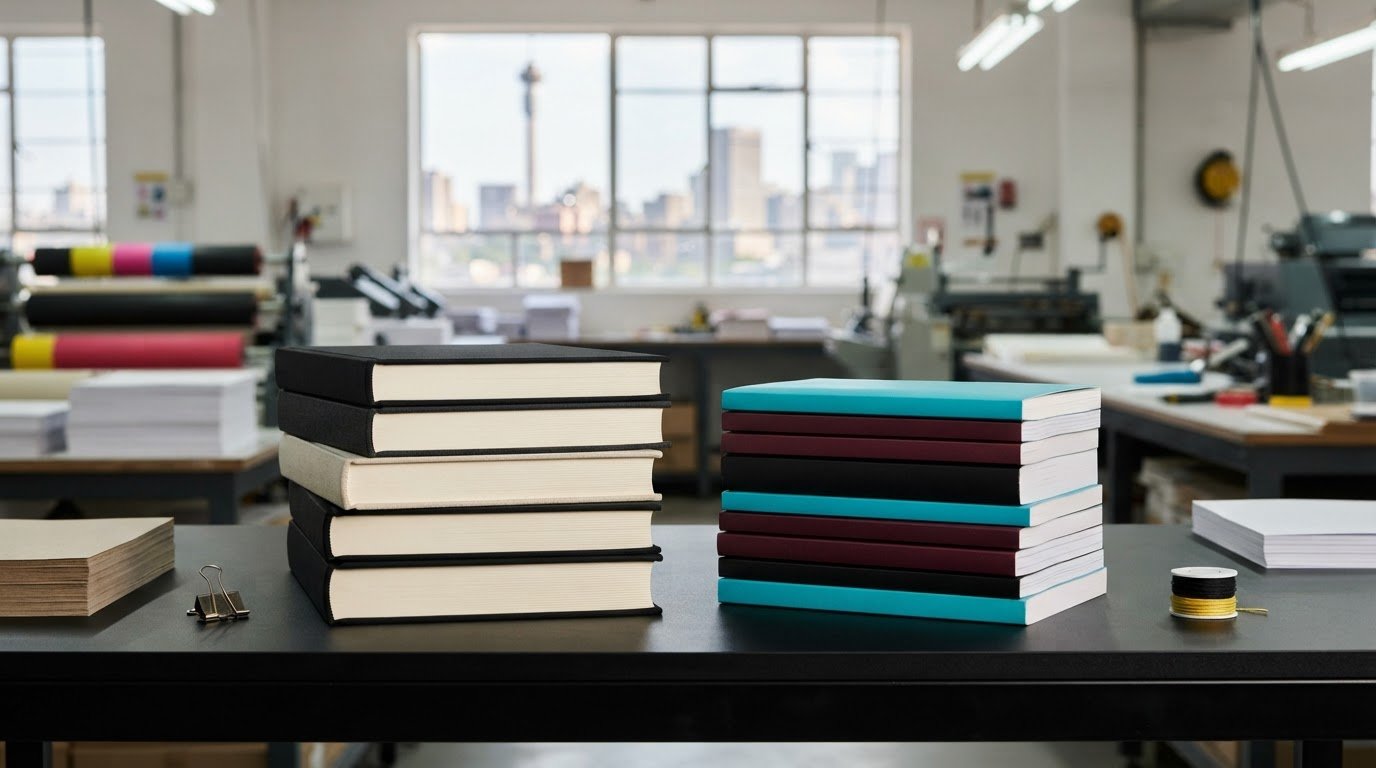
- Hardcover (Case Bound): This method offers superior protection, a significant shelf presence, and a clear signal of premium quality. It is the standard for legacy projects, professional portfolios, and books intended for retail.
- Softcover (Perfect Bound): In this process, pages are glued together at the spine with a strong yet flexible adhesive and attached to a cardstock cover. It offers a more accessible price point and is a popular choice for high-end catalogues, corporate brochures, and art journals.
Tactile Finishes and Embellishments
The details that a reader can touch and feel are what truly set a luxury book apart. These embellishments add a layer of sophistication and create a memorable sensory experience that enhances the visual content within.
- Debossing and Embossing: These techniques create a three-dimensional effect on the cover. Embossing raises a design element, while debossing impresses it into the surface, adding a subtle, high-end texture.
- Wibalin and Cloth Covers: Move beyond standard printed covers with luxury materials. Wibalin is a durable, versatile, and high-quality paper that mimics the look and feel of cloth, while genuine cloth covers offer a timeless, classic appeal.
- Dust Jackets vs. Printed Covers: A dust jacket is a removable paper cover that wraps around the book, offering extra protection and additional space for design and text. Alternatively, a printed-cover-on-board (PCOB) involves printing your design directly onto the paper that is then wrapped around the hardcover.
Preparing Your Design for Professional Printing
A successful print project begins long before the files reach the press. Proper preparation is essential to ensure that your creative vision is translated accurately onto the page. Paying close attention to technical details guarantees a smooth production process and a flawless final product.
- High-Resolution Imagery: All images intended for print must have a resolution of at least 300 DPI (dots per inch) at their final printed size. Anything less will result in a blurry or pixelated result, compromising the quality of your book.
- Bleed and Margin Requirements: Bleed is the area of the artwork that extends beyond the trim edge of the page. A standard 3-5mm bleed ensures that there are no unprinted white edges after trimming. Safe margins are also crucial to prevent important content from being cut off.
- Colour Management (RGB to CMYK): Digital screens use an RGB (Red, Green, Blue) colour model, while printing presses use CMYK (Cyan, Magenta, Yellow, Black). All files must be converted to CMYK to ensure the printed colours are accurate and match your expectations.
- In-House Design Support: Utilising an in-house design team for a final pre-flight check is invaluable. Our experts can spot potential issues with your files, from font problems to incorrect spine calculations, saving you time and money.
Pre-Flight Checklist for Self-Publishers
If you are managing the design process yourself, running through this checklist before submitting your files can prevent common and costly printing errors. This is a vital step for anyone embarking on their publishing journey.
- Font Embedding: Ensure all fonts used in your design are embedded in the final PDF file to prevent them from being substituted with default fonts.
- Spine Width Calculation: The width of your book’s spine is determined by the number of pages and the thickness (GSM) of your chosen paper. This must be calculated precisely for the cover to fit correctly.
- ISBN and Barcode Placement: If your book is for retail, verify that the ISBN and barcode are placed correctly on the back cover according to industry standards and are clear and scannable.
Working with a Creative Partner
You don’t have to navigate the complexities of printing alone. Collaborating with a professional printer from the start can elevate your project from good to exceptional. This partnership ensures technical precision and creative excellence. For authors, our strategic guide to self-publishing printing and distribution in South Africa offers valuable insights into this process.
- Improving Final Quality: Consultations with print experts can help you choose the best materials and finishes to complement your design, often introducing you to options you may not have considered.
- The Importance of Prototyping: For large or complex runs, seeing a physical proof or prototype is non-negotiable. It allows you to check the colour reproduction, paper feel, and overall construction before committing to the full production run.
Why Print It ZA is South Africa’s Preferred Book Partner
Choosing a printer is about more than just equipment; it’s about finding a partner committed to bringing your vision to life. Print It ZA has established itself as a leader in coffee table book printing in South Africa by combining state-of-the-art technology with a deep understanding of our clients’ needs. Our commitment to quality, speed, and service makes us the ideal choice for authors, artists, and businesses across the country.
- Strategic Gauteng Location: The central facility is perfectly positioned for rapid and efficient distribution to the economic hubs of Johannesburg and Pretoria, as well as the rest of the country.
- Rapid Turnaround Times: Our high-capacity operations and streamlined workflow ensure some of the fastest and most reliable turnaround times in the industry, without ever compromising on quality.
- Diverse Expertise: We have extensive experience managing projects for a wide range of clients, from B2B corporate reports and architectural portfolios to B2C self-publishing projects for independent authors.
- Proven Logistical Capabilities: Our track record includes managing complex nationwide logistics and international exports, ensuring your books arrive safely and on time, wherever their destination.
Nationwide Delivery and International Export
A beautifully printed book is only valuable once it reaches its audience. We have built a robust and reliable distribution network to manage the final, critical step of the production process, offering peace of mind and seamless delivery.
- Reliable National Shipping: We manage dependable shipping from our Gauteng hub to all major centres, including Cape Town, Durban, and beyond, ensuring your project is handled professionally from press to doorstep.
- Bulk Distribution Management: For retail-ready projects, we handle the complex logistics of bulk book distribution, coordinating with warehouses and retailers to ensure a smooth supply chain.
- Dedicated Project Support: We provide responsive support for time-sensitive marketing collateral and book launches, understanding that deadlines are non-negotiable.
Sustainable and Local Production
By choosing Print It ZA, you are making a conscious decision to invest in local industry and sustainable practices. We are proud to offer world-class printing solutions that support the South African economy while minimising environmental impact.
- Supporting Local Industry: Local production keeps skills and investment within South Africa and reduces the carbon footprint associated with international freight.
- International Quality, Local Expertise: Our high-quality litho and digital solutions rival those of international boutique printers, offering you global standards with the convenience and collaborative benefits of a local partner.
- Your Creative Partner: We invite you to connect with our team for a consultation to see how we can turn your vision into a reality. Explore our ultimate guide to business printing to learn more about our comprehensive capabilities.
Contact Print It ZA today, for a Free Quote and Speedy Service.
Print It ZA print and packaging, South Africa/ ZA.