Scaling your print run doesn’t automatically slash your unit costs. In fact, committing to high volumes on the wrong press setup often triggers spiralling expenses, delayed rollouts, and wasted stock. When evaluating bulk printing services South Africa businesses trust, commercial success requires far more than chasing the lowest baseline quote. You already know the sting of unboxing a multi-branch shipment only to discover mismatched brand colours across production batches, flimsy binding, or freight delays that derail marketing campaigns across multiple provinces.
You deserve predictable turnaround times, sharp colour fidelity, and rock-solid durability backed by facilities built for round-the-clock production. This guide provides actionable insights to help you master high-volume commercial print procurement with confidence. We’ll examine the operational crossover between heavy litho engineering and high-speed digital presses, break down substrate and finishing options, and reveal how centralised Gauteng manufacturing optimizes logistics to protect your budget and your brand nationwide.
Key Takeaways
- Pinpoint the exact volume tipping points where high-speed sheet-fed litho outpaces digital printing on per-unit costs.
- Select the ideal paper grammages and industrial binding formats to guarantee multi-province durability for catalogues, books, and packaging.
- Avoid costly production reruns with enterprise-grade prepress calibrations, precise bleed tolerances, and Pantone colour profiles.
- Optimise your procurement schedule by leveraging bulk printing services South Africa enterprises rely on for continuous 24/7 manufacturing and streamlined freight.
- Vet long-term print partners using objective criteria centered on round-the-clock machine redundancy, end-to-end binding, and freight reliability.
What Defines Bulk Printing Services in South Africa?
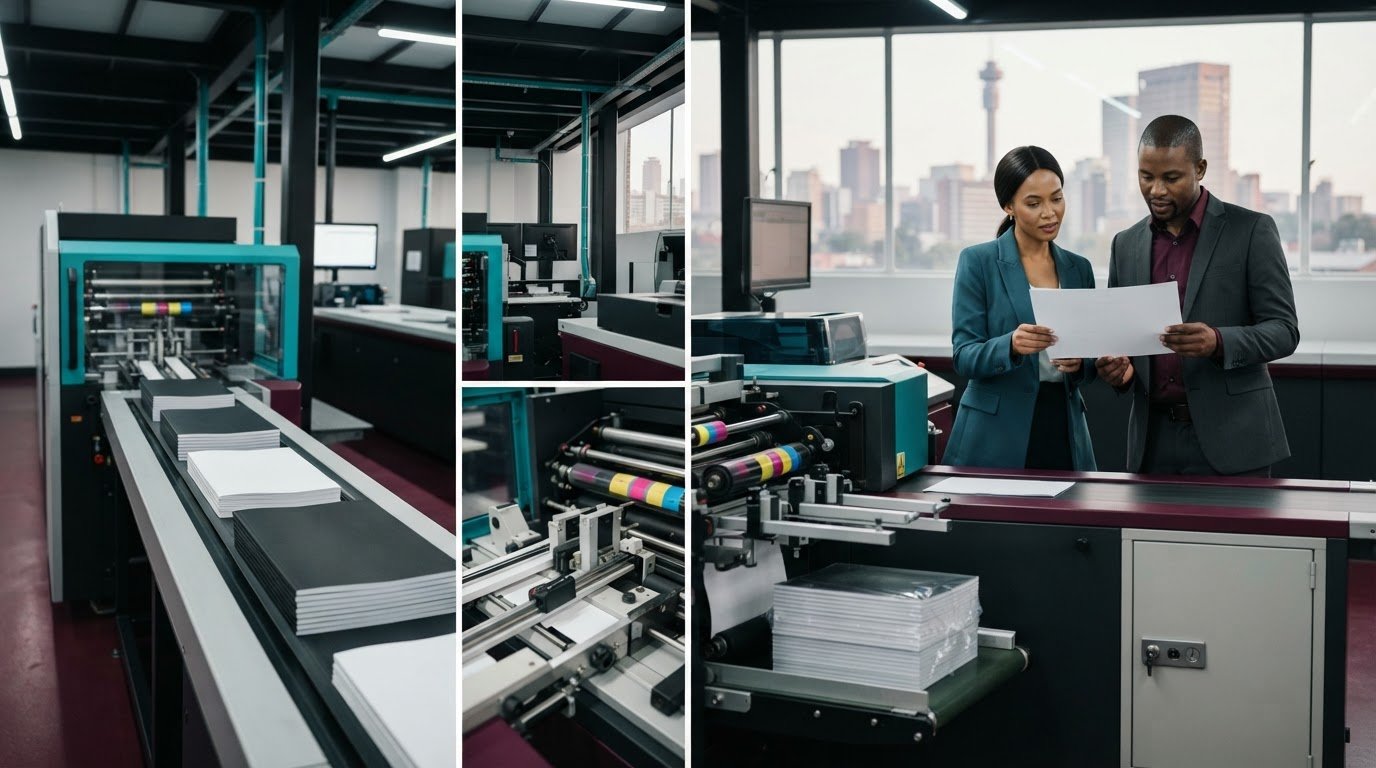
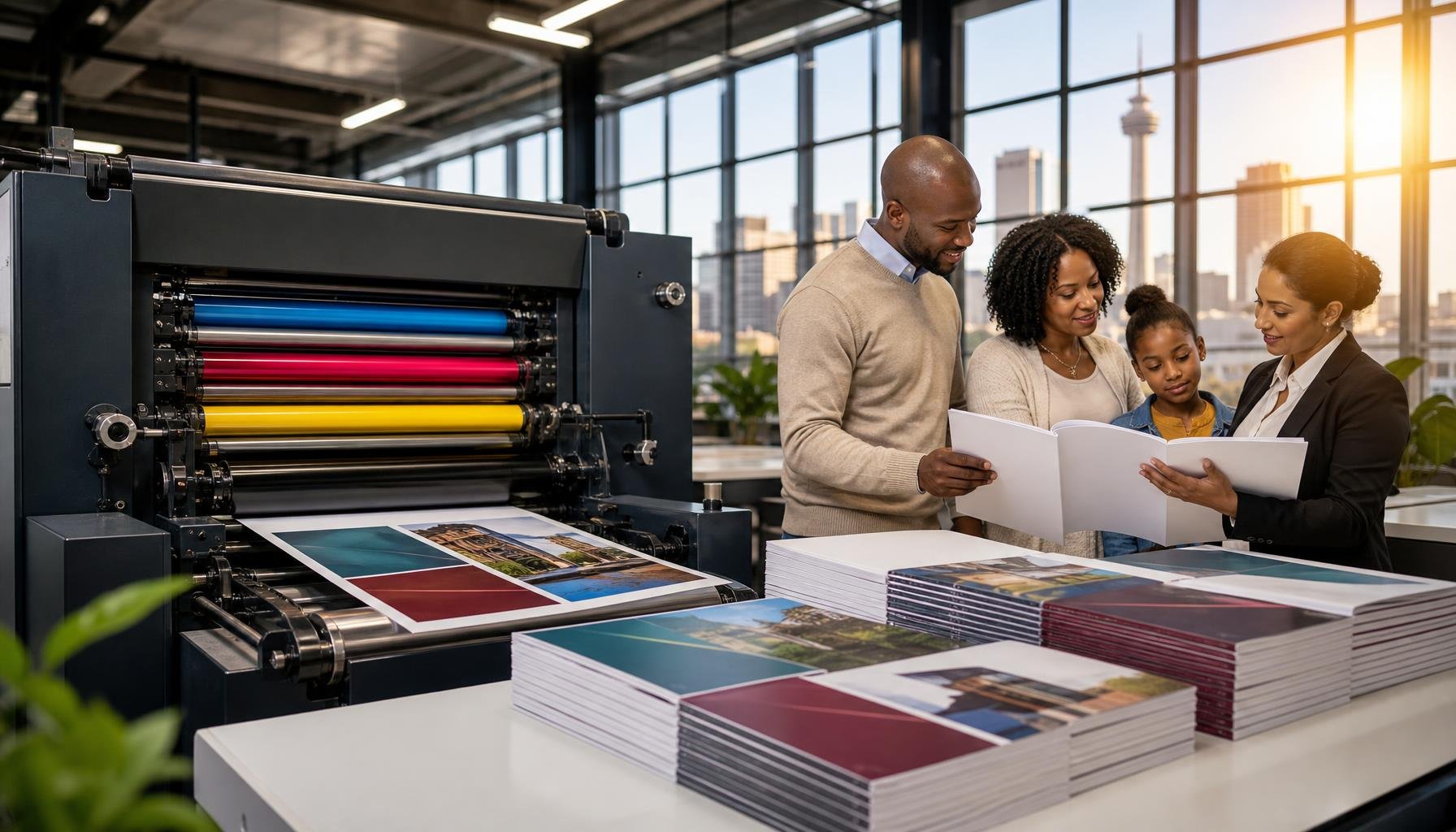
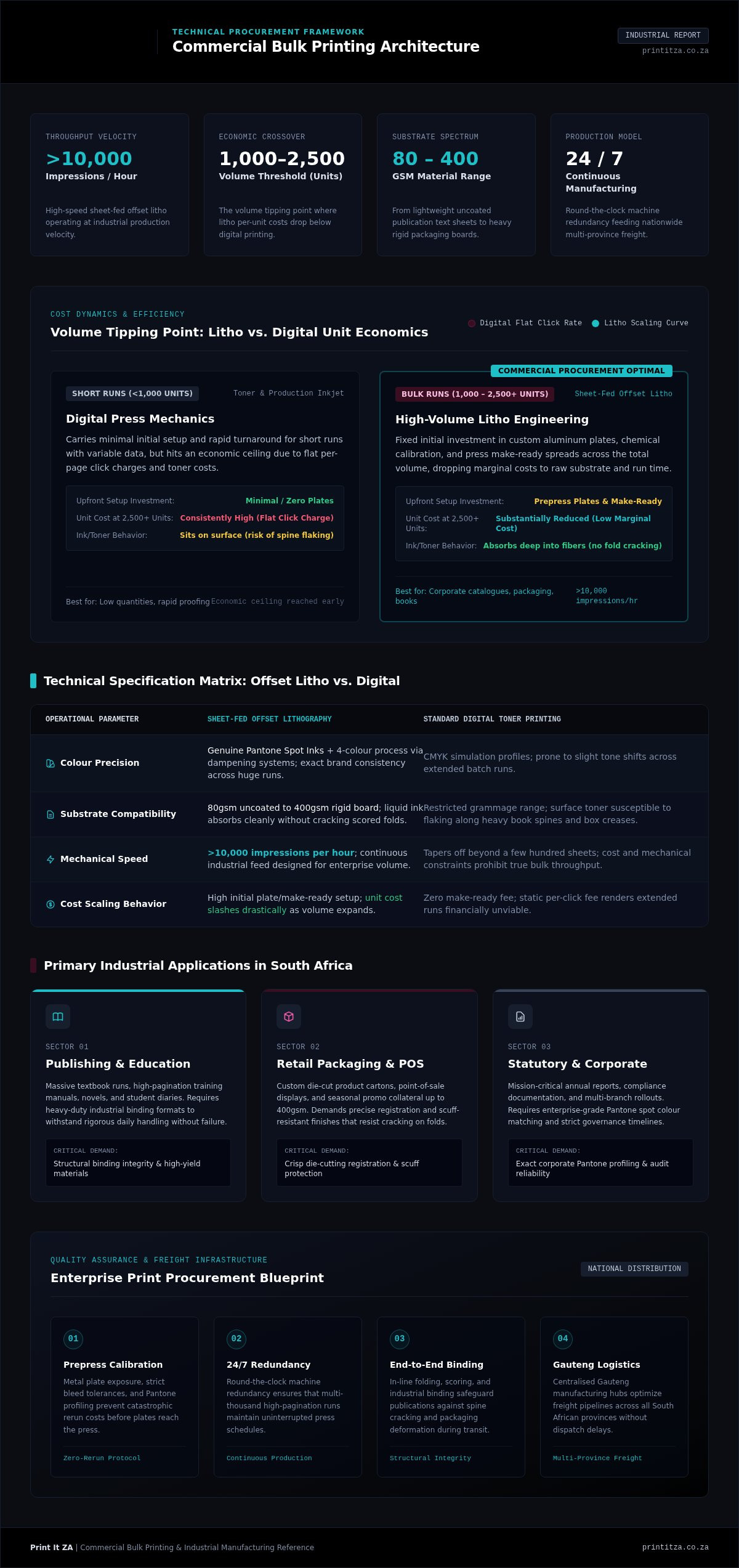
Commercial bulk printing isn’t simply running a desktop machine for several hours or ordering a batch of flyers. It represents industrial-scale manufacturing engineered to deliver high-volume runs without compromising structural integrity or visual precision. At this level, reproduction relies heavily on high-speed sheet-fed machinery. Technologies like offset printing transfer ink via custom aluminum plates onto paper substrates at speeds exceeding ten thousand impressions per hour. While desktop or basic copy shops taper off past a few hundred pages, professional bulk printing services South Africa organisations depend on are designed for continuous, heavy-duty production. This industrial workflow drives per-unit costs down substantially as quantities scale, protecting procurement budgets while maintaining strict quality controls.
Commercial Volume Thresholds for Corporate Orders
Short-run digital presses offer flexibility, but they reach an economic ceiling quickly due to flat per-page click charges. True commercial bulk production generally kicks in between 1,000 and 2,500 units for items like catalogues, corporate brochures, and books. At this volume, the fixed initial investments in prepress plate setting, ink profiling, and machine make-ready steps spread across the run. Once those plates are spinning, each additional sheet costs drastically less than digital toner reproduction, yielding significant savings for large corporate runs.
Primary Applications: Publishing, Packaging, and Enterprise Collateral
Enterprise procurement managers across South Africa manage heavy-duty print schedules across three core industry sectors:
- Publishing and Education: Large-scale textbook runs, training manuals, novels, and student diaries. These formats require high-yield materials that handle daily wear and tear without binding failure.
- Retail Packaging and POS: Custom die-cut product cartons, point-of-sale displays, and seasonal promotional collateral that demand crisp registration and scuff-resistant finishes.
- Statutory and Corporate Reporting: Mission-critical annual reports, compliance manuals, and multi-branch corporate materials requiring exact corporate Pantone matching.
Successfully managing these extensive volumes demands reliable manufacturing setups. Continuous 24/7 printing press operations ensure high-pagination publications move swiftly from the print floor directly into national freight routes without missing strategic retail or reporting windows.
Litho vs. Digital: Choosing the Right High-Volume Press
Choosing the proper production path isn’t about which technology is newer; it’s about matching mechanical output to project volume. Digital toner and production inkjet presses shine for short runs requiring rapid variable data. When scaling corporate collateral, books, or packaging, sheet-fed lithographic presses take command. Organizations like Printing SA highlight the sustained industrial relevance of litho, primarily because offset engineering handles multi-thousand runs at continuous speeds that digital cannot economically match.
Unit Economics and Cost Curves at Scale
Digital printing carries minimal upfront preparation, but each impression carries a fixed click charge and toner cost. As your volume climbs past 500 to 1,000 units, those flat digital fees quickly outstrip budget allowances. Litho printing requires an initial investment in metal plates, chemical calibration, and press make-ready time. Once the cylinders lock in and ink keys balance, the marginal cost drops down to raw paper and running time. For enterprise contracts, bulk printing services South Africa procurement teams rely on utilize heavy litho machinery to drive unit costs down significantly on extended runs compared to digital equivalents.
Colour Precision and Substrate Flexibility
High-volume production demands exact colour fidelity across every single carton, brochure, or catalogue cover. Litho presses utilise wet ink transferred through mechanical dampening systems, offering genuine Pantone spot colour integration alongside four-colour process work. This guarantees exact brand matching that digital toner struggles to duplicate across extended runs.
Offset liquid inks also absorb deep into diverse stocks, from 80gsm uncoated text sheets to 400gsm rigid packaging boards. Digital toner sits on the surface, which often leads to flaking or cracking along scored book spines and box folds. If you need assistance selecting the most cost-effective press setup for your production run, consulting an experienced commercial litho and digital printer helps align machine parameters directly with your procurement goals.
Selecting Substrates, Bindings, and Finishes for High-Volume Projects
Substrate choice and finishing dictate both the visual presence and functional lifespan of your print run. Procuring through bulk printing services South Africa enterprises depend on requires balancing material weight against shipping durability. Specifying the wrong board weight or adhesive can cause spine splits, page pullouts, or severe transit abrasion before your collateral ever reaches its end recipient.
Paper Stock Classifications and Yield Considerations
Matching stock type to utility keeps production running efficiently without unnecessary material expenses:
- Gloss Art (90gsm to 170gsm): Provides high reflectivity and vibrant image reproduction, making it the commercial staple for retail catalogues, magazine inserts, and high-impact brochures.
- Matt Art (115gsm to 200gsm): Delivers a smooth, glare-free finish that enhances readability for text-heavy corporate reports and premium brand lookbooks.
- Uncoated Bond (80gsm to 100gsm): Absorptive and tactile, ideal for high-yield training manuals, textbooks, and interactive school workbooks where users write directly on the page.
- Packaging Boards (250gsm to 400gsm): Rigid folding boxboards designed for structural cartons and product packaging. These require precise grain direction alignment so creases fold cleanly without cracking substrate fibres.
Standardising dimensions around international parent sheet sizes minimizes trim waste during press imposition, driving substantial cost savings on long runs.
Structural Binding Methods for Multi-Page Collateral
Binding selection hinges on pagination, paper weight, and expected daily handling. Saddle stitching utilizes wire staples through the fold, providing a cost-effective, fast solution for booklets up to 64 pages. For thicker publications, PUR (polyurethane reactive) adhesive perfect binding offers tremendous spine flexibility and tensile strength. PUR prevents coated pages from pulling loose out of corporate manuals and softcover books. Case binding encases sewn page sections into rigid binder boards, creating durable hardcover books and school yearbooks built to withstand years of heavy use.
Finishing Touches: Laminates, Varnishes, and Embellishments
Protective finishes defend high-volume print runs against scuffing during transit and extended shelf life. Inline machine varnishes seal wet inks immediately on press, preventing ink set-off without slowing turnaround times. For publication covers and packaging, thermal matt, gloss, or soft-touch lamination creates a tough, moisture-resistant barrier that shields high-use items. Strategic embellishments like spot UV varnishing, embossing, and foil stamping elevate specific design elements, delivering high visual contrast while keeping bulk production runs economically grounded.
Managing National Logistics, Freight, and Prepress Operations
Flawless press work means very little if your shipment arrives damaged or misses launch day entirely. Successfully coordinating bulk printing services South Africa enterprises require demands strict file preparation paired with industrial packaging protocols. High-volume runs involve substantial physical weight; thousands of multi-page catalogues or hard-cover books quickly accumulate into multi-ton freight loads. Preventing transport damage and costly production delays requires a disciplined prepress workflow and an efficient distribution strategy from day one.
Prepress Checklists to Prevent Costly Volume Errors
Catching technical discrepancies before plates are imaged prevents devastating material waste. Every production-ready file must adhere to these technical standards:
- Bleed and Margin Clearances: Include a mandatory minimum 3mm bleed on all external edges. Keep all running text and critical design elements at least 5mm inside the final trim line to prevent shearing during high-speed guillotine finishing.
- Colour Profile Mapping: Convert all RGB artwork directly into calibrated CMYK colour spaces. Leaving unmapped RGB elements triggers automated colour substitutions, resulting in dull tones and muddy brand hues across the run.
- Hard-Copy Contract Proofs: Always inspect a calibrated digital contract proof or scatter proof before approving plate exposure. Viewing digital files on non-calibrated screens never reflects how real inks absorb into physical paper fibers.
Logistics Architecture Across South African Metros
Manufacturing out of a centrally positioned hub in Midrand, Gauteng provides strategic freight reach across South Africa. Operating directly between Johannesburg and Pretoria unlocks immediate transport access along primary logistics routes, including the N1, N3, and N12 corridors.
Road freight dispatched from central Gauteng reliably reaches regional commercial hubs like Durban within 24 to 48 hours, while Cape Town and Gqeberha shipments typically land within 48 to 72 hours. Managing multi-branch national rollouts often requires complex split distributions directly to regional retail branches, schools, or depot facilities.
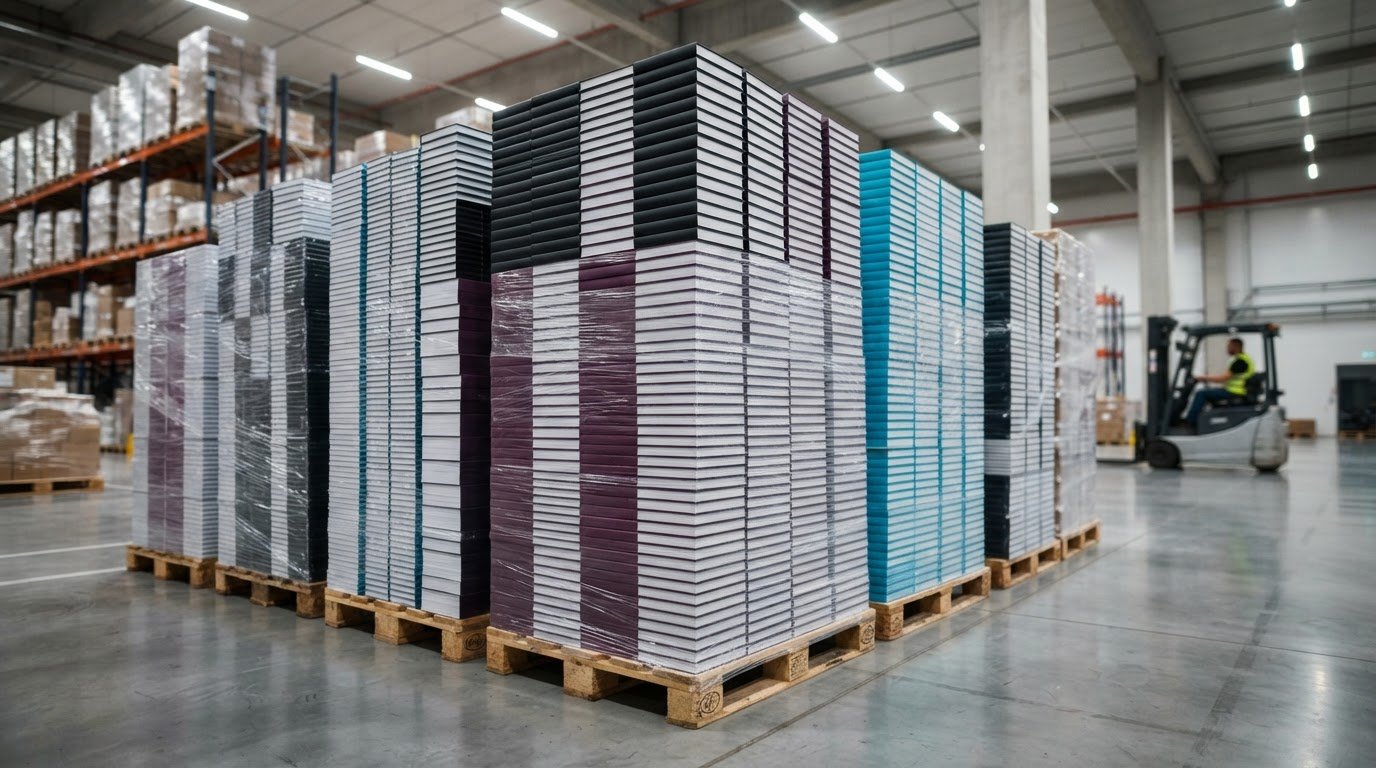
Protecting extended print runs against South Africa’s diverse regional climates is essential. Finished goods should be boxed in double-walled corrugated cartons, strapped onto standard wooden pallets, and sealed with heavy-gauge moisture shrink-wrap. This shields print stock from coastal humidity, dust ingress, and long-haul road vibration. If you want streamlined national delivery backed by dedicated distribution teams, partner with an end-to-end commercial print provider to handle your procurement from prepress prep through final pallet drop-off.
Evaluating Commercial Print Partners for Enterprise Contracts
Enterprise print procurement requires structured service level agreements rather than quick online checkouts. Contracting bulk printing services South Africa corporations depend on demands thorough scrutiny of factory equipment, operational stability, and in-house bindery capacity. An unvetted vendor facing press breakdowns or machine backlogs can easily miss statutory publication dates, derailing seasonal retail campaigns or shareholder meetings.
Key Procurement Criteria and Factory Auditing
Before entering long-term supply agreements, audit prospective commercial print facilities against several operational benchmarks:
- Automated Colour Control: Ensure presses feature closed-loop spectrophotometry and density scanning to maintain strict Delta E colour tolerances across extended litho runs.
- Production Redundancy and Backup Power: Verify that the plant operates industrial generator backups and duplicate prepress plate-setters to neutralise local power disruptions.
- Integrated Bindery Infrastructure: Select partners housing folding, PUR binding, saddle stitching, and die-cutting under one roof to eliminate subcontracting delays and transit friction.
Procurement teams seeking dependable volume capacity benefit immensely from partnering with vetted providers of professional printing services in Johannesburg who possess the machinery and technical mastery to handle enterprise-level output.
Why Midrand Serves as South Africa’s Commercial Print Hub
Geographic positioning directly impacts logistics lead times. Situated squarely between Johannesburg and Pretoria, Midrand provides an optimal logistics springboard. Facilities in this economic artery plug directly into primary transport routes, streamlining freight handling for national parcel and freight carriers.
Production velocity surges when operations run non-stop. Operating round the clock with continuous 24/7 press shifts dramatically compresses delivery timelines on high-pagination books, retail packaging, and commercial catalogues. Instead of jobs resting idle between shifts, continuous production keeps sheet-fed litho presses turning through the night to meet aggressive procurement deadlines. For reliable execution backed by over two decades of technical pressroom experience, collaborate directly with Print It ZA print and packaging to safeguard your enterprise print contracts.
Scale Your Enterprise Print Procurement with Total Confidence
Executing commercial print at scale comes down to balancing technical precision with operational velocity. When you align high-volume print runs with heavy-duty litho engineering, calibrate your paper substrates accurately, and specify industrial binding methods, you protect both your procurement budget and your brand integrity. Securing dependable bulk printing services South Africa enterprises trust doesn’t have to be a logistical gamble.
Operating continuously from a centralised facility in Midrand, Print It ZA print and packaging delivers end-to-end commercial solutions. Our round-the-clock 24/7 printing press capacity, in-house binding infrastructure, and streamlined national freight channels keep your books, catalogues, and packaging moving without interruption. Ready to eliminate production bottlenecks and drive maximum value across your supply chain? Request a Commercial Bulk Print Consultation today to get your next national rollout moving with precision.
Frequently Asked Questions
What is considered a bulk print run for commercial businesses in South Africa?
Commercial bulk printing generally begins at 1,000 units for multi-page documents like catalogues, annual reports, and books, or 5,000 units for flat collateral like flyers and brochures. Below this threshold, digital printing handles demand cost-effectively. Above it, industrial sheet-fed litho presses take over to unlock genuine volume economics, driving unit production expenses down substantially for Gauteng enterprises and national procurement teams.
How much cheaper does unit pricing become when moving from digital to litho printing?
Moving to litho can reduce per-unit costs by over fifty percent once production volumes amortise the initial plate-making and make-ready fees. While digital maintains a static cost per page, litho marginal costs decrease steadily toward the raw price of the paper substrate. For multi-thousand runs, bulk printing services South Africa corporations contract through high-speed litho presses achieve significant budget savings compared to static per-click digital charges.
How long does a high-volume commercial print run typically take from proof approval to delivery?
Most high-volume commercial runs take between five to ten working days from final proof sign-off to delivery. Timelines depend heavily on binding complexity, embellishments like laminates or spot UV, and order volume. Facilities operating 24/7 continuous production shifts compress these lead times substantially, running litho presses through the night so finished collateral reaches national transport networks days faster than standard single-shift print shops.
Can bulk printed orders be split and dispatched to multiple offices across South Africa?
Yes, full-service commercial printers routinely split large production runs for multi-branch distribution across South Africa. Central manufacturing plants situated in Midrand coordinate palletised freight dispatches directly along regional transit corridors. Whether shipping consignments to regional hubs in Durban, Cape Town, and Gqeberha or delivering directly to local Gauteng office networks, consolidated logistics management ensures simultaneous delivery across all corporate branches.
What file specifications are required to prevent print defects on large offset press runs?
Commercial press runs require print-ready PDF/X files set to a minimum resolution of 300 DPI at 100% scale. Always incorporate at least 3mm bleed margins, convert all fonts to outlines or embed them cleanly, and verify all artwork uses CMYK or spot Pantone color spaces instead of RGB. Adhering strictly to these prepress guidelines eliminates trim clipping, plate registration shifts, and unintentional colour discrepancies.
How do paper grammage and finish choices affect final bulk shipping weights and costs?
Paper weight directly governs pallet tonnage, which shapes road freight and distribution budgets. A 10,000-copy run of a 96-page catalogue printed on 170gsm art paper weighs roughly double the same job produced on 90gsm text stock. Heavy laminates, board covers, and thicker stocks increase deadweight fast. Selecting the optimal grammage ensures your printed materials feel substantial without triggering unnecessary long-haul shipping surcharges.
Why is load shedding and power continuity an important factor when vetting print suppliers?
Power interruptions halt commercial presses instantly, causing missed registration, ruined substrate runs, and severe delivery delays. Vetting bulk printing services South Africa partners requires checking for integrated industrial generator systems and uninterrupted power supply (UPS) backups. Continuous power allows printing facilities to sustain round-the-clock production uninterrupted, ensuring corporate annual reports, educational materials, and retail packaging ship right on time regardless of municipal grid instability.
Contact Print It ZA today, for a Free Quote and Speedy Service.
Print It ZA print and packaging, we deliver Printing Best!