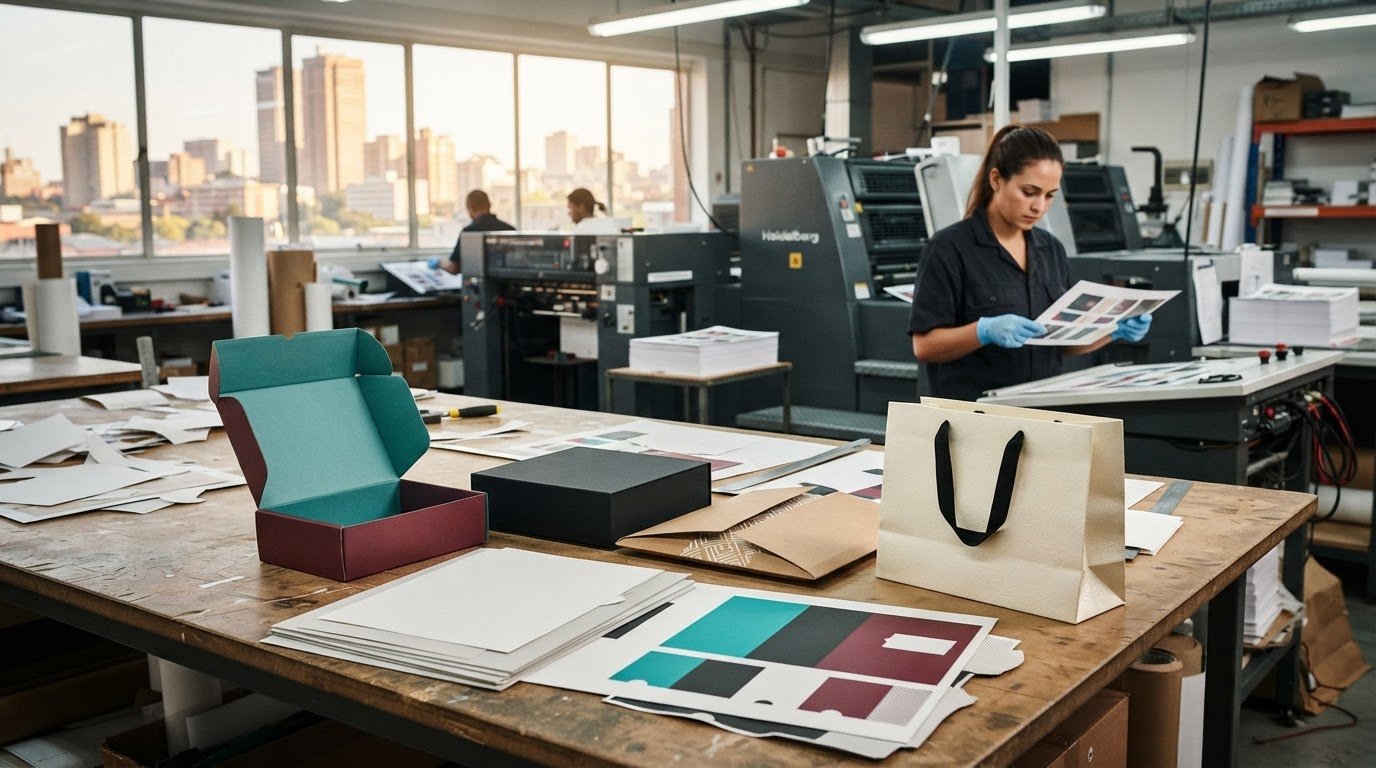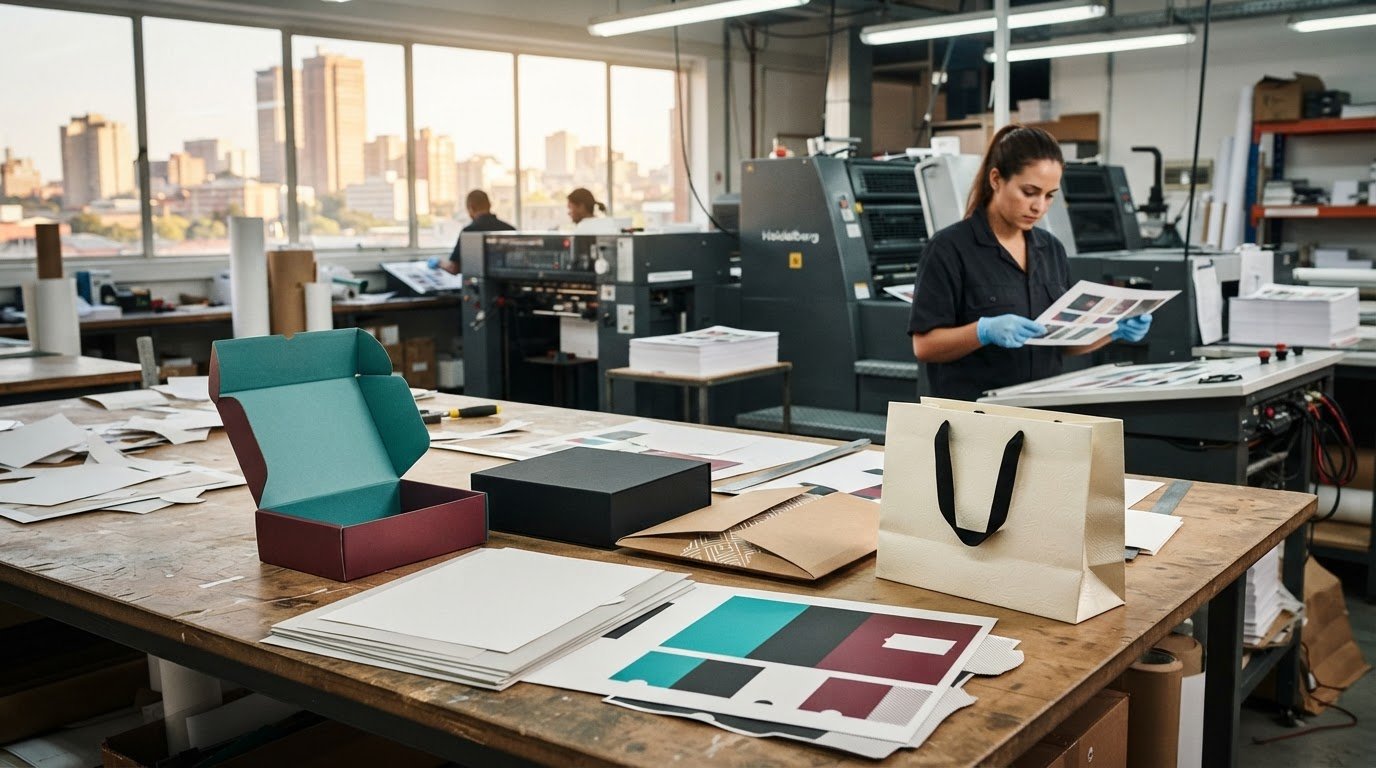

Business cards remain one of the most cost-effective marketing tools for small businesses and organisations across South Africa, giving a tangible first impression that often opens doors to networking and sales.
Why business cards still matter in 2026?
Despite the rise of digital contact-sharing, business cards are tactile, memorable, and portable. They act as a physical reminder after a meeting, trade show, or school event. For schools and educational publishers, business cards help staff and sales reps connect during term starts; for commercial printers and packaging suppliers, they communicate quality by example.
According to a 2019 industry survey by FedEx Office, a large percentage of people admitted they make judgments about a company based on the quality of its business card. According to Statista, print remains a multi-billion-dollar global market and still supports many small-business marketing strategies. According to a regional survey, fast turnaround printing and print delivery across South Africa rank among the top requirements for small businesses ordering printed materials.
How do I design business cards that stand out?
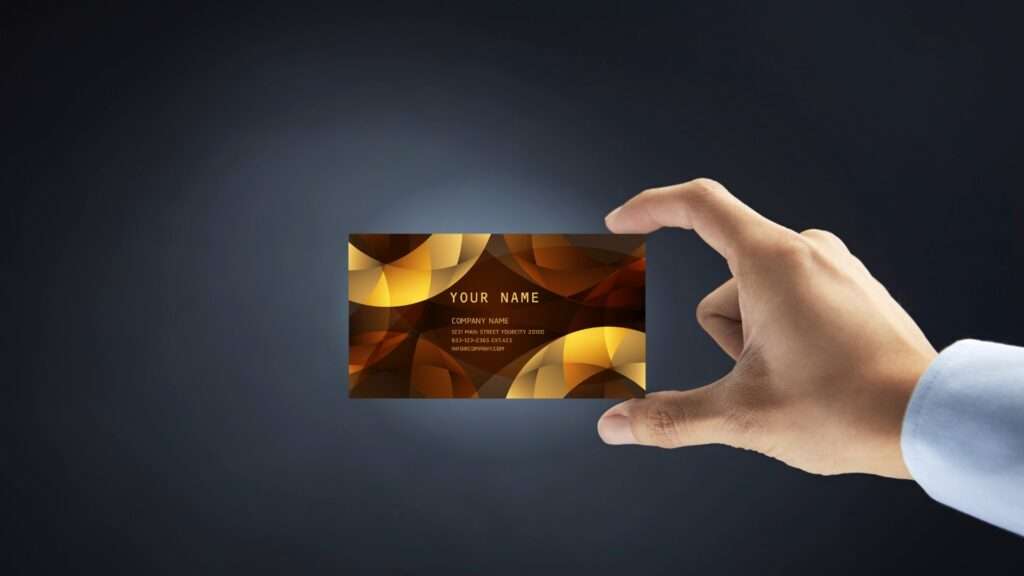
Designing business cards that stand out combines clear branding, hierarchy of information, and a tactile finish that reflects your business personality. Start with the essentials—logo, name, role, phone, email, and one strong call to action or website—and then refine layout, typography, and white space so information is easy to scan.
Elements to consider:
- Brand consistency: Use your brand colours and typefaces so cards align with brochures, catalogues, and website materials.
- Hierarchy: Prioritise name and primary contact; secondary info can be smaller.
- Finish and texture: Consider soft-touch, matte, spot UV, or foil to convey premium quality.
- Shape and size: Standard 90 x 50mm is practical, but rounded corners or square formats can be memorable.
Design is especially important when your print partner offers litho and digital printing, custom print finishes or print-on-demand services: choosing the right finish on an initial 250–500 run can shape future marketing materials, from brochures to booklets and catalogues.
What printing methods are best for business cards?
There are several printing processes used for business card printing: digital printing, litho (offset) printing, letterpress, and specialty techniques like foil stamping and embossing. For short runs and fast turnaround printing you’ll typically use digital printing; for larger runs where colour consistency and cost per unit matter, litho printing is often preferred.
Quick comparison:
| Method | Best for | Pros | Cons |
| Digital | Short runs, customisation | Fast, cost-effective for small quantities | Less tactile depth than letterpress |
| Litho (Offset) | Large runs | Consistent colour, lower unit cost at scale | Longer setup time |
| Letterpress | Premium luxury cards | Distinct impression and texture | Higher cost, longer lead time |
| Special finishes | Brand differentiation | Foil, spot UV, embossing add perceived value | Extra cost |
How many business cards should I order and what are typical quantities?
Order quantities depend on your marketing schedule, events, and budget. Small businesses often order 250–500 cards for initial runs. Sales teams, distributors, or schools placing cards for several staff may require 1,000 or more. Bulk ordering reduces per-card cost, but print-on-demand lets you reorder in smaller lots with updated details.
Practical considerations:
- Prepare for events: order more before trade shows, open days, or school term starts.
- Team size: provide a small personalised batch for each staff member.
- Design updates: if details change often, prefer smaller, more frequent runs using digital print-on-demand to avoid waste.
Which paper stocks and finishes work best for business cards?
The choice of paper stock and finish directly affects how your card feels and how the recipient perceives your brand. Common stocks range from 300gsm to 600gsm; heavier stocks feel premium. Finishes—matte, gloss, soft-touch, and recycled—add both protection and personality.
Recommended pairings:
- 300–350gsm uncoated: Affordable, good for writing notes on the card.
- 350–450gsm coated: Crisp print and colour; ideal for full-colour cards.
- 400–600gsm premium or duplex: For luxury feel, often used with soft-touch or laminate.
Eco stocks: Recycled or FSC-certified paper for eco-friendly printing.
How can I keep business card printing cost-effective in South Africa?
Cost-effective business card printing in South Africa balances quantity, stock, finish, and turnaround. Combine savvy choices—digital printing for small runs, choosing standard sizes, and limiting heavy finishes—to reduce costs while maintaining professional quality.
Tips to save:
- Order standard sizes and avoid custom die-cuts unless necessary.
- Use digital printing for variable data and smaller runs.
- Consolidate orders for brochures, catalogues, and cards to benefit from bulk pricing across services like booklet printing or brochure printing.
If your organisation is involved in bulk educational printing for schools or needs promotional material for events and promotions, coordinating multiple print items together often reduces overall production and logistics costs.
What turnaround times can I expect for business card printing?
Turnaround depends on method, quantity, and finish. Digital jobs can often be printed within 3 to 4 working days for small runs, whereas litho and specialty finishes (foil, embossing) may need several days. Fast turnaround printing services in South Africa commonly offer next-day options for standard stocks.
Consider these timelines:
- Digital, standard stock: 3 to 4 working days for small runs.
- Litho, medium to large runs: 4–7 business days including proofs.
- Special finishes: Add 2–5 business days depending on complexity.
Plan ahead for school term preparation, conference season, and busy promotional periods—printers often book out for large catalogue printing and booklet printing runs, so early ordering avoids delays.
How do I choose a print partner in South Africa?
Choosing the right print partner means evaluating technical capability, quality control, delivery options, and eco credentials. Look for experience across industry services—commercial printing, educational printing, school textbook printing, brochure printing, and business card printing—so they can handle varied projects and advise on best practices.
Checklist when evaluating printers:
- Range of services (e.g., litho and digital printing, packaging printing, custom publishing)
- Proofing process and colour management systems
- Delivery network and ability to manage print delivery across South Africa
- Eco-friendly printing options and certifications
- Portfolio and samples showing finishes and stocks
Internal resources you might consult when comparing offerings include textbook-printing, brochure-printing-services, and catalogue-printing to understand how a supplier manages larger print pipelines alongside small runs like business cards.
Can business cards be eco-friendly and sustainable?
Yes—eco-friendly business cards use recycled stocks, FSC-certified paper, or alternative fibres and often use eco inks or waterless printing methods. Sustainable choices can be both cost-effective and align with corporate social responsibility goals, particularly for educational publishers and schools choosing eco-friendly printing for handouts and staff cards.
Options to consider:
- Recycled paper stocks (post-consumer content)
- FSC or PEFC certification
- Eco inks
- Minimal coatings or water-based varnishes
Choosing eco options also complements other print products such as training manuals and books printing when an institution seeks a consistent sustainability policy across materials.
How should templates and files be prepared for print?
Preparing print-ready files avoids delays and ensures accurate colour reproduction. Provide high-resolution vector logos (PDF) and images at 300 dpi. Include bleed (commonly 3 mm) and safe zones for text to avoid accidental trimming. Convert fonts to outlines or embed them in PDFs.
File checklist:
- CMYK colour mode for print files
- 300 dpi raster images
- 3 mm bleed and trim marks
- Embedded fonts or converted to outlines
- Proof PDF for colour and layout approval
Digital printers and print-on-demand platforms in South Africa will often provide templates to match their cutting and finishing specs—use those templates for best results.
How can I use business cards as part of a wider marketing strategy?
Business cards should be coordinated with your other print assets—brochures, catalogues, newsletters and booklets—so the message and brand experience are seamless. For example, a sales rep handing a business card at a school open day can include a small brochure or a catalogue of educational resources. Combining print materials often increases perceived value and makes follow-up easier.
Integration ideas:
- Include a QR code linking to a digital portfolio, event sign-up, or catalogue page.
- Match card designs with promotional brochures and book covers for consistent campaigns.
- Use variable-data printing for personalised cards or targeted messages in direct sales.
When coordinating larger runs or mixed materials, consult a printer who handles booklet printing and books printing to streamline scheduling and costs.

What common mistakes should I avoid when ordering business cards?
Many mistakes are avoidable with attention to detail: low-resolution logos, missing bleed, insufficient contact details, and choosing finishes that don’t suit your brand or budget. Avoid overly complex designs that obscure essential contact information, and check proofs carefully.
Common pitfalls:
- Using RGB files or low-res images—always use CMYK and 300 dpi.
- Omitting alternate contact methods or URLs—include a primary phone and email plus one web address.
- Ignoring how finishes affect readability—high-gloss over heavy text can create glare.
Proofing and requesting a physical sample or printed proof prior to large runs helps you catch issues early, whether you’re ordering a few dozen or preparing for bulk educational printing for schools.

Where can I learn more about business card history and etiquette?
Business card history and etiquette offer context for modern usage; historically cards conveyed status and networks and now remain a key tool in first impressions. For a deeper historical perspective, the Wikipedia page on business cards provides an overview of their evolution and cultural variations: Business card – Wikipedia.
Etiquette tips:
- Offer your card with the contact details facing up so the recipient can read it immediately.
- Keep cards in a tidy holder to avoid damage and preserve professional appearance.
- Follow up within a week after meeting to leverage the momentum from a face-to-face introduction.
Whether you’re a small business owner preparing marketing materials for events and promotions, a school administrator ordering staff cards for term, or a publisher coordinating business cards with catalogue and book printing, a thoughtful approach to design and production will ensure your cards make an impression.
Suggested next steps: request printed samples, compare litho and digital quotes, and ask your printer about eco-friendly options and fast turnaround printing. For more on related print services, explore textbook-printing, brochure-printing-services, training-manual-printing, books-printing, and catalogue-printing to align your card strategy with larger print projects.
Contact Print It ZA today, for a Free Quote and Speedy Service.
Print It ZA, we deliver Printing Best!