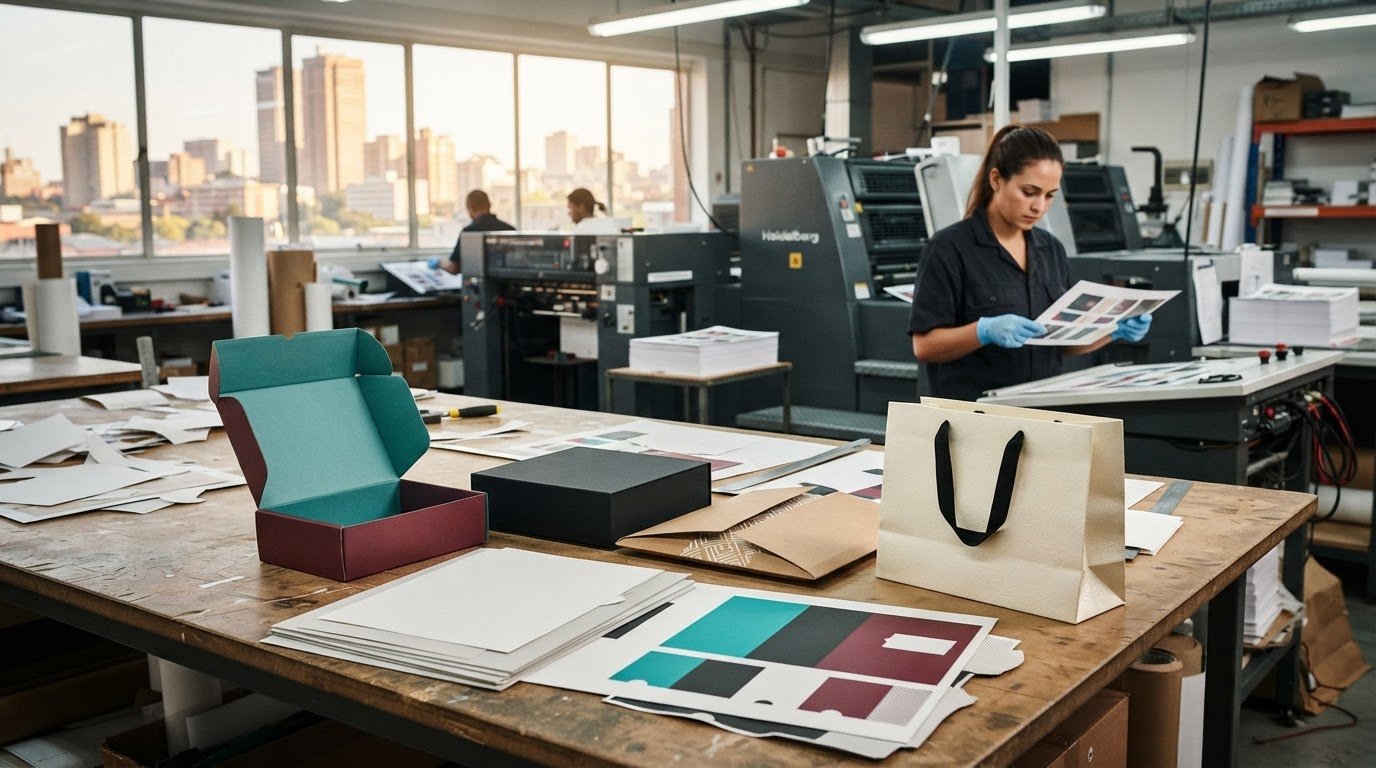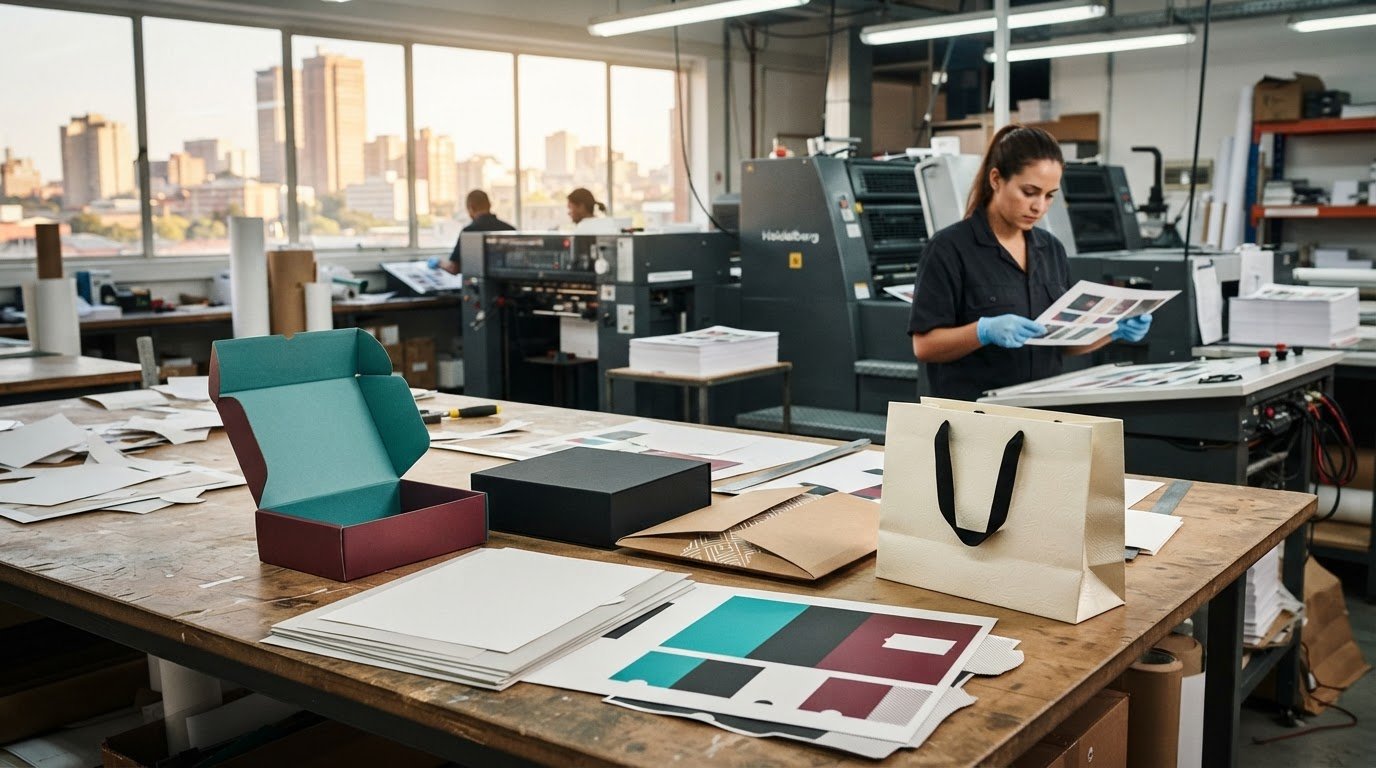
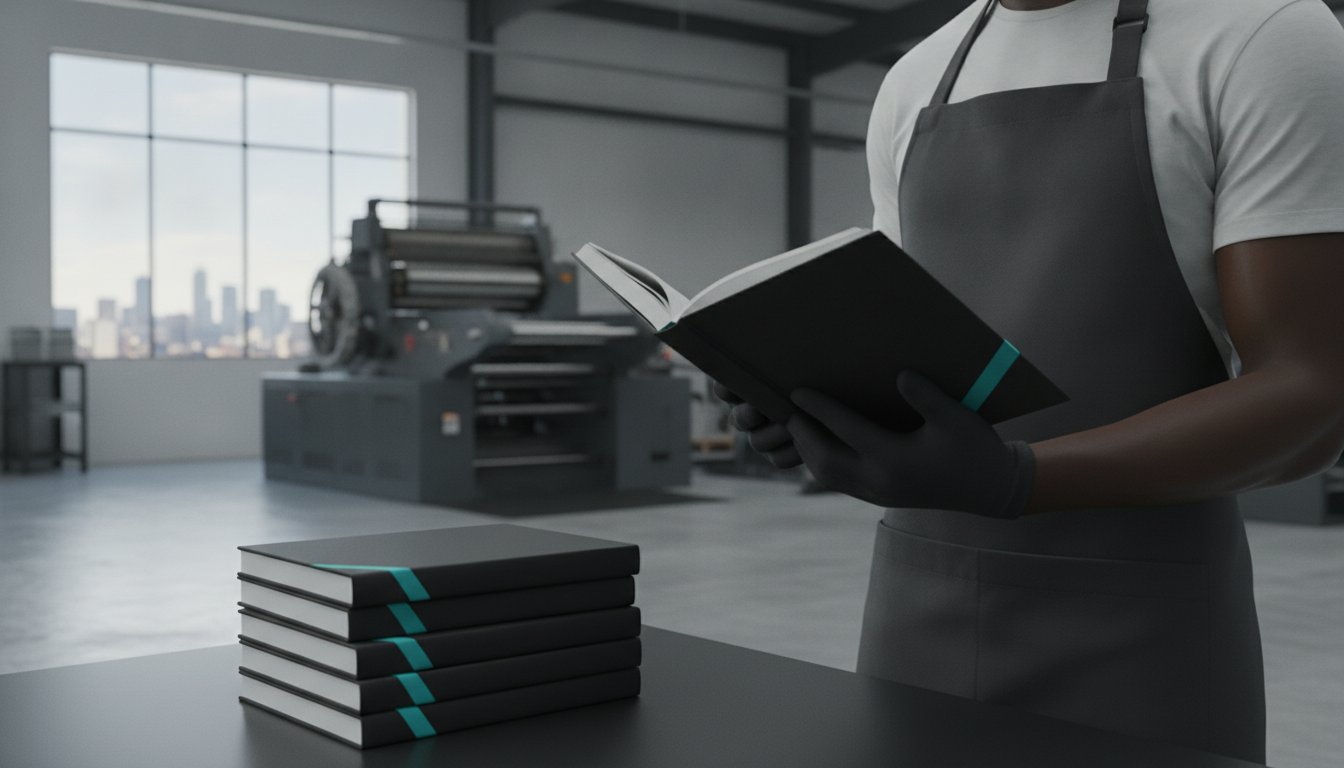
Waiting six weeks for an international shipment of journals isn’t just frustrating; it’s a missed opportunity to put your brand in your client’s hands today. You need a finished product that looks sophisticated and feels durable, but the technical side of custom journal printing South Africa often brings more questions than answers. Whether you’re worried about paper bleed or wondering if your binding will survive daily use, these concerns are completely valid. It’s tough to balance aesthetic goals with the reality of rising production costs and complex technical specifications.
We’re here to help you turn that vision into a high-impact reality. This guide simplifies the production process for 2026, helping you choose between litho and digital options while navigating the 47% rise in paper costs seen since 2020. You’ll discover how to leverage local South African materials and expert finishing techniques to create a journal that truly lasts. We’ll walk you through professional binding styles, like Case and PUR binding, and explain how to meet the new 2028 targets for recycled content. This ensures your project is both beautiful and compliant with current regulations.
Key Takeaways
- Discover why premium physical stationery remains a powerful branding tool and how it creates a lasting tactile connection with your South African audience.
- Master technical specifications by selecting the ideal paper weights and durable binding options, such as Case or PUR binding, to ensure your journals withstand daily use.
- Navigate the choice between digital and litho production to find the most cost-effective solution for your custom journal printing South Africa project.
- Use our expert design-to-print checklist to ensure your files meet professional standards for bleed, safe zones, and resolution.
- Learn how working with a 24/7 local partner in Midrand provides the speed and end-to-end support needed for successful corporate distributions.
What is Custom Journal Printing and Why It Matters for Your Brand in 2026?
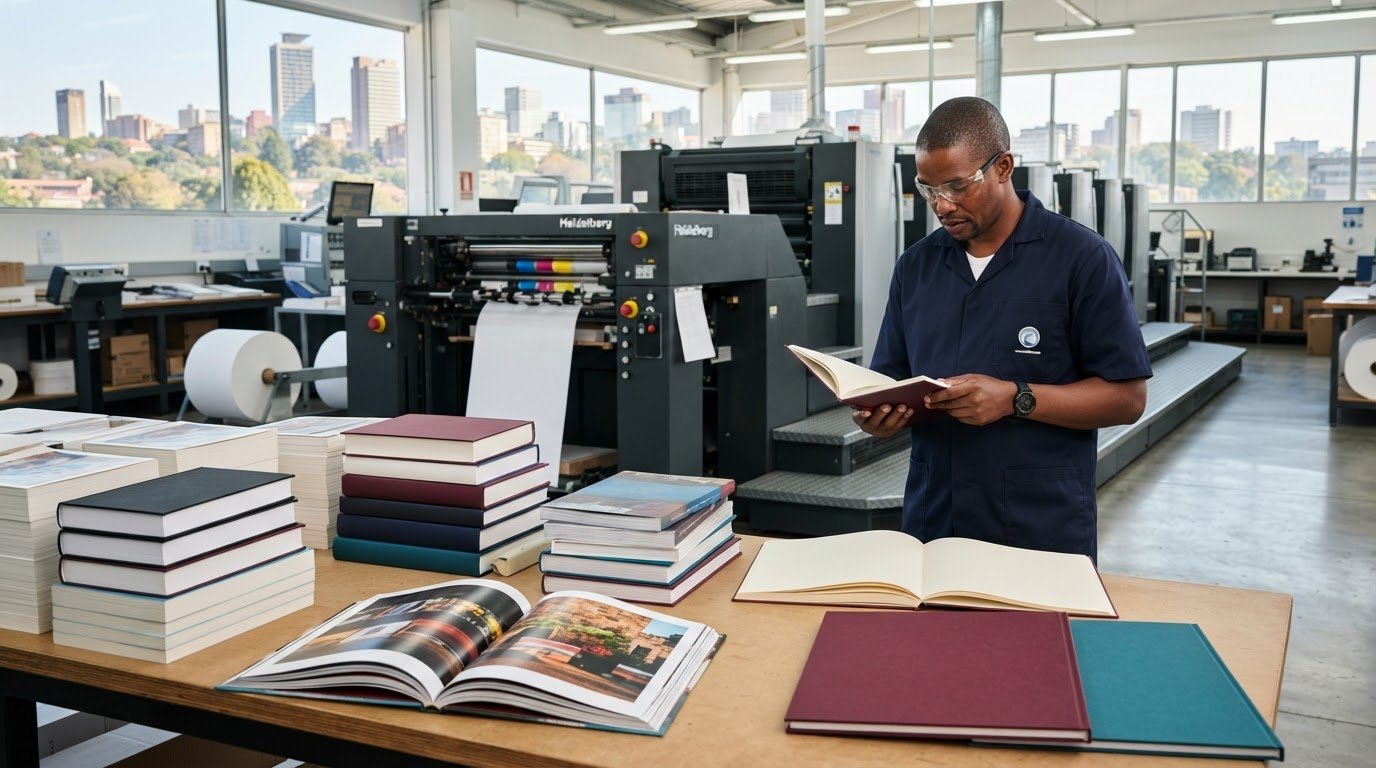
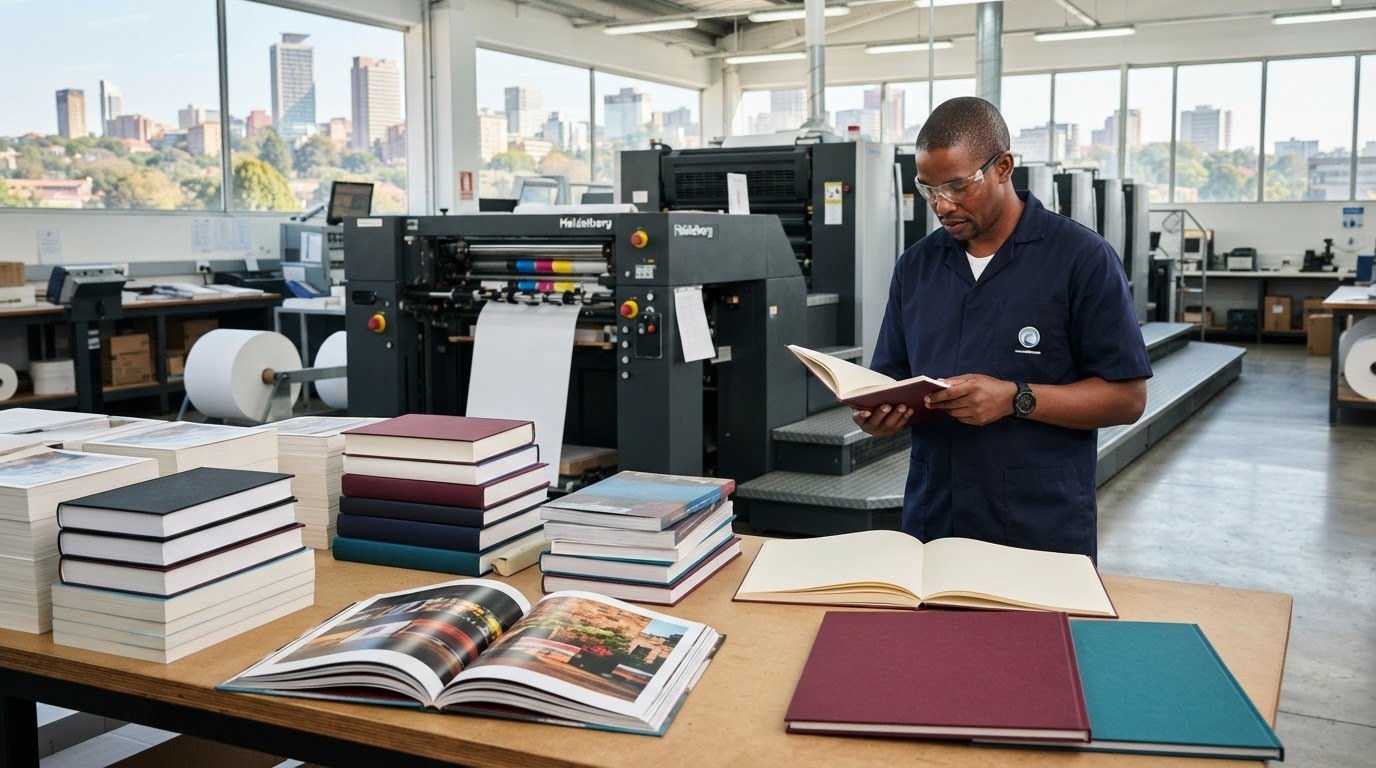
Custom journal printing is the process of creating bespoke stationery that is fully tailored to your brand’s specific needs. It goes far beyond simply slapping a logo on a pre-made notebook. It involves choosing every element, from the texture of the cover to the weight of the internal pages. In 2026, this level of customization is essential for brands that want to stand out in a crowded marketplace. A well-crafted journal serves as a silent ambassador for your business, sitting on a client’s desk for months or even years.
The psychological impact of a physical journal remains significant in our digital-first South African market. Writing by hand helps with memory retention and creative thinking. When your brand provides the medium for those ideas, you build a deep, tactile connection with the user. Since paper costs have risen by 47% since 2020, every page needs to count. Investing in custom journal printing South Africa ensures that your investment results in a high-impact tool rather than a disposable item. Whether it’s for corporate employee appreciation, premium retail merchandise, or detailed educational workbooks, the quality of the paper and the precision of the print matter immensely.
The Rise of Branded Stationery in South Africa
Local businesses are using journals to foster a stronger company culture. In the busy hubs of Johannesburg, journals are now staples at professional workshops and training events. They help ground high-energy sessions in something permanent. We are also seeing a major trend toward sustainability. With the Extended Producer Responsibility (EPR) regulations enforced by the Department of Forestry, Fisheries and Environment, many South African brands are opting for eco-friendly paper stocks. The goal is to reach 50% recycled content by 2028, and starting that transition now positions your brand as a forward-thinking leader.
Custom Journals vs. Off-the-Shelf Notebooks
The biggest advantage of custom production is total control. Off-the-shelf notebooks force you into standard layouts that might not suit your purpose. With custom journals, you decide if you want a dot grid, specific coaching prompts, or specialized lined sections. Cover customization is equally vital for brand consistency, allowing for unique textures and finishes that reflect your identity. Durability is another major factor. By understanding the history and techniques of bookbinding, you can see why professional finishing is superior to cheap imports. A custom-printed journal uses high-quality binding techniques that prevent pages from falling out, ensuring your brand message stays intact for the long haul.
Technical Specifications: Mastering Paper, Finishes, and Binding
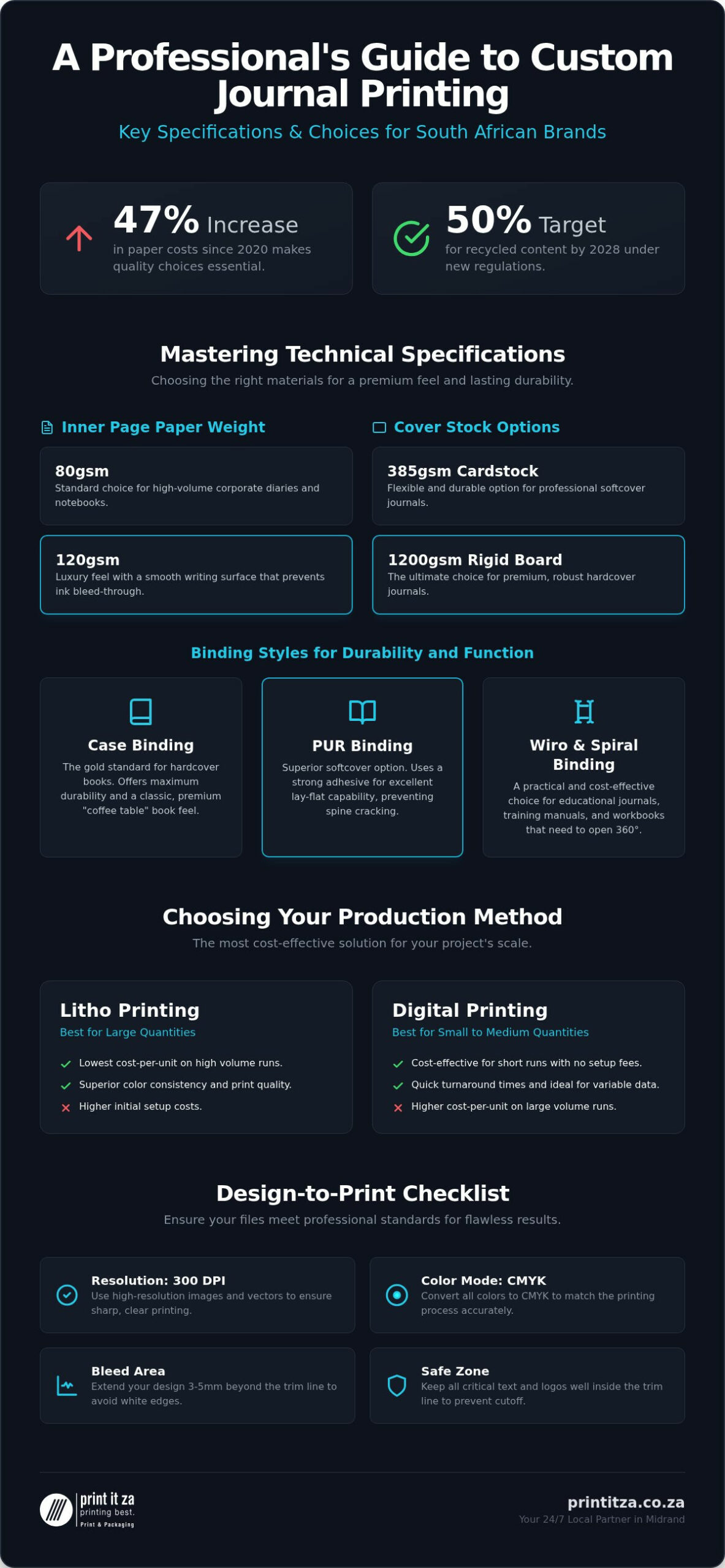
Selecting the right materials is where your vision takes physical shape. For custom journal printing South Africa, the choice of paper weight fundamentally changes the user experience. A standard 80gsm paper is excellent for high-volume corporate diaries. If you want to offer a luxury feel, 120gsm is the way to go. This heavier stock provides a smooth writing surface. It also prevents ink from bleeding through to the other side, which is vital for users who prefer fountain pens or heavy markers.
Your cover is the first thing a client feels. We offer options ranging from a flexible 385gsm cardstock to a robust 1200gsm rigid board for premium hardcovers. If you’re looking for a professional edge, consider specialized finishes like matt lamination for a silky touch, or foil stamping to make your logo pop with metallic brilliance. Inside, the layout should reflect your specific brand goals. Whether you need traditional lines, a modern dot grid, or fully custom illustrated pages, the interior design dictates how the journal will be used.
Binding Styles: Choosing for Durability and Function
The way your journal is put together determines its lifespan. Case Binding is the gold standard for hardcover journals; it provides that classic ‘coffee table’ book feel and maximum durability. For softcover projects, we recommend PUR binding over standard perfect binding. PUR uses a specialized adhesive that offers superior ‘lay-flat’ capability. This makes it much easier for writers to use every inch of the page without the spine cracking. If your project is an educational journal or a training manual, Wiro and spiral binding are practical choices that allow the book to fold back on itself completely. When planning your custom journal printing South Africa project, remember that the right binding ensures your brand remains in use for much longer.
Finishing Touches That Elevate Your Project
Small details often leave the biggest impression. Debossing and embossing create a tactile brand experience by physically raising or lowering your logo on the cover. Spot UV is a decorative technique that applies a high-gloss finish to specific areas. You can also add functional extras like elastic closures to keep pages secure, ribbon markers for easy navigation, and inner pockets for loose notes. If you’re ready to start your project, our team can help you choose the perfect printing specs to match your brand’s unique personality.
Litho vs. Digital Printing: Which Method Suits Your Project?
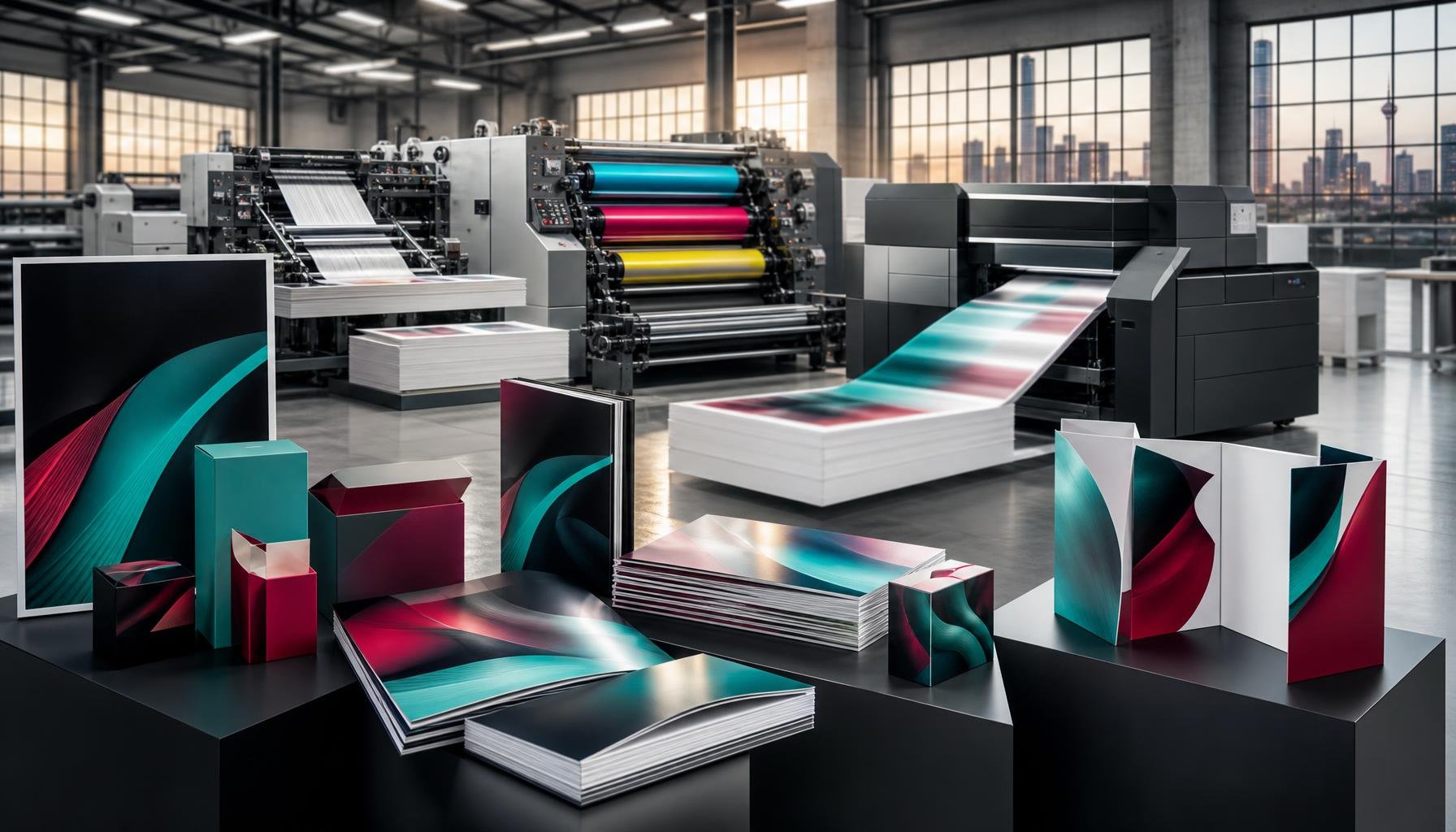
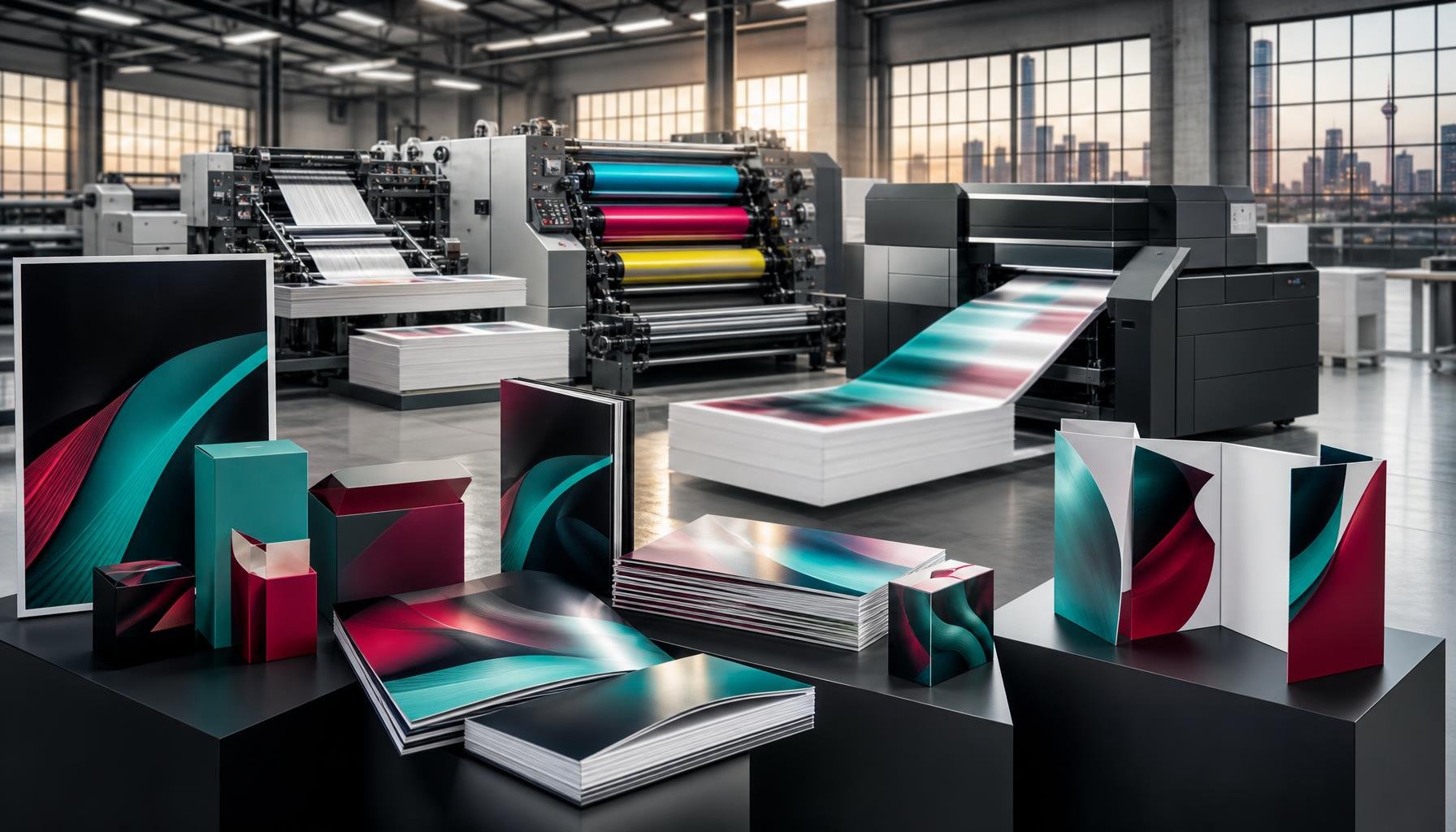
Choosing between litho and digital printing is one of the most critical decisions for your project. Litho, or lithographic printing, uses ink on rollers and custom-made plates to transfer designs onto paper. Digital printing works more like a high-end industrial version of an office printer. At our 24/7 facility in Midrand, we use both methods to ensure we meet your specific deadlines and quality needs. Each technique has its own strengths, and the right choice depends on your specific goals.
For custom journal printing South Africa, the decision usually comes down to your total volume and color requirements. If you have strict corporate brand guidelines that require exact Pantone matching, litho is essential. It offers the most consistent color accuracy across thousands of copies. Digital printing is excellent for standard CMYK work, but it can sometimes struggle with the precise spot colors that major brands demand for their logos. Our team helps you navigate these technical choices to ensure your brand looks perfect every time.
The financial side is equally important. Litho has higher initial setup costs because we have to create physical plates for the press. However, once those plates are running, the cost per journal drops significantly as the volume increases. Digital printing has almost zero setup cost, making it the smarter choice for smaller projects. With electricity prices in South Africa having increased by 8.8% in 2026 alone, choosing the most efficient printing method for your custom journal printing South Africa project is essential for keeping your costs manageable.
When to Choose Digital Journal Printing
Digital is perfect for “Print on Demand” or small batches under 100 units. It’s the ideal choice if you want to personalize each journal with a different name or a unique cover design for specific team members. Because there are no plates to make, it is also the fastest option for urgent event requirements in Gauteng. If you need a small stack of professional journals for a board meeting tomorrow, digital is your go-to solution.
When to Invest in High-Volume Litho Printing
Litho is the most cost-effective solution for retail-ready journals, especially for runs of 500 units or more. It provides superior image quality and crispness, which is vital if your journals feature high-resolution photography or intricate artwork. This method also handles heavier textured paper stocks more effectively than digital toners. If you are launching a new stationery line for the national market, litho gives you the professional finish and volume pricing you need to succeed.
The Design-to-Print Checklist for South African Professionals
Getting your artwork right is the difference between a professional masterpiece and a costly printing mistake. For custom journal printing South Africa, precision starts on your digital canvas long before the first page is printed. You need to account for the physical mechanics of the printing press to ensure your vision translates perfectly to the final product. Setting up your files correctly saves time and prevents technical delays during the production phase.
Start with your resolution. Every image, logo, and graphic must be at least 300 DPI (Dots Per Inch). While lower resolutions might look crisp on your high-definition monitor, they often appear blurry or pixelated once they hit the paper. You also need to manage your color space settings carefully. Most design software defaults to RGB, which is for screens. For accurate output on our presses, you must convert your designs to CMYK. This ensures that the vibrant colors you see on your screen don’t turn into dull or unexpected shades in the physical world.
Bleed is your best friend in the print world. Always set an essential 3mm bleed on all sides of your document. This extra area allows the cutting machines a small margin of error, ensuring your background colors or images run right to the edge of the page without leaving awkward white lines. When you’re ready to export, use the high-quality PDF/X-1a format. This industry standard locks in your fonts and images, ensuring that our team sees exactly what you intended without any missing elements.
Preparing Your Internal Page Layouts
When designing the interior of your journal, pay close attention to the gutter. This is the inner margin where the pages meet the spine. If your text or important graphics are too close to the center, they can get swallowed by the binding, especially with thick Case or PUR bound journals. Maintain consistency in your line spacing and margin widths to create a balanced, professional look throughout the book. A safe zone is the area within the trim line where all critical text and graphics should reside.
Cover Art and Spine Calculation
Calculating your spine width is vital for a perfect fit, particularly for hardcover journals. This measurement changes based on your total page count and the thickness of the paper you’ve chosen, such as the 80gsm or 120gsm stocks we discussed earlier. For wrap-around hardcover designs, your artwork needs to extend far enough to be folded over the rigid board during assembly. Place your logo strategically on the front cover or the spine for maximum brand visibility. If you’re feeling stuck with your layout, you can contact our in-house design team for expert creative support.
Why Print It ZA print and packaging is South Africa’s Leading Choice for Journals
Our 24/7 production facility in Midrand is the engine room that brings your creative visions to life. We don’t just act as a service provider; we position ourselves as your reliable creative partner. By operating around the clock, Print It ZA print and packaging handles the technical complexities of custom journal printing South Africa with unmatched speed. This constant availability is vital for corporate clients who need high-quality results on tight schedules. Whether you’re a local entrepreneur or a global brand, our facility is equipped to manage both high-volume litho and short-run digital projects with precision.
We provide end-to-end support that covers every stage of the journey. This starts with our in-house design team, who help you finalize the layouts and spine calculations we discussed in earlier sections. Once the design is locked in, our technical experts manage the production using the latest printing technology. Print It ZA print and packaging caters to both B2B and B2C markets, ensuring that every journal meets our rigorous internal standards for durability and aesthetic excellence. From the first consultation to the final distribution, we’re committed to making the process feel accessible and straightforward.
Local Expertise and Regional Reliability
Our deep Gauteng roots give us a unique understanding of the local business landscape. We know the pace of industry in Johannesburg and Pretoria, and our strategic location allows for exceptionally fast delivery across the province. We believe in building long-term partnerships through collaborative consultations. This mentor-like approach ensures you get the best ROI on your project. We take the time to understand your brand’s specific needs, helping you navigate the choices between paper weights and binding styles to achieve a professional result that reflects your vision.
Logistics and Distribution Management
Managing the distribution of a large print run can be a logistical nightmare for many businesses. Print It ZA print and packaging solves this by offering comprehensive kitting and delivery services that take the hassle out of the process. If you’re a multi-branch corporate entity, we can manage high-volume orders and ship them directly to your various locations. Our nationwide delivery and international export capabilities ensure that your journals reach their destination, no matter where that might be. We handle the heavy lifting so you can focus on your core business goals. Get an expert quote for custom journal printing today.
Start Your Premium Journal Project Today
High-quality journals are more than just paper; they’re a physical extension of your brand’s commitment to excellence. As we’ve explored, mastering technical details like 300 DPI resolution and 3mm bleed ensures your project looks professional from the very first copy. Whether you choose the precision of litho for large retail runs or the speed of digital for personalized batches, selecting the right production method is the foundation of your success. Quality always pays off in the long run.
The team at Print It ZA print and packaging is ready to bring these technical specifications to life from our 24/7 facility in Midrand. With our expert in-house design team and nationwide delivery, we help you navigate every step of custom journal printing South Africa. You don’t have to face the frustration of long international lead times or inferior binding that falls apart. We provide the regional reliability and high standards your brand deserves.
Request a Custom Journal Printing Quote today to turn your creative concepts into a premium reality. We look forward to helping you make a lasting impression with stationery that truly stands out in the South African market.
Frequently Asked Questions
What is the minimum order quantity for custom journals in South Africa?
Our facility handles both short-run digital projects and high-volume litho orders to suit your specific needs. For digital printing, we can produce small batches of under 100 units, making it perfect for personalized gifts or small team events. If you require retail-ready volumes of 500 units or more, our litho process offers the most cost-effective solution for your brand.
How long does the custom journal printing process take?
Our 24/7 Midrand facility ensures fast turnaround times by keeping production moving around the clock. Digital projects are often completed within a few working days, while high-volume litho runs require more time for plate setup and specialized binding. We’ll provide a specific timeline based on your project’s complexity to ensure you meet your event or launch deadlines without stress.
Can you print journals with a specific Pantone color for my brand?
Yes, we offer precise Pantone matching through our high-volume lithographic printing process. This is the essential choice for corporate brands that require strict color consistency across all their stationery. While digital printing uses the CMYK color space for standard designs, our litho presses allow for the specialized inks needed to match your brand’s unique identity perfectly.
What is the best binding style for a journal that needs to lay flat?
PUR binding is the superior option for journals that need to lay flat for a comfortable writing experience. It uses a specialized polyurethane reactive adhesive that remains flexible after it sets, allowing the book to open wide without the spine cracking. This method is much more durable than standard perfect binding and ensures your journal stays intact even with heavy daily use.
Do you offer design assistance if I only have a rough idea for my journal?
Our in-house design team provides expert creative support to turn your rough concepts into professional, print-ready files. We can help you with internal page layouts, cover art, and technical calculations like spine width. By acting as your creative partner, we ensure your final product meets all the technical requirements for high-quality custom journal printing South Africa.
Can you ship custom journals to Cape Town or Durban from your Johannesburg facility?
We provide reliable nationwide delivery to Cape Town, Durban, and all other regions across South Africa from our Johannesburg hub. Our logistics team manages the entire shipping process, including kitting and distribution for multi-branch corporate entities. We also have international export capabilities if you need to send your branded journals to clients or offices beyond our borders.
What is the difference between case binding and PUR binding for journals?
Case binding is the standard for premium hardcovers, while PUR binding is the top choice for high-quality softcover journals. Case binding involves wrapping your artwork around rigid boards to create a sturdy, “coffee table” style book. PUR binding uses a powerful, flexible glue for softcover books, offering better durability and a flatter opening than traditional binding methods used for cheaper notebooks.
Do you offer eco-friendly or recycled paper options for journal printing?
We offer a range of sustainable paper stocks to help your brand comply with South Africa’s latest Extended Producer Responsibility (EPR) regulations. Choosing recycled materials is a proactive way to meet the 2028 target of 50% recycled content in paper products. We can help you select eco-friendly options that maintain a premium, tactile feel while supporting your company’s environmental goals.