In 2026, self-publishing in South Africa isn’t a “plan B” for authors who couldn’t find a traditional deal. It’s a high-stakes business move for creators who want total control and maximum royalties. You’ve likely spent months pouring your heart into a manuscript, but now you’re facing the technical wall of ISBN registrations and legal deposits. It’s natural to worry that your hard work might end up looking like a “homemade” project rather than a bookstore-quality novel. We understand that frustration, especially when you’re trying to figure out how to self publish a book in South Africa while meeting the standards of retailers like Exclusive Books.
You deserve a finished product that commands respect on any shelf. This guide provides a clear, professional roadmap to take you from a digital PDF to a physical masterpiece. We’ll cover the essential legal requirements of the National Library, the benefits of zero-rated VAT on book sales, and the specific production steps needed for premium litho or digital printing. By the end of this article, you’ll have the technical confidence to handle local distribution and turn your creative vision into a professional reality.
Key Takeaways
- Secure legal compliance through the National Library of South Africa by understanding ISBN requirements and mandatory legal deposit laws.
- Master the technical roadmap of how to self publish a book in South Africa, from professional manuscript formatting to high-tier print production.
- Determine whether short-run digital printing or high-volume litho solutions are the best fit for your specific publishing goals and budget.
- Gain the confidence to pitch to local retailers like Exclusive Books by ensuring your physical book meets international bookstore standards.
- Leverage local printing and zero-rated VAT benefits to keep your production costs low and your profit margins high.
The Self-Publishing Landscape in South Africa for 2026
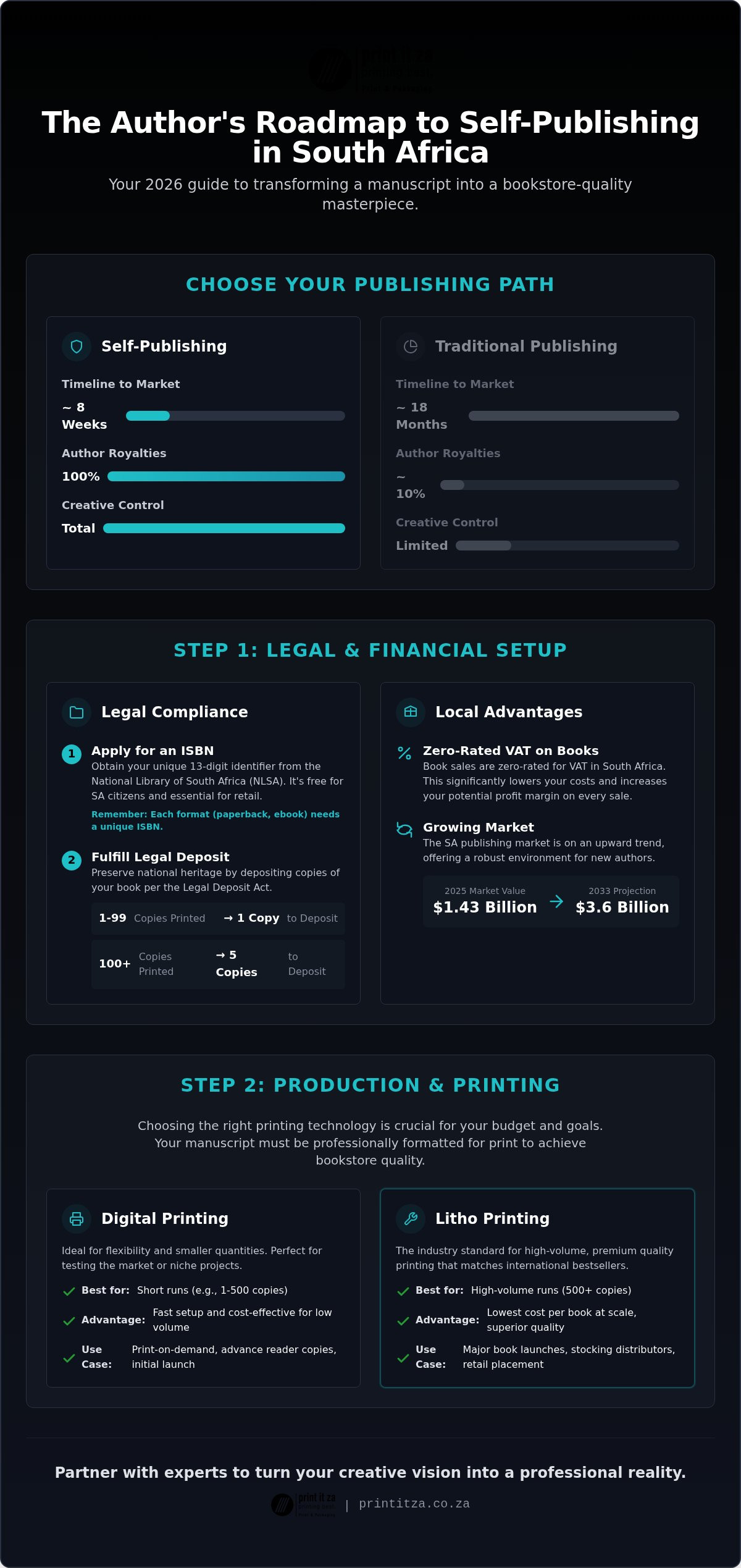
The era of waiting for a rejection letter from a traditional publisher is officially over. The South African publishing market generated $1.43 billion in 2025, and this growth is increasingly driven by independent voices. Self-publishing in our local context has evolved from a “vanity” project into a sophisticated, professional business model. Today, authors are bypassing traditional gatekeepers to keep 100% of their intellectual property and royalties. You no longer need permission to share your story with the world.
In 2026, mastering how to self publish a book in South Africa means understanding that you are the CEO of your own literary brand. The old stigma of “self-made” looking amateurish has been replaced by a high-tier indie movement. Local writers are now using advanced litho and digital printing to produce books that are indistinguishable from international bestsellers. You aren’t just writing a story; you’re launching a retail product into a market projected to reach $3.6 billion by 2033. Success depends on professional execution and a clear roadmap from manuscript to shelf.
Self-Publishing vs. Traditional Publishing in SA
Choosing between these two paths often comes down to speed and financial control. Traditional publishing in South Africa can take up to 18 months to bring a manuscript to the bookstore. Self-publishing slashes that timeline to as little as 8 weeks. While a traditional house might offer a 10% royalty, self-publishing allows you to retain 100% of the profits after production. You also get the final word on every creative detail, from the weight of the paper to the specific finish on the cover.
The Rise of the “Author-Preneur”
Modern South African writers are shifting their mindset toward becoming “author-preneurs.” This means treating your book like a business startup. It requires a commitment to high standards that reflects the professionalism of our regional business community. A key differentiator for success is the physical quality of the book itself. Readers across the country still show a strong preference for print. If your book looks and feels like it belongs in a major retail store, it will sell like one. Building a local brand means partnering with experts who can turn a digital file into a bookstore-ready reality without the delays of legacy systems.
Legal Requirements: ISBNs and Legal Deposits in South Africa
Legal compliance is the backbone of any professional publishing journey. In our local market, the National Library of South Africa (NLSA) acts as the primary custodian of literary works. As a self-publisher, you’re legally considered the publisher of record. This means you’re responsible for securing an ISBN and fulfilling legal deposit obligations. Don’t let the administrative side intimidate you; the process is straightforward and, unlike many other countries, the essential identifiers are free for South African citizens.
Securing an ISBN is the first real step in learning how to self publish a book in South Africa for commercial retail. Without this 13-digit number, you can’t generate a barcode, and most bookstores won’t be able to list your title in their systems. It serves as the unique thumbprint for your book, ensuring that retailers and libraries can distinguish your work from millions of others globally. Remember that you need a separate ISBN for every format; your paperback, hardcover, and ebook versions each require their own unique number.
How to Apply for an ISBN via the NLSA
The application process is handled entirely online. First, you’ll need to download the application form from the official NLSA website. You’ll provide specific manuscript details, including the final title, the format, and whether it’s a first edition. Once you’ve filled this in, you submit the form via email to the ISBN office. In 2026, turnaround times are generally efficient, often taking between three to five business days. Once you receive your number, you can use a barcode generator to create the graphic for your back cover, ensuring it meets international retail standards.
Fulfilling Legal Deposit Requirements
Under the Legal Deposit Act 54 of 1997, every publisher in South Africa must provide copies of their work to designated places of deposit. This ensures our national heritage is preserved for future generations. Your obligations depend on your print run size. If you print 99 copies or fewer, you only need to deposit one copy. For runs of 100 copies or more, you’re required to provide five copies. These go to institutions like the NLSA in Pretoria and Cape Town, and the Mangaung Library Services. Non-compliance can lead to fines, so it’s best to handle this immediately after your first print authors books run is delivered.
Preparing Your Manuscript for Professional Printing
A manuscript isn’t a book until it’s been formatted for the physical world. Transitioning from a word processor to a bookstore shelf requires a shift in focus from storytelling to technical precision. If you want to know how to self publish a book in South Africa that actually sells, you must treat the preparation phase with the same rigor as a traditional publishing house. This stage is where your project moves from a simple document to a professional retail product.
Professional editing and proofreading are your first line of defense against poor reviews. A single typo on the first page can destroy your credibility with local retailers and readers alike. Beyond spelling, you need to consider layout specifications like gutter compensation. This is the extra space in the inner margin where the pages are bound. Without it, your text will disappear into the spine, making the book frustrating to read. Similarly, choosing between standard A5 or A4 sizes depends on your genre; novels thrive in A5, while manuals often require the space of an A4 layout.
South African English Standards
Localization is a powerful tool for connecting with local readers. Using South African English standards ensures your book feels authentic to a domestic audience. Whether it’s using “colour” instead of “color” or “programme” instead of “program,” these small details build trust. Johannesburg and Cape Town are home to world-class freelance editors who understand our linguistic nuances. Investing in local proofreading is often the difference between a book that stays on the shelf and one that gets recommended by local book clubs.
Technical Specifications for Print-Ready PDFs
Your printer needs a high-resolution PDF to ensure aesthetic excellence. One of the most common mistakes is submitting files in RGB color profiles. Digital screens use RGB, but professional litho and digital presses use CMYK. Converting your cover artwork to CMYK prevents unexpected color shifts during production. You also need to include a 3mm bleed on all sides for full-bleed images. This extra margin allows the printer to trim the pages without leaving white gaps at the edges. Always export your final file as a “Press Quality” PDF at 300 DPI to avoid pixelation. Mastering these technicalities is a vital part of learning how to self publish a book in South Africa with a result that rivals international bestsellers.
Printing Your Book: Litho vs. Digital Solutions
Choosing the right production method is one of the most significant financial decisions you’ll make. Your choice impacts your upfront costs, your retail price, and your final profit margins. When you’re figuring out how to self publish a book in South Africa, you need to match your print run to your actual sales strategy. A high-quality physical book is a powerful marketing tool, but only if the production method aligns with your business goals.
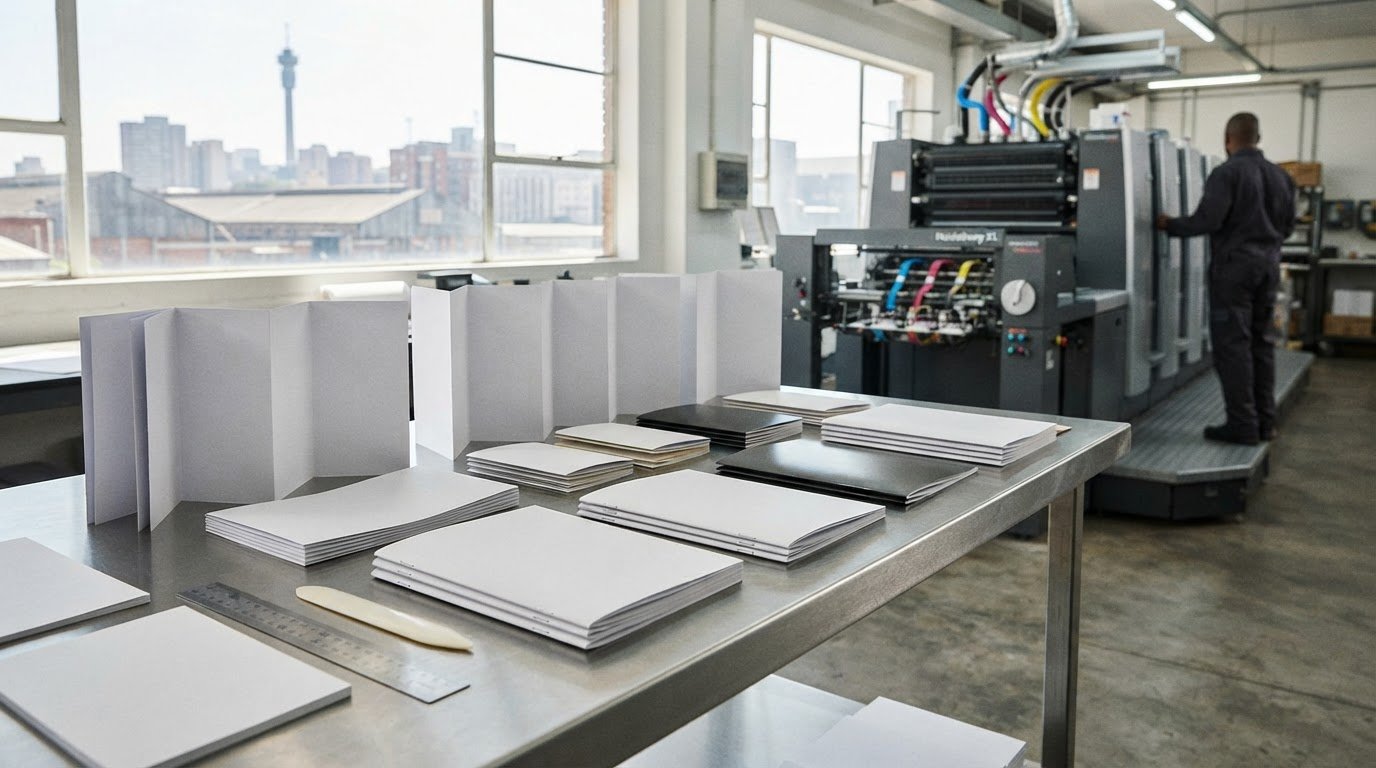
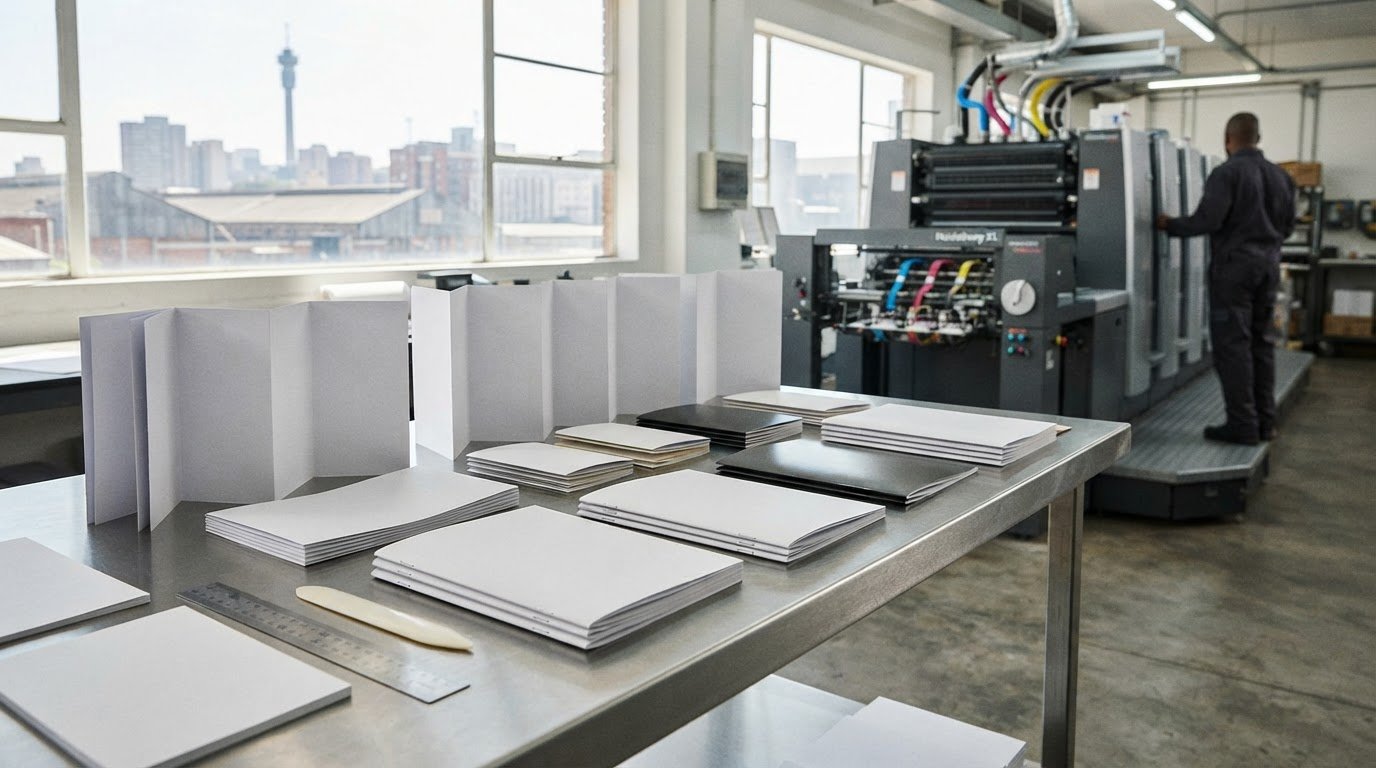
Binding also plays a vital role in the reader’s experience. Perfect bound books are the standard for paperbacks, using a strong adhesive to create a clean, squared-off spine. If you’re producing a premium coffee table book or a limited edition novel, case binding (hardcover) offers a level of durability and prestige that justifies a higher retail price. Selecting the right combination of binding and paper stock ensures your work feels substantial and professional.
Which Printing Method Fits Your Goal?
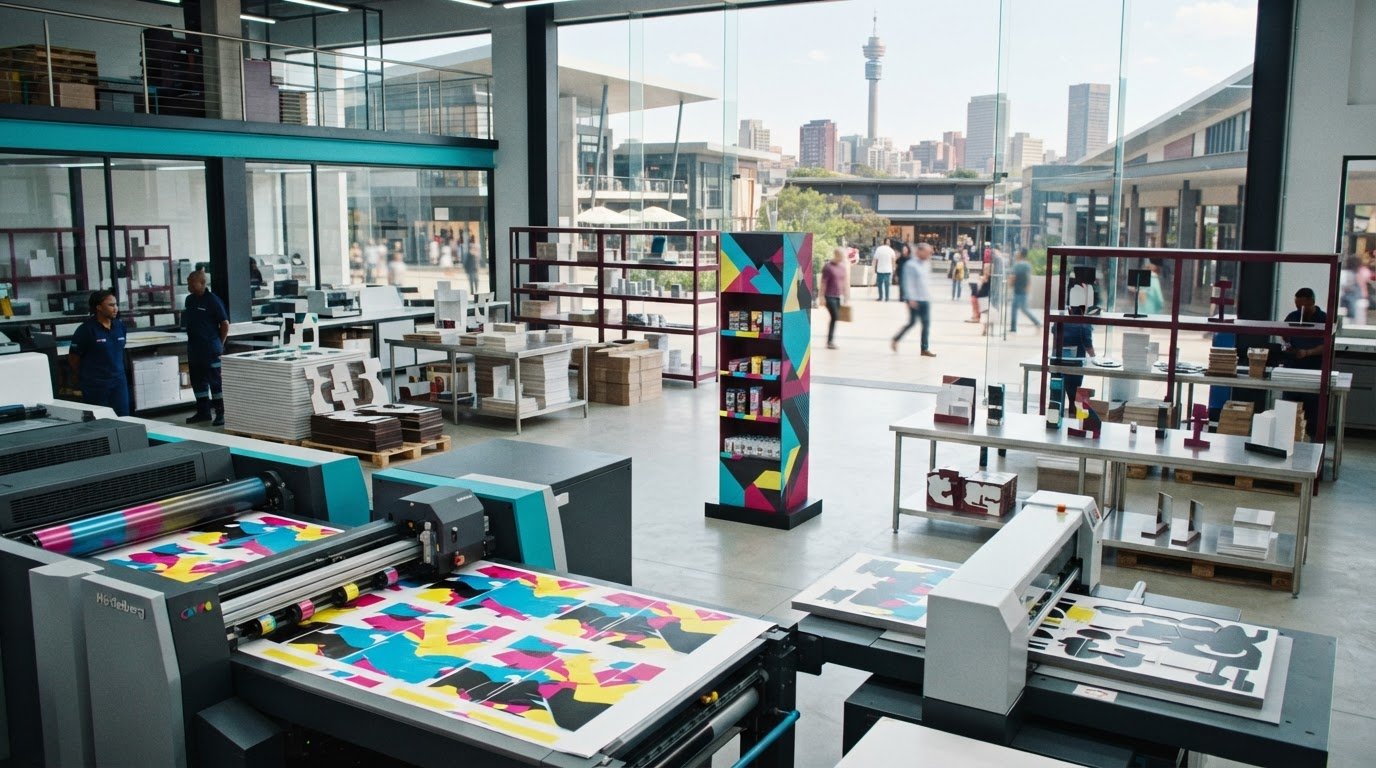
Digital printing is the perfect entry point for new authors. It’s ideal for short runs of 1 to 200 copies, offering a fast turnaround and a low entry cost. This allows you to test the market or fulfill pre-orders without a massive initial investment. However, as your audience grows, litho printing becomes the superior choice. For runs of 500 copies or more, litho offers a lower per-unit cost and unmatched color precision. Leading professional printing services in Johannesburg provide the flexibility to scale from a digital proof to a full litho run as your demand increases.
Choosing Materials for a Premium Feel
The “feel” of your book is determined by the Grams per Square Meter (GSM) of the paper. Most novels use an 80gsm or 100gsm bond paper. You can choose between a crisp white or a classic cream stock; cream is often preferred for fiction as it’s easier on the eyes during long reading sessions. For the cover, a 250gsm or 300gsm board with a matt or gloss lamination provides the necessary protection and aesthetic appeal. If you want to stand out, consider special finishes like Spot UV or foil. These tactile elements catch the light and the reader’s eye, signaling that your book is a premium product. To see these materials in person, you can contact our team for a consultation at our Midrand facility.
Distribution and Marketing in the South African Market
You’ve successfully navigated the production phase. Now it’s time to get your work into the hands of readers. While many guides focus exclusively on international platforms, understanding how to self publish a book in South Africa means mastering the local retail landscape. South African readers still have a deep affinity for physical books. To succeed, you need a distribution strategy that combines digital direct-to-consumer sales with a professional retail presence.
Selling through your own website or social media channels is the best way to maximize your profit. Since you’ve already handled the printing costs, you keep the full retail price minus small transaction fees from local payment gateways. However, building a brand often requires the prestige of a bookstore shelf. Whether you’re targeting independent shops in Johannesburg or aiming for national chains, your approach must be professional and outcomes-oriented.
Working with Local Bookstores
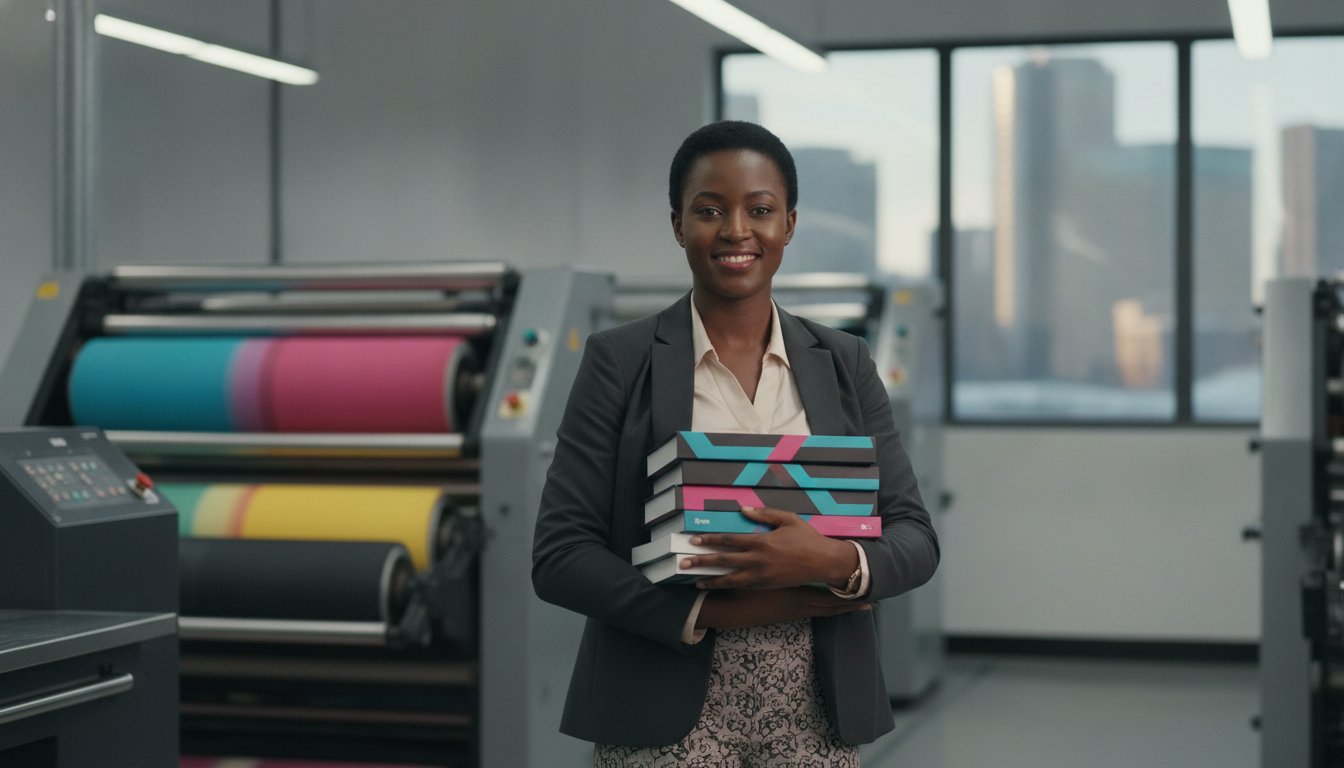
Independent bookshops in Pretoria and Johannesburg are often the most welcoming to local authors. These stores frequently support homegrown talent through consignment agreements. In these deals, the store takes a percentage of the sale, typically between 40% and 55% as per current retail trends, and pays you once the book sells. National chains like Exclusive Books have stricter requirements. They expect a high standard of cover design and a valid ISBN. When you pitch to a buyer, bring a finished copy to prove your book meets international quality standards.
Logistics and Fulfillment
Moving your stock from a warehouse to a customer’s doorstep is a critical part of the process. If you’re based in Gauteng, you’re at the heart of the country’s logistics hub. You need to ensure your books are packaged securely to prevent corner damage during transit. Softcover books are particularly vulnerable to bruising if they aren’t wrapped correctly. It’s these small details that separate a hobbyist from a professional author-preneur.
Partnering with the best print shop in Johannesburg simplifies this stage significantly. From our 24/7 facility in Midrand, we offer nationwide delivery that ensures your orders reach Cape Town, Durban, or Bloemfontein safely. This end-to-end support is a vital part of how to self publish a book in South Africa effectively. It allows you to focus on marketing and engaging with your audience at local literary festivals and book launches while we handle the heavy lifting of distribution.
Bring Your South African Story to Life
You’ve now mastered the essential steps of how to self publish a book in South Africa, from navigating the National Library’s ISBN requirements to selecting the perfect paper stock for a premium finish. By choosing the right printing method and ensuring your manuscript meets international retail standards, you’ve moved beyond the “hobbyist” stage and into the world of professional author-preneurship. Your story deserves a physical form that reflects the hard work you’ve put into every page.
Whether you’re starting with a short digital run to test the local market or scaling up with high-volume litho printing for national distribution, the right partner makes all the difference. We provide the technical expertise and regional reliability you need to succeed. With our 24/7 Production Capacity, Expert Litho & Digital Printing, and Nationwide SA Delivery, we’re here to bridge the gap between your digital file and a bookstore-ready reality.
Ready to print your masterpiece? Get a custom quote from Print It ZA today.
The South African literary landscape is growing, and there’s never been a better time to share your unique voice. We can’t wait to see your finished book on the shelves.
Frequently Asked Questions
How much does it cost to self-publish a book in South Africa?
Self-publishing costs vary based on your choice of editors, cover designers, and the size of your print run. While you’ll pay for professional services, books are zero-rated for VAT in South Africa, which helps manage your budget. You should account for editing and formatting as your primary upfront investments. The final production cost depends on whether you choose a short digital run or a larger litho project to lower the per-unit price.
Is an ISBN free in South Africa?
Yes, an ISBN is provided free of charge to South African publishers by the National Library of South Africa (NLSA). You don’t need to pay third-party sellers to secure a valid number for your work. Once you register as a publisher with the NLSA, you can apply for your number online. This free service is a significant benefit for anyone learning how to self publish a book in South Africa on a budget.
How many copies of my book do I need to give for Legal Deposit?
Your legal deposit obligations depend on the size of your print run. For a run of 99 copies or fewer, you only need to deposit one copy with the National Library. If your print run is 100 copies or more, the law requires you to submit five copies. This is a mandatory requirement under the Legal Deposit Act of 1997 to ensure the preservation of our national literary heritage.
Can I sell my self-published book on Amazon and in local stores simultaneously?
You can absolutely sell your book on Amazon and in local South African bookstores at the same time. Many local authors use Amazon.co.za for online reach while partnering with independent shops in Johannesburg for physical presence. Using a multi-channel approach helps you reach different segments of the market. Just ensure your local print quality matches international standards so your physical stock looks professional next to traditionally published titles.
What is the standard book size for novels in South Africa?
The standard size for novels in the South African market is typically A5 (148 x 210mm). This size is cost-effective for printing and fits perfectly on standard retail bookshelves. Some authors choose custom trade sizes for a more premium feel, but A5 remains the go-to for most fiction and non-fiction titles. Choosing this standard helps ensure your book is compatible with the shelving systems used by major local retailers.
How long does the printing process take once my files are ready?
Printing times depend on the complexity of your project and the method you choose. Short-run digital printing is usually faster, while high-volume litho projects require more setup time. Our 24/7 operational facility in Midrand allows us to maintain high-energy production speeds and meet tight deadlines. Once your files are print-ready, we move quickly to production and nationwide delivery, making the process of how to self publish a book in South Africa efficient and reliable.
Do I need to register a business to self-publish a book?
You don’t need to register a formal company to self-publish; you can publish under your own name as an individual. However, if your book sales grow significantly, you’ll need to keep an eye on VAT registration thresholds. As of 2026, compulsory VAT registration starts at R2.3 million in annual turnover. Many authors start as individuals and only register a business entity once their publishing activities become a more significant commercial venture.
What is the difference between a paperback and a softcover book?
In the professional printing industry, these terms are often used interchangeably to describe a book with a flexible cardstock cover. Paperback is the common term for fiction novels, while softcover is a broader category that includes manuals, brochures, and catalogues. Both typically use perfect binding, where the pages are glued into a squared-off spine. Whether you call it a paperback or a softcover book, the focus is on durability and retail appeal.