
The lowest quote you receive for your book project might actually be the most expensive mistake you make this year. It’s a common trap for authors who realize too late that a bargain price often leads to flimsy covers or retail margins that vanish into thin air. When you’re looking for the best self publishing printing south africa has to offer, you’ve likely felt overwhelmed by technical jargon like GSM weights or the logistics of managing nationwide delivery from a hub in Johannesburg. You’ve poured your heart into every page, and you deserve a finished product that reflects that dedication.
We agree that the technical side of book production shouldn’t feel like a barrier to your success. This 2026 guide is designed to help you master the logistics and technical standards required to produce a professional, shelf-ready book that stands out on any bookstore shelf. You’ll learn how to choose the right binding for your genre, how to lower your unit costs for better profits, and what to look for in a reliable local printing partner in Gauteng. We’re going to take the guesswork out of the process so you can focus on your next bestseller.
Key Takeaways
- Discover why physical books still dominate the local market and how to leverage this trend for your upcoming launch.
- Learn the exact break-even point between digital and litho technology to ensure your self publishing printing south africa project remains profitable.
- Master technical specifications like GSM and binding types to create a premium, shelf-ready product that readers love to hold.
- Avoid common production errors by correctly setting up bleeds, margins, and the CMYK colour space before your manuscript hits the press.
- Scale your distribution with rapid 24/7 printing cycles and reliable nationwide delivery from a local Gauteng partner.
Understanding the Self-Publishing Printing Landscape in South Africa
The South African literary scene is undergoing a massive shift. Independent authors are no longer on the fringes; they are taking control of their own narratives and commercial success. To grasp this evolution, it helps to look at the history and overview of self-publishing, which reveals how technology has empowered writers to bypass traditional gatekeepers. In our local market, physical books continue to dominate sales figures. While eBooks have their place, South African readers still show a strong preference for the tactile experience of a well-printed paperback or a premium coffee table book.
Your choice of a professional printer is the most critical link in the self-publishing value chain. A high-quality finish turns a simple manuscript into a retail-ready product that can compete with international bestsellers. Choosing the right partner for self publishing printing south africa ensures that your hard work doesn’t just end up as a digital file, but as a tangible asset that bookstores are proud to stock.
Why Local Printing Beats International POD
Many authors consider international print-on-demand (POD) platforms, but they quickly run into logistical walls. High import duties and unpredictable international shipping delays can eat your margins and frustrate your readers. By choosing a local partner in Gauteng, you gain direct control over the process. You can verify paper quality, test different finishes, and ensure the final product meets your standards without waiting weeks for an overseas proof. Working locally also supports our regional creative economy and ensures faster turnaround times for restocking local shelves.
Defining Your Publishing Goals for 2026
Success starts with a clear strategy before the first page hits the press. You must decide if you are producing a limited edition run for a niche audience or aiming for wide retail distribution. In South Africa, you need to register an ISBN through the National Library; it is a free process but essential for any book intended for sale. Once you have your ISBN, work backward from your desired retail price. Your unit cost will determine your profit margins, especially if you plan to sell through major retailers. Understanding these numbers early helps you choose the most efficient technology for your self publishing printing south africa journey, whether you need fifty copies or five thousand.
Digital vs. Litho Printing: Which Technology Suits Your Book Run?
Choosing the right press is a business decision that dictates your profit margins. In the past, self-published authors had to settle for lower quality if they weren’t printing thousands of copies. By 2026, technology has advanced so much that the average reader can’t distinguish between a digitally printed novel and a lithographic one. The real difference lies in your volume and your budget. For most authors entering the world of self publishing printing south africa, the choice depends on whether they are testing the waters or launching a full-scale retail campaign.
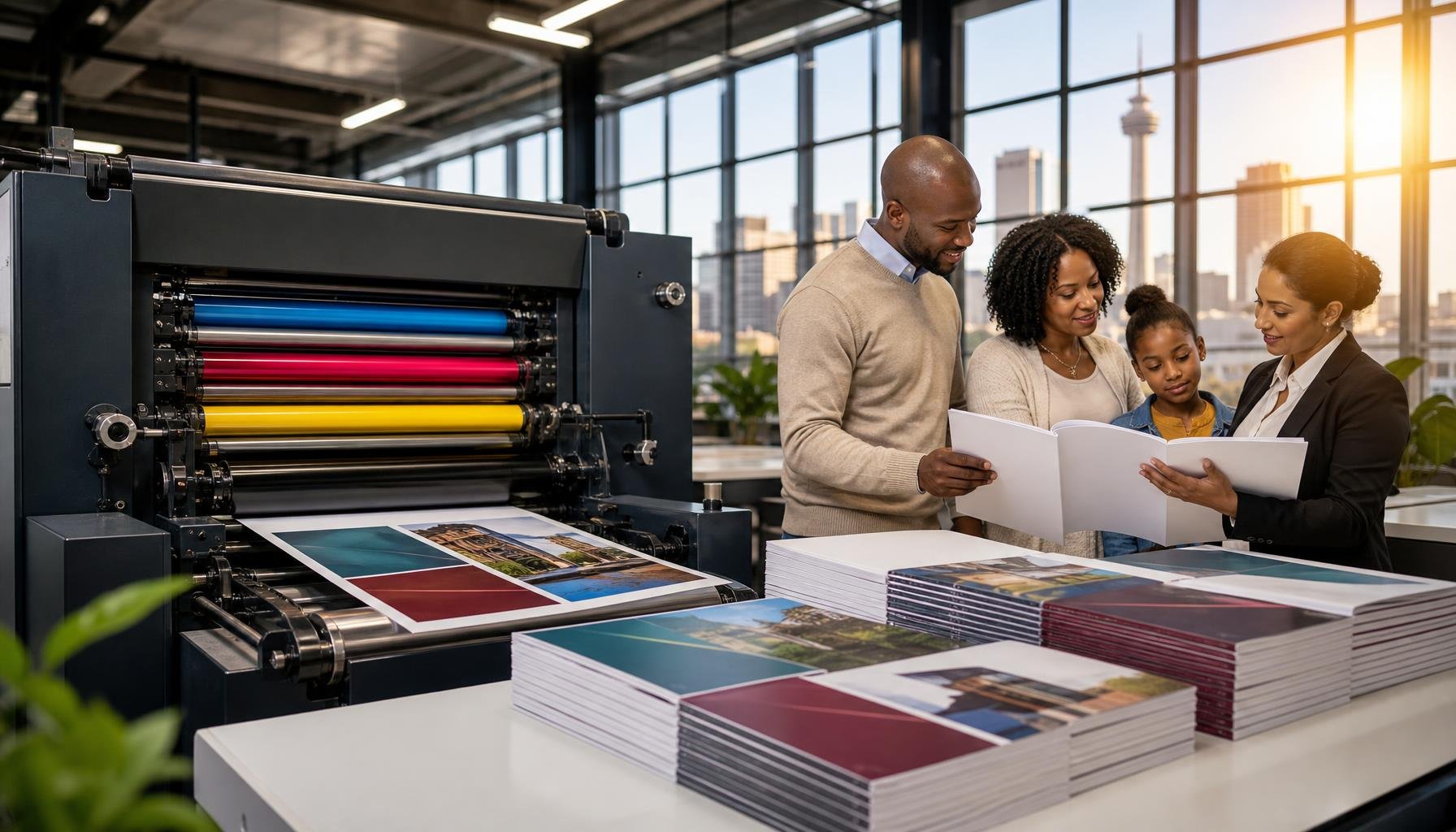
Our 24/7 facility in Midrand is designed to handle both paths with precision. The technology we use affects more than just the look of the book; it determines how quickly you can react to market demand. If a social media post goes viral, you need a partner that can pivot from a small digital batch to a massive litho run without missing a beat. Understanding these mechanical differences helps you avoid over-investing in stock that might sit in a garage.
When to Choose Digital Printing
Digital printing is the perfect entry point for runs between 10 and 500 copies. Since there are no expensive plates to create, you don’t face massive setup fees. It offers incredible flexibility for inventory management; you can print what you need and restock as orders arrive. In our 24/7 Midrand facility, digital setups are fast, making it the best choice for urgent Johannesburg book launches or niche projects like personalized kids books.
When to Scale to Litho Printing
If you’ve proven your market or need high volumes for schools or religious groups, litho is the gold standard. Once you exceed 1,000 copies, the unit price drops significantly. It provides superior colour consistency for high-end coffee table books and allows for specialized paper stocks that aren’t compatible with digital presses. Scaling to litho for self publishing printing south africa ensures your retail margins remain healthy as you grow. If you aren’t sure which path fits your manuscript, you can explore our book printing options to see how we balance speed and cost.
The beauty of modern manufacturing is that you don’t have to choose one forever. Many successful authors start with a digital “test run” of 100 copies to check for any final typos or layout issues. Once the demand is proven, they move to a litho run of 2,000 copies to get the best possible price per unit. This hybrid approach minimizes your risk while maximizing your professional output.
Selecting the Right Specs: Binding, Paper, and Finishes
The tactile experience of your book transforms a simple manuscript into a professional product. When readers pick up your work, they shouldn’t just see your story; they should feel the quality. Choosing the right specifications is a critical step in self publishing printing south africa, as these choices directly impact your production costs and retail appeal. Every detail, from the weight of the paper to the texture of the cover, tells the reader what to expect before they read a single word.
Our team in Midrand understands that these technical decisions can feel overwhelming. Whether you’re aiming for a sleek matte finish or a classic hardcover, the goal is to create a book that feels at home on any Exclusive Books shelf. Getting the specs right ensures your book doesn’t just look the part but lasts for years to come.
Popular Binding Methods for SA Authors
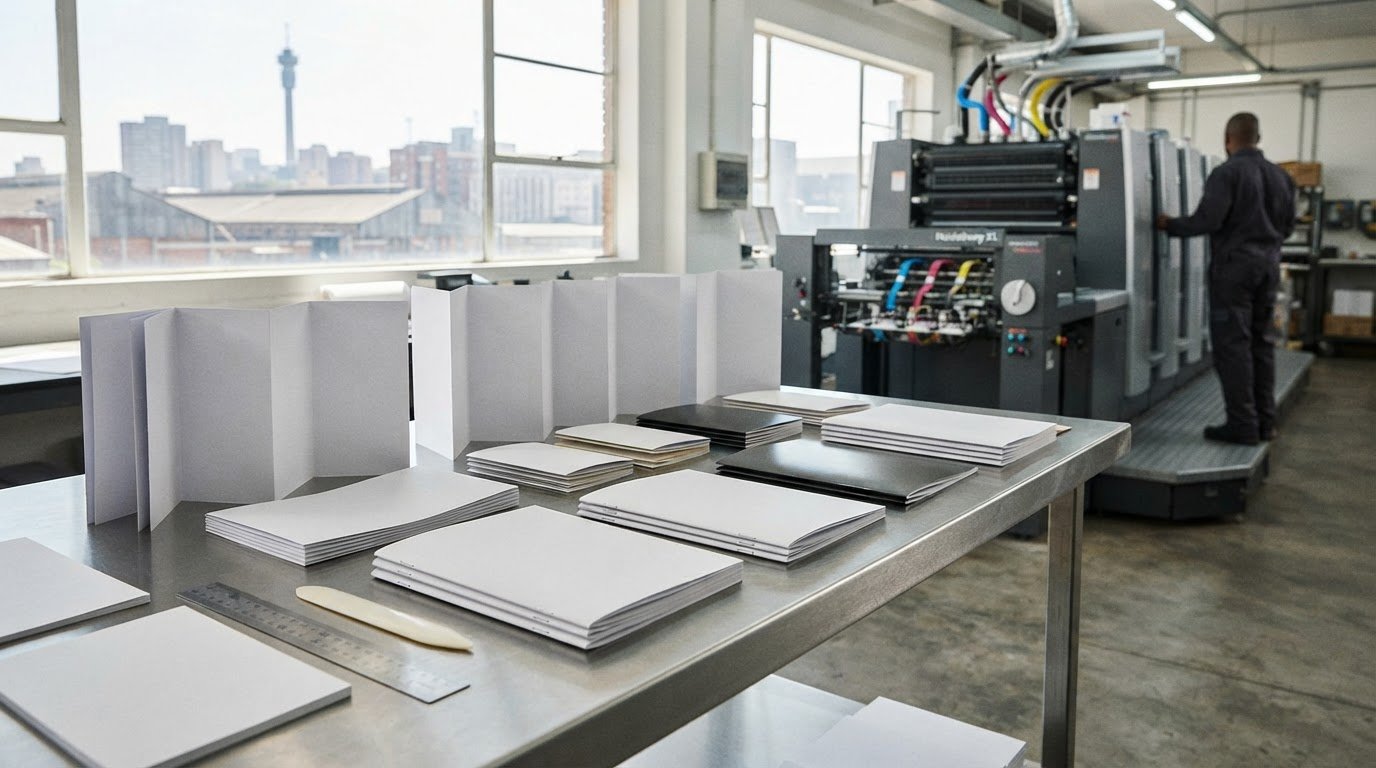
- Perfect Binding (PUR): This is the industry standard for softcover novels. It uses a strong adhesive to attach pages to a wrap-around cover, creating a clean, squared-off spine that looks professional.
- Case Binding: For authors wanting a premium feel, case binding creates a durable hardcover. It’s the go-to choice for coffee table books or special editions where high perceived value is paramount.
- Saddle Stitching: This method uses staples along the fold. It’s the most cost-effective choice for shorter publications like booklets, manuals, or children’s colouring books.
Selecting Your Interior Paper Stock
The paper you choose sets the mood for your content. For standard fiction, cream-coloured paper is often preferred because it reduces eye strain during long reading sessions. In contrast, white paper provides the high contrast needed for non-fiction or textbooks with charts and diagrams. You also need to consider the weight, measured in GSM (grams per square meter). Most novels use 80gsm to 100gsm for the interior, while covers typically require 250gsm to 350gsm to prevent curling.
We’re seeing a rising demand for sustainable and eco-friendly paper options across South Africa. Using recycled or FSC-certified stocks is a great way to align your book with modern environmental standards. If you’re including high-resolution photos, coated paper (available in matte or gloss) ensures that the ink doesn’t soak in too deeply, keeping your images crisp and vibrant.
Professional Finishes and the Spine Trap
Don’t overlook the impact of specialty finishes. A matte lamination with a Spot UV highlight on your title can make a cover “pop” under retail lighting. Foil stamping adds a metallic, luxury feel that works exceptionally well for fantasy or historical genres. Remember that your binding choice and paper thickness will dictate your spine width. You shouldn’t finalize your cover design until your printer confirms the exact spine measurement based on your specific page count and paper GSM. This prevents your title from drifting onto the front or back cover. Getting these technical details right is why working with a local self publishing printing south africa partner is so valuable for final quality checks.

Preparing Your Manuscript for Professional Printing
You’ve finalized your story and selected your premium specs. Now comes the most technical phase: file preparation. Small errors in your digital documents can lead to significant issues on the press, which is why technical accuracy is the backbone of successful self publishing printing south africa. Your computer screen displays colours using light in an RGB space, but professional printing uses CMYK ink. If you don’t convert your artwork to CMYK before exporting, your vibrant cover might lose its punch once it hits the paper.
Exporting a high-resolution, print-ready PDF is your final hurdle. Ensure you embed all fonts within the file so your chosen typography doesn’t default to a generic font during the print cycle. This simple step preserves your creative vision and prevents layout shifts that could ruin your page numbering or headers. Our 24/7 facility in Midrand is equipped to catch many of these issues, but starting with a clean file ensures a faster turnaround for your launch.
The Technical Pre-Flight Checklist
Before you hit send, run through a professional checklist to guarantee crisp results. All images must be at least 300 DPI; anything lower will appear blurry or pixelated in print. If your layout includes complex layers or shadows, check your transparency and overprint settings to ensure they flatten correctly. A bleed is the 3mm safety zone for trimming. This extra space ensures that your background colours extend perfectly to the edge of the page, even if the industrial cutters shift by a fraction of a millimetre during the final bind.
The Importance of Physical Proofing
A digital proof is excellent for a final read-through, but it won’t show you how the ink interacts with your chosen paper stock. We always recommend a physical proof copy to verify colour accuracy and alignment. It’s your last chance to feel the weight of the book and ensure the margins provide a comfortable reading experience. You can see how we integrate these quality checks into our larger workflow in our guide to Professional Printing Services in Johannesburg.
Checking a physical copy helps you spot alignment issues on the spine or typos that your eyes missed on a glowing screen. It’s a small investment that prevents the heartbreak of a large run with a visible error. If you’re feeling stuck on the technical details, you can chat with our in-house design team to ensure your files are press-ready and perfect for the South African market.
Scaling Your Success: Distribution and Bulk Printing with Print It ZA print and packaging
Once your files are press-ready, the focus shifts to how quickly you can get your work into a reader’s hands. In the competitive landscape of self publishing printing south africa, timing is often the difference between a successful launch and a missed opportunity. Our 24/7 operational facility in Midrand ensures that we don’t just print during standard office hours. We work around the clock to meet your deadlines, allowing for a rapid market response that traditional publishing houses simply can’t match. If your book goes viral or a local bookstore requests an urgent restock, our team is ready to pivot and deliver.
Scaling from a handful of copies to a massive retail run requires a partner that understands the mechanics of growth. We provide the flexibility to move from short-run digital batches to high-volume litho printing without compromising on quality. This scalability ensures that your unit costs decrease as your audience grows, protecting your profit margins as you enter the retail market. By leveraging both technologies under one roof, we help you transition from a “test” run to a national bestseller seamlessly.
Logistics and Distribution for SA Authors
Distribution is the pulse of your publishing business. We manage the heavy lifting by handling nationwide delivery logistics from our Gauteng hub to Cape Town, Durban, and every town in between. For authors managing high-volume sales, we offer warehousing and kitting services. This means we can store your stock and bundle books with marketing materials or promotional inserts before they’re shipped. If you’re looking for global reach, we also facilitate international export logistics to ensure your work reaches readers beyond our borders. Selecting a partner with these capabilities is essential, as detailed in The Essential Guide to Finding the Best Print Shop in Johannesburg.
Partnering with Print It ZA print and packaging
Beyond the advanced machinery, we offer a dedicated human connection. Our in-house design and structural team is available to help with final layout refinements, ensuring your cover and interior meet professional retail standards. Every complex book project is assigned a dedicated account manager who acts as your primary point of contact. This mentor-like approach ensures that you’re never left wondering about the status of your project. We value your vision and your time, providing a streamlined process from the initial quote to the final delivery at your doorstep. Print It ZA print and packaging positions itself as a reliable creative partner that understands the unique needs of the South African author.
Ready to turn your manuscript into a professional reality? Start your self-publishing journey with a professional print quote and see how our 24/7 facility can bring your story to life.
Bringing Your Story to the South African Shelf
Successful publishing isn’t just about the words on the page; it’s about the technical choices that turn a manuscript into a professional product. By matching your volume to either digital or litho technology, you protect your margins and ensure your book is priced for profit. Mastering specifications like paper GSM and binding types allows you to compete with international bestsellers while maintaining a local footprint. When you finalize your file preparation with correct bleeds and CMYK colour spaces, you remove the barriers between your vision and a shelf-ready masterpiece.
Mastering the world of self publishing printing south africa is easier when you have a dedicated partner by your side. Print It ZA print and packaging operates a 24/7 production facility in Midrand, equipped with both litho and digital specialists to handle projects of any scale. With nationwide delivery and in-house design support, we ensure your books reach readers across the country with speed and precision. You’ve done the hard work of writing; now it’s time to see your name in print.
Request a Custom Book Printing Quote Today and take the final step toward becoming a published author. We’re ready to help you build your literary legacy.
Frequently Asked Questions
How much does it cost to self-publish a book in South Africa?
Pricing in South Africa varies based on your specific production choices like paper stock and finishing. While zero-rated VAT helps keep books accessible, your final budget depends on the balance between quality and volume. We recommend requesting a custom quote to evaluate how your specs impact your retail price point. This allows you to plan your project with financial precision from the start.
What is the minimum number of books I can print?
You have the freedom to print exactly what your market demands. Digital technology makes short runs of ten to fifty copies highly affordable for proofing or niche launches. As your audience expands, we scale your production to high-volume litho runs. This flexibility is a cornerstone of self publishing printing south africa, ensuring you aren’t forced into holding excessive inventory you don’t need.
Do I need an ISBN to print my book in South Africa?
You don’t need an ISBN for personal projects, but it is mandatory for selling through major South African retailers. The National Library of South Africa provides these numbers for free to local authors. It’s a quick online process that should be finalized before you go to press. Having this number ensures your work is properly indexed in the national bibliography and retail systems.
What is the difference between perfect binding and case binding?
Perfect binding is the standard for softcover paperbacks, using a durable adhesive for a clean, squared-off spine. Case binding is the technical term for premium hardcover books where the interior is bound into a rigid board. While perfect binding is cost-effective for high-volume novels, case binding provides the durability and prestige required for high-end coffee table books or special commemorative editions.
Can I print a hardcover book in Johannesburg with a fast turnaround?
Yes, our 24/7 facility in Midrand is specifically equipped for rapid hardcover production. Many shops outsource case binding, causing delays, but we handle the process in-house to ensure faster turnaround times for Johannesburg authors. This allows you to launch a premium product without waiting weeks for assembly. Our central Gauteng location ensures that your finished hardcovers are ready for immediate nationwide distribution.
How long does the book printing process take from start to finish?
Timelines depend on the complexity of your project and the specific binding required. A standard digital run can be ready in a few business days, whereas complex litho projects with specialty finishes take slightly longer. Because Print It ZA print and packaging operates around the clock, we significantly reduce the standard industry waiting period. We move your manuscript through production and finishing with high-energy efficiency.
What paper weight (GSM) should I use for a standard novel?
For a standard novel, an interior paper weight of 80gsm to 100gsm is the industry norm. An 80gsm bond is excellent for keeping the book light and readable, while 100gsm provides a more opaque, premium feel. We usually pair this with a 300gsm or 350gsm cover stock. This combination ensures your book feels substantial in a reader’s hands and resists curling on a retail shelf.
Does Print It ZA print and packaging help with book cover design?
Our in-house design and structural team is available to help you refine your cover and interior layout. We ensure your files meet all technical requirements, such as correct bleed margins and CMYK colour conversion, before they hit the press. This collaborative approach helps you avoid common production errors. Print It ZA print and packaging acts as a mentor to ensure your final product meets professional standards.