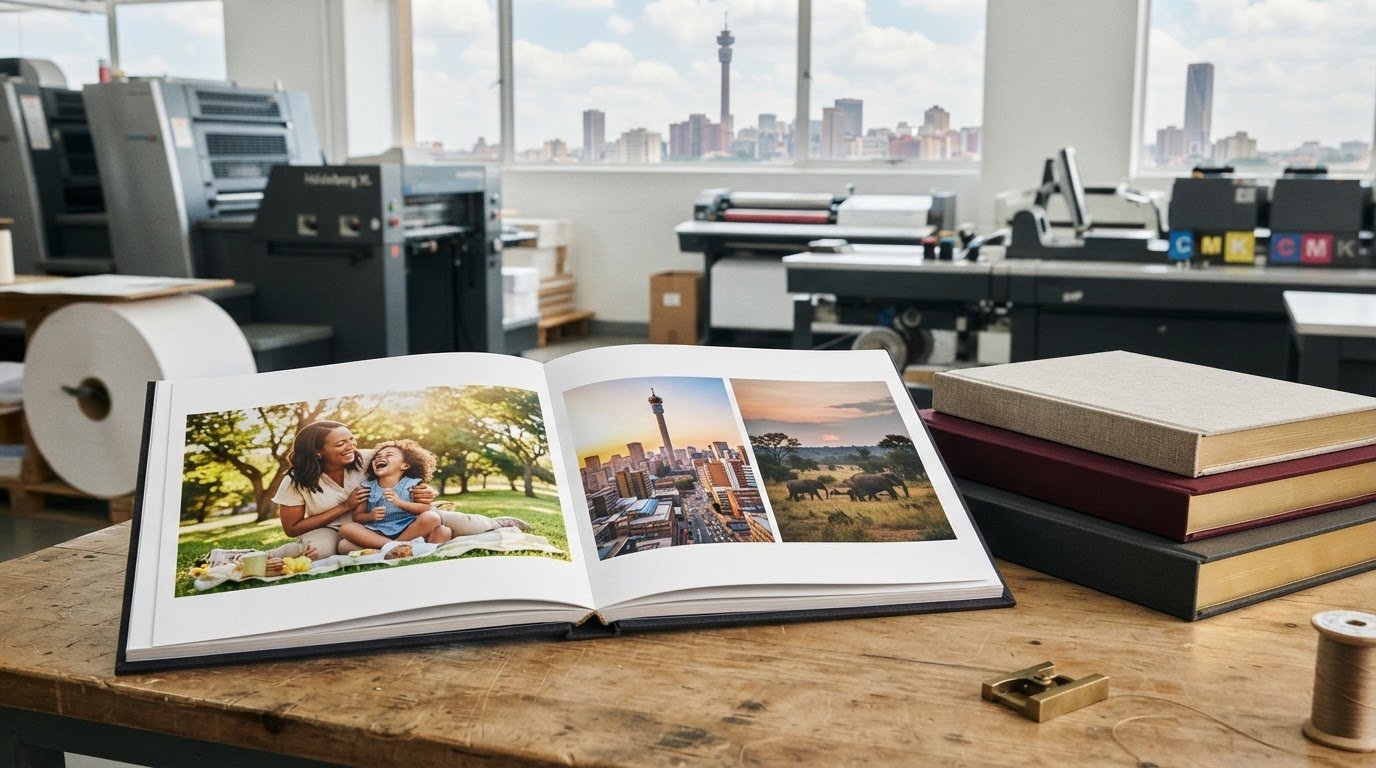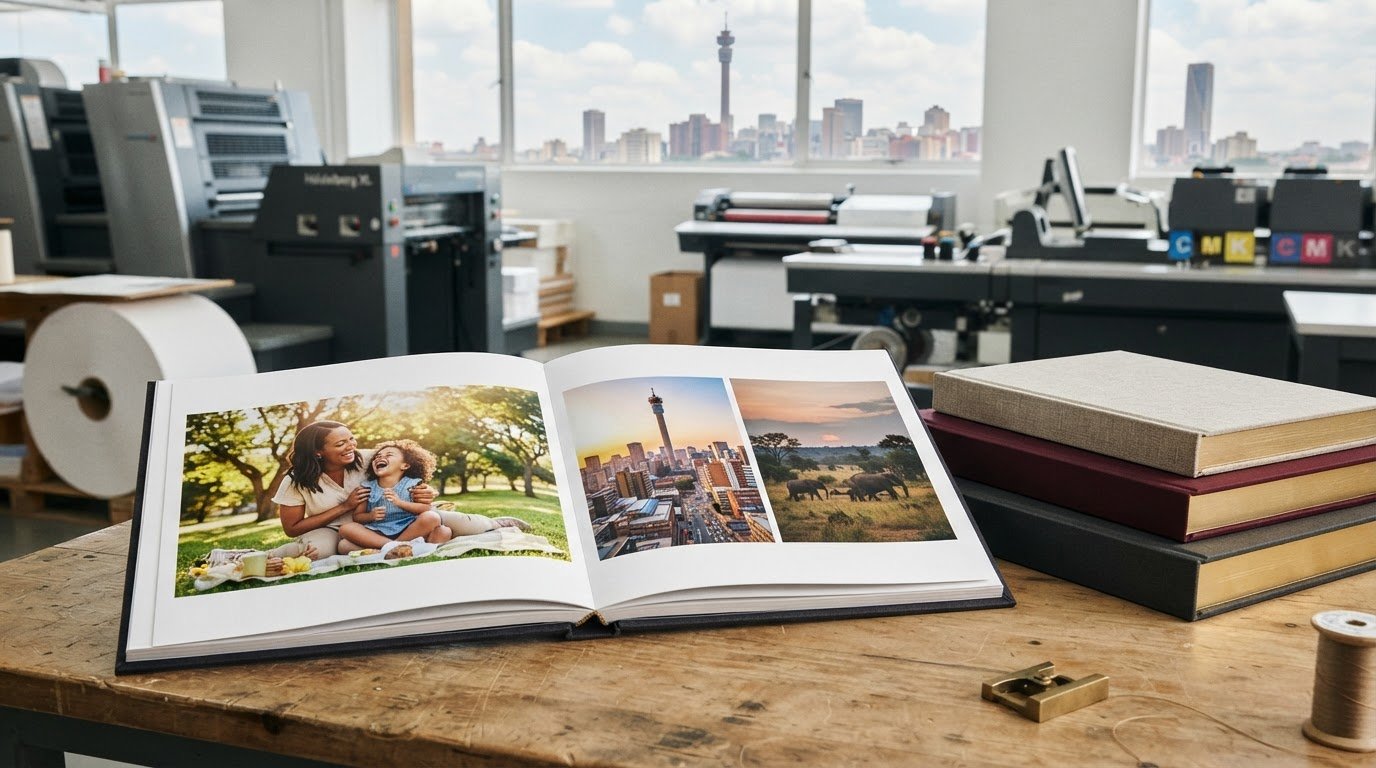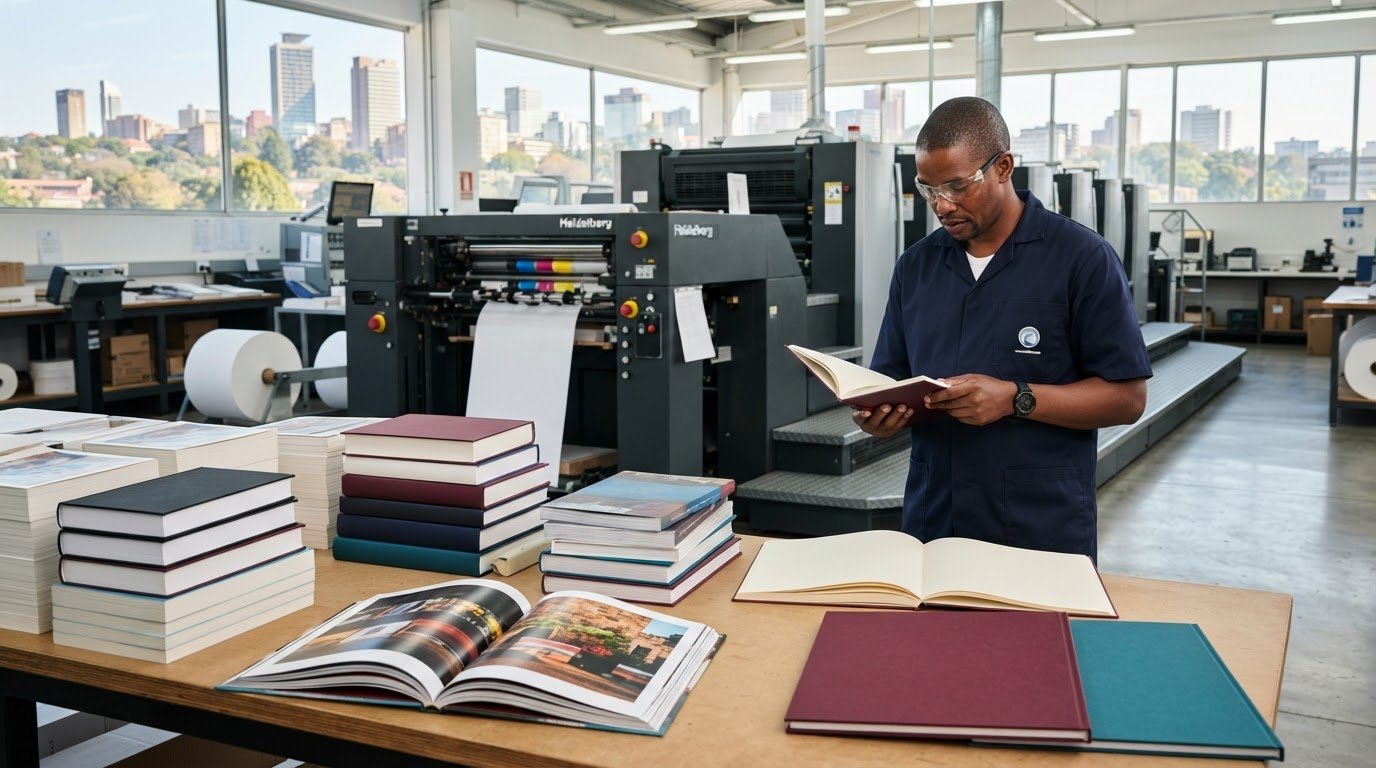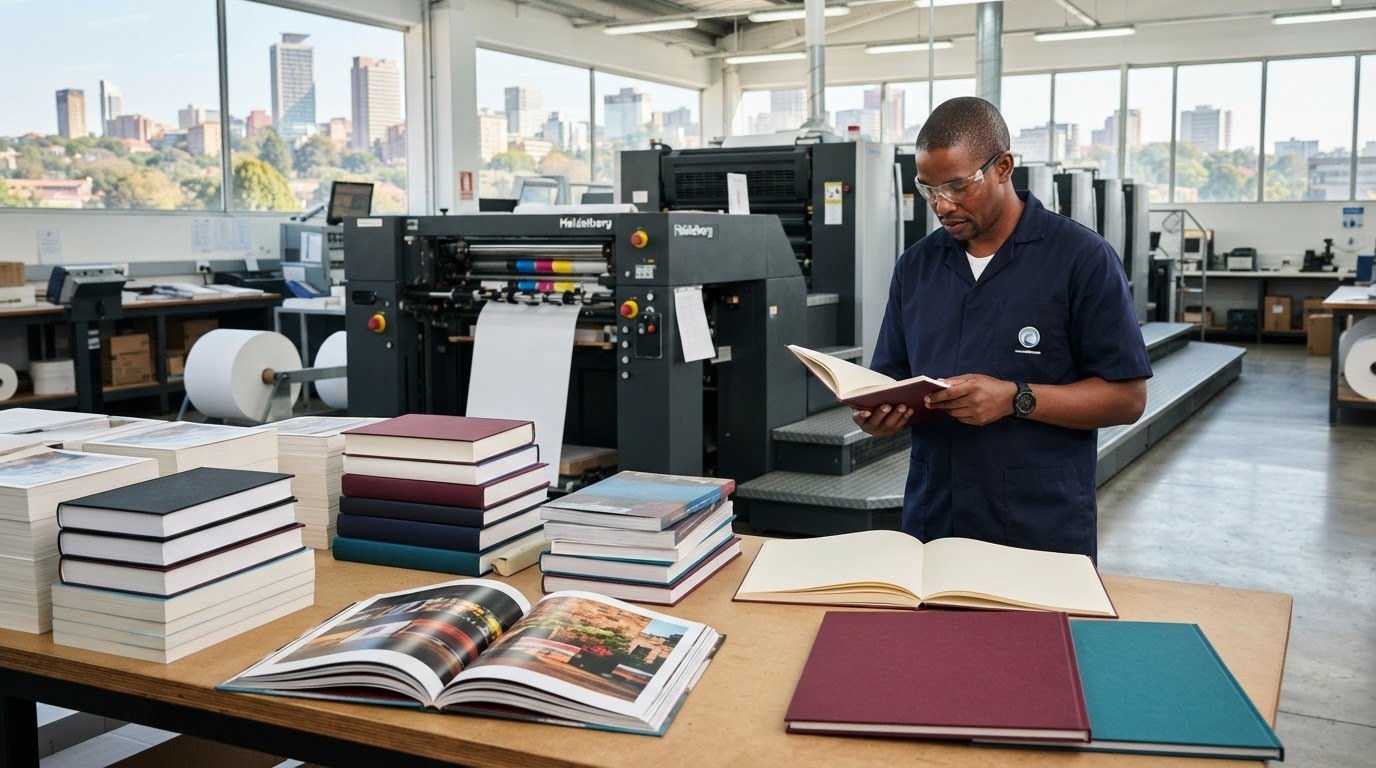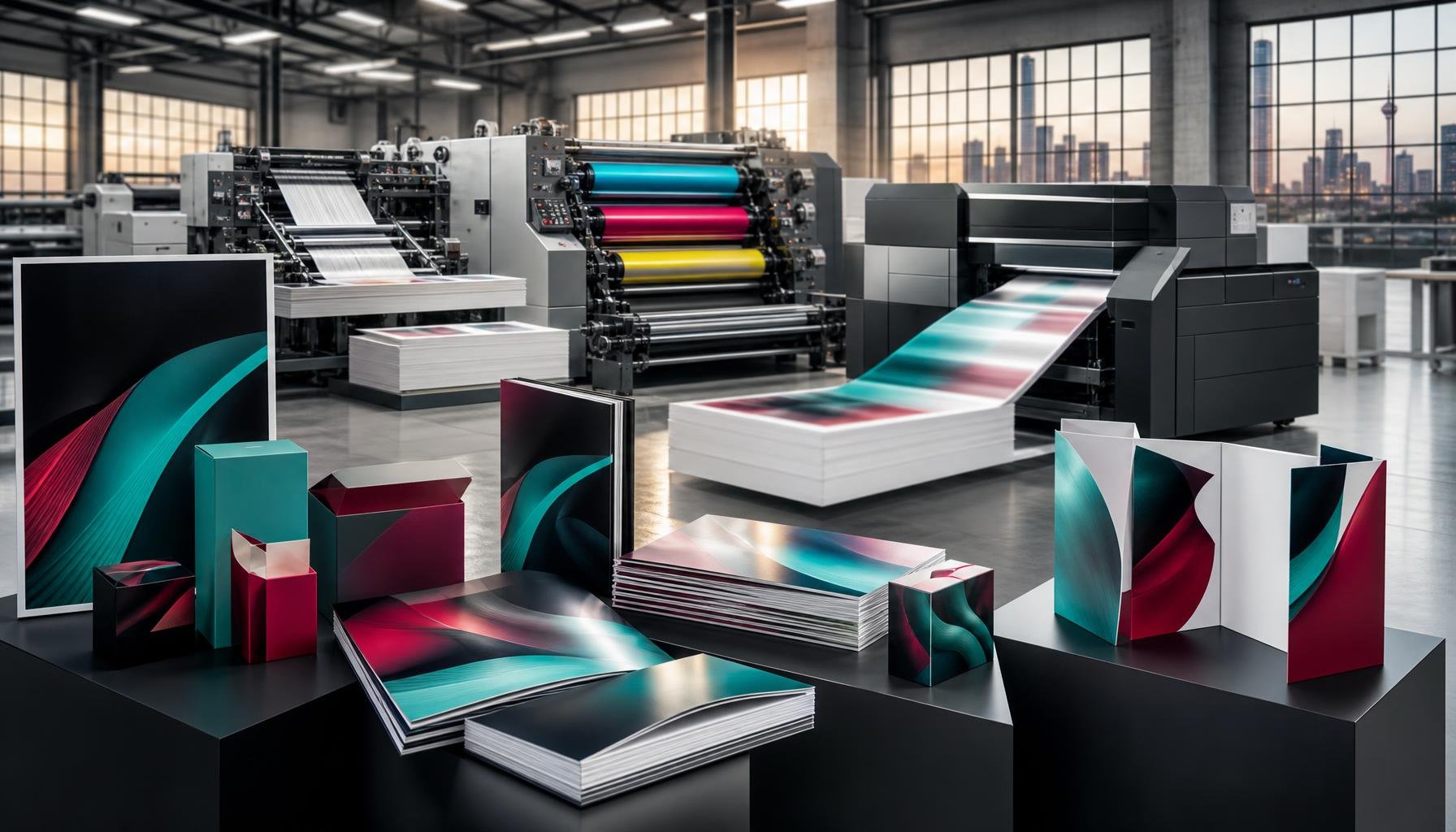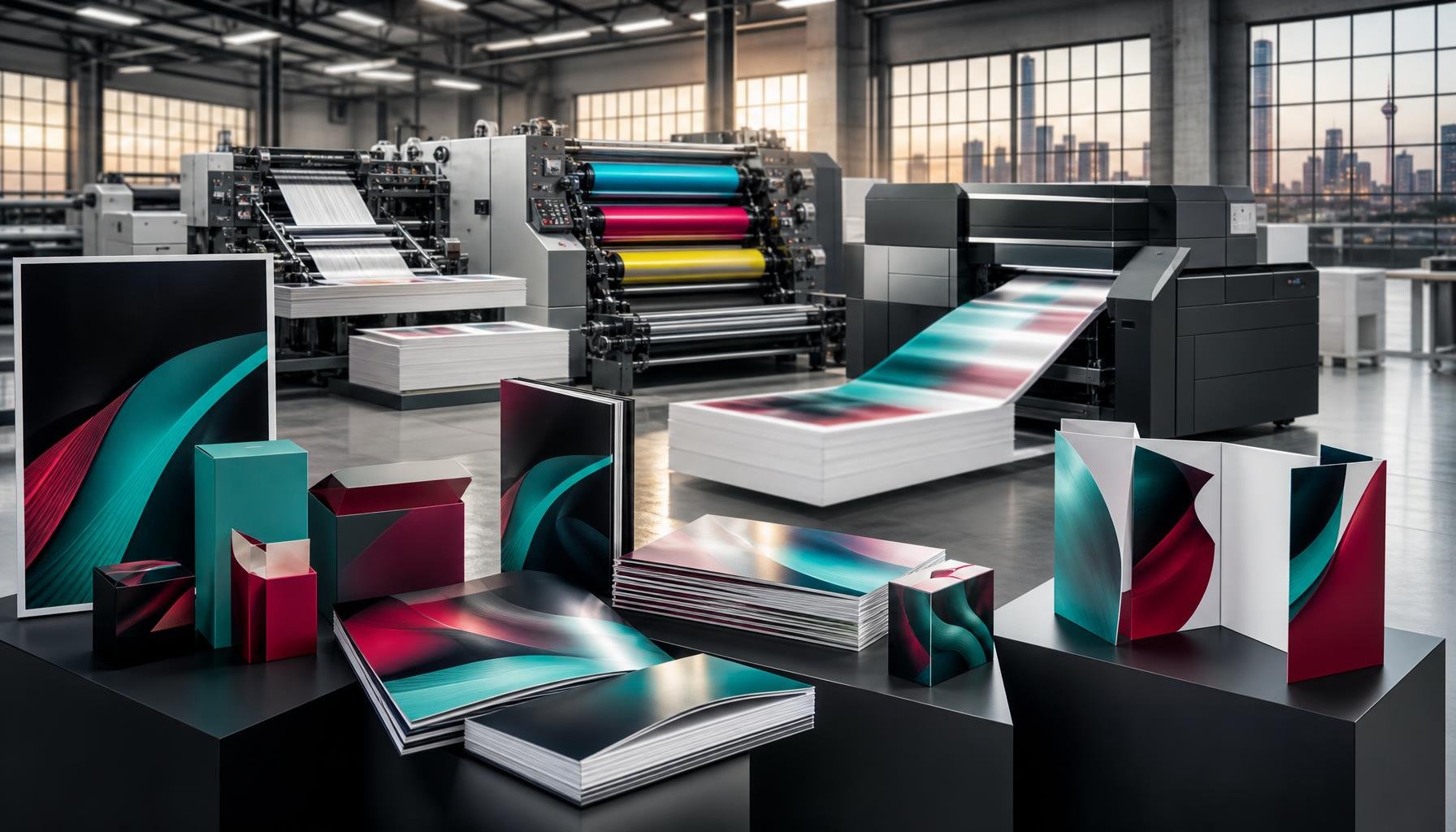

Short run book printing gives authors, schools, publishers, and businesses a practical way to print smaller quantities without committing to a large bulk order. Although large print runs can reduce unit cost, short run printing often makes more sense when flexibility, speed, testing, or budget control matter more. As a result, short run book printing has become a useful option for self-publishing, training material, niche books, pilot projects, and limited editions.In South Africa, short run book printing works well for novels, educational books, manuals, branded publications, church materials, internal company books, and custom publishing projects. Because of that, this topic connects directly with books printing, graphic design services, booklet printing, textbook printing, and training manual printing.

What is short run book printing?
Short run book printing is the production of a smaller quantity of books instead of a large bulk print order. In simple terms, it allows you to print only the number of books you currently need. That may be a small launch batch, a test quantity, a training run, or a limited edition.
Because of that, short run book printing gives more flexibility than traditional high-volume production. Instead of carrying large stock from the start, you can print in stages and adjust as needed.
Why does short run book printing matter?
Short run book printing matters because not every project needs hundreds or thousands of copies upfront. First, it helps reduce upfront cost. Then, it lowers the risk of overprinting. After that, it gives authors and organisations a way to test the market or produce books only when needed. Consequently, it offers a more practical path for many smaller or specialised projects.
That matters even more when the project is new, highly specific, or subject to regular updates. In those cases, printing fewer copies can be the smarter move.
| Why Short Run Printing Matters | How It Helps |
| Lower upfront spend | Reduces the cost of starting a project |
| Less stock risk | Avoids storing too many unsold copies |
| More flexibility | Lets you update or reprint in stages |
| Faster testing | Supports pilots, launches, and smaller batches |
| Better control | Helps match print volume to actual demand |
Who uses short run book printing?
Short run book printing helps many different users. For example, self-published authors use it to test demand before committing to a larger run. In the same way, schools and trainers may use it for smaller class groups or updated content. Businesses also use it for manuals, branded books, and internal publications where they only need limited quantities.
Therefore, short run printing supports both commercial publishing and practical internal use.
| User | Why Short Run Printing Helps |
| Authors | Supports launches, testing, and manageable first print runs |
| Schools | Allows smaller educational batches and content updates |
| Training providers | Supports class-based manual and guide production |
| Businesses | Works for internal books, manuals, and short-term projects |
| Publishers | Helps with niche titles and lower-risk inventory control |
If the project is educational or training-focused, it may also connect well with textbook printing, education printing, and training manual printing.
When should you choose short run book printing?
You should choose short run book printing when flexibility matters more than bulk unit pricing. First, it makes sense when you are launching a new title. Then, it helps when you expect updates or content changes. After that, it works well for smaller audiences, events, training groups, and limited distributions. As a result, short run printing becomes a strong option when demand is uncertain or intentionally limited.
On the other hand, if the book already has predictable demand at higher volume, a larger run may offer better value. So, the right choice depends on the real demand for the book.
What types of books suit short run printing best?
Short run printing suits books that do not need massive volume from the start. For example, niche non-fiction titles, church books, limited educational guides, event books, pilot textbooks, internal manuals, and test-market novels often work well in smaller runs. In the same way, books that may need regular revisions can benefit from smaller, more controlled production.
Because of that, short run printing works especially well when content may change or audience size is still being measured.
| Book Type | Why It Suits Short Runs |
| Self-published books | Helps test sales before scaling up |
| Training manuals | Supports smaller class or team quantities |
| Educational guides | Allows updates without overstock |
| Branded business books | Works for controlled internal distribution |
| Limited edition books | Matches the intended small quantity |

What binding works best for short run book printing?
The best binding depends on the type of book, not only on the size of the run. For instance, a standard short run paperback may use perfect binding or PUR binding. However, a training guide may benefit more from spiral or wiro binding if users need it to open flat. In the same way, a premium short run edition may suit hardcover case binding.
Therefore, the binding method should follow the purpose of the book rather than the print quantity alone.
| Binding Type | Best For | Main Advantage |
| Perfect binding | Paperback books and standard trade books | Creates a professional square spine |
| PUR binding | Books needing stronger softcover durability | Offers improved adhesive strength |
| Spiral binding | Manuals and workbooks | Opens easily and lies flatter |
| Wiro binding | Guides and desk-use resources | Supports practical open-flat use |
| Case binding | Premium short run hardcover books | Creates a stronger and more premium finish |
If the project is shorter and lighter, then booklet printing may sometimes be more practical than full book production.
How does short run printing affect book design?
Short run printing still needs proper design and file preparation. First, the trim size must match the intended format. Then, the cover needs the correct spine setup. After that, the interior file needs margins, page flow, and export settings that work for printing and binding. Because of that, a short run still needs professional planning even when the quantity is small.
That is why short run projects often connect closely with graphic design services and with careful layout preparation before production starts.
How does short run book printing compare with large print runs?
Short run printing gives more flexibility, while large runs often reduce cost per unit. In other words, short runs help control risk and stock, while large runs help improve volume efficiency. Therefore, the better option depends on what matters more for the specific project.
| Factor | Short Run Printing | Large Print Run |
| Upfront cost | Usually lower | Usually higher |
| Unit cost | Usually higher per book | Usually lower per book |
| Stock risk | Lower | Higher |
| Flexibility | Higher | Lower once printed |
| Best use case | Testing, updates, niche demand | Established demand and larger distribution |
How much does short run book printing cost?
The cost depends on several factors. First, page count affects the amount of paper and the spine requirements. Then, trim size, cover type, binding method, paper stock, and final quantity all change the quote. As a result, a short run paperback novel will not cost the same as a short run hardcover business book or a spiral-bound training manual.
Because of that, the best way to estimate cost is to define the book size, page count, cover type, binding method, and target quantity before requesting a quote.
| Cost Factor | How It Affects Price |
| Page count | More pages increase print and binding needs |
| Trim size | Larger books use more paper and cover stock |
| Cover type | Hardcover usually costs more than softcover |
| Binding method | Different methods use different finishing steps |
| Paper choice | Stock changes the quote and final feel |
| Quantity | Small volumes affect unit cost differently from bulk runs |

What should you look for in a short run book printer?
You should look for a printer that understands books properly and can guide you on format, binding, cover setup, and print-ready file preparation. In addition, the printer should be able to help you match the production route to the size and purpose of the project. That matters because short run printing is most valuable when it stays flexible without sacrificing quality.
A practical place to start is with books printing, graphic design services, textbook printing, training manual printing, and the contact page for planning and quotes.
Where can you order short run book printing in South Africa?
If you need short run book printing in South Africa, first decide what type of book you are producing, how many copies you need right now, and whether the project may need updates or reprints later. Then choose the format and binding that best support those goals.
You can begin with Print It ZA’s books printing, graphic design services, booklet printing, textbook printing, training manual printing, and contact page.
Short run book printing still matters because it gives authors and organisations a more flexible way to produce books without taking on unnecessary stock risk. More importantly, when the print quality, design, and binding all work together, even a small run can look polished, professional, and ready for real use.
Frequently asked questions about short run book printing
What is short run book printing?
Short run book printing is the production of a smaller quantity of books instead of a large bulk print order.
Who should use short run book printing?
Short run book printing works well for authors, schools, training providers, businesses, and publishers that need smaller quantities or more flexible production.
What are the benefits of short run book printing?
The main benefits include lower upfront spend, less stock risk, more flexibility, and better control over testing and reprints.
Is short run printing more expensive per book?
Yes, short run printing usually costs more per book than a large print run, but it often lowers total upfront cost and reduces stock risk.
Where can I order short run book printing in South Africa?
You can order short run book printing in South Africa from Print It ZA, they are providers that already handle books, print-ready file setup, and multiple binding methods.
Contact Print It ZA today, for a Free Quote and Speedy Service.
Print It ZA print and packaging, We deliver Printing Best!