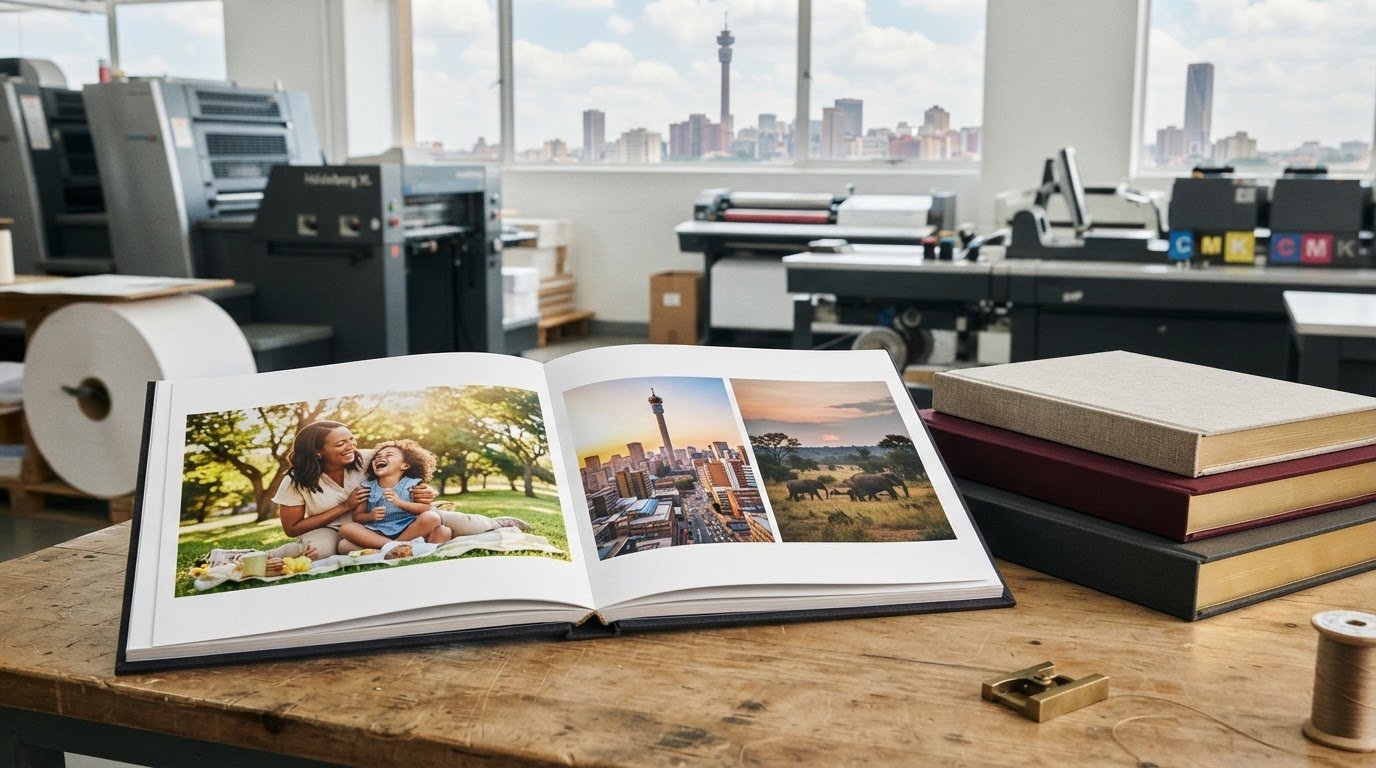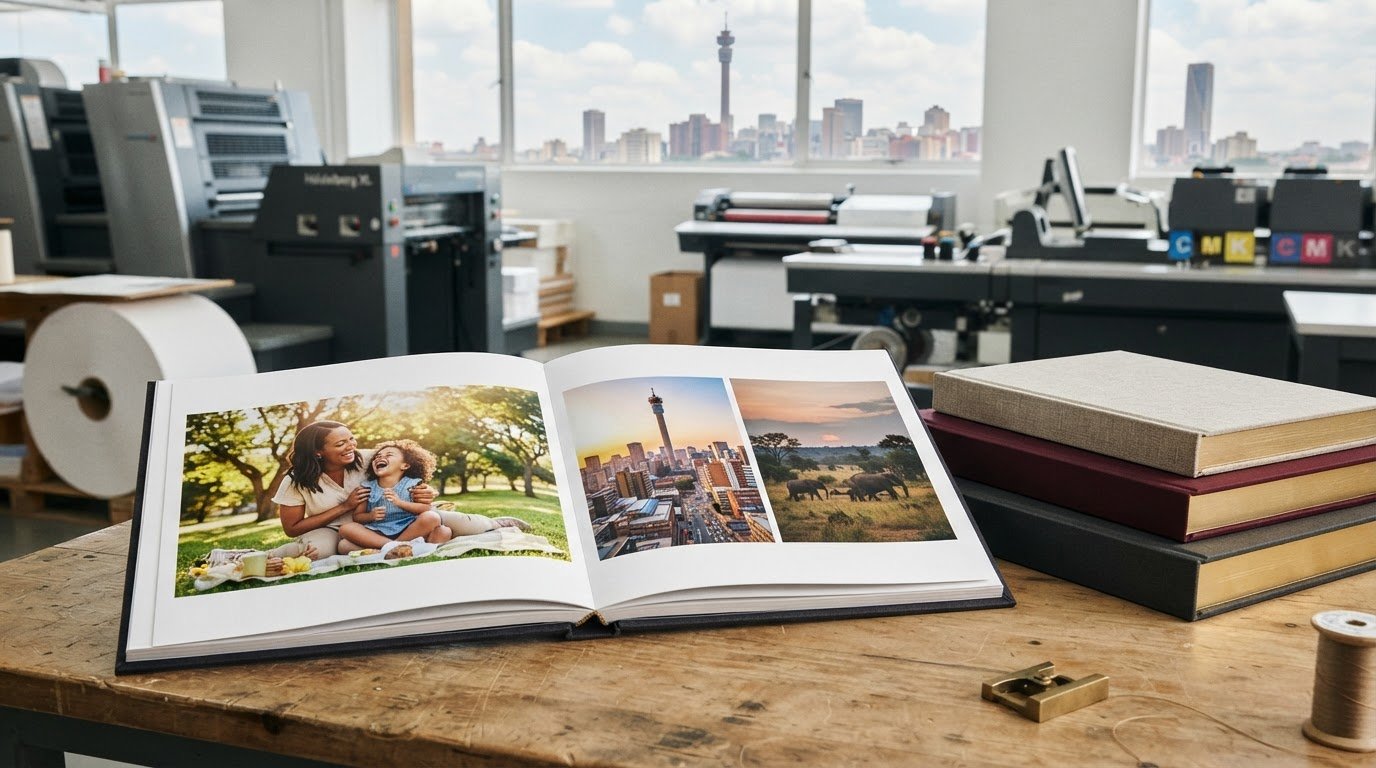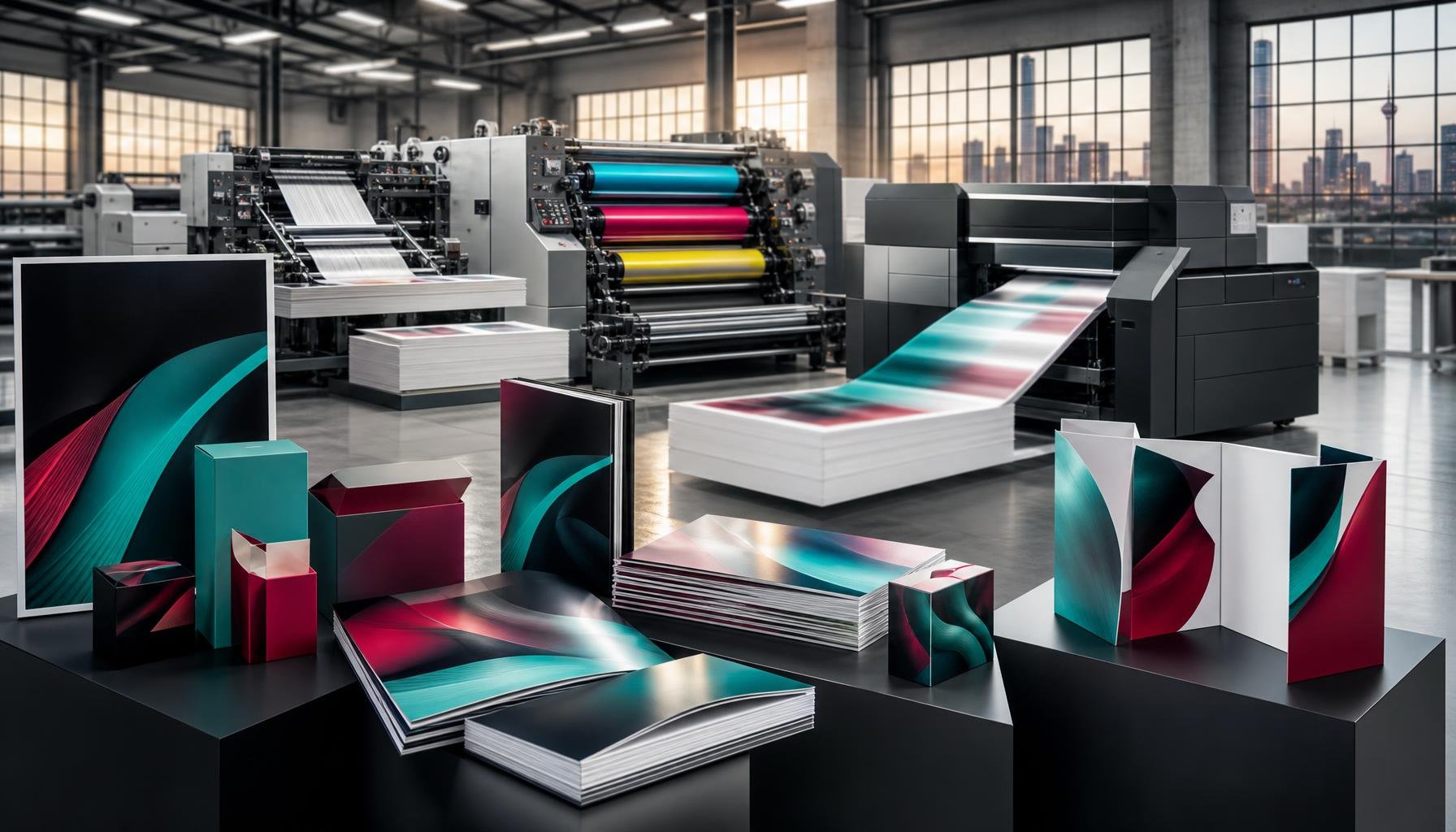
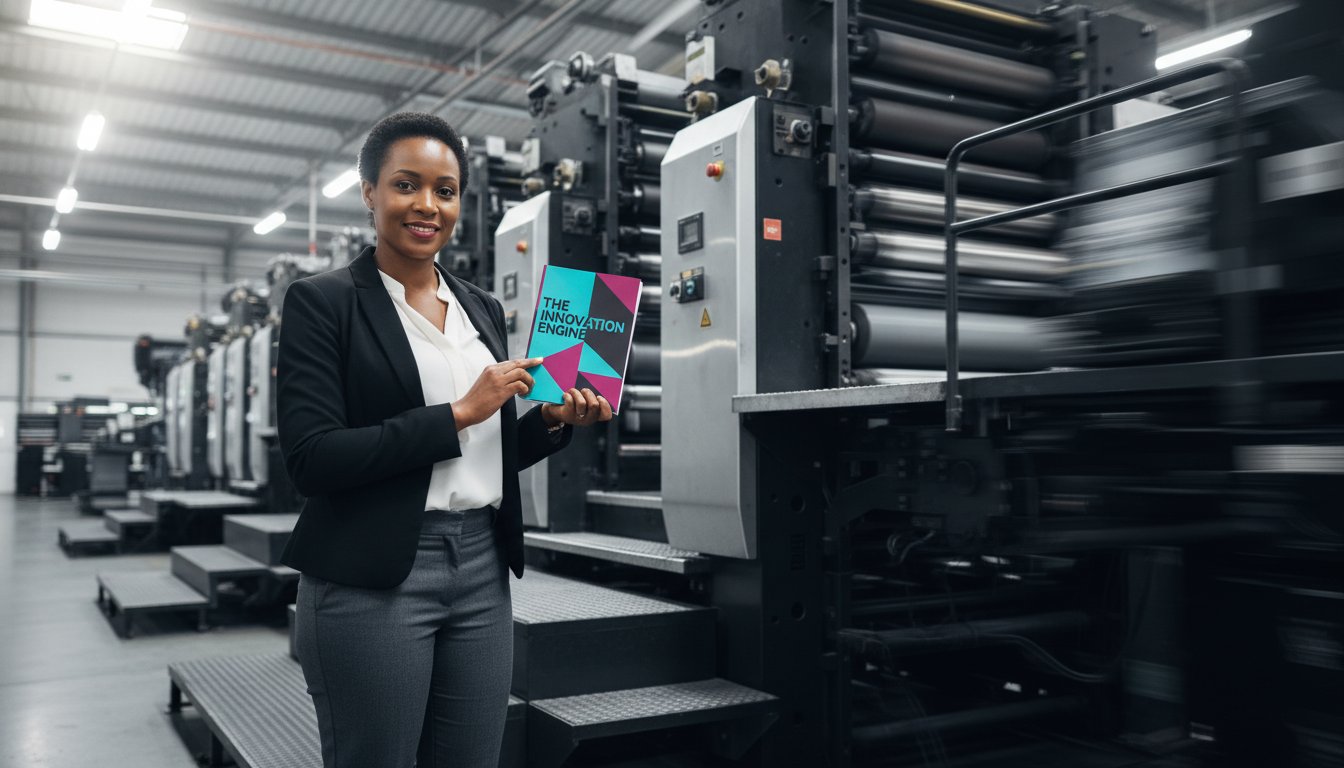
What if your long awaited book launch is ruined by pages that fall out the moment a reader opens the cover? It’s a common fear for authors, and with paper costs rising by 47% since 2020, the pressure to get your production right the first time has never been higher. Finding reliable book printers in Johannesburg is about more than just getting a quote. It’s about ensuring your hard work feels premium and stays intact. You want a local printing partner who understands that a 250 page paperback should look as good on a shelf in Sandton as it does in London.
We know the stress of choosing between digital and litho or worrying about tight deadlines. This guide simplifies the process by showing you how to achieve a professional finish that rivals international publishers without hidden setup fees. We’ll break down the 2026 cost projections, explain why the 500 unit mark is your magic number for savings, and help you navigate local regulations like the Imprint Act. We’re here to make printing easy, ensuring your project moves from digital file to local delivery with total precision.
Key Takeaways
- Identify the essential equipment and local expertise you need when vetting book printers in Johannesburg to ensure your project stays on track.
- Understand the critical role of binding in book longevity and how bespoke finishes like foiling make your work rival international publications.
- Learn the “tipping point” between digital and litho printing so you can scale your production without overspending on setup fees.
- Navigate the South African self-publishing landscape with confidence, including essential steps for manuscript prep and free ISBN registration.
- Discover how a 24/7 local printing production partner in Midrand turns complex technicalities into a seamless, stress-free experience.
Table of Contents
What to Look for in Professional Book Printers in Johannesburg
Picking a printing partner isn’t just about finding the lowest price. It’s about finding a team that truly understands your creative vision and technical requirements. A professional book printer is a partner that manages everything from pre-press to final distribution. While the history of the printing press highlights centuries of evolution, the core need for technical precision hasn’t changed. You need a team that handles paper grammage, binding durability, and color calibration under one roof to ensure a premium result.
To see how a high-volume facility operates and what to expect from top-tier book printers in Johannesburg, watch this brief overview:
The Johannesburg Advantage: Speed and Logistics
Being in the economic hub of South Africa offers unique perks for your publishing project. Johannesburg serves as the primary logistics gateway for Gauteng and the wider country. Choosing local book printers in Johannesburg means your stock moves from the warehouse to the shelf with minimal transit time. You don’t have to worry about long-distance shipping delays or the risk of damage during extended travel.
You can even visit our Midrand printing facility to sign off on physical proofs. Holding a real sample of your book provides peace of mind that a digital PDF simply can’t match. This proximity also enables same-day or overnight delivery options for those high-pressure book launches where every hour counts. We understand the local market and the urgency of getting your work into the hands of your readers.
In-House vs. Outsourced Production
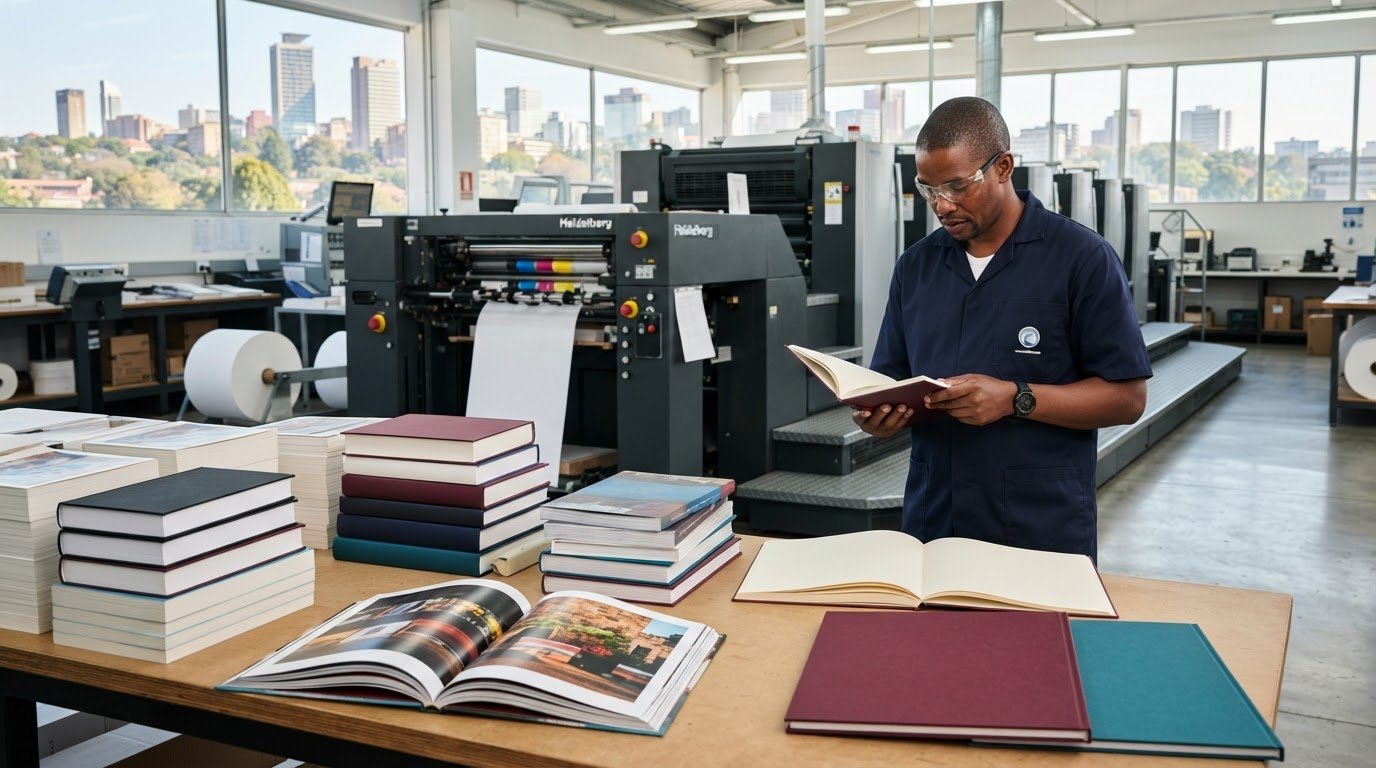
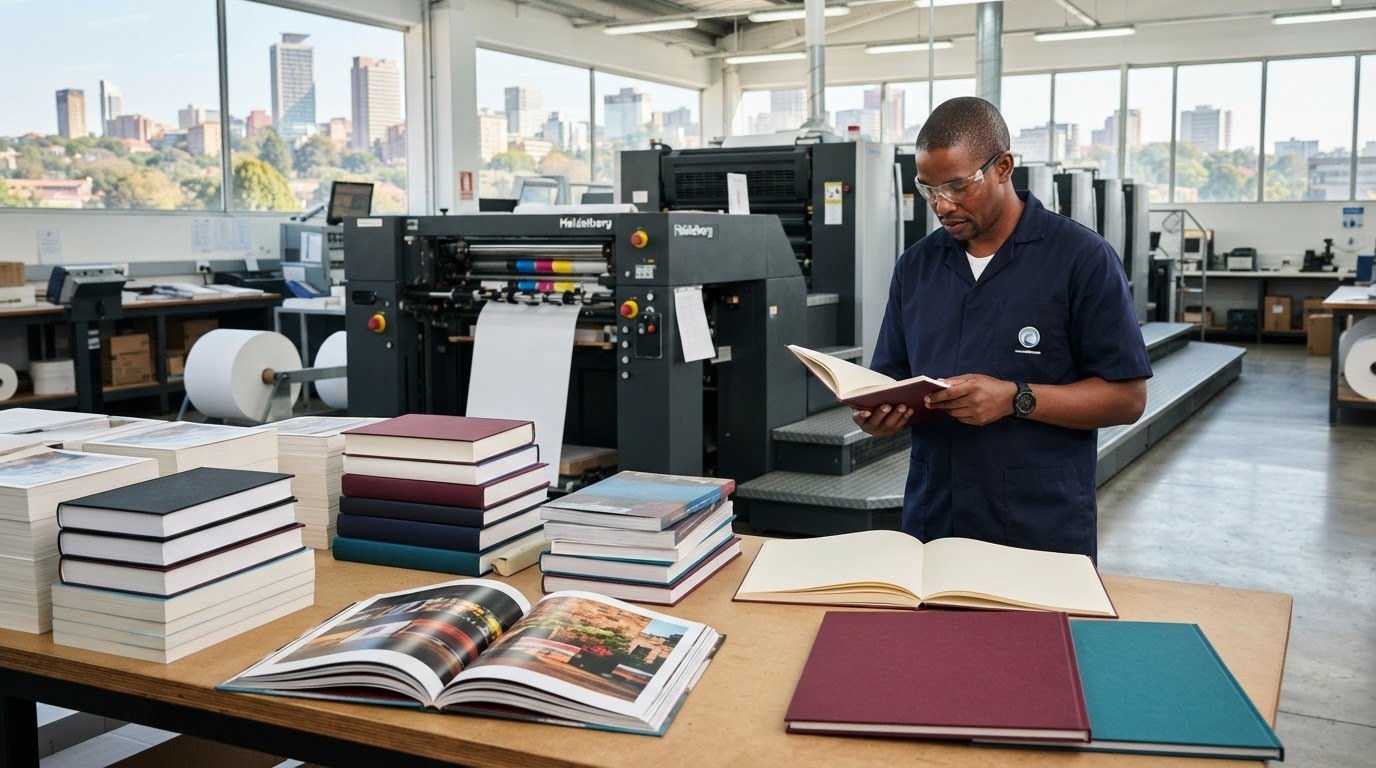
When production stays in-house at a printing 24/7 facility, you get total accountability. Our team monitors every stage, from the initial file check to the final shrink-wrapping. It’s a seamless process designed to protect your investment.
Having an in-house design team is equally critical. They don’t just look at aesthetics; they verify your margins, bleed, and spine width to ensure the final product meets international standards. If your file isn’t ready for the press, we’ll help you fix it immediately rather than letting a mistake go to print. We treat your book as a creative partnership, using our technical expertise to make the world of printing accessible and stress-free for you. Look for these hallmarks of a true professional:
-
Direct Accountability: You speak to the people actually running the machines.
-
Quality Control: Constant monitoring of ink density and binding strength.
-
Rapid Turnaround: 24/7 print operations that keep your project moving while you sleep.
Understanding Book Binding and Finishes
The tactile experience of holding a book often determines its perceived value before a single word is read. Binding is the backbone of your project. It dictates how the book opens, how it ages, and whether it feels like a premium product or a disposable flyer. Leading book printers in Johannesburg prioritize binding because they know a beautiful cover won’t save a book that falls apart. Adhering to Printing SA industry standards ensures your publication survives years of handling without losing pages or cracking.
Specialty finishes add that vital "wow" factor to your cover. Spot UV creates a striking contrast between matte and gloss, highlighting specific design elements. Foiling adds a metallic shimmer that catches the eye on a retail shelf, while lamination protects the cover from fingerprints and moisture. These aren’t just decorations; they are strategic tools that help your work compete with international titles. If you’re unsure which finish fits your budget, you can get a custom quote to see the price difference in real-time.
| Binding Type | Best Application | Durability | Cost Profile |
|---|---|---|---|
| Perfect Binding | Novels, Softcover Books | High | Cost-Effective |
| Case Binding | Hardcover, Coffee Table Books | Maximum | Premium |
| Saddle Stitch | Brochures, Instruction Booklets | Moderate | Budget-Friendly |
Hardcover vs. Softcover: Which is Right for You?
Case binding, or hardcover, is the gold standard for coffee table books and premium novels. It offers a rigid protective cover that screams quality. However, it involves a higher production cost and longer lead times. Softcover books using perfect binding are the go-to for standard fiction and non-fiction. They’re lighter, faster to produce, and more affordable for large print runs. Experienced book printers in Johannesburg will typically recommend softcover for novels where the retail price point needs to remain competitive.
Advanced Binding: PUR vs. EVA Glue
The type of glue used in your binding matters more than most authors realize. EVA (Ethylene Vinyl Acetate) is the traditional standard, but it can become brittle in extreme temperatures. PUR (Polyurethane Reactive) binding is far superior for high-use manuals and textbooks. It’s incredibly flexible; you can lay the book flat without the spine cracking. For educational materials that need to stay open on a desk, we often suggest spiral or wiro binding. These options allow for a 360-degree fold, making them perfect for training manuals and workbooks.
Litho vs. Digital Printing: Scaling Your Production
Choosing the right printing technology is the single most important decision for your budget. Most book printers in Johannesburg offer two primary paths: digital and lithographic printing. Digital printing works much like a high-end office printer but on a massive, industrial scale. It uses toner or inkjet technology to apply images directly to paper. Lithographic printing, often called litho, uses aluminum plates to transfer ink onto a rubber blanket before it hits the page. Each method has its own place depending on your goals and the number of copies you need.
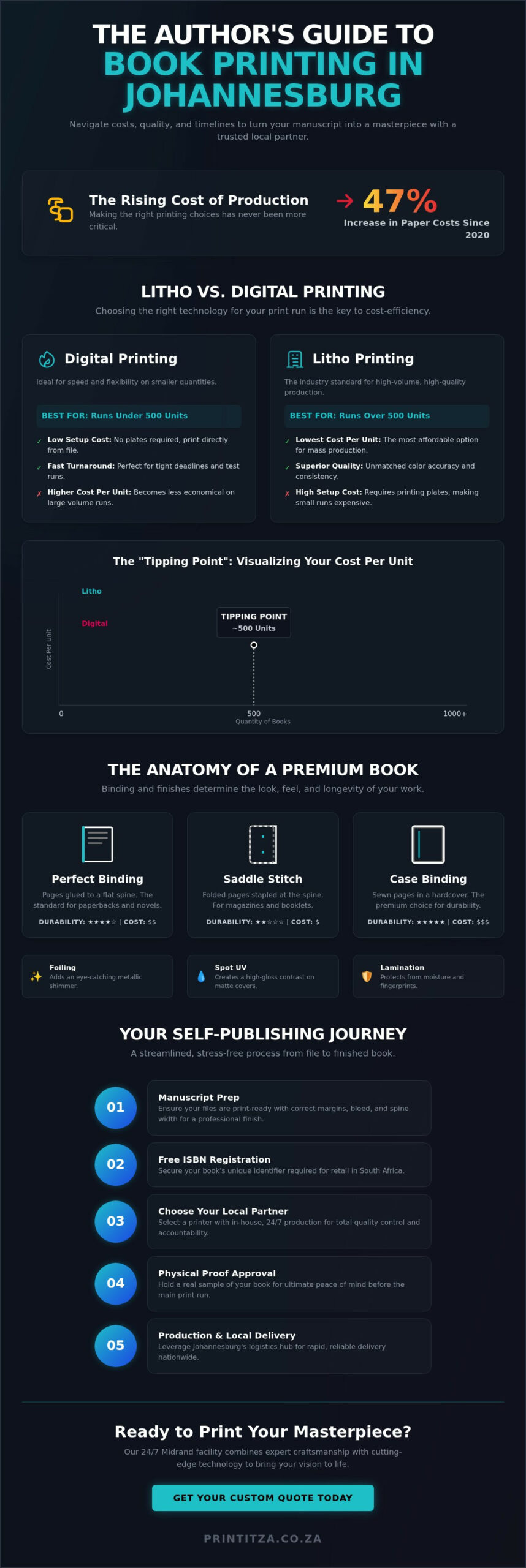
The fundamental difference comes down to setup. Digital has almost zero setup time. You send a file, and the machine starts printing. Litho requires the creation of physical plates, ink mixing, and machine calibration, which adds initial cost. However, once a litho press starts running, it’s incredibly fast and cheap per page. The break-even point between digital and litho usually occurs around 500 copies. If you’re printing fewer than 500 books, digital is almost always your best friend. If you’re heading toward 1,000 or more, litho will save you thousands of Rands.
Digital Printing for Self-Publishers
Digital printing is the king of short-run projects and "print on demand" services. In early 2026, data showed that 65% of small businesses in Johannesburg preferred digital because it avoids heavy setup fees. This technology allows you to test the market with 50 or 100 copies without a massive financial risk. You don’t have to worry about storing boxes of unsold books in your garage. Setup is fast, making it perfect for authors who need a quick-to-market launch. By 2026, digital quality has reached a point where most readers can’t tell the difference between a digitally printed novel and one from a traditional litho press. It’s about making your entry into the market as seamless and affordable as possible.
High-Volume Litho for Corporate and Education
When you need to scale, litho is the undisputed champion. It’s why 82% of corporate firms in Johannesburg still choose litho for their annual reports. This method offers unmatched color precision, especially if you need specific Pantone brand colors that digital toners can’t always replicate perfectly. For educational institutions or large-scale publishers, our high-volume book printing services provide the consistency needed for thousands of identical copies. Whether it’s training manuals or school workbooks, litho ensures every single copy looks exactly like the first. We’ve built our Midrand facility to handle these massive runs with 24/7 print reliability, ensuring your bulk order is delivered across Gauteng without a hitch.
The Self-Publishing Journey in Johannesburg
Turning your manuscript into a physical masterpiece is a marathon, not a sprint. You’ve done the hard work of writing; now you need a roadmap to navigate the technicalities of production. Finding the right book printers in Johannesburg is your first step toward a professional result. We’ve created a comprehensive how to publish a book in South Africa guide to help you start, but the production phase is where your vision truly takes shape. It’s about moving from a digital file to a tangible object that readers will love to hold.
Once your book is printed, you must remember the legal deposit requirements. For print runs under 100 copies, you need to send one copy to the National Library of South Africa. If your run is larger, you’re required to send five copies. Don’t forget the Imprint Act of 1993, which requires us to affix our name and address to your book. These small details ensure your work is recognized and protected within the local industry.
Paper Stock and Grammage Selection
Choosing your paper stock is a balancing act between aesthetics and budget. Paper costs in South Africa have increased since 2020, so efficiency is key. Standard 80gsm uncoated paper is the go-to for most novels and text-heavy books. It’s readable and cost-effective. If you’re printing a premium journal or a book with heavy illustrations, a 100gsm or 120gsm stock feels more substantial. Coated papers, available in gloss or matt, make colours pop, while uncoated stocks offer a classic, glare-free reading experience. Your cover board should typically be 250gsm to 350gsm to ensure the spine doesn’t warp over time.
Distribution and Logistics in Gauteng
Your journey doesn’t end when the boxes leave the press. Our Midrand printing facility is perfectly positioned near major distribution hubs in Gauteng. This makes nationwide delivery fast and affordable. We can even assist with storage and kitting services if you’re selling directly to your readers online. If you’re planning to export your work, we’ll help you navigate the requirements for international shipping. We act as your local logistics partner, ensuring your books reach their destination in pristine condition. Ready to see your name on a spine? Start your self-publishing journey with a custom quote today.
Why Print It ZA is the Premier Choice in Johannesburg
Choosing a partner for your publishing project requires more than just a price list. It demands a team that understands the pulse of the city and the technical demands of the industry. With years of experience in the South African print landscape, we’ve refined our process to become the most reliable book printers in Johannesburg. Our 24/7 operational printing facility in Midrand is designed for the "always-on" nature of modern business. We don’t just print books; we act as your creative partner to ensure every page reflects your vision perfectly. Our commitment to "Printing Made Easy" means we handle the technical heavy lifting so you can focus on your content.
While this guide focuses on books, our expertise extends to a massive range of products. Whether you need retail packaging, annual reports, or high-end catalogues, our professional printing services provide the same level of scale and precision. We’ve built a reputation for dependability that keeps local creators and corporate firms coming back. We value your time and your vision, offering a no-nonsense approach that cuts through the jargon and delivers results.
State-of-the-Art Technology at Your Service
Our facility houses the latest digital and litho presses, ensuring unmatched vibrancy for every project. We maintain total quality control by keeping finishing and binding in-house. This means your project never leaves our sight until it’s ready for delivery. Sustainability is also at the heart of what we do. As of May 2026, South Africa’s Extended Producer Responsibility (EPR) regulations are strictly enforced. We help you stay compliant by offering FSC-certified paper stocks and supporting the industry’s goal of 50% recycled content by 2028. Currently, the local paper recycling rate is 62%, and we’re proud to contribute to that success through eco-friendly papers, eco inks and efficient waste management.
Get a Custom Quote Today
Ready to move from manuscript to masterpiece? Getting an accurate quote is the first step. To help us provide the best pricing, try to have your specifications ready, including your desired page count, binding style, and paper grammage. If you’re unsure about the technical details, don’t worry. Our team provides professional, mentor-like advice to help you choose the most cost-effective path for your specific run size. We believe in transparent pricing with no hidden setup fees, so you always know exactly what you’re paying for. Contact us today for a bespoke consultation and let’s make your book a reality.
Bring Your Vision to Life with Johannesburg’s Best
Your journey from a digital manuscript to a high-quality physical book is finally within reach. We’ve explored how the right binding keeps your pages intact and why choosing between digital and litho printing is the secret to scaling your production without overspending. Working with professional book printers in Johannesburg gives you the local edge, ensuring your vision is handled with technical precision and creative care. You now have the roadmap to navigate paper stocks, finishes, and the essential legal requirements of the South African market.
Print It ZA brings years of industry expertise to your project, backed by a 24/7 print production facility in Midrand. We handle the technical heavy lifting, from initial file checks to nationwide distribution. Our goal is to make your publishing experience as simple and rewarding as possible. Ready to see your name on a premium spine? Get a Custom Quote for Your Book Project today. Let’s turn your hard work into a professional reality that readers will love to hold.
Frequently Asked Questions
How much does it cost to print a book in Johannesburg?
Costs depend on your total volume and specifications. For a standard 250-page A5 paperback in 2026, short runs of 50 to 100 copies are cost effective and done digitally. But if you scale to a bulk run of over 1,000 copies, the unit price drops drastically and a great saving is had, as printing is a numbers game. These projected costs include a full-colour cover and black-and-white interior pages.
What is the minimum number of books I can print?
You can print as few as 10 to 50 copies using our digital print on demand services. This low minimum order quantity is perfect for self-publishers testing the market or corporate teams needing a limited run of training manuals. Digital printing eliminates the heavy setup fees associated with traditional plates, making small batches affordable and fast for everyone.
How long does the book printing process take from start to finish?
A standard digital print run typically takes 3 to 5 working days from final proof approval. Larger litho projects generally require 7 to 10 working days due to the plate creation and calibration process. Our 24/7 Midrand printing facility helps us maintain these quick turnaround times, ensuring you meet your book launch deadlines without any unnecessary stress or delays.
What file format do I need to provide for book printing?
We require a high-resolution, print-ready PDF file with all fonts embedded and a 3mm bleed on all sides. Your interior pages and cover should be sent as separate files to ensure correct alignment during the binding process. Our in-house team is always available to check your files and ensure they meet professional book printers in Johannesburg standards before the press starts.
Can you help with the cover design and layout of my book?
Yes, our in-house design team can assist you with professional cover design and interior layout. We don’t just look at the art; we ensure your margins, gutter, and spine width are technically perfect for the chosen binding method. This collaborative partnership ensures your final product looks like it belongs on an international bookstore shelf, giving you a competitive edge.
Do you offer nationwide delivery from your Johannesburg facility?
We offer nationwide delivery across South Africa from our central Midrand and Distribution Hub. Being located near major Gauteng distribution points allows us to provide fast, reliable transport for your order. Whether you need a single box or several pallets, we manage the logistics so your books arrive safely at your doorstep, retail store, or warehouse.
What is the difference between PUR binding and Perfect binding?
PUR binding uses Polyurethane Reactive glue, which is much stronger and more flexible than the EVA glue used in standard perfect binding. PUR is the best choice for heavy textbooks or manuals because it allows the book to lay flatter without the spine cracking. It also handles extreme temperatures better, preventing pages from falling out over years of heavy use.
Can I see a physical proof of my book before the full print run?
You can definitely request a physical proof to verify the paper quality and color accuracy before the full run begins. As leading book printers in Johannesburg, we encourage authors to order a sample copy for checking and marketing purposes before the main print run. This step provides total peace of mind that the final product will match your creative vision and technical requirements exactly.
Contact Print It ZA today, for a Free Quote and Speedy Service.
Print It ZA print and packaging, we do Printing Best!