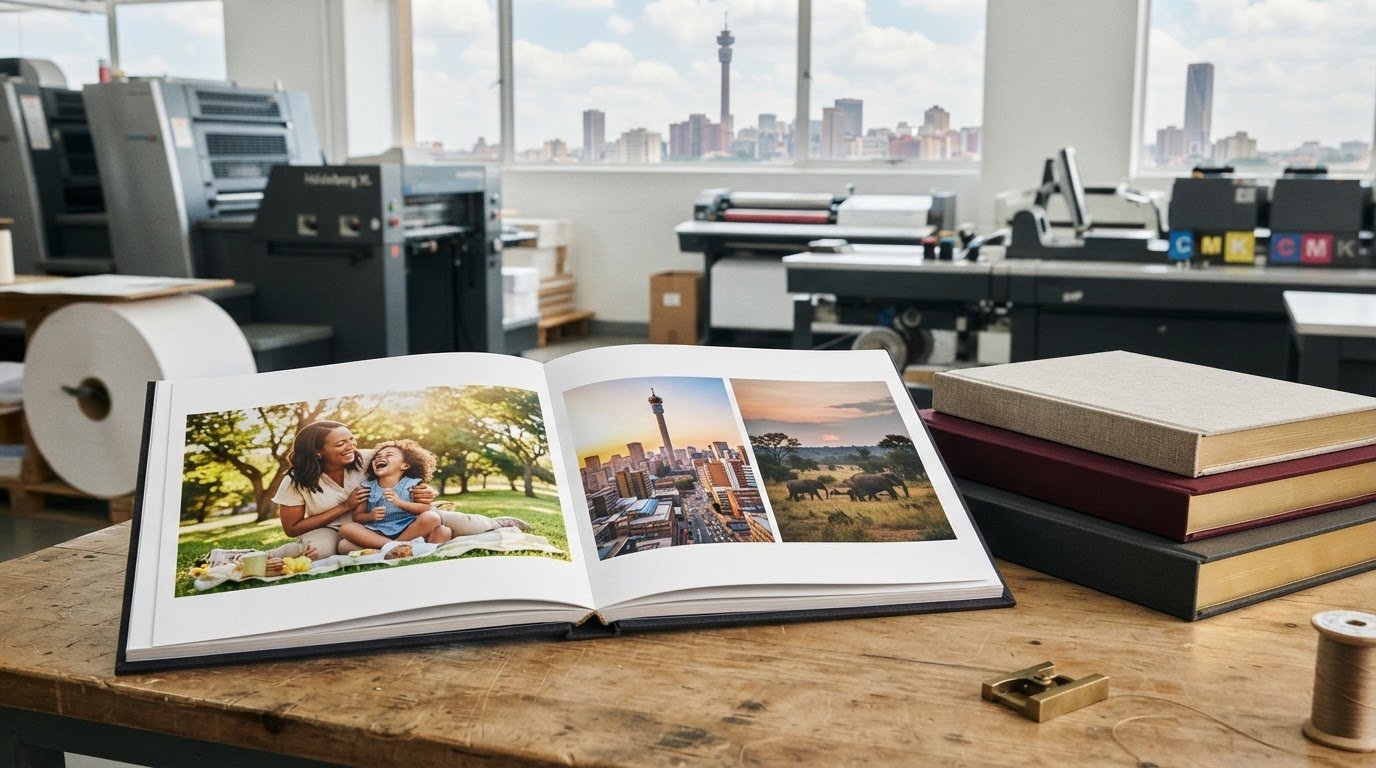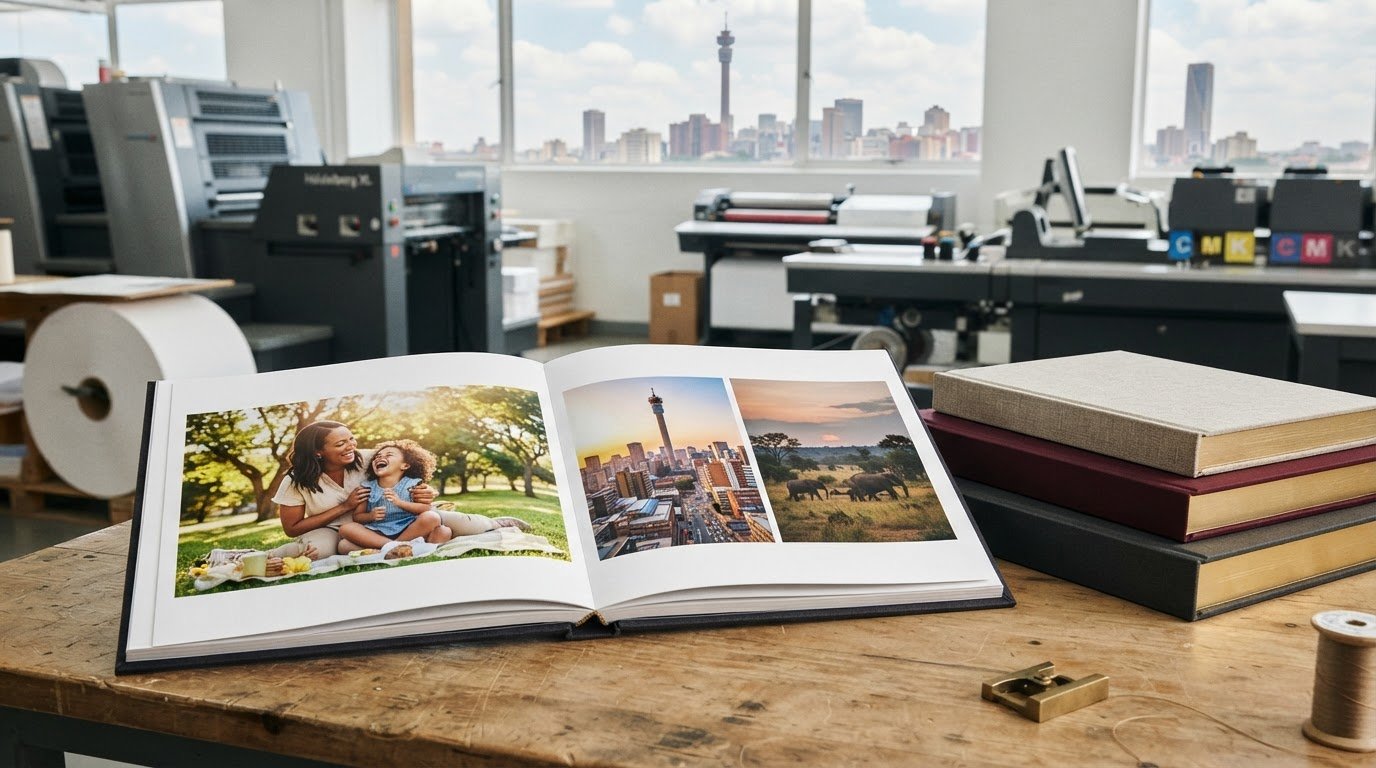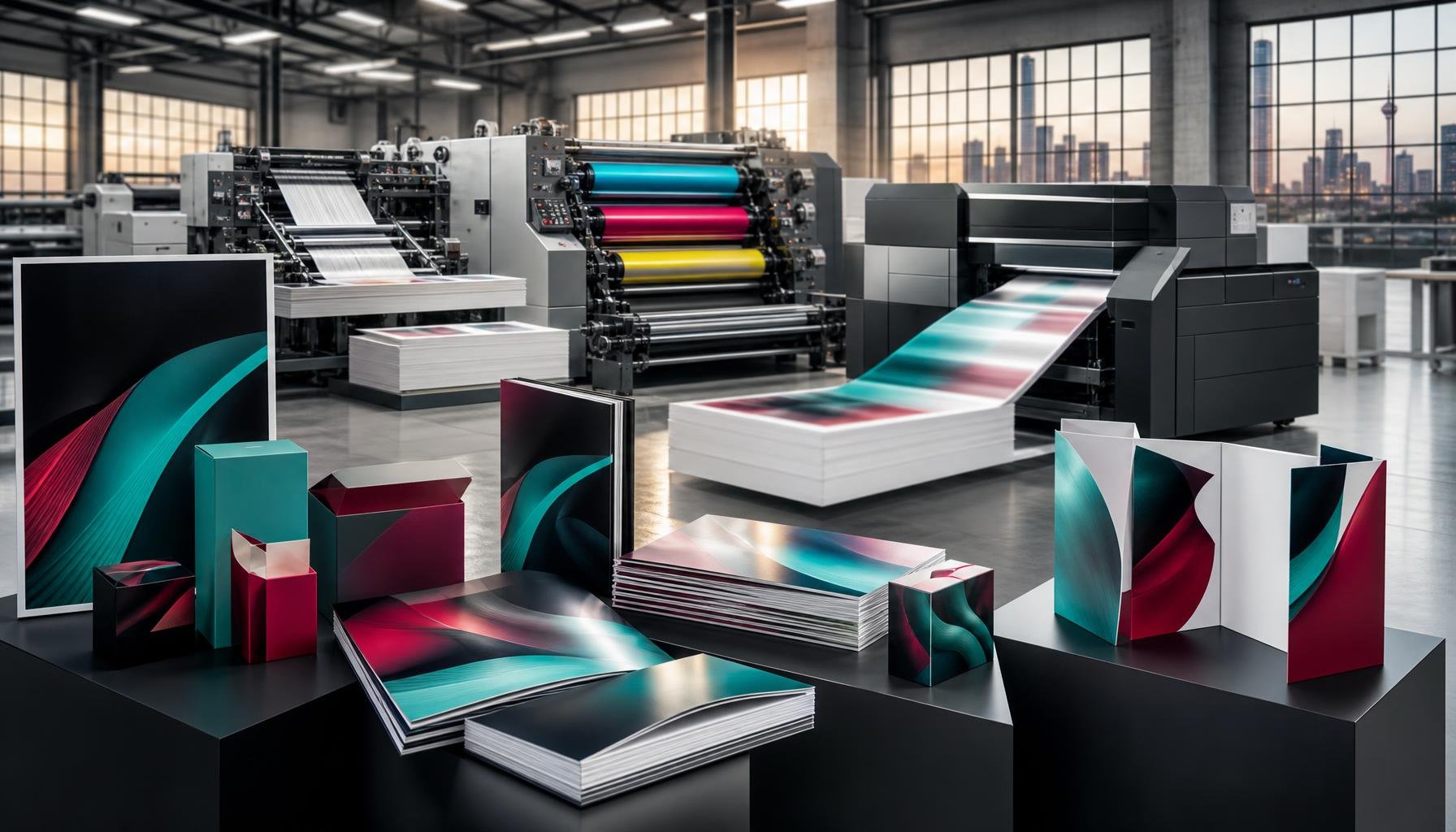

What if your most stunning digital masterpiece looks like a dull, pixelated mess once it hits the paper? It’s a common nightmare for many graphic designers in Johannesburg who find that a design perfect on a screen doesn’t always translate to a flawless physical product. You’ve likely felt that sting of disappointment when a project comes back with incorrect margins or muddy colors. We understand that your reputation depends on the final output, not just the file on your hard drive.
We know that the disconnect between a creative idea and the final press run is a major hurdle. This guide promises to show you how to bridge that gap, ensuring your vision leads to high-quality print production right here in the South African market. We’ll preview the technical standards you need, from 300 DPI resolutions to 3mm bleeds, to achieve results that actually enhance brand value. Since research shows that campaigns combining print and digital can achieve a 142% return on investment, mastering these details is the key to your professional success.
Key Takeaways
- Learn how professional design serves as a strategic foundation for high-quality print, ensuring your brand stands out in the competitive South African market.
- Get the essential 2026 technical checklist to make your files print-ready, covering everything from color modes to resolution requirements for local presses.
- Compare the benefits of different creative partnerships, helping you decide when to hire freelance graphic designers versus engaging a full-service agency.
- Stay ahead of the curve with insights into local trends, including the growing demand for sustainable packaging and modern minimalist aesthetics in Gauteng.
- See how a streamlined, in-house design-to-print process can reduce errors and get your projects finished faster without sacrificing quality.
The Critical Role of Graphic Designers in the Print Production Lifecycle
Design is far more than an aesthetic choice; it’s a hard-working business tool. For brands in Johannesburg, professional graphic design serves as the essential bridge between a marketing strategy and a finished product. When you invest in high-quality litho or digital printing, the design file is your blueprint. A weak blueprint leads to a failed build. Professional graphic designers ensure that your creative vision survives the transition from a backlit screen to a physical object that customers can hold.
Expert designers act as translators. They take your brand’s core message and convert it into a visual language that speaks to your specific audience. This role of the graphic designer involves deep technical knowledge of page layout, typography, and color theory. Without this expertise, you risk significant financial loss. Since paper costs in South Africa have risen by 47% since 2020, printing errors aren’t just frustrating; they’re a massive hit to your bottom line. Wasted stock and production delays from flawed design files can quickly derail a marketing budget.
Bridging the Gap Between Concept and Physical Product
A great design considers the final physical experience from the very first sketch. You need to think about how different paper stocks feel in a customer’s hand and how they absorb ink. If you’re creating retail packaging, the structural design is just as vital as the graphics. It has to protect the product while looking premium on a shelf in Sandton or Midrand. Your designer must also account for how the item is distributed. A brochure designed for a high-traffic Gauteng expo might need a different finish or weight than one sent through the mail to ensure it survives the journey in perfect condition.
Design for Different Mediums: Books, Magazines, and Brochures
Every medium has its own set of rules and technical requirements. For self-publishers in South Africa, book layout and typesetting are critical for readability and professional appeal. Magazines require a delicate balance between engaging editorial content and high-impact advertising to keep readers turning pages. Meanwhile, brochures remain a powerhouse in the local B2B market. A well-designed brochure doesn’t just inform; it drives conversions by presenting your services with clarity and authority. When graphic designers understand these nuances, they turn simple paper into a high-performance sales tool.
Technical Standards: What Makes a Design Print-Ready in 2026?
A beautiful design on your screen is only half the battle. When your work moves from the digital workspace to our Midrand production facility, technical precision becomes the priority. Modern graphic designers know that "print-ready" isn’t just a label; it’s a rigorous set of standards that ensures your vision translates accurately to paper. Understanding what makes a design print-ready saves you from costly reprints and missed deadlines.
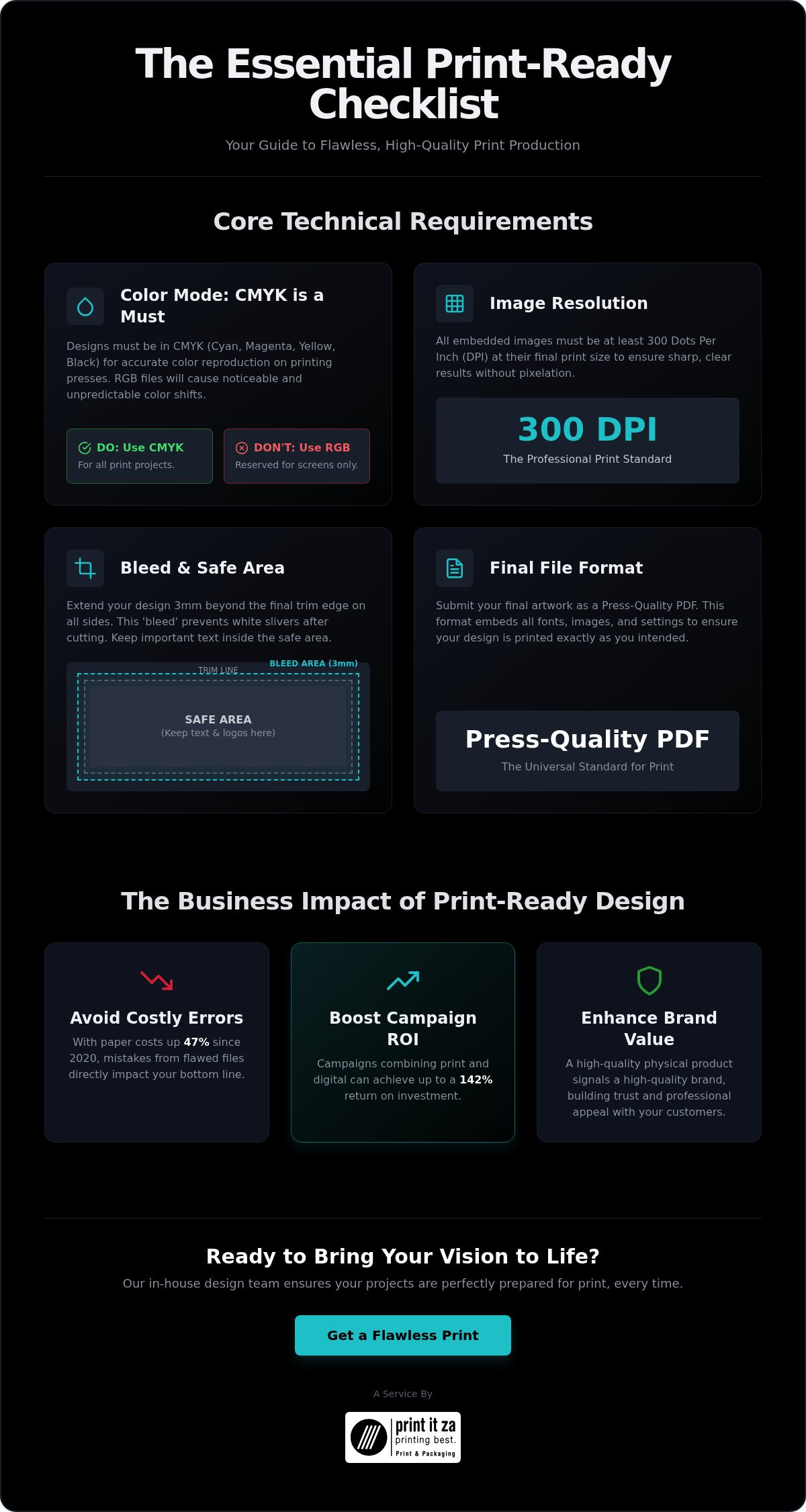
Start every project in CMYK mode. While RGB is perfect for light-based displays like smartphones and monitors, our printing presses use Cyan, Magenta, Yellow, and Black ink. If you submit RGB files, the colour shift during conversion can leave your vibrant oranges looking muddy and dull. Resolution is equally critical. For crisp, professional results, all images must be at least 300 DPI at their final print size. Lower resolutions result in pixelation that undermines the quality of your brand.
Don’t forget the 3mm bleed. This standard requirement for South African paper products ensures that your design extends past the trim line. It prevents those dreaded white slivers at the edge of your brochures or flyers if the cutting blade shifts slightly during the high-speed finishing process. Including a slug area is also helpful for communicating specific instructions to the print team without affecting the final product.
Colour Management and Specialised Inks
Choosing between process colours and Pantone spot colors depends on your project goals. Process colors are cost-effective for multi-colour images, but Pantone inks offer unmatched consistency for corporate logos. You also need to consider your paper choice. Uncoated paper absorbs more ink, making colors appear more muted compared to the vibrant finish of coated stock. Special finishes like foiling or spot UV require separate vector layers to guide the application process.
Typography and Vector Graphics for Precision
Sharpness is non-negotiable. Always use vector graphics for logos and icons to ensure they remain crisp whether they’re on a business card or a massive poster. Typography requires a specific approach; professional graphic designers know that outlining fonts converts text into shapes, preventing "missing font" errors. Finally, keep an eye on ink coverage. Exceeding 300% coverage leads to slow drying times and smudging. If you need a second pair of eyes, our team at Print It ZA print and packaging can help with a pre-flight review.
Finding the Right Creative Partner: Freelance vs. Agency vs. In-House Design
Choosing the right creative partner is a strategic decision that impacts your brand’s bottom line. Freelance graphic designers offer incredible agility and are often the best choice for specific, project-based tasks. These professionals are perfect for quick turnarounds on flyers, business cards, or social media assets where direct communication is a priority.
For large-scale branding or complex annual reports, a full-service creative agency provides a broader strategic depth. These teams handle everything from market research to long-term visual identity. While with a senior agency, the investment covers a comprehensive suite of services that a solo operator might not provide. However, you should also consider the unique advantages of a printer’s in-house design team. These experts work directly with the production crew in our Midrand facility. They know the machines intimately, which virtually eliminates the technical "dead zones" where digital designs often fail during the litho or digital printing process.
Before you sign a contract, ask your designer these essential questions:
- Can you provide examples of print-ready PDFs with 3mm bleed?
- Do you have experience working with CMYK color profiles for local South African paper stocks?
- Are all fonts converted to curves or embedded in the final delivery?
- Does your quote include the native source files?
The Cost of Design: Investing in Value over Price
Professional design is an investment in your brand’s shelf life. Avoid the trap of "cheap templates" for retail packaging. These often lack the precise structural integrity needed for a professional finish. Since paper costs have risen 47% since 2020, finding graphic designers who get it right the first time is the only way to avoid the high cost of reprints.
Collaboration Tools and Workflows
Efficiency is vital in the fast-paced Gauteng business environment. Start with a clear creative brief to minimize guesswork and keep the project on track. Use cloud-based proofing tools to speed up sign-offs. This allows you to review and approve designs from your phone or office without delay. Managing your revision cycles strictly ensures you stay within your production budget while still achieving a flawless final product.
Design Trends Shaping the South African Market: From Books to Packaging
Trends in the South African market are shifting toward a more tactile and conscious approach. Local graphic designers are increasingly moving away from generic global templates to embrace aesthetics that resonate specifically with the Gauteng consumer. We see a strong push for sustainable packaging solutions, driven by a growing demand for recyclable materials and eco-based inks. This isn’t just about ethics; it’s about building brand trust in a market that values environmental responsibility and authenticity.
The debate between minimalism and maximalism is evolving in 2026. While "warm minimalism" remains popular for its organic modernism and soft textures, a new wave of bold, saturated color palettes is emerging. This is a clear rebellion against muted neutrals. This shift is often paired with nostalgic typography from the 90s and 2000s, creating a powerful emotional connection with audiences. Integrating digital elements, such as QR codes, has also become a standard requirement. These codes bridge the gap between physical print assets and online experiences, offering a seamless journey for the modern user.
Retail Packaging That Pops on the Shelf
In a crowded retail environment, visual hierarchy is your best friend. Your design must guide the consumer’s eye to the most critical information first, ensuring the brand name and key benefits are unmistakable. Texture and finish play a massive role in this process. A matt laminate or a subtle embossed texture can significantly increase the perceived value of a product. In the Johannesburg FMCG sector, successful packaging redesigns often focus on these material-focused elements to create a premium feel that stands out on the shelf.
Modern Book and Magazine Layouts
The self-publishing boom of 2026 has revitalized the demand for professional book design. To achieve shelf appeal in local bookstores, authors are investing in premium finishes for hard cover books and softcover novels. We’re seeing a return to high-end diaries and coffee table books that serve as decor items as much as reading material. Magazines are also evolving. Many are moving toward "mook" formats, which are hybrid magazine-books that prioritize collectible quality and thick paper stocks over disposable content. If you’re ready to bring your trend-setting vision to life, explore our printing and packaging solutions to see how we can help.
Streamlining Your Project with Print It ZA’s In-House Graphic Design Team
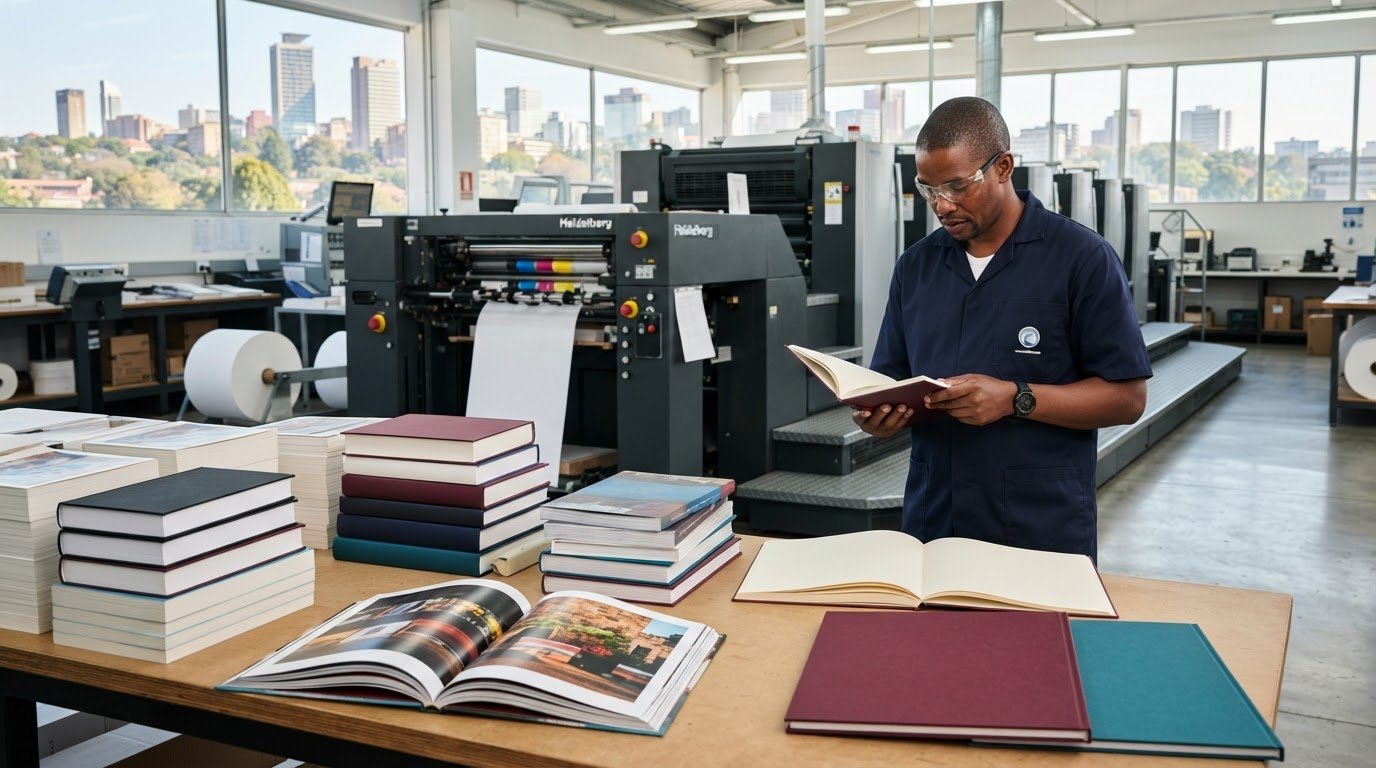
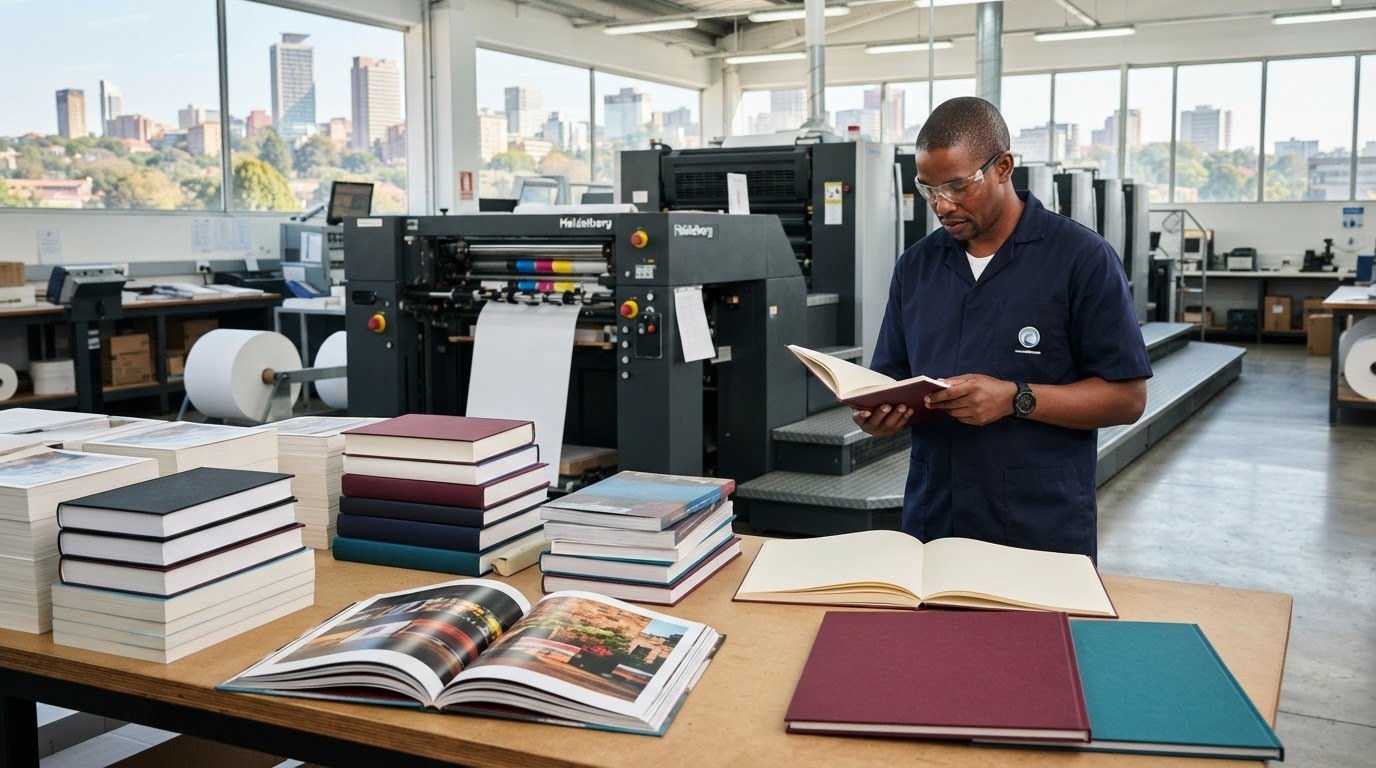
Most businesses face a frustrating disconnect when they hire a designer in one place and a printer in another. You receive a file in your inbox, but the printer tells you it’s not compatible with their machines. We eliminate this headache by offering an integrated design-to-print workflow. Our in-house graphic designers work directly alongside the 24/7 Midrand print production facility. This proximity means that every creative choice is informed by real-world technical capabilities, ensuring your project moves from concept to completion without a single hitch.
Our team understands the specific nuances of our state-of-the-art litho and digital equipment. When we design your annual reports, brochures, or retail packaging, we aren’t just making them look good. We are optimizing them for the exact press they will run on. This synergy prevents common errors like incorrect ink coverage or registration issues that often plague outsourced designs. By leveraging our technical expertise during the creative phase, we help you achieve a higher standard of aesthetic excellence while maintaining maximum production efficiency.
This end-to-end support is especially vital for complex projects. If you’re developing custom retail packaging, our graphic designers can create structural prototypes and physical mock-ups. You get to hold the product in your hands and test the folds before we commit to the full production run. This pragmatic approach saves time, reduces waste, and gives you total confidence in the final result. Whether you need a simple flyer or a high-end coffee table book, our integrated team handles every detail from the first sketch to final delivery.
Our Creative Process for Johannesburg Businesses
Everything begins with a collaborative consultation. We take the time to understand your vision and the specific needs of your Gauteng audience. Once the concept is clear, we move quickly into the design and prototyping phase. We know that corporate environments move fast. If you have time-sensitive training manuals or instruction booklets, our streamlined process is built to meet those deadlines. We provide clear, digital proofs and physical samples to ensure your sign-off process is as smooth as possible.
Get Started with Professional Design and Print
Taking the next step is easy. You can request a comprehensive quote for your next project through our website, and our team will provide a clear, action-oriented plan. While we are deeply rooted in the Johannesburg community, we offer nationwide delivery and international export for all our products. We are committed to being your reliable creative partner, helping you achieve professional results that drive real business value. Partner with Print It ZA for expert graphic design and printing today and see the difference that an integrated workflow makes.
Elevate Your Creative Impact Today
The journey from a digital canvas to a high-quality physical product requires more than just artistic talent. It demands a technical partnership that understands the nuances of the local market. Professional graphic designers succeed when they align their creative vision with the specific capabilities of modern printing technology. By mastering technical standards and staying ahead of Gauteng’s evolving design trends, you ensure your work does more than just look good; it performs.
The 24/7 operational printing facility in Midrand is equipped with state-of-the-art litho and digital equipment to handle your most ambitious projects with precision. We pride ourselves on offering nationwide delivery across South Africa, making high-standard production accessible no matter where you’re located. Your vision deserves a flawless finish that enhances your brand’s value and drives real results.
Get a Professional Design and Print Quote from Print It ZA
We’re ready to help you bridge the gap between concept and creation. Let’s build something remarkable together.
Frequently Asked Questions
What is the difference between a graphic designer and a print-ready designer?
A print-ready designer focuses on the technical execution required for high-quality physical production. While all graphic designers are creative, a print-ready specialist ensures files have correct bleeds, CMYK color profiles, and ink coverage limits. This technical focus prevents production delays and ensures the final printed product matches your digital vision exactly. It’s the difference between a design that looks good on screen and one that prints perfectly.
Why do I need a professional designer for my self-published book in South Africa?
Professional design is vital for shelf appeal and readability in the competitive South African market. A specialist handles complex typesetting, spine width calculations, and cover finishes that meet local bookstore standards. Since paper costs have risen significantly since 2020, getting the layout right the first time prevents expensive re-runs. A pro ensures your book looks premium and competes effectively on the shelf while maintaining high production standards.
Can a graphic designer help with the structural design of my retail packaging?
Yes, many experienced designers specialize in the structural engineering of retail packaging. They create the die-lines and fold patterns that ensure your box is sturdy and functional. This goes beyond just adding graphics; it involves choosing the right board grade and testing how the package assembles. This prevents product damage during transit and ensures your brand presents a professional, high-quality image to the consumer at every touchpoint.
What file formats should I ask my designer for to ensure high-quality printing?
You should always ask your designer for a high-resolution, print-ready PDF as the primary delivery format. Additionally, request the original source files, such as Adobe InDesign or Illustrator packages. These should include all linked images and outlined fonts. Having these files ensures you can make future edits and provides the printer with everything needed for a perfect run without font errors or broken image links.
How much does graphic design for print typically cost in Johannesburg?
Design costs in Johannesburg vary based on the complexity of the project and the level of strategic input required. Freelance rates and agency fees reflect different service levels and regional expertise. While we don’t provide industry-wide price lists, investing in quality design typically pays off by reducing production errors and enhancing your brand’s market value. It’s best to request a tailored quote for your specific project needs to ensure accuracy.
How do I know if my images are high enough resolution for a large format poster?
Check your image properties to ensure they meet the 300 DPI rule at the final print size. For a large format poster, images that look clear on a small screen often become pixelated when enlarged to full size. If you are unsure, our team can review your digital files to confirm if the resolution is sufficient for your specific dimensions before the printing process begins, saving you time and stock.
Can Print It ZA fix my design if it is not currently print-ready?
Our in-house team of graphic designers can assist in making your files print-ready if they don’t currently meet technical standards. We can adjust bleeds, convert color profiles, and fix font issues to ensure a smooth transition to the press. This collaborative approach helps prevent errors and ensures your project moves quickly into our 24/7 Midrand print production facility for final output, ensuring your vision is realized perfectly.
What is the standard turnaround time for a design and print project in Midrand?
Turnaround times depend on the project’s scale and finishing requirements, but our 24/7 print facility is built for speed. Simple projects like flyers or brochures can often be completed very quickly, while complex books or retail packaging take more time for assembly and drying. We provide specific timelines with every quote to ensure your corporate reports or manuals are delivered to your door exactly when you need them.
Contact Print It ZA today, for a Free Quote and Speedy Service.
Print It ZA print and packaging, we deliver Printing Best!