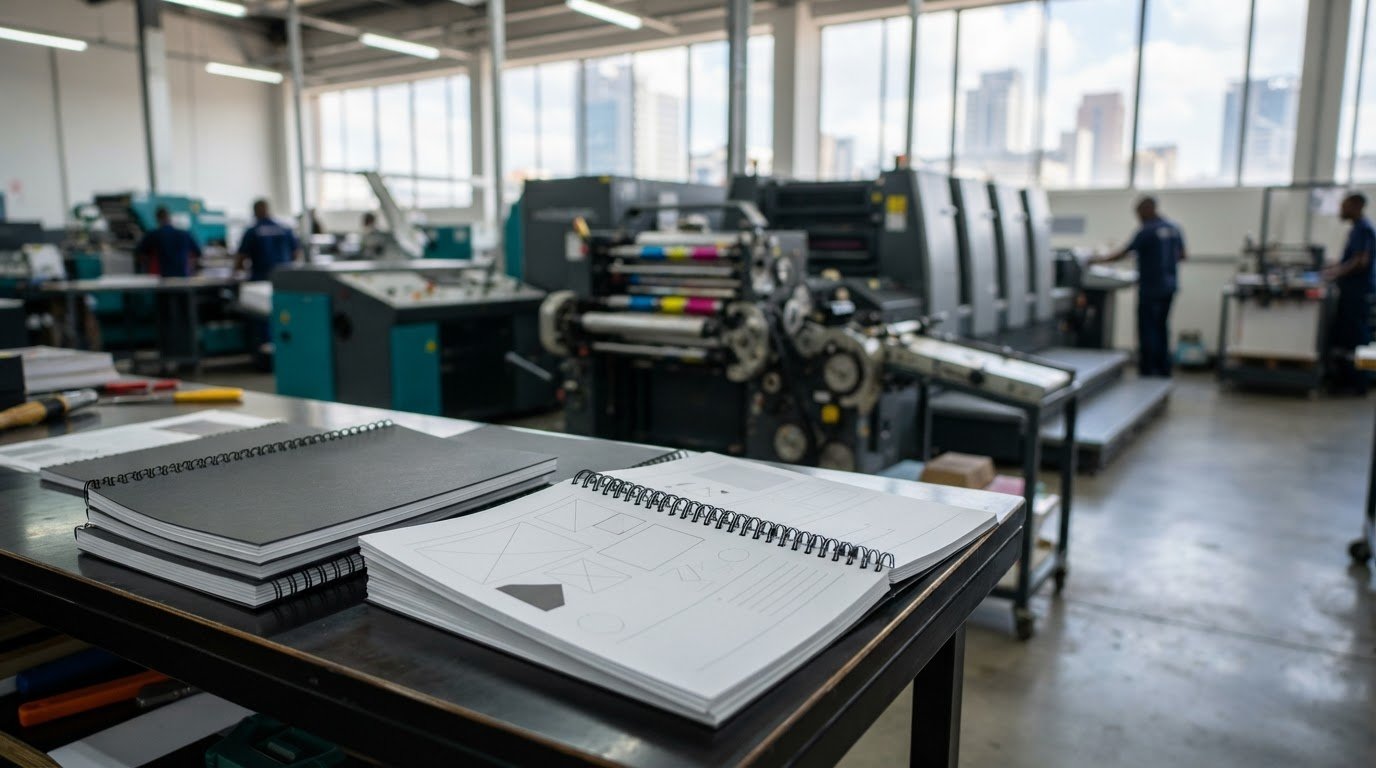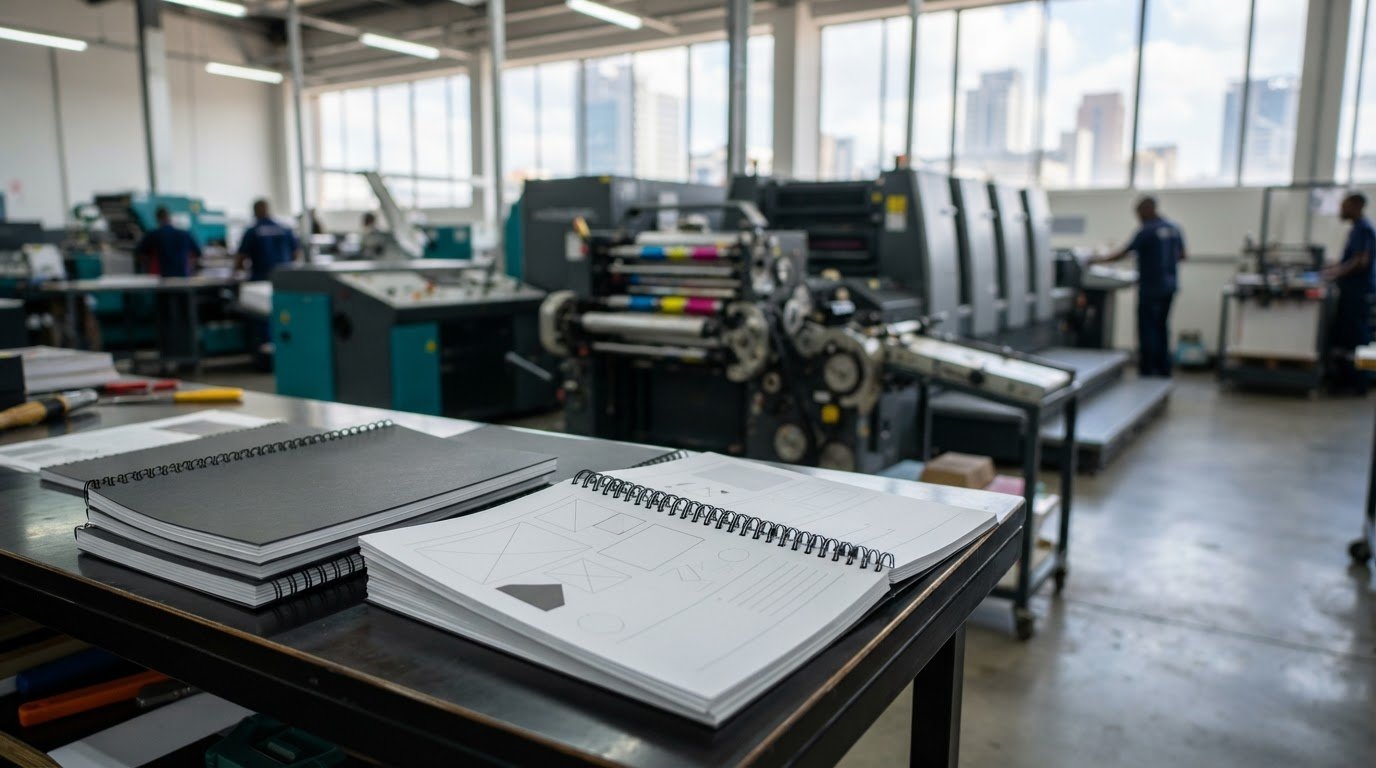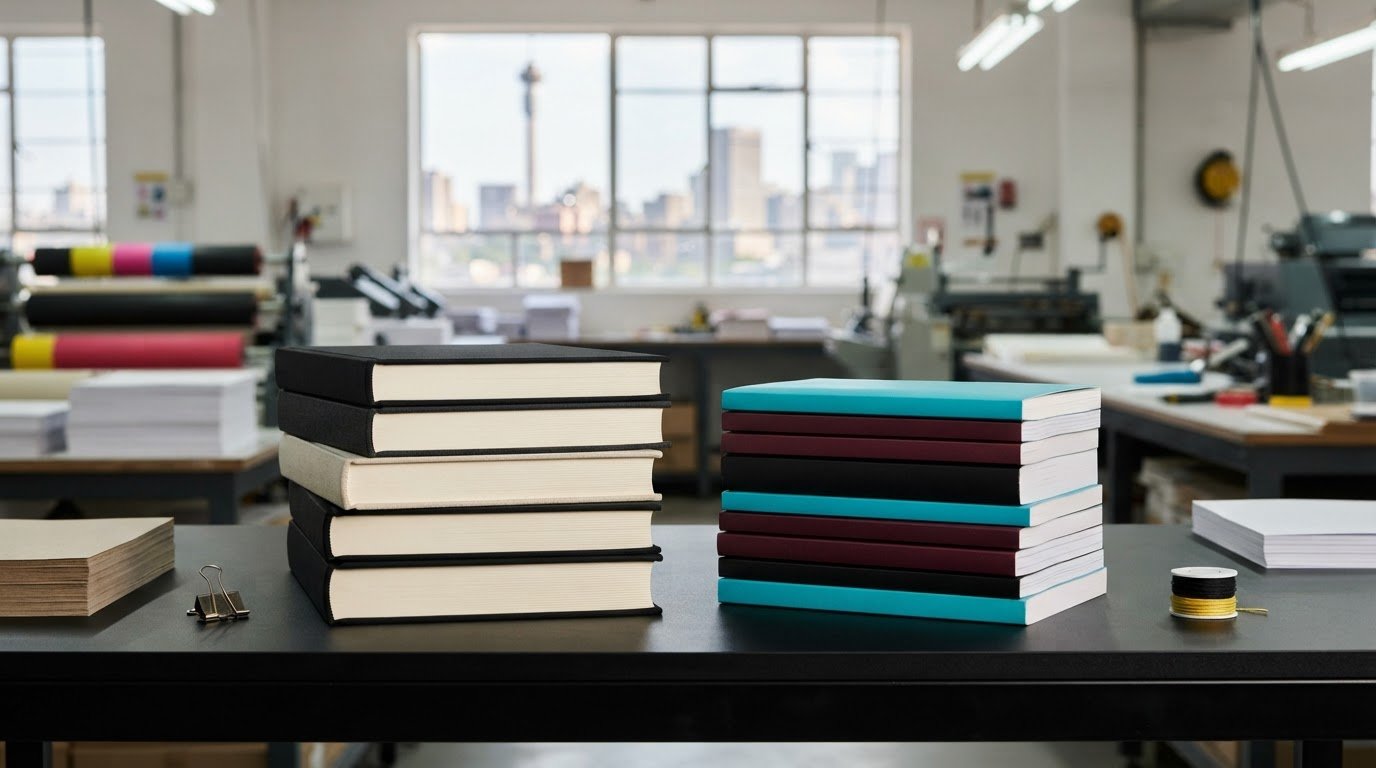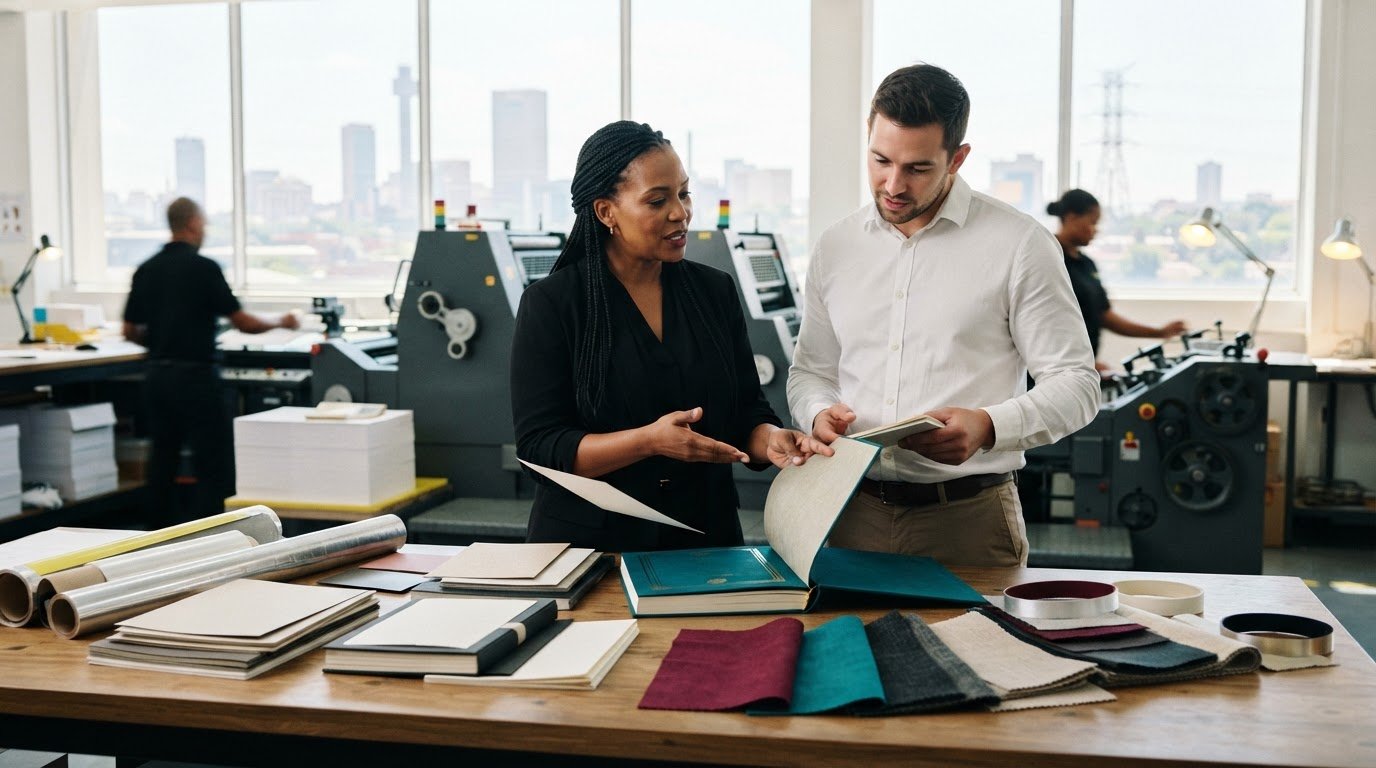

Wholesale branded packaging South Africa is a strategic choice for schools, publishers and small businesses that need cost-effective, consistent packaging across large volumes and multiple SKUs. Whether you’re preparing school terms, printing educational workbooks, or shipping product catalogues, buying wholesale branded packaging ensures professional presentation and budget predictability.
What is wholesale branded packaging and why choose it for your South African business?
Wholesale branded packaging is bulk-ordered, custom-printed packaging that carries your logo, brand colors and messaging across boxes, sleeves, inserts and wrap-around labels. Businesses, educational publishers and event organisers in South Africa choose wholesale options because unit costs fall dramatically with volume, and production consistency improves with repeat runs. Wholesale packaging suits industry needs from commercial printing to catalogue printing and booklet printing, and helps small businesses and schools present materials professionally.
When you order wholesale, you also access broader customisation—specialised finishes, die-cutting and inner inserts—at prices that make sense for termly textbook distribution or promotional campaigns for events and promotions.
How do pricing and volume discounts work for high-volume orders?
Pricing tiers are typically based on quantity, material type and print complexity. Most suppliers in South Africa offer step-based discounts (e.g., 1–500, 501–2,500, 2,501+ units) and will quote per-SKU for mixed orders. For wholesale branded packaging, economies of scale matter: set-up costs (artwork, plates, die-lines) are amortised across units, so a higher run reduces effective unit cost.
Typical cost factors include:
- Run length: longer runs lower unit price.
- Material: corrugated board vs folding carton vs paperboard.
- Print method: litho (offset) vs digital vs flexo.
- Finishes: varnish, laminates, hotfoil, embossing.
Table: Typical pricing drivers
| Driver | Effect on Price |
| Quantity | Higher quantities → lower unit cost |
| Material grade | Premium stocks increase cost |
| Colour complexity | More colours may raise setup and ink costs |
| Special finishes | Varnish, lamination add to per-unit price |
According to Statista, the global packaging market was valued at around US$900 billion in 2020, underscoring the broad, established economy of scale in packaging production.
Which printing methods are best for wholesale branded packaging?
Choosing between litho (offset), digital, flexo and gravure depends on volume, turnaround and the desired finish. For very large runs, litho and flexo are cost-effective and provide consistent colour across long print runs. Digital printing is ideal for shorter runs, variable data (e.g., unique serial numbers or student names on educational materials) and faster turnaround times.
Each method has pros and cons:
- Litho/Offset: Best for consistent high-volume prints and premium colour accuracy.
- Digital: Best for shorter runs, quick proofs, personalization.
- Flexo: Common for corrugated and large carton work.
For an overview of the commercial printing industry and common processes such as litho and digital printing, see this Wikipedia article on commercial printing.

How do you maintain consistent branding across large runs and multiple SKUs?
Maintaining consistent branding across large production runs requires strict colour management, approved colour swatches (PMS), and clear print specifications. A robust supplier will provide proofs, match to Pantone (when required), and run press checks or digital proofs before the full production run.
Best practices include:
- Prepare master artwork with clear dielines and colour references.
- Request a press proof or short-run colour sample before mass production.
- Use spot colours (Pantone) for brand-critical elements and CMYK for photographic work.
- Document a brand-spec sheet that accompanies every reorder.
For educational bodies preparing multiple textbooks and workbooks each term, linking clear brand specs to every order reduces rework and keeps school materials uniform across batches. See our textbook printing services for tailored guidance on school printing and bulk educational printing: textbook printing.
What materials, finishes and eco-friendly options are available?
Material choice affects protection, presentation and sustainability. Common materials include paperboard, corrugated cardboard, kraft, and coated stocks. Finishes such as aqueous varnish, matte or gloss lamination, soft-touch, hot-foil stamping and embossing elevate perceived value but add to cost.
Eco-friendly options increasingly matter to South African schools and small businesses. Recycled kraft, FSC-certified board, eco inks and water-based varnishes reduce environmental impact. Many suppliers offer advice on balancing sustainability with durability—especially important for educational printing that has to handle repeated use.
Quick list of sustainable choices:
- FSC or recycled fibre board
- Eco inks
- Water-based coatings instead of plastic lamination
- Efficient nesting to reduce waste on print sheets
For promotional brochures, catalogues and booklets using sustainable materials, check our brochure printing, catalogue printing and booklet printing services: brochure printing, catalogue printing, booklet printing.
What are typical lead times and turnaround for bulk orders in South Africa?
Lead times depend on print method, complexity and available stock. Typical windows are:
- Digital short runs: 3–7 business days
- Litho medium/large runs: 7–21 business days
- Complex packaging with die-cuts and special finishes: 2–6 weeks
Turnaround can be expedited by providing finalised artwork, approving proofs quickly, and selecting in-stock material. Suppliers with local production facilities in South Africa can shorten logistics time—beneficial for school term preparation or tight event deadlines.
How do logistics and delivery across South Africa work for wholesale orders?
Delivery logistics for wholesale packaging involve palletised shipping, bonded warehousing and coordinated last-mile distribution. Suppliers will typically:
- Provide FOB or delivered pricing options
- Offer consolidated shipping for multi-item SKUs
- Coordinate with freight partners for regional distribution
For education printing and catalogue distribution across provinces, many printers arrange staggered deliveries aligned to school calendars or sales cycles. Planning ahead reduces freight costs and avoids term-start shortages. According to the World Packaging Organisation, effective packaging and distribution reduce product damage and waste while supporting efficient supply chains.
How does quality control work for educational and textbook printing at scale?
Educational printing needs particularly strict QC because materials are reused and distributed to many learners. Quality control steps include paper testing, binding strength checks (perfect binding, saddle stitch, sewn binding), colour consistency checks and sampling across batches.
Typical QC workflow:
- Pre-press file validation and soft proofing.
- Test prints or soft proofs for colour and layout approval.
- In-line checks during press runs and post-run sampling.
- Binding strength and page sequence verification for books and manuals.
For training manuals and workbooks, extra attention is paid to paper opacity (to prevent show-through), binding durability, and inline perforations for tear-out worksheets. See our training manual printing and books printing pages for service-specific recommendations: training manual printing, books printing.

What file specifications, dielines and artwork preparation do suppliers require?
Supplying print-ready files speeds production. Typical artwork specs include:
- High-resolution PDF/X-1a or PDF/X-4 files
- CMYK colour mode (include Pantone references if needed)
- 300 DPI for images; vector for logos/line art
- Bleed (usually 3–5 mm) and clear dielines for boxes
- Fonts embedded or outlined
For packaging, include an accurate dieline with cut and fold lines, glued flap positions, and a mock-up, or photo or sketch. Suppliers may offer pre-press checks and minor fixes; however, large changes after plate-making or die-cutting can be costly. For help preparing artwork tailored to booklets and catalogues, consult our booklet and catalogue printing resources: booklet printing, catalogue printing.
How to choose a reliable wholesale branded packaging supplier in South Africa?
Selecting a supplier requires balancing price, quality, and service. Key questions to ask potential suppliers:
- Do you offer samples and press proofs?
- Can you handle mixed-SKU orders and staggered deliveries?
- What are your quality assurance and returns policies?
- Do you provide sustainability certifications (FSC, recycled content)?
- Where is production located and what are typical lead times?
Red flags include vague turnaround promises, no ability to provide references or sample work, and lack of clear file specifications. A trusted partner will also advise on cost-saving alterations that don’t compromise branding or durability.
Cost-saving tips and sustainable practices for small businesses, schools and publishers
For budget-conscious organisations—especially schools preparing bulk educational printing for a new term—little changes can create large savings:
- Standardise sizes and materials across SKUs to reduce plates and die costs.
- Consolidate SKUs to reduce changeovers and waste.
- Choose recyclable stocks and water-based coatings to reduce disposal costs and support eco-friendly procurement policies.
- Plan orders around supplier production schedules to avoid rush fees.
For publishers, combining catalogue printing and brochure printing in shared print runs can cut costs and accelerate delivery for promotional campaigns. According to industry sources, strategic planning of print runs and logistics significantly lowers per-unit packaging costs and carbon footprint.

Next steps: requesting quotes and preparing for your first wholesale order
Start by compiling a specification sheet: item dimensions, quantities per SKU, material grade, print method preference, required finishes and delivery windows. Ask suppliers for a step-by-step quote that separates setup, tooling, per-unit print and finishing, and delivery. Be sure to request proofs and a small pre-production sample where possible.
If you’re preparing textbook runs, training manuals or booklets for schools or businesses, provide enrolment or distribution schedules so your supplier can time production and deliveries around academic terms or sales seasons. For help with brochure and promotional print materials alongside your packaging order, see our brochure printing services: brochure printing.
Ready to start? Contact local South African printers who specialise in packaging printing and commercial printing to get tailored quotes, samples and sustainable options for your wholesale branded packaging needs.
For wholesale branded packaging in South Africa, you need a supplier who can deliver consistent print quality, reliable lead times, and cost-effective pricing at volume.
Print It ZA produces branded packaging in bulk—ideal for retailers, eCommerce, corporates, and events—offering options like boxes, sleeves, labels, and inserts designed to protect your products and elevate presentation. With expertise across packaging print and commercial production, we help you choose the right materials and finishes for packaging that stays on-brand, run after run.
Contact Print It ZA today for a free quote and speedy nationwide delivery.
Print It ZA — We Deliver Printing Best!