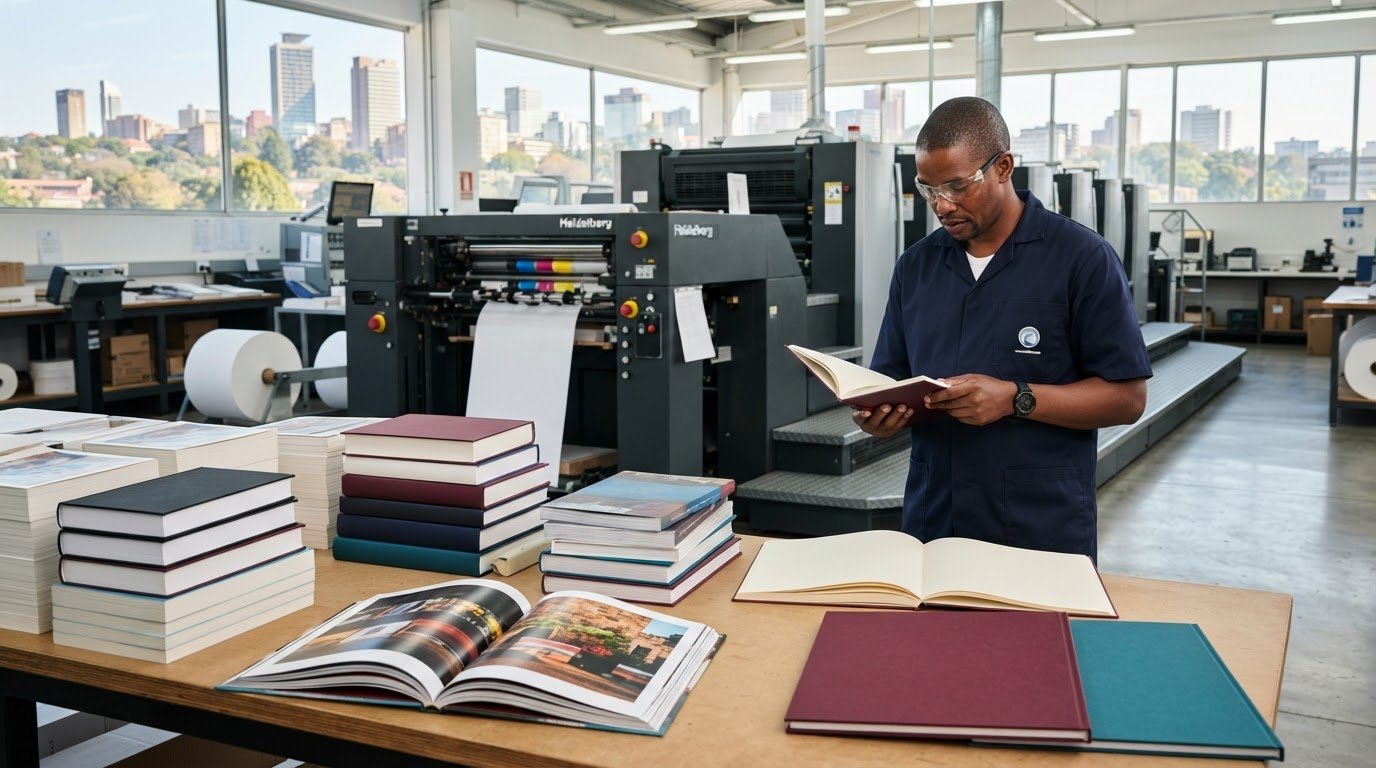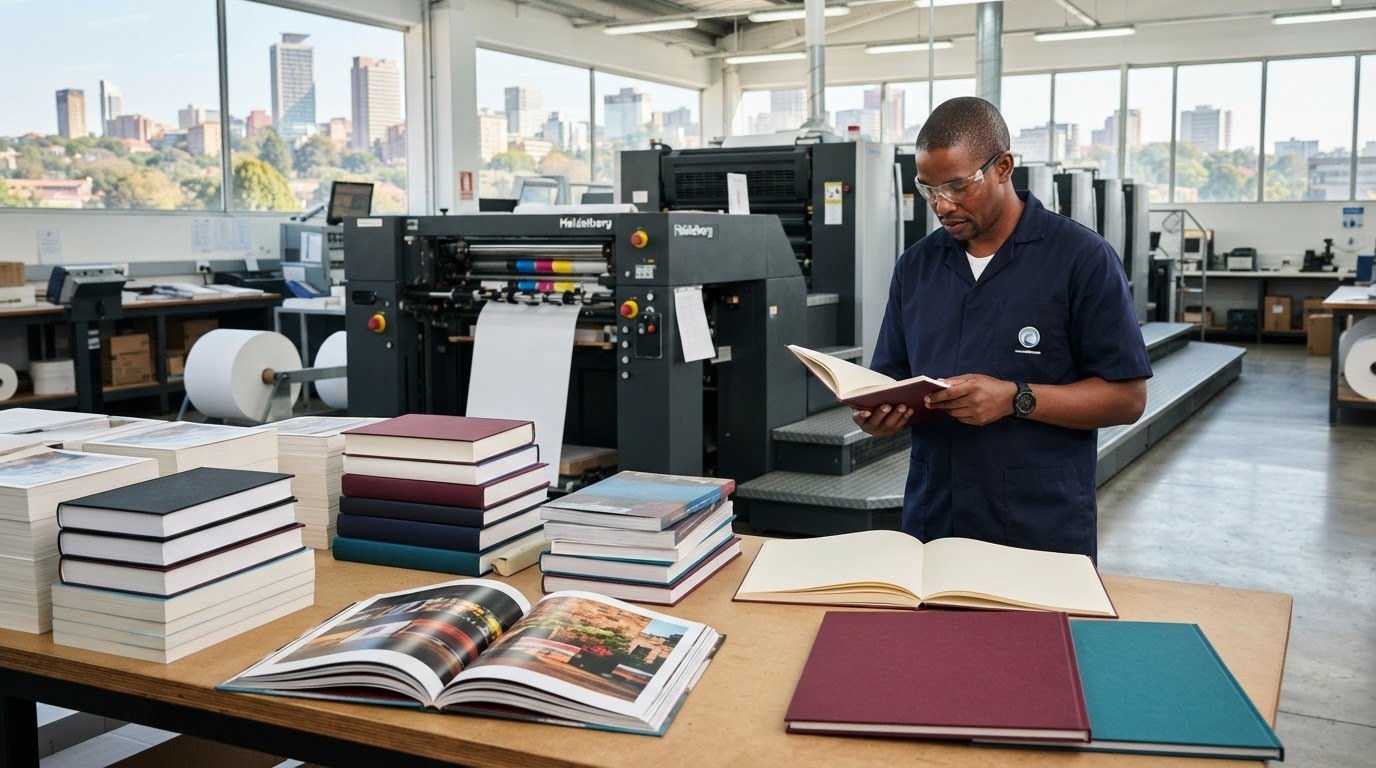

What if the difference between a literary success and a bargain-bin reject isn’t the writing, but the paper it’s printed on? For authors in South Africa, the stakes have never been higher. With production costs shifting in 2026, choosing the right book printing paper types is a decision that impacts your budget as much as your brand. You’ve likely spent years on your manuscript, and the last thing you want is for the final product to look amateurish because of a technical misunderstanding.
We agree that the world of gsm and caliper can feel daunting when you just want to see your vision realized. At Print It ZA, we’re your reliable creative partners here to make these technical choices accessible and rewarding. This guide will help you master the aesthetic and functional world of book paper to ensure your publication looks, feels, and lasts like a professional masterpiece. We’ll decode paper weights, explore the sensory differences between finishes, and show you how to match stock to your specific genre for a truly premium result.
Key Takeaways
- Learn how to navigate various book printing paper types to find the perfect balance between readability and durability for your specific project.
- Master the “Sweet Spot” of paper weights by choosing between 80gsm and 100gsm to ensure your book feels premium without becoming overly bulky.
- Discover when to opt for the classic, tactile feel of uncoated stock versus the vibrant, high-contrast finish of gloss coated paper for visual-heavy projects.
- Get genre-specific stock recommendations, from literary novels needing cream bond to children’s books requiring heavy-duty silk finishes.
- Find out why visiting our Midrand facility to feel physical paper samples is the best way to guarantee your book looks like a professional masterpiece.
Table of Contents
Understanding the Basics of Book Printing Paper Types
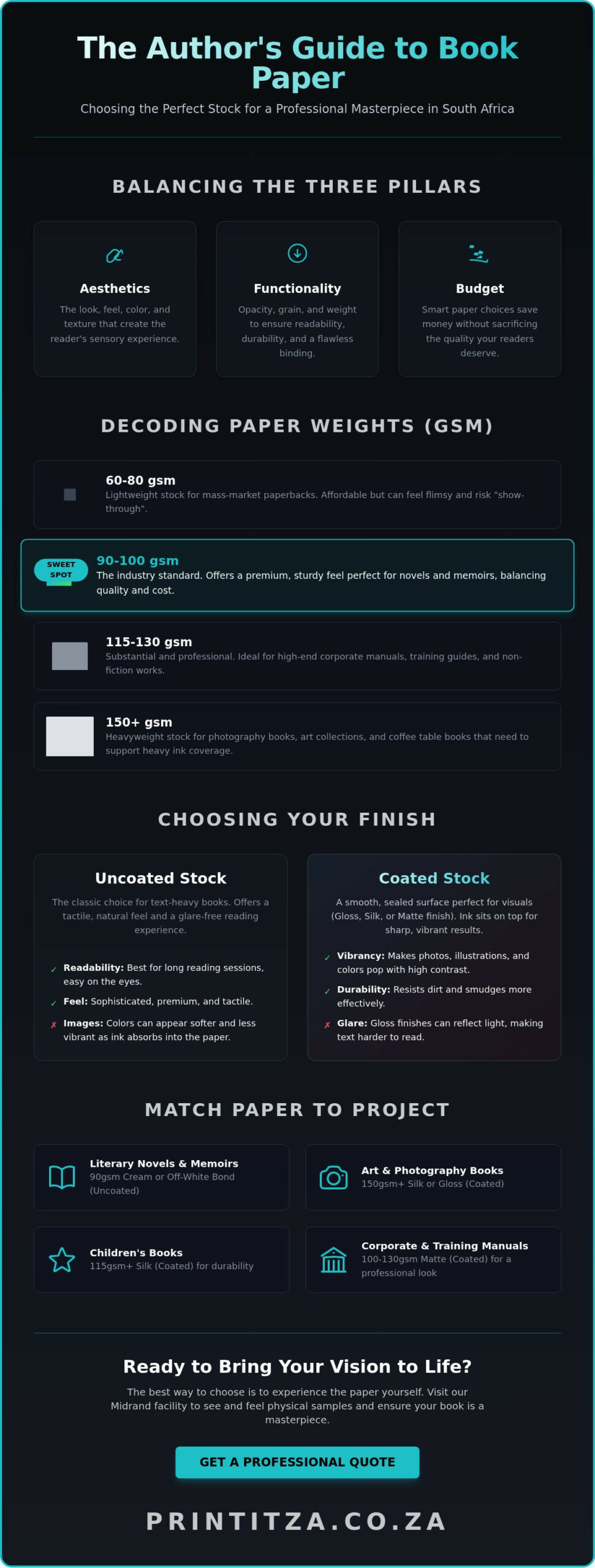
Most authors focus heavily on their cover design, but the interior stock is what keeps a reader turning pages. Book paper isn’t just standard office paper. It’s a specialized stock engineered for high opacity, consistent readability, and the structural strength to survive years of shelf life. When you select book printing paper types, you’re balancing three critical pillars: aesthetics, functionality, and budget. Getting this balance right ensures your book feels like a premium product rather than a cheap photocopy.
Aesthetics involve the color, texture, and "feel" of the page. A high-gloss finish makes colors pop, while a matte finish feels sophisticated and professional. Functionality focuses on how the paper interacts with the binding glue and the ink. If you choose a paper that’s too thin, you’ll see the text from the next page ghosting through. If it’s too thick, the spine might crack or refuse to stay closed. Budget is the final hurdle. Since paper costs in South Africa rose by 47% between 2020 and 2026, every gram counts toward your final unit cost. Choosing a 100gsm stock when an 80gsm bond would suffice can significantly inflate your production bill without adding much value to the reader experience.
The Anatomy of a Professional Page
Grain direction is the secret hero of bookbinding. Paper has a "grain" just like wood, formed by the direction of the fibers during manufacturing. If the grain runs parallel to the spine, your book opens easily and stays open. If it runs perpendicular, the pages feel stiff and "springy," often leading to binding failure over time. You also need to consider brightness versus whiteness. Brightness measures how much light reflects off the page, while whiteness describes the shade. For long novels, a softer cream or "off-white" is easier on the eyes for extended reading sessions.
Longevity is another factor you can’t ignore. You should always insist on acid-free stock to prevent your pages from yellowing and becoming brittle. You can check a comprehensive list of paper types to see how different chemical treatments affect the archival quality of your work. Professional book printing paper types are almost always acid-free to ensure your legacy lasts for decades.
The South African Context: Why GSM Matters
In South Africa, we don’t use the American "pound" (lb) system for measuring paper. We use Grams per Square Metre (GSM). GSM is the weight of a square metre of paper, which dictates thickness and sturdiness. If you’re using a template from an international site that asks for 60lb offset, you’re looking for roughly 90gsm in our local market. Understanding this conversion is vital if you want to avoid ordering paper that’s far thinner than you expected. We always recommend seeing a physical sample because the "bulk" or thickness can vary even between two different 80gsm stocks.
Decoding Paper Weights: Which GSM is Right for Your Book?
If you’ve been browsing international self-publishing forums, you’ve likely seen references to 50lb or 60lb paper. In South Africa, we use the metric system, specifically Grams per Square Metre (GSM). This difference often leads to confusion when authors try to match international templates with local production. Understanding how GSM translates to the physical feel of your book is the first step in avoiding a "cheap" final product.
Your choice of weight depends on your genre and page count. Here’s how the most common book printing paper types break down by weight:
-
75gsm to 80gsm: This is the lightweight territory of mass-market paperbacks and newsprint. It’s affordable and keeps the book light, but it can feel flimsy if the opacity isn’t high enough.
-
90gsm to 100gsm: We call this the "Sweet Spot." It provides a premium, sturdy feel that readers expect from modern novels and memoirs. It offers an excellent balance between quality and production cost.
-
115gsm to 130gsm: This range is perfect for high-end corporate manuals or training guides. It feels substantial and professional in the hand.
-
150gsm and above: This is heavyweight stock. Use this for photography books, art collections, or coffee table books where the paper needs to support heavy ink coverage without warping.
Opacity and ‘Show-Through’
Opacity is the measure of how much light passes through a sheet of paper. If your paper has low opacity, your reader will see the text from the reverse side of the page. This "show-through" is distracting and looks amateurish. For text-heavy books, you need a rating high enough to keep your pages clean. Interestingly, instruction booklet printing frequently utilizes thinner 70gsm and 80gsm stocks that are engineered with high opacity. This allows the booklets to remain compact while keeping the diagrams on each page perfectly legible. If you aren’t sure about the opacity of your chosen stock, you can always ask our team for a physical sample to test it yourself.
Caliper and Spine Width
Caliper refers to the actual thickness of a single sheet of paper, usually measured in microns. It’s distinct from GSM because two different types of 80gsm paper can have different thicknesses based on how they were pressed. This "bulk" factor is a powerful tool for authors. If you have a short novella, using a high-bulk paper can make the spine wider, giving your book more presence on a bookstore shelf. However, you must consult your printer before finalizing your cover art. Even a 1mm difference in spine width can cause your cover text to wrap around the edges, ruining the professional look you’ve worked so hard to achieve. We provide precise spine calculations for every project to ensure your book printing paper types align perfectly with your cover design.
Coated vs. Uncoated Paper: Choosing Your Finish
The way a reader interacts with your book is purely physical. While weight matters for the "heft," the finish dictates the actual texture of the reading experience. Different book printing paper types react to ink and light in unique ways. You need to decide if you want a classic, organic feel or a modern, high-definition look. This choice changes how your colors appear and how the book feels under a reader’s thumb.
When to Go Uncoated
If you’re writing a novel, memoir, or workbook, uncoated paper is usually your best friend. It has a "toothy" texture that feels natural and premium. This surface is highly absorbent, which means ink soaks into the fibers rather than sitting on top. For self publishing printing south africa, authors typically choose between cream and white uncoated stock.
Cream is the industry standard for long-form fiction. It reduces glare and eye strain, making it much easier to read 300 or more pages in one sitting. Stark white is better for journals or educational workbooks where you want a clean, high-contrast look. Because uncoated paper is porous, it’s the only logical choice for books that require writing, like diaries or training manuals. A pen will glide across the "tooth" of the paper without smudging or skipping.
The Power of Coated Stocks
Coated papers are treated with a layer of clay or polymer during manufacturing. This coating sits on top of the fibers, preventing ink absorption and keeping colors crisp. This is why cookbooks, coffee table books, and catalogues almost always use coated stock. You have two main paths to take here:
-
Gloss: This offers high shine, vibrant colors, and maximum contrast. It makes images "pop" but can be hard to read under bright lights due to the reflection.
-
Silk or Matt: This is a sophisticated middle ground. It offers the color precision of gloss but with a non-reflective finish that’s much easier on the eyes.
Coated stocks also offer a durability advantage. They resist fingerprints and smudges better than uncoated paper, which is vital for books that will be handled frequently in a kitchen or a workshop. Coating sits on top of the fibres, preventing ink absorption and keeping colours crisp.
How Finishes Affect Binding
Your choice of finish also impacts your book binding options. Coated papers are smoother, which means certain glues used in paperback binding might require specific adhesives or "scoring" to ensure the pages don’t pull out over time. When you’re selecting book printing paper types, we’ll help you match the finish to the right binding method so your book stays together for a lifetime.
Matching Paper Types to Your Specific Genre
Every genre carries a specific set of reader expectations. You wouldn’t print a gritty crime thriller on high-gloss photo paper any more than you’d print a luxury cookbook on thin newsprint. Selecting the right book printing paper types is about matching the physical feel of the book to the story told within its pages. When the paper weight and texture align with the genre, the book feels "right" in the reader’s hands.
Here are the industry standards we recommend for different types of publications:
-
Novels and Memoirs: Use 75gsm uncoated cream bond. The cream tint reduces eye strain for long reading sessions, while the "toothy" texture provides that classic literary feel.
-
Children’s Books: Opt for 130gsm to 150gsm silk coated paper. Kids are famously rough on books. This heavier weight provides the durability needed to survive sticky fingers and frequent page-turning, while the silk finish makes illustrations look vibrant.
-
Corporate Annual Reports: Choose 115gsm to 130gsm matt coated stock. This gives your report a sophisticated, executive finish that feels substantial without the distracting glare of high-gloss paper.
-
Training Manuals: Standard 80gsm to 90gsm white bond is the go-to choice. It’s cost-effective for high-volume runs and provides a clean, high-contrast surface for diagrams and text instructions.
Specialty Projects: Poetry and Art
High-end poetry collections often benefit from specialty book printing paper types like "laid" or textured papers. These stocks have a visible pattern of parallel lines from the manufacturing process, adding a handcrafted feel to the work. For photography portfolios or fine art books, we move into the 170gsm+ heavyweight territory. These thick stocks prevent ink from warping the page during heavy coverage. If you’re planning a massive release, our high volume book printing services can help you balance these premium quality choices with the logistics of a large-scale production run.
Religious and Educational Texts
Religious volumes like Bibles or thick hymnals require a very specific stock known as "bible paper." This is an incredibly thin, lightweight paper that remains highly opaque. It allows thousands of pages to fit into a single, portable volume without the text from the reverse side showing through. In the Gauteng educational sector, school yearbooks and diaries usually standardize on 80 to 100gsm white offset paper. It’s the king of the South African classroom because it’s durable enough for a full school year and easy for students to write on with any pen or pencil.
Ready to see how these stocks feel in person? You can contact us for a custom quote and paper samples to find the perfect match for your next project.
The Print It ZA Advantage: Local Expertise in Johannesburg
Choosing between different book printing paper types is only half the battle. You also need a partner who understands the South African market and the logistical challenges of local distribution. Our 24/7 production facility in Midrand serves as a hub for Gauteng authors and businesses, providing a fast turnaround that international printers simply can’t match. We believe in a "can-do" approach. This means we don’t just print your files; we help you navigate the entire creative process from the first grammage selection to the final delivery at your doorstep.
Seeing a digital mock-up is one thing, but feeling the "tooth" of an uncoated sheet is another. We encourage our clients to visit us or request physical samples. You’ll see the difference between a 90gsm bond and a 115gsm silk finish immediately. It’s about confidence. When you hold the stock, you know exactly how your readers will feel when they open your book for the first time. We also prioritize sustainability by sourcing FSC-certified, eco-friendly paper from local South African and International paper suppliers whenever possible.
Logistics and Shipping in South Africa
Logistics play a massive role in your final unit cost. If you’re printing 1,000 copies of a 300-page book, choosing 100gsm over 80gsm increases your total shipment weight by 25%. In the 2026 courier market, that extra mass translates directly into higher shipping fees. We help you calculate these trade-offs early in the planning phase. Our strategic location in Midrand and our Distribution Hub in Germiston near OR Thambo International Airport allows for efficient distribution across South Africa. We use reinforced, bespoke packaging to ensure your premium paper finishes stay pristine and protected during transit, regardless of the distance.
Get a Bespoke Quote for Your Project
Our in-house designers work with you to align your paper choice with your brand vision. Whether you need a short digital run for a niche memoir or a large litho print for a retail catalogue, we have the technology to handle it. Digital printing is fantastic for fast, short-run book printing paper types, while litho printing offers unmatched cost-efficiency for bulk orders of 1,000 copies or more. We’re here to ensure your technical specs match your budget and your aesthetic goals perfectly. Ready to get started? Contact Print It ZA today for a custom book printing quote and let’s turn your manuscript into a professional masterpiece.
Bring Your Story to Life on the Perfect Stock
Choosing the right book printing paper types is the final step in transforming your hard work into a tangible, professional reality. By now, you understand how to navigate the technicalities of gsm and the sensory impact of different finishes to ensure your publication meets the high standards of the 2026 market. Whether you’re aiming for the classic, eye-friendly feel of cream bond or the vibrant durability of a silk-coated interior, your choice defines how your reader connects with your story.
At Print It ZA, we’re committed to making this journey seamless for authors and businesses alike. Our 24/7 state-of-the-art printing facility in Midrand provides the expert support you need, from initial stock selection to final litho or digital production. With nationwide delivery across South Africa, we ensure your project arrives in perfect condition, no matter where you’re based. We don’t just print pages; we help you build a professional brand that lasts.
Ready to see your work in print? Get a custom book printing quote from Print It ZA today!
Your vision deserves a finish that reflects its true quality. We look forward to helping you hold your finished masterpiece for the very first time.
Frequently Asked Questions
What is the best paper weight for a self-published novel?
The industry standard for novels is usually between 80gsm and 100gsm. An 75gsm cream bond is the most common choice for mass-market fiction because it keeps the book lightweight and affordable. If you want a more premium feel for a shorter memoir or a special edition, 100gsm provides a sturdier page that feels substantial in the reader’s hand. Your choice of book printing paper types should always balance the final thickness of the book with the comfort of the reader.
Is cream paper better than white paper for books?
Cream paper is the preferred choice for fiction and long-form memoirs. The off-white tint reduces light reflection, which significantly lowers eye strain during extended reading sessions. White paper is better suited for non-fiction, textbooks, or manuals. The high contrast of white stock makes black text and technical diagrams stand out clearly. If your book is over 200 pages of pure text, your audience will find cream stock much more comfortable to read.
What is the difference between bond paper and offset paper?
Bond and offset are very similar, but they serve different roles in a print shop. Offset paper is specifically engineered for high-speed litho presses to resist moisture and picking. Bond paper is a more general-purpose uncoated stock often used in digital printing. For most authors, both provide that classic "toothy" feel. We’ll help you select the right grade based on whether your project is a short digital run or a large-scale litho production.
Can I use different paper types for the inside and the cover?
You almost always use different stocks for the interior and the cover of a book. A standard paperback requires a heavy cover board, typically between 250gsm and 350gsm, to protect the contents and provide structural integrity. The interior pages use much lighter book printing paper types, ranging from 80gsm to 130gsm. This combination ensures the book remains flexible enough to open easily while the cover stays durable and professional.
Does the type of paper affect the price of book printing significantly?
Paper selection is one of the biggest factors in your production budget. Heavier stocks cost more per sheet and increase the total weight of your order, which raises courier fees for nationwide delivery. Since South African paper costs rose by 47% between 2020 and 2026, choosing a fit-for-purpose 80gsm stock instead of a luxury 115gsm option can save you a significant amount on bulk runs of 1,000 copies or more.
What does ‘FSC Certified’ paper mean for my book?
FSC Certified paper comes from forests managed by the Forest Stewardship Council. This certification guarantees that the wood was harvested responsibly to protect local ecosystems and worker rights. Using FSC-certified stock is a great way to show your readers that your project supports environmental health. It’s a standard we prioritize at our Midrand facility to ensure your publication meets modern sustainability expectations in the South African market.
How do I calculate my book’s spine width based on paper type?
You calculate the spine width by multiplying your total page count by the paper’s caliper, which is its physical thickness. Because different 80gsm stocks have varying bulks, there isn’t a single universal formula. We provide a precise measurement for your specific paper choice before you finalize your cover art. This prevents your spine text from shifting or wrapping around the edges, which is a common mistake that makes a book look amateurish.
Can I print high-quality photos on uncoated paper?
You can print photos on uncoated paper, but the colors will appear softer and more muted. The ink soaks into the fibers of the paper rather than sitting on top, which reduces the sharpness compared to a coated stock. This look is very popular for poetry collections or artistic journals where a "vintage" feel is desired. If you need high-definition images for a cookbook or a catalogue, you should opt for a silk or gloss coated finish instead.
Contact Print It ZA today, for a Free Quote and Speedy Service.
Print It ZA print and packaging, we deliver Printing Best!