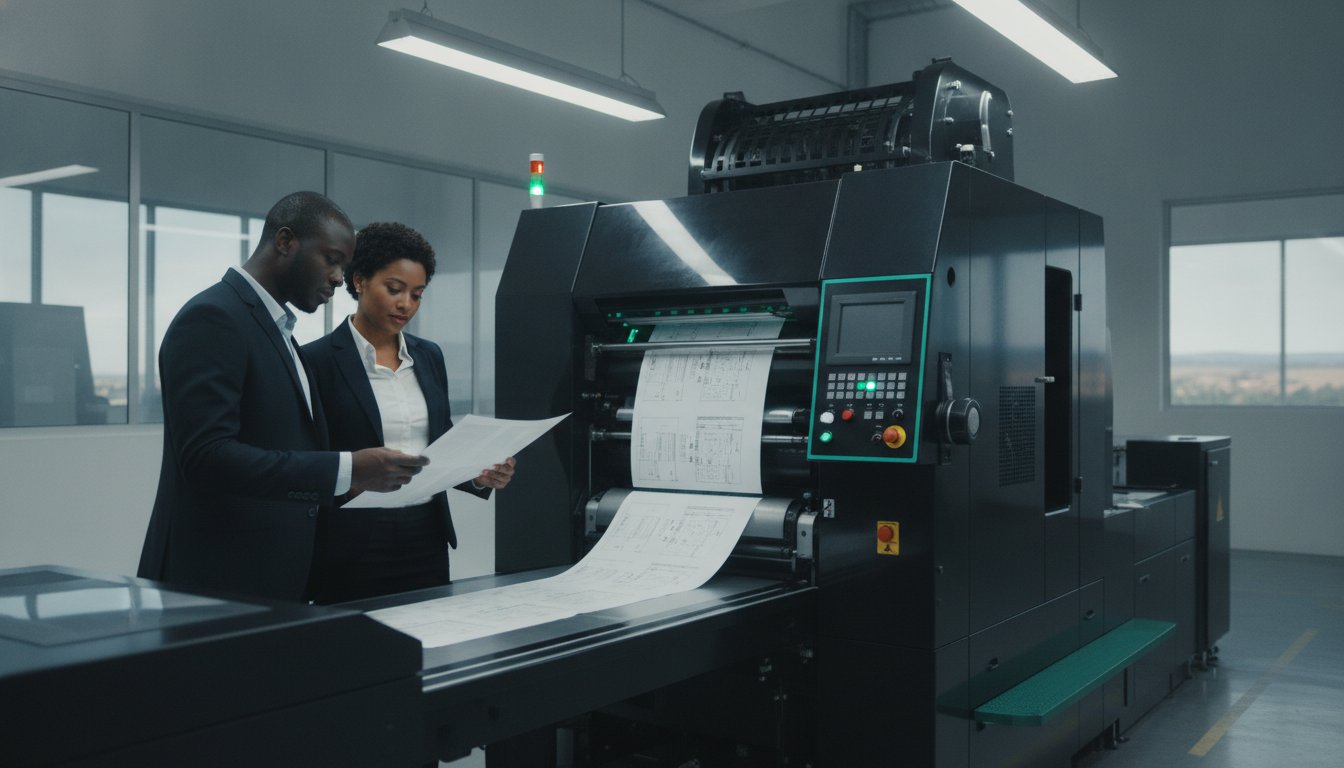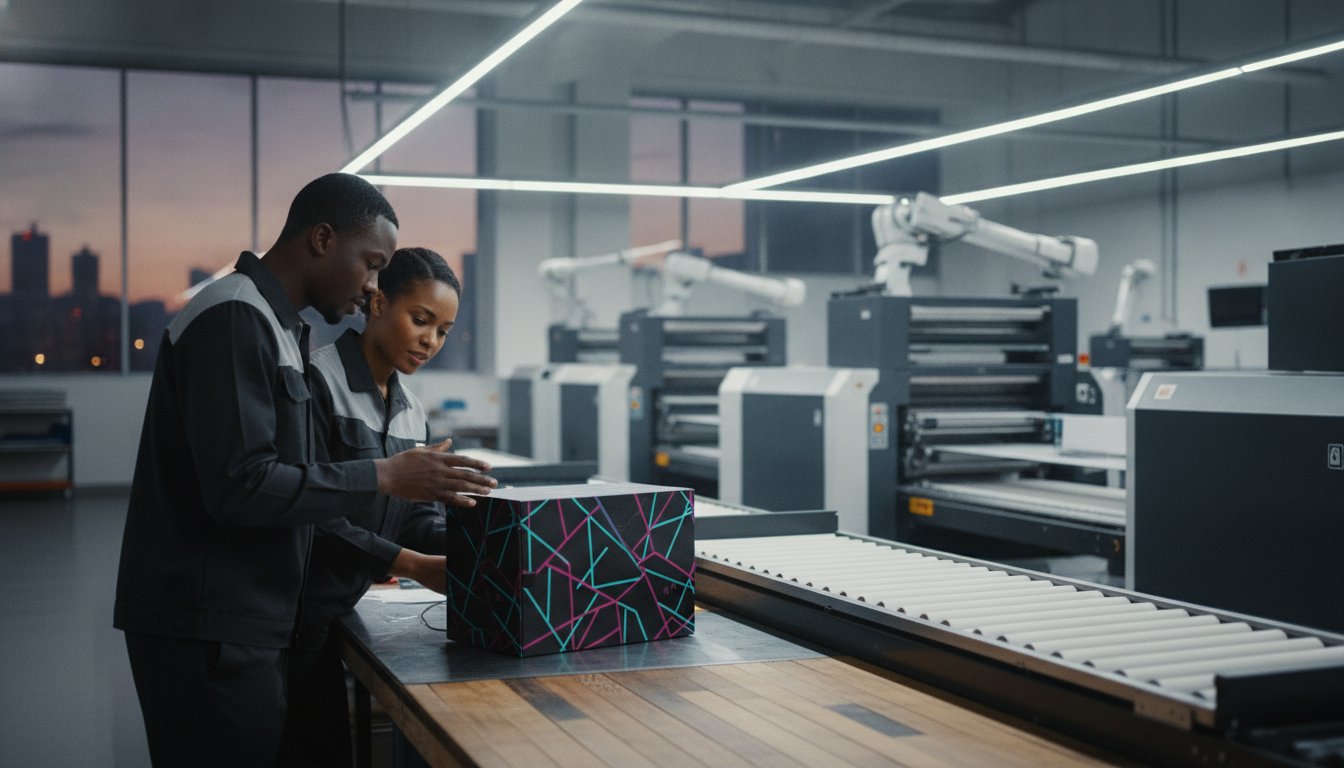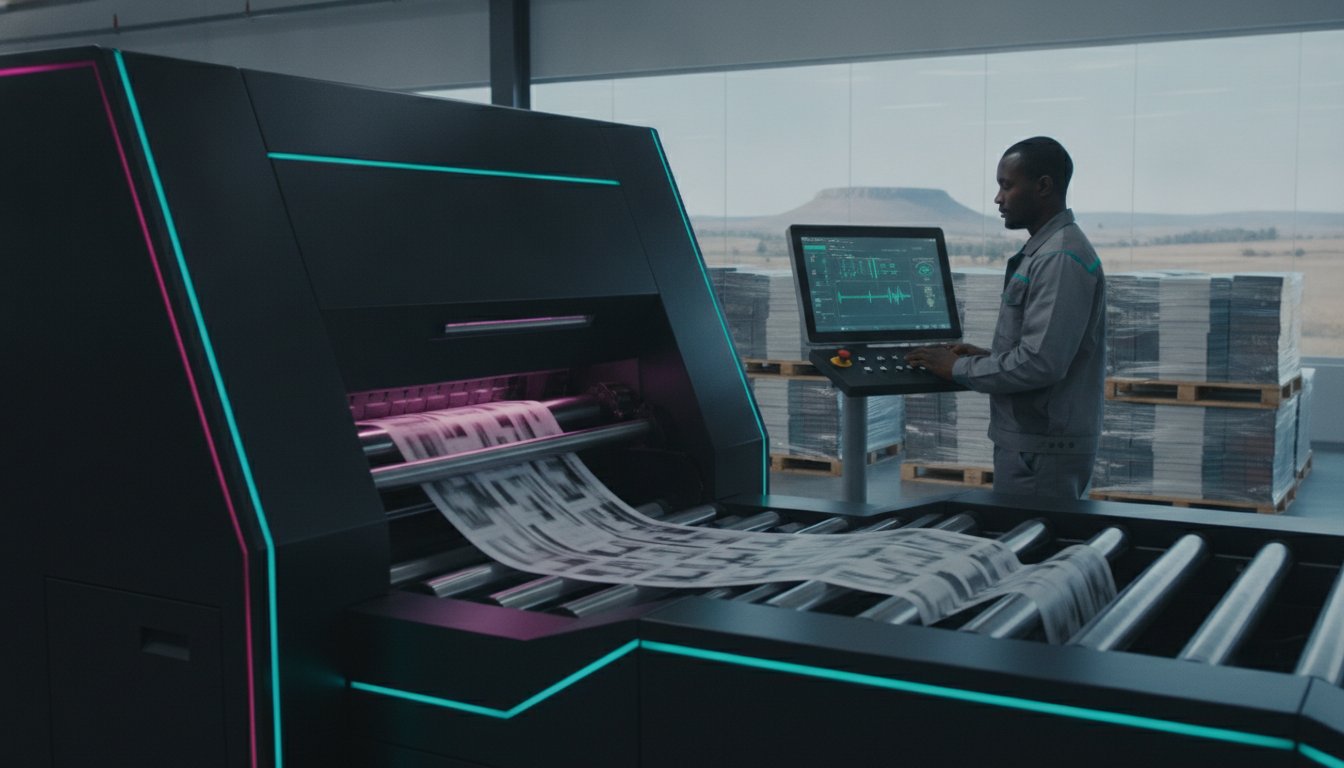

Print on demand is a flexible printing option for South African schools, publishers, businesses and organisations that need smaller print runs, fast updates and lower inventory risk. Instead of printing thousands of copies upfront, print on demand allows you to print books, manuals, brochures, catalogues, workbooks or marketing material as needed.
This guide explains when print on demand is the better choice, when bulk printing makes more sense, and how Print It ZA can help you choose the right print strategy for your project. The best option depends on quantity, turnaround time, storage, budget, content updates, finishing requirements and delivery needs.
What Is Print on Demand?
Print on demand is a printing model where items are printed only when they are needed, either as single copies or small batches. Instead of committing to a large bulk print run, you can produce the exact quantity required for current orders, late requests, updated content or smaller distribution needs.
A typical print on demand workflow includes file setup, proofing, digital printing, finishing, binding where needed, packing and delivery. It is commonly used for books, training manuals, school workbooks, catalogues, brochures, business materials and custom publications.
For South African customers, print on demand is useful when demand is uncertain, content changes often, or storage space is limited. It can also reduce the risk of paying for stock that may become outdated, damaged or unused.
Print on Demand vs Bulk Printing: Quick Comparison
| Factor | Print on Demand | Bulk Printing |
|---|---|---|
| Best for | Small runs, custom orders, updated content and flexible quantities | Large, stable print runs with predictable demand |
| Setup cost | Lower setup requirements for short runs | Higher setup requirements, especially for large production |
| Unit cost | Usually higher per unit at large volumes | Usually lower per unit when printing higher quantities |
| Storage | Minimal storage needed | Requires storage space for printed stock |
| Waste risk | Lower risk of outdated or unused stock | Higher risk if demand changes or content becomes outdated |
| Turnaround | Fast for short runs and urgent updates | Efficient for large planned print runs after setup |
| Content changes | Easy to update between runs | More difficult once a large batch has been printed |
| Best examples | Training manuals, school supplements, short-run books, updated catalogues and event brochures | Large textbook runs, annual prospectuses, high-volume catalogues and long-term stock items |
When Is Print on Demand the Better Choice?
Print on demand is the better choice when flexibility matters more than the lowest possible unit price. It works well when you need to print smaller quantities, update content often, avoid storage costs or test demand before committing to a larger order.
Print on demand is useful for:
- Short-run book printing for authors and publishers.
- Updated training manuals and internal company documents.
- School workbooks, supplements and learning material with changing content.
- Event brochures, programmes and marketing material with tight deadlines.
- Catalogues that need regular product, price or service updates.
- Test runs before committing to a larger bulk print order.
- Personalised or customised print projects.
For example, a school may not want to print hundreds of workbooks if class numbers are still changing. A business may not want to bulk print catalogues if product pricing will change soon. In both cases, print on demand can reduce waste and make the print process more practical.

When Is Bulk Printing Still the Better Option?
Bulk printing is still the better option when your content is final, your quantity is high and your demand is predictable. Larger print runs often reduce the unit cost, which can make bulk printing more cost-effective for stable materials that will not change soon.
Bulk printing may be the better choice for:
- Large textbook orders with stable content.
- High-volume catalogue printing for long-term use.
- Annual school prospectuses or institutional publications.
- Brochures or flyers for major campaigns with large distribution.
- Packaging or labels that will be used consistently over time.
- Corporate print materials that will not need regular updates.
The main advantage of bulk printing is the lower unit cost at higher quantities. The main risk is overprinting. If your content changes, demand drops, or storage becomes a problem, the money saved per unit can be lost through waste or outdated stock.
How Do Print on Demand Costs Compare with Bulk Printing?
Print on demand usually has a higher unit cost than bulk printing when large quantities are involved. However, it can be more cost-effective overall when you factor in storage, waste, outdated stock, returns, cashflow and the ability to print only what is needed.
Important cost factors include:
- Quantity: Higher quantities usually favour bulk printing.
- Setup: Print on demand has lower setup requirements for short runs.
- Storage: POD reduces warehousing and storage needs.
- Waste: POD lowers the risk of unused or outdated stock.
- Updates: POD makes it easier to update content between print runs.
- Finishing: Special finishes may affect cost depending on quantity and method.
- Delivery: Smaller batches can be easier to dispatch as needed.
For many South African organisations, the most practical answer is not always “POD or bulk.” A hybrid approach can work best: bulk print stable core material and use print on demand for updated pages, supplements, late orders, revised manuals or smaller regional requirements.
Print on Demand for Schools and Educational Printing
Print on demand is especially useful for schools, colleges, training providers and educational publishers. Learning material often changes because of curriculum updates, class size changes, late enrolments, language requirements or new term planning.
Educational print on demand can support:
- School workbooks and learner guides.
- Updated textbook supplements.
- Teacher manuals and training notes.
- Exam preparation packs.
- Short-run classroom material.
- Multi-language learning resources.
- Late enrolment print orders.
For stable, high-demand books, bulk printing can still offer better unit pricing. For changing or smaller educational materials, print on demand can reduce waste and help schools avoid storing outdated stock. Print It ZA also supports related educational printing services such as textbook printing and education printing.
How Fast Is Print on Demand?
Print on demand can be faster than bulk production for smaller orders because it usually needs less setup. Digital printing allows short runs to move from file approval to production more efficiently, especially when the artwork is supplied correctly and the finishing requirements are straightforward.
Turnaround time depends on:
- File readiness and print quality.
- Quantity required.
- Paper and material availability.
- Binding or finishing requirements.
- Delivery location.
- Whether a proof is needed before production.
For event-driven printing such as brochures, catalogues, programmes or training packs, POD can help meet tight deadlines without committing to unnecessary stock. You can also explore related services such as brochure printing services, booklet printing and catalogue printing.
Can Print on Demand Match Bulk Printing Quality?
Yes, print on demand can produce professional-quality results when the correct digital printing equipment, paper, file setup and finishing options are used. Modern short-run printing can deliver sharp text, strong colour and clean finishing for books, manuals, brochures, catalogues and marketing material.
Quality depends on the details of the project. A simple training manual may need clear black-and-white pages and durable binding. A premium catalogue may need full-colour printing, coated paper and a professional finish. A school workbook may need practicality and affordability more than luxury presentation.
If your project needs special finishing, hardcover binding, foil, embossing or premium packaging, it is best to discuss those requirements before choosing between POD and bulk. Some finishes are possible on short runs, while others may become more practical at larger quantities.
How Print on Demand Reduces Inventory Risk
One of the biggest advantages of print on demand is reduced inventory risk. Instead of guessing how many copies you might need, you can print closer to actual demand. This helps avoid tying up money in stock that may not sell or may become outdated.
This is useful for publishers, schools, businesses and organisations that deal with changing information. Product catalogues, learning material, training manuals and internal documents can all become outdated if printed too far in advance.
Print on demand helps manage:
- Unsold stock.
- Outdated content.
- Storage costs.
- Cashflow pressure.
- Late or unpredictable orders.
- Multiple small print versions.
Is Print on Demand More Sustainable?
Print on demand can support more responsible printing because it reduces overproduction and unnecessary stock. Printing only what is needed can reduce paper waste, storage needs and the disposal of unused material.
However, sustainability also depends on paper choice, ink, production process, packaging and delivery. A smart print strategy looks at the full workflow, not only the print quantity. For some projects, a planned bulk run may still be efficient. For others, smaller print on demand batches can reduce waste significantly.
If sustainability is important to your organisation, discuss paper options, print quantities and delivery planning with your printer before production begins.
Common Print on Demand Use Cases in South Africa
Print on demand is used across different industries because it supports smaller, faster and more flexible print projects. It is especially helpful when customers need print material that may change, vary by audience or require repeat small orders.
Common examples include:
- Self-publishing: Authors can test demand before printing larger quantities.
- Training manuals: Businesses can update content as processes, policies or regulations change.
- School materials: Schools can print updated learning packs or extra copies for late enrolments.
- Marketing campaigns: Businesses can print brochures or flyers for specific events or promotions.
- Catalogues: Product information, pricing and stock details can be updated between runs.
- Packaging samples: Brands can test small packaging batches before committing to large production.
For business and staff material, services such as training manual printing can work well with a print on demand approach when content needs regular updates.
How Do Custom Finishes Work with Print on Demand?
Print on demand does not mean plain or low-quality printing. Many short-run projects can still include professional finishing options, depending on the material, quantity and production method.
Possible finishing options may include:
- Matt or gloss lamination.
- Binding for books, booklets and manuals.
- Folded brochures and leaflets.
- Stapled or saddle-stitched booklets.
- Perfect binding for selected book projects.
- Cover finishes for premium printed materials.
- Packaging samples or limited-edition print runs.
Special finishes such as foil, embossing or spot UV may depend on quantity and production requirements. If your short-run print project needs a premium finish, include those details when requesting a quote.
Choosing Print on Demand or Bulk for Educational Printing
For educational printing, the decision usually depends on demand, budget, curriculum stability and delivery requirements. If the content is stable and the school or publisher needs a large quantity, bulk printing may offer a better unit price. If content changes often or quantities are uncertain, print on demand can be the more practical option.
A useful approach is to divide educational material into stable and changing content:
- Print stable core material in bulk when demand is predictable.
- Use print on demand for supplements, late orders, updated pages or smaller language editions.
- Review demand each term before committing to large quantities.
This approach gives schools and publishers better control over stock, cost and content accuracy. It also helps avoid overprinting material that may change before it is fully used.
How Lead Times, Inventory and Cashflow Affect the Decision
Lead time, inventory and cashflow are often just as important as unit price. A bulk print run may look cheaper per unit, but it requires more money upfront and more space to store stock. Print on demand spreads printing over smaller batches and can align costs more closely with actual orders.
Before choosing a print method, consider:
- How many copies are needed immediately.
- Whether more copies may be needed later.
- How often the content changes.
- Whether there is space to store printed stock.
- Whether the project has a fixed deadline.
- Whether unused stock could become a financial loss.
For promotional campaigns, events or short-term offers, print on demand can be useful because it reduces the risk of leftover material after the campaign ends.

Hybrid Printing: Combining Print on Demand and Bulk Printing
Many South African organisations get the best results from a hybrid print strategy. This means using bulk printing for stable, predictable material and print on demand for flexible, updated or lower-volume items.
Hybrid printing can work well for:
- Schools printing core textbooks in bulk and updated worksheets on demand.
- Businesses printing standard company brochures in bulk and campaign inserts on demand.
- Publishers printing proven titles in bulk and testing new titles with POD.
- Retailers printing standard packaging in bulk and seasonal labels or inserts on demand.
- Training providers printing main course material in bulk and updated policy pages on demand.
This approach gives you the lower unit cost of bulk printing where it makes sense, while still keeping the flexibility of print on demand for material that changes or varies by audience.
What Should You Send for a Print on Demand Quote?
To get an accurate print on demand quote, send as much project information as possible. Clear details help the printing team recommend the right production method, paper, finish and delivery approach.
- Print-ready artwork or file.
- Product type, such as book, manual, brochure, catalogue or packaging sample.
- Quantity required now.
- Expected repeat quantity, if known.
- Finished size.
- Page count, where applicable.
- Colour or black-and-white printing requirements.
- Paper or material preference.
- Binding or finishing requirements.
- Delivery location and deadline.
If you are unsure, Print It ZA can help you compare print on demand, bulk printing or a hybrid approach based on your needs.
Final Recommendation: When Should You Choose Print on Demand?
Choose print on demand when your project needs flexibility, smaller quantities, quick updates, lower storage risk or repeat short runs. Choose bulk printing when your content is stable, demand is high and the lower unit cost is the main priority.
For many South African schools, businesses and publishers, the best answer is a planned mix of both. Print stable material in bulk, and use print on demand for supplements, updated editions, test runs, small batches and customised print projects.
Print It ZA can assist with book printing, educational printing, brochure printing, booklet printing, catalogue printing, training manuals and other custom print projects. Contact Print It ZA to request a quote and discuss the best printing strategy for your project.