Your manuscript isn’t just a passion project; it’s a high-growth business asset that deserves more than a standard office printer. You’ve likely spent months or even years perfecting your words, only to feel overwhelmed by the technical jargon of the printing world. It’s frustrating to face the choice between high upfront litho costs and the fear that digital quality won’t meet international bookstore standards. If you’re looking for the best way to handle self publishing printing south africa, you’re in the right place to turn that digital file into a physical masterpiece.
We understand that the logistics of distribution from Johannesburg can feel like a mountain to climb, especially when you want total control over your profits and timeline. This guide will help you master the technical side of production, from choosing the right paper grammage to picking a reliable local partner in Gauteng. We’ll show you exactly how to produce a bookstore quality book that stands tall on any shelf, ensuring your 2026 launch is as professional as it is successful.
Key Takeaways
- Learn why indie authors are choosing a 4-week production cycle over the traditional 18-month wait while retaining 100% of their creative rights.
- Identify the “sweet spot” between digital and litho technology to minimize your upfront costs and maximize profit margins for self publishing printing south africa.
- Master the technical specs of professional bookmaking, including how paper grammage and binding choices affect your book’s tactile quality and shelf appeal.
- Follow our checklist for a perfect print-ready PDF, ensuring your colors stay vibrant and your text remains safe during the final trimming process.
- Discover how leveraging a Johannesburg-based printing hub can streamline your nationwide distribution and help you meet tight launch deadlines.
Table of Contents
-
The Rise of Self-Publishing in South Africa: Why Indie is Winning in 2026
-
Digital vs. Litho: Choosing the Right Printing Tech for Your Volume
-
Essential Specs: Binding, Paper, and Finishes for Professional Results
-
Preparing Your Manuscript: A Checklist for South African Authors
The Rise of Self-Publishing in South Africa: Why Indie is Winning in 2026
In 2026, the South African literary scene is vibrating with a new energy. Authors are realizing that waiting for a traditional gatekeeper is no longer the only path to success. Self-publishing is now a strategic partnership where you retain 100% of your rights and creative control. You’re the CEO of your book. This shift is part of a larger global trend of self-publishing that has empowered millions of creators to bypass old industry bottlenecks and reach their audience directly.
Speed is the ultimate advantage. While traditional publishing houses in South Africa typically require an 18-month lead time from manuscript acceptance to shelf, the self-publishing cycle is now as short as 4 weeks. This efficiency allows you to capitalize on current trends and local conversations while they’re still relevant. When it comes to self publishing printing south africa, the goal is to move fast without sacrificing the premium feel readers expect. South African readers are increasingly hungry for local, niche stories that traditional houses might overlook as too specific or risky.
Traditional vs. Self-Publishing in the SA Market
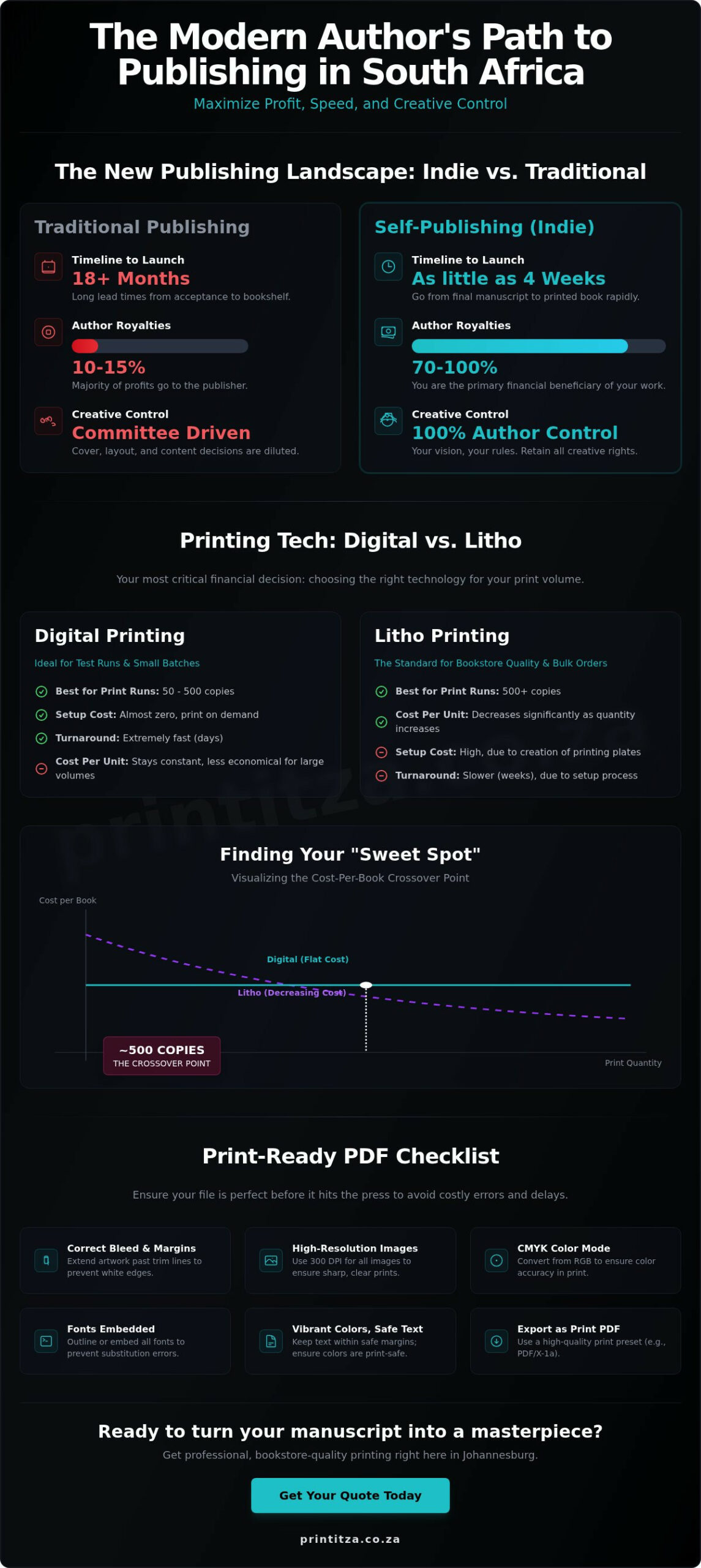
Major South African publishers have become significantly more selective in 2026. Many have reduced their annual title lists by up to 30% to focus on established names. For a new author, this means your chances of a traditional deal are slimmer than ever. However, the indie model offers a much better financial return. You keep 70% to 100% of your profits, compared to the standard 10% to 15% royalty offered by traditional houses. You also decide exactly how your cover looks and how your chapters are laid out, ensuring your vision isn’t diluted by a corporate committee.
The "Professional Grade" Standard
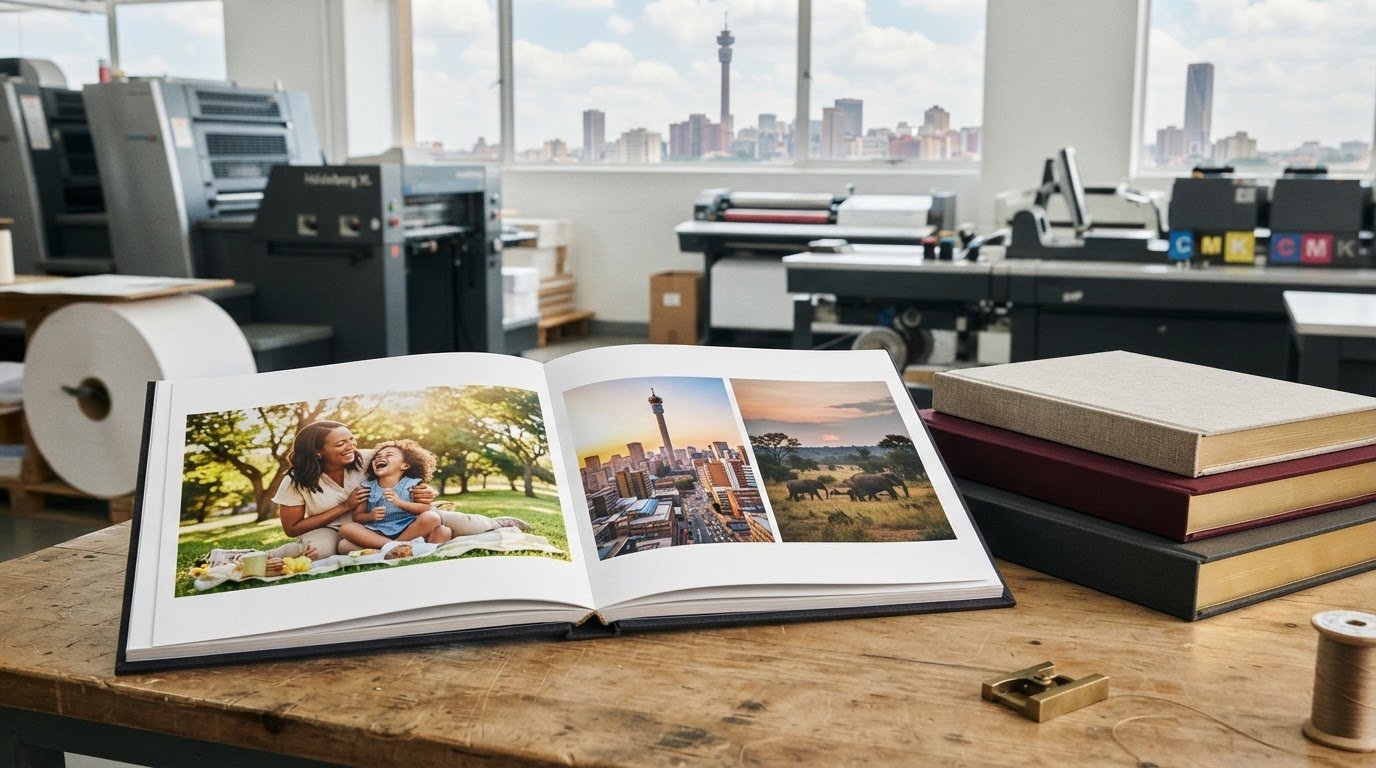
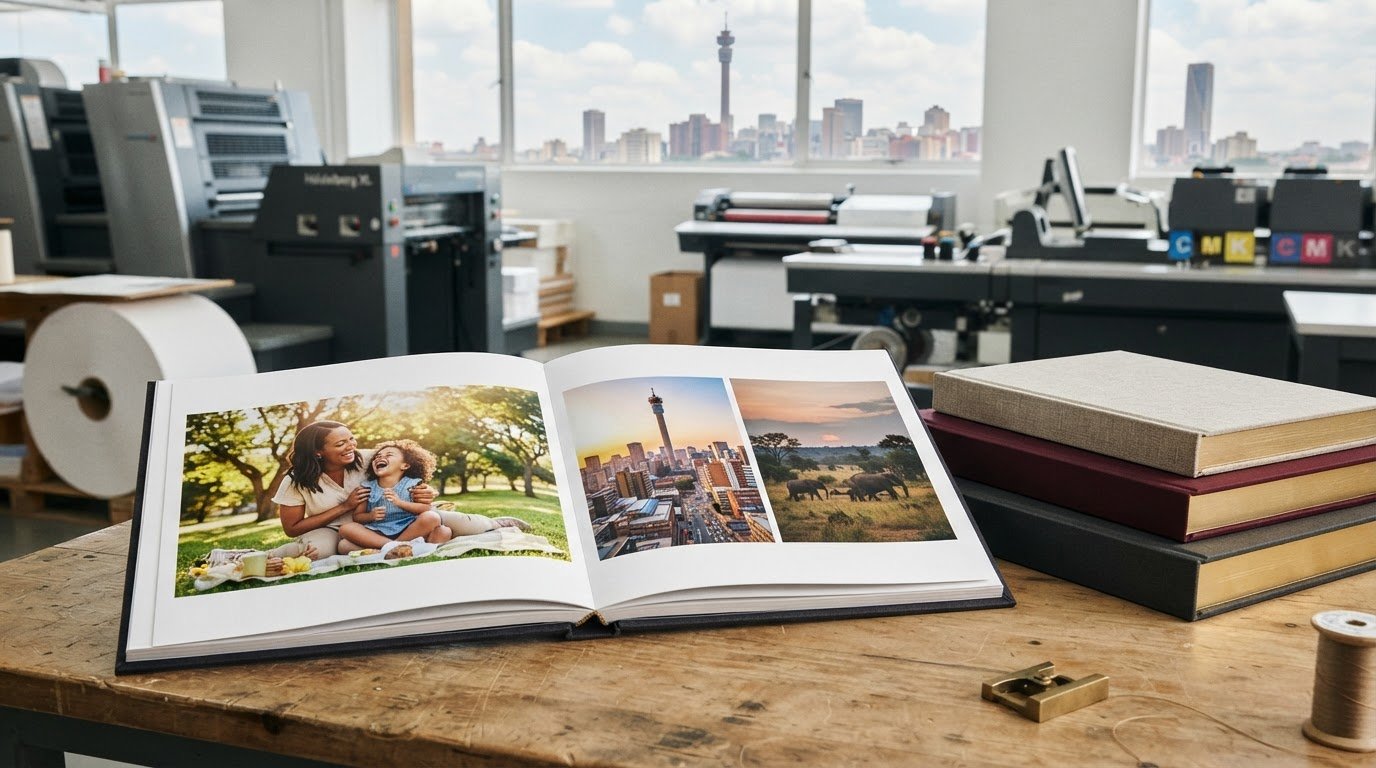
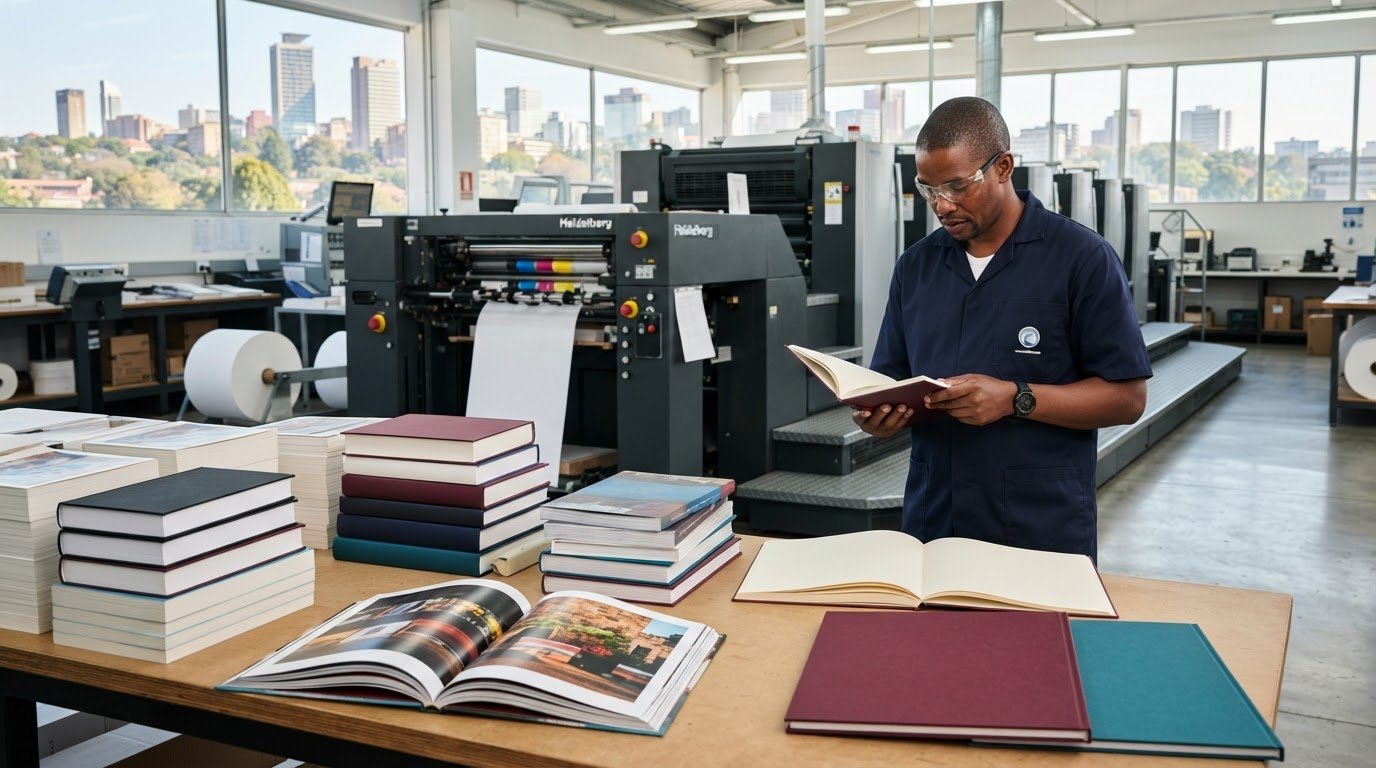
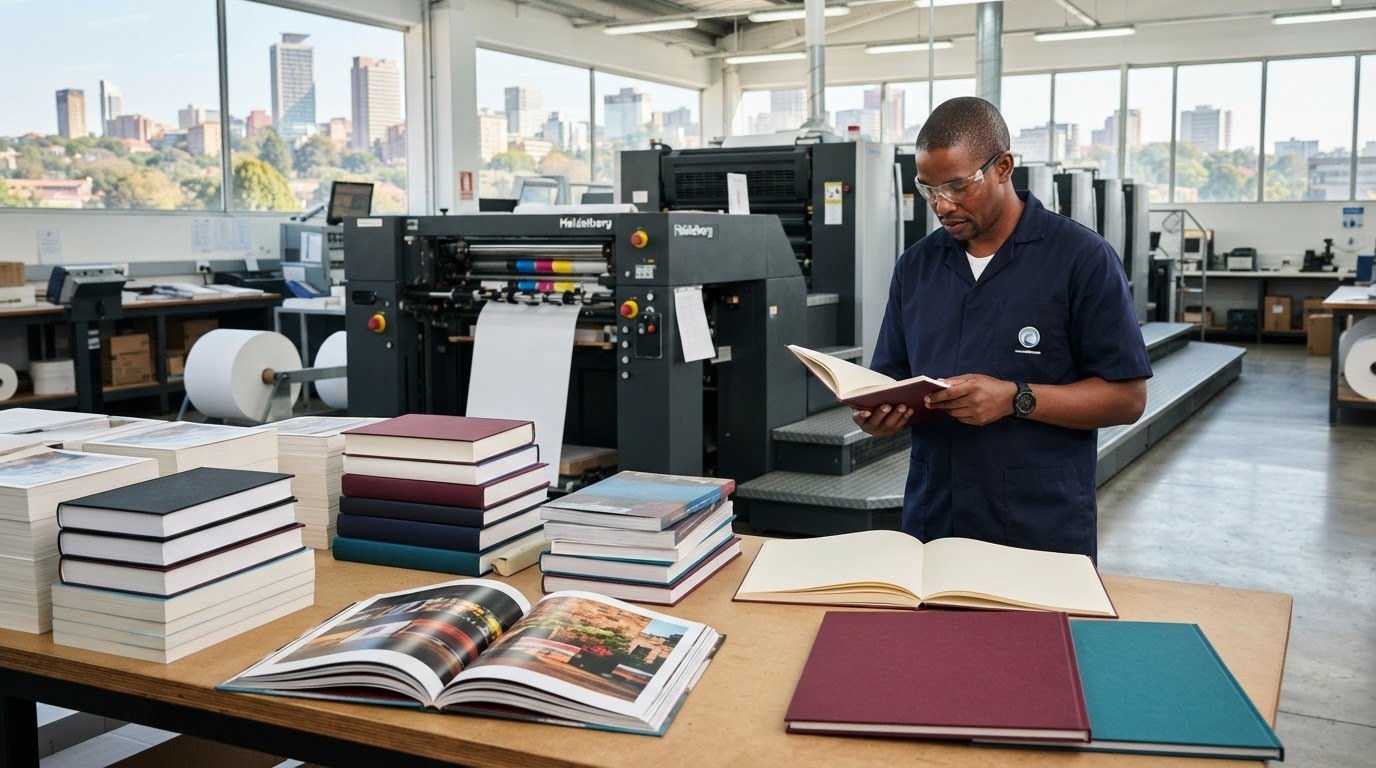
There’s a common myth that indie books look homemade. That’s simply not true in 2026. By choosing self publishing printing south africa through a high-end local facility, you get access to the same litho and digital technology used by global giants. Local Johannesburg production often beats international print on demand services because you can physically verify the paper grammage and binding strength before the full run. This hands-on quality control ensures your book doesn’t just look the part; it feels premium in the reader’s hands.
Treating your book as a business asset means investing in quality. High-end finishes like spot UV or soft-touch lamination aren’t just extras. They’re essential for creating a bookstore-ready product. Johannesburg authors are winning because they have a local partner to ensure every copy meets international standards while maintaining a competitive price point.
Digital vs. Litho: Choosing the Right Printing Tech for Your Volume
Choosing between digital and litho printing is the most critical financial decision you’ll make in your publishing journey. Digital printing works much like a high-end office setup but on a massive, industrial scale. It uses toner or inkjet technology to apply ink directly to the page. Lithographic (litho) printing is a different beast altogether. It involves creating physical metal plates that transfer ink onto a rubber blanket and then onto the paper. While the tech sounds complex, the choice usually comes down to your total quantity and your budget goals for self publishing printing south africa.
The "Sweet Spot" is the magic number where one method becomes cheaper than the other. Digital has almost zero setup costs, making it perfect for small batches. However, the price per book stays nearly the same whether you print 10 or 100 copies. Litho has a high initial setup cost because of the plate-making process, but your per-unit cost plummets as your volume increases. In 2026, the financial crossover point typically happens around 500 copies. Before you commit to a massive run, ensure you’ve secured your Copyright in South Africa to protect your intellectual property as you scale.
Short-Run Digital Printing for New Authors
If you’re testing the waters with a new title, digital is your best friend. It’s ideal for runs of 50 to 200, even 500 copies. You won’t be stuck with a garage full of unsold books, and you can get your copies in hand within days. Digital workflows also allow for personalization. You could print a special "Reviewer Edition" or include unique serial numbers for a limited first-run release. It’s the fastest way to get your book ready for a Johannesburg launch event without a massive upfront investment.
High-Volume Litho Printing for Bestsellers
Once your book gains momentum, you’ll need high-volume book printing services to keep your margins healthy. Litho is the only way to drive your unit cost low enough for nationwide retail distribution. It also offers superior color consistency. If you’re producing a vibrant art book or a premium coffee table title, litho ensures the 1,000th copy looks exactly like the first. Most successful Gauteng authors start with digital to build buzz and then switch to litho for their second and third print runs.
Having both options under one roof in a Johannesburg facility means you don’t have to switch partners as your career grows. You can move from a 50-copy digital "proof of concept" to a 2,000-copy litho bestseller seamlessly. If you’re unsure which method fits your current manuscript, feel free to chat with our team for a custom quote to see the cost breakdown for your specific volume.
Essential Specs: Binding, Paper, and Finishes for Professional Results
Your book’s success isn’t just about the words on the page. It’s about the physical sensation when a reader picks it up. In 2026, premium tactile choices are what separate professional authors from amateurs. For self publishing printing south africa, the standard for a novel is usually an 80gsm bond or 75gsm cream bond. This provides that classic "literary" feel and prevents eye strain. If you’re printing a high-end photography book, you’ll want a 148gsm or 170gsm coated art paper to ensure the images look vibrant without bleeding through to the other side. Understanding the full range of book printing paper types available to South African authors will help you make the most informed decision for your specific project and budget.
Finishing touches act as your silent salesperson. A matte lamination offers a sophisticated, velvety texture that resists fingerprints, while a gloss finish makes colors look sharp and high-energy. If you want to truly stand out on a crowded shelf in a Rosebank bookstore, consider adding spot UV to your title or foil stamping for a touch of luxury. Don’t forget the spine. A professional spine width calculation is essential; if it’s too thin, your title disappears. If it’s too thick, the cover won’t wrap correctly. We use precise formulas based on your specific paper grammage to ensure a perfect fit every time.
Professional Binding Options in Gauteng
Choosing the right binding depends on your page count and intended use. Perfect binding is the industry standard for paperbacks, using a flexible adhesive to attach the cover. For books that will see heavy use, PUR binding is a superior choice because the glue is significantly stronger and more heat-resistant. If you’re aiming for the top tier of the market, case binding for premium hardcover books provides the durability and prestige readers love. For shorter projects like instruction booklets or poetry chapbooks, saddle stitching is a cost-effective method that uses staples along the fold.
Paper Stock and Interior Layout
The color of your paper dictates the reading mood. Cream paper is easier on the eyes for long-form fiction, while bright white paper is the go-to for non-fiction and technical manuals where high contrast is key. Most South African authors now favor the "Trade Paperback" size (A5, 210 x 148mm) because it fits perfectly in most retail displays. When designing your interior, pay close attention to the "gutter" or the inner margin. A 10 to 20mm gutter on soft and hard cover books ensures your text doesn’t get lost in the fold, making for a seamless reading experience. These small technical details are what make self publishing printing South Africa a viable path to creating a truly bespoke product.
Preparing Your Manuscript: A Checklist for South African Authors
Your final manuscript is ready, but the bridge between a Word document and a bookstore-quality book is a technical one. To ensure your project meets the highest standards of self publishing printing South Africa, you must start with a Print-Ready PDF. This means converting your file to the CMYK color space to ensure what you see on screen matches the final ink on paper. Every image must be high-resolution, specifically at least 300 DPI, to avoid pixelation that makes a book look amateur.
Setting up "Bleed" is another non-negotiable step. In the printing industry, we require a 3mm bleed on all edges where images or colors extend to the page’s end. This allows for slight variations during the trimming process. Simultaneously, keep all essential text within a "Safe Zone" at least 10mm from the edge. This prevents your page numbers or text from being cut off. Before you send that final file, invest in a professional proofreader. Even a single typo on the back cover can damage your credibility as an indie author.
Administrative Essentials for SA Authors
Applying for an ISBN through the National Library of South Africa is a straightforward but vital process. It’s your book’s unique identity and is required if you plan to sell through major retailers like Exclusive Books or Takealot. Once you have your ISBN, you’ll need a corresponding EAN-13 barcode on your back cover. Also, remember the Legal Deposit Act of 1997. It requires South African authors to submit copies of their work to designated places like the National Library in Pretoria or Cape Town. Success in self publishing printing South Africa depends on these administrative foundations being solid before your launch date.
Cover Design that Sells
In 2026, your cover has to work twice as hard. It must look stunning on a physical shelf in Johannesburg and remain legible as a tiny thumbnail on a smartphone screen. Your design file needs to be a single, cohesive PDF that includes the front cover, the spine, and the back cover. Calculating the spine width correctly is where many authors stumble, as it depends entirely on your final page count and paper grammage. If you’re feeling stuck, working with in-house designers can help polish your vision into a retail-ready masterpiece. Request a professional file review to ensure your manuscript is ready for the press and perfectly formatted for your chosen binding.
Logistics and Distribution: Leveraging the Johannesburg Hub
Johannesburg is the logistical heartbeat of the country. For authors, leveraging a Gauteng-based facility provides a massive strategic advantage for nationwide delivery. When you’re coordinating self publishing printing South Africa, being centrally located means your books reach readers in Cape Town, Durban, or Bloemfontein significantly faster than if they were shipped from a coastal town. This central position reduces transit times and helps you maintain a more responsive supply chain.
We operate with 24/7 production cycles because we know that book launches are time-sensitive events. If your launch is scheduled for a specific date, such as the 15th of November, you can’t afford a single day’s delay. Our high-energy team works around the clock to ensure your premium finished product is ready exactly when you need it. Beyond just printing, we offer kitting and fulfillment services. This means we can handle the storage and individual shipping of your orders, acting as your personal distribution warehouse so you can focus on marketing.
Exporting your work is also simpler from a Johannesburg hub. With direct access to major international freight routes and OR Tambo International Airport, reaching readers in London or New York from a South African base is a seamless process. You keep the local production quality while maintaining a global reach. It’s a "no-nonsense" way to scale your author business without the headache of managing multiple international vendors.
Nationwide Delivery and Gauteng Logistics
Distributing from a central point in Gauteng can reduce your shipping costs by up to 20% compared to peripheral locations. We offer fast-tracking for time-sensitive marketing collateral, such as posters or bookmarks, to accompany your book release. For Johannesburg-based authors, local collection is always an option. You can swing by our facility, meet the team, and pick up your first box of books fresh off the press. It’s that personal touch that makes self publishing printing south africa feel like a true creative partnership.
Partnering with Print It ZA
We pride ourselves on a "can-do" approach to every project, no matter how complex or bespoke. Whether you’re looking for a specific paper grammage or a unique spot UV finish, we have the technical expertise to make it happen. You aren’t just another order number to us; you’re a creative partner. We offer 24/7 support for high-priority self-publishing runs to ensure you never feel left in the dark. Ready to see your name on a spine? Start your self-publishing journey with a custom quote today and let’s get your story into the hands of readers across the country.
Bring Your 2026 Manuscript to Life
You’ve mastered the technical requirements of manuscript preparation and decoded the financial benefits of digital versus lithographic production. Now, the final step is turning that digital file into a bookstore-quality reality. By adhering to the 300 DPI standard and selecting the right paper grammage, you’ve ensured your work meets the high expectations of modern readers. Choosing a partner for self publishing printing south africa is about more than just ink on paper; it’s about securing a reliable distribution network from a central Johannesburg hub.
Our 24/7 operational facility in Gauteng ensures your project moves forward around the clock, meeting tight event deadlines with precision. Our in-house design team is ready to polish your bespoke cover, while our logistics experts handle nationwide and international shipping to reach readers everywhere. You have the vision and the technical knowledge; we have the machinery and the "can-do" attitude to make it happen. Don’t let your manuscript sit on a hard drive when it could be on a shelf. Your story deserves to be told with premium quality and local pride.
Get a Professional Self-Publishing Quote from Print It ZA
Frequently Asked Questions
How much does it cost to self-publish a book in South Africa?
The total cost depends on several technical variables including your page count, paper grammage, and chosen binding style. A small digital run of 50 copies has a lower total cost but a higher per-unit price than a 1,000 plus -copy litho run. Because every project is unique, getting a custom quote is the best way to plan your budget accurately without any guesswork.
What is the minimum number of books I can print?
You can print as few as 20 to 50 copies using our modern digital printing technology. This low entry point allows you to test your manuscript with a small audience before investing in a larger volume. It’s an ideal solution for authors who want to manage their initial costs while maintaining a professional standard.
Do I need an ISBN to sell my book in South African bookstores?
Yes, you must have an ISBN and a scannable barcode to sell through retail chains like Exclusive Books or Takealot. Retailers use these numbers to track inventory and process sales through their digital systems. You can apply for your ISBN through the National Library of South Africa.
How long does the printing process take once my files are ready?
The standard turnaround time is usually 5 to 7 working days after you approve your final digital proof. Our 24/7 production facility in Johannesburg is designed to handle tight deadlines for book launches and special events. If you have a specific launch date, we’ll work with you to ensure your books arrive with time to spare.
Can Print It ZA help with my book cover design?
Our in-house design team can help you polish your cover to ensure it meets the 300 DPI high-resolution standard required for retail. We’ll assist with spine width calculations and file formatting so your creative vision translates perfectly to the physical page. This support is essential for successful self publishing printing South Africa.
What is the difference between paperback and perfect binding?
Paperback is the general term for a softcover book, while perfect binding is the specific technical process used to glue the pages to the spine. We use industrial strength adhesives to ensure your spine remains flexible and durable. For books that will see heavy use, we also offer PUR binding for even greater longevity.
How do I get my self-published book into stores like Exclusive Books?
Retailers require a professional product that meets international quality standards and includes a valid ISBN. You’ll need to approach their head office or individual store managers with a professional pitch and a physical sample of your book. Having a bookstore-quality product from a local partner is the first step to securing a spot on those shelves.
Can I print a single "proof copy" before ordering a full run?
Yes, we recommend printing a physical proof copy so you can verify the paper feel and color accuracy before the final production. This step is a vital part of self publishing printing South Africa because it gives you total peace of mind. Seeing a physical copy helps you catch any final layout issues before your full order is processed. Before committing to your proof, reviewing the complete guide to book printing paper types can help you confirm you’ve selected the ideal stock for your genre and budget.
Contact Print It ZA today, for a Free Quote and Speedy Service.
Print It ZA, we deliver Printing Best!
Print It ZA print and packaging.